It’s hard not to get addicted to this.
From side conversations with @MEBirnbaum to an incredible result for patients. So proud of the Kelonia team for all the hard work it took to make this real.
The first patient with multiple myeloma has been dosed in the inMMyCAR study, our first in-human Ph 1 clinical trial of our in vivo gene therapy, KLN-1010.
Learn more about the inMMyCAR clinical trial and our unique gene delivery platform: https://t.co/P43q5xaWP5
Check out @Steph_Gaglione's amazing preprint introducing a highly scalable (and inexpensive) approach to TCR synthesis that enables library-on-library screening of TCRs + antigens 👇!
Thrilled to share our preprint! We introduce TCRAFT, a method to assemble tens of thousands of TCRs at <$1 each, unlocking high-throughput functional TCR screening from single-cell data.
🧵@kochinstitute@MEBirnbaum@MITChemE@MIT
https://t.co/zifGBP4p7k
here's a peek of Dr. Perez showing this work - how diverse CAR libraries (inputs) can be leveraged to generate useful datasets that describe differential CAR phenotypes (outputs) at his thesis defense yesterday 👇
super lucky to be your lab mate & play a small part in this work!
An incredibly impressive body of work from the newly-minted PhD @calebrperez comparing clinical candidate CAR-T architectures head-to-head at single cell resolution, shedding light on mechanisms of differential CAR-T efficacy in vivo with insights into better construct design 🚗
Excited to share some of my PhD work was pre-printed! Using single-cell sequencing, we took a deep look at a library of CAR signaling architectures to try to identify signal-intrinsic drivers of CAR-T function🧵👇 @MEBirnbaum@kochinstitute@MITdeptofBE
https://t.co/DHbwlFQlnB
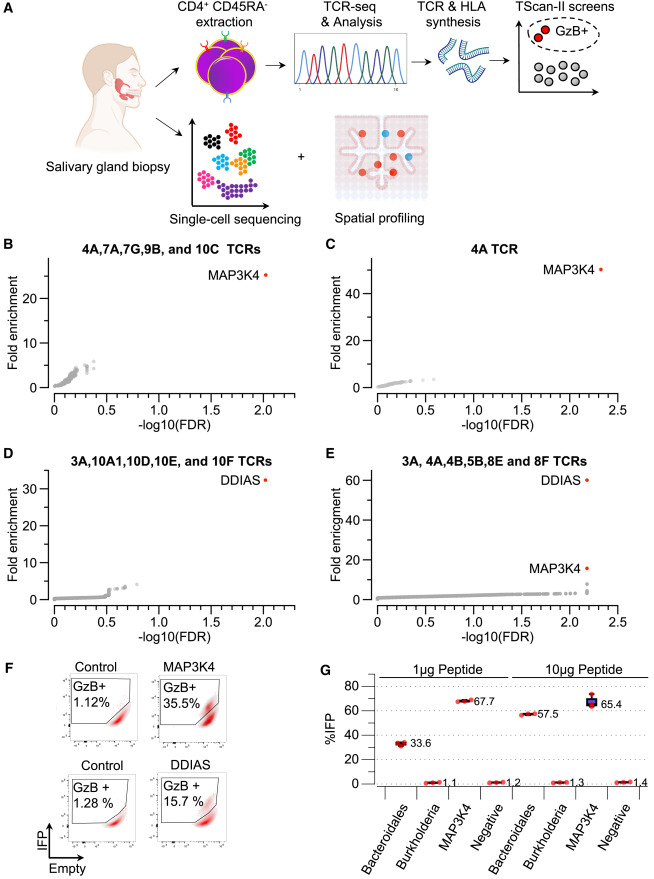
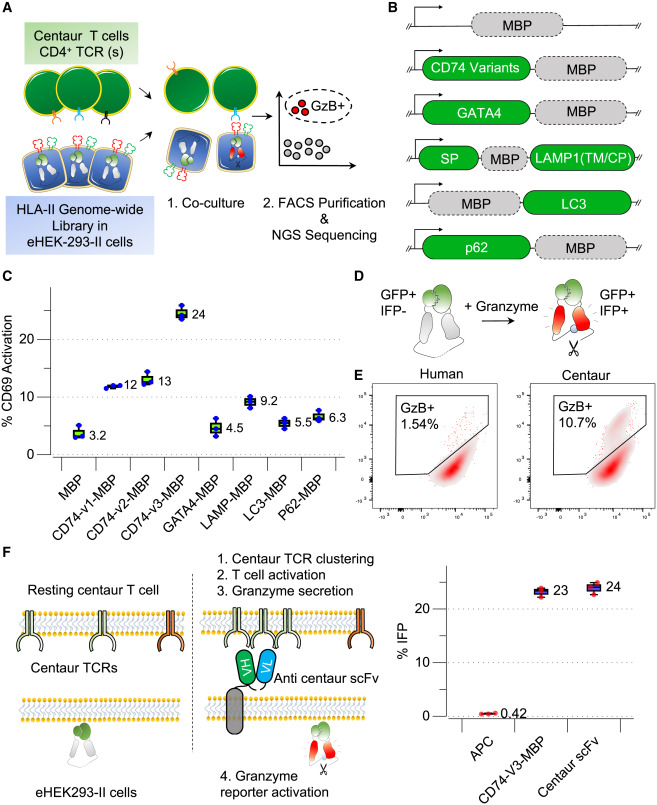
The authors then applied their TScan-II methodology to uncover antigens in cancer, autoimmunity, & infectious disease across many different MHC class II alleles & TCRs
Their screens uncovered antigens recognized by clonally-expanded CD4+ T cells from Sjögren's syndrome patients
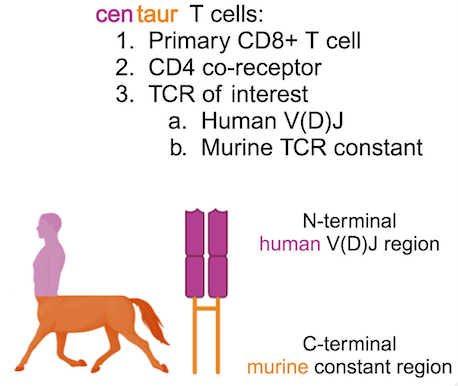
For their last trick🪄, the authors introduced the candidate human TCR antigen-binding variable region atop a murine TCR constant region resulting in a human-mouse hybrid TCR that reduces cross-reactivity with the endogenous TCR
They termed these chimeras "centaur T cells"🏃🐎
For the T cell side of the equation, they made use of the granule-releasing properties of primary CD8+ T cells, but introduced a CD4 co-receptor alongside a candidate T cell receptor (TCR) of interest
But what if the introduced TCR mispairs with the endogenous CD8+ T cell's TCR?
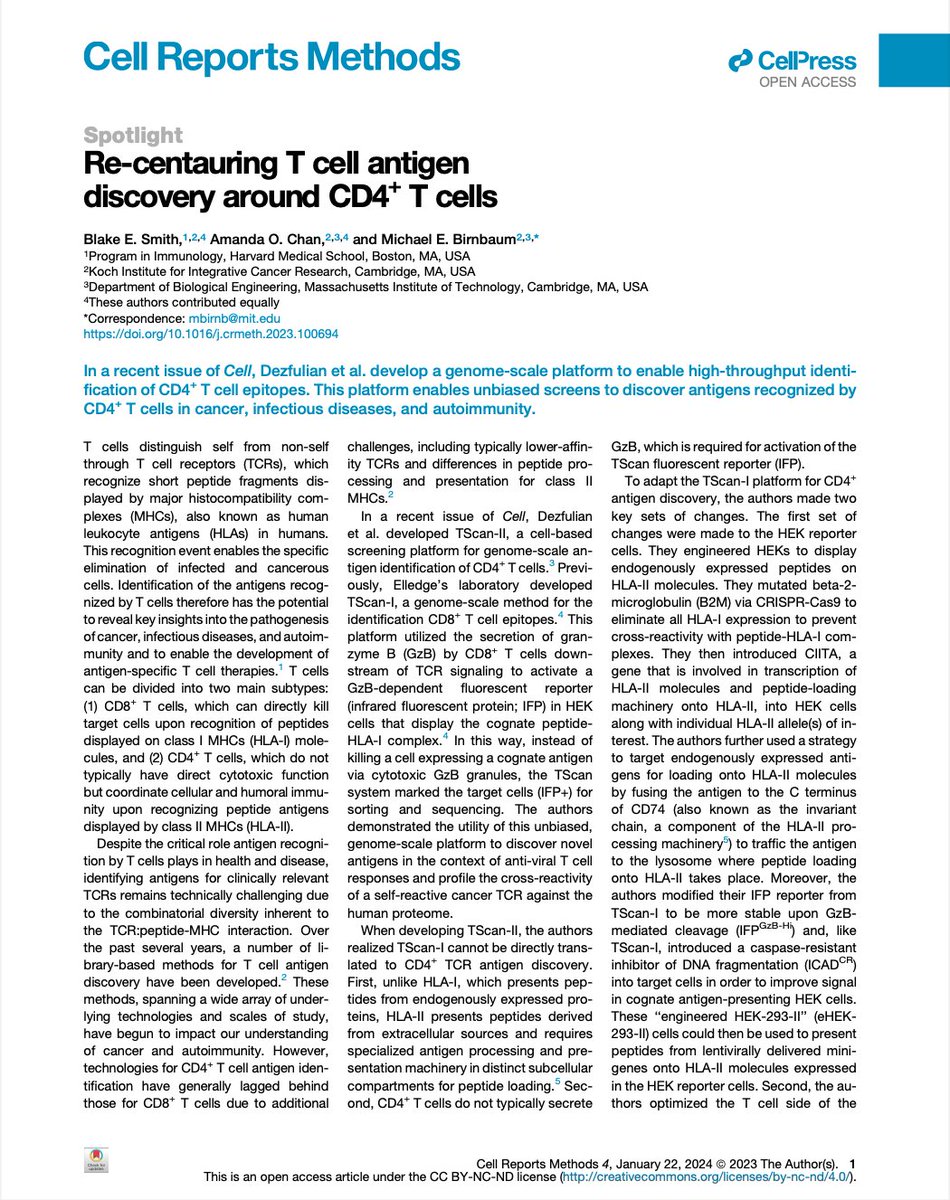
Wrote a Spotlight piece together w/ lab mate @amandaochan & @MEBirnbaum covering an impressive new methodology from @elledge_stephen's group that enables MHC class II antigen discovery for CD4+ T cells called TScan-II
https://t.co/v5CTgyZqMh
They also needed to introduce a reporter of T cell antigen recognition
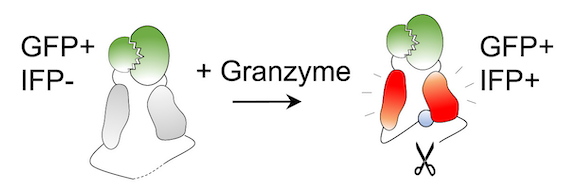
The reporter is an infrared fluorescent protein (IFP) that only becomes fluorescent upon exposure to cytotoxic granzyme B (GzB), representing a functional & sortable readout of cognate CD4+ T cell recognition
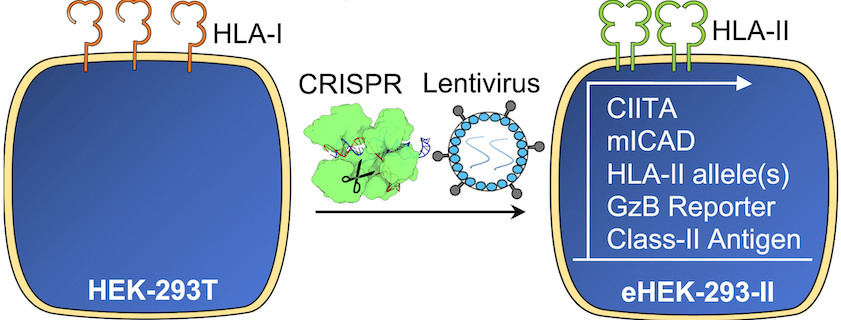
But to do so, the authors needed to engineer both the antigen presenting cells (APCs), alongside the primary T cells used
For the APCs, they modified HEK-293 cells (eHEK-293-II) to lack MHC class I, but present MHC class II allele(s) of interest alongside appropriate machinery
TScan-II allows for genome-scale interrogation of MHC class II antigens using endogenous processing & presentation machinery of antigen libraries, alongside physiological T cell activation & degranulation (GzB) 👇
https://t.co/nVCO97nd9L
new @runthelistpod episode is now out hosted on @MHMedical's AccessMedicine webpage!
best part about it?
you can search for key words & phrases to more easily listen to high-yield content 🤯
https://t.co/gk4dowcBPG
We're back with another pod🎙️!
Ep 97: Approach to Dysphagia
https://t.co/i96iBINONn
Host @NavinKumarMD discusses dysphagia workup w/ RTL's own @WalkerReddMD
1. ENTER #mRNAvaccines for #pancreaticcancer! Long-term #PDAC survivor story PART3.
"Do #PDACs REALLY have vaccine neoantigens (NAs)"? (aren’t they lowly mutated?)
If each patient = own NAs, how do you vaccinate?
Maybe mRNA? But how?
@Nature https://t.co/d1SgGgdVHq
👇🏽 [1/32]
@ESmithMDPhD@DanaFarber this is so incredibly exciting, congrats to you @ESmithMDPhD & your team! such an amazing turnaround from the 2019 publication to now 👏