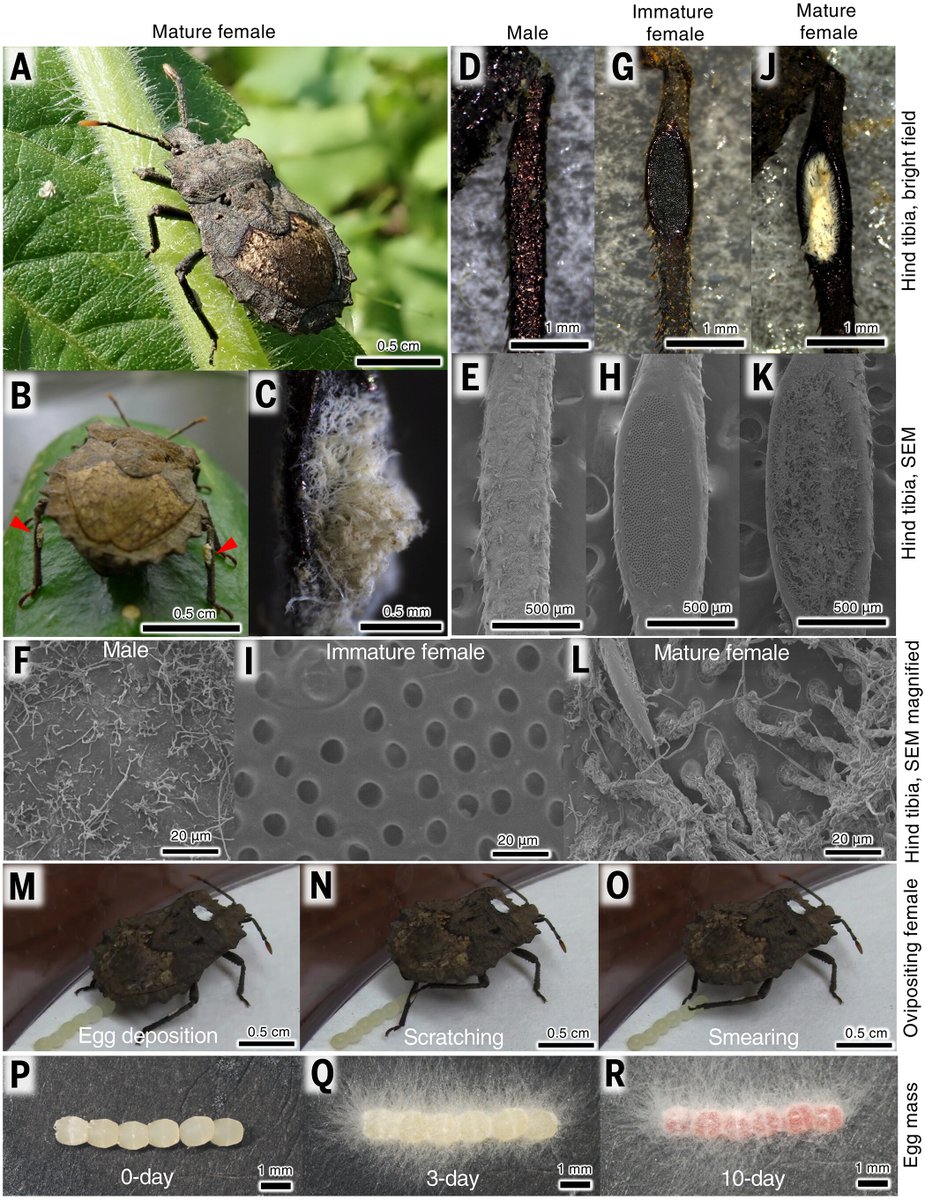
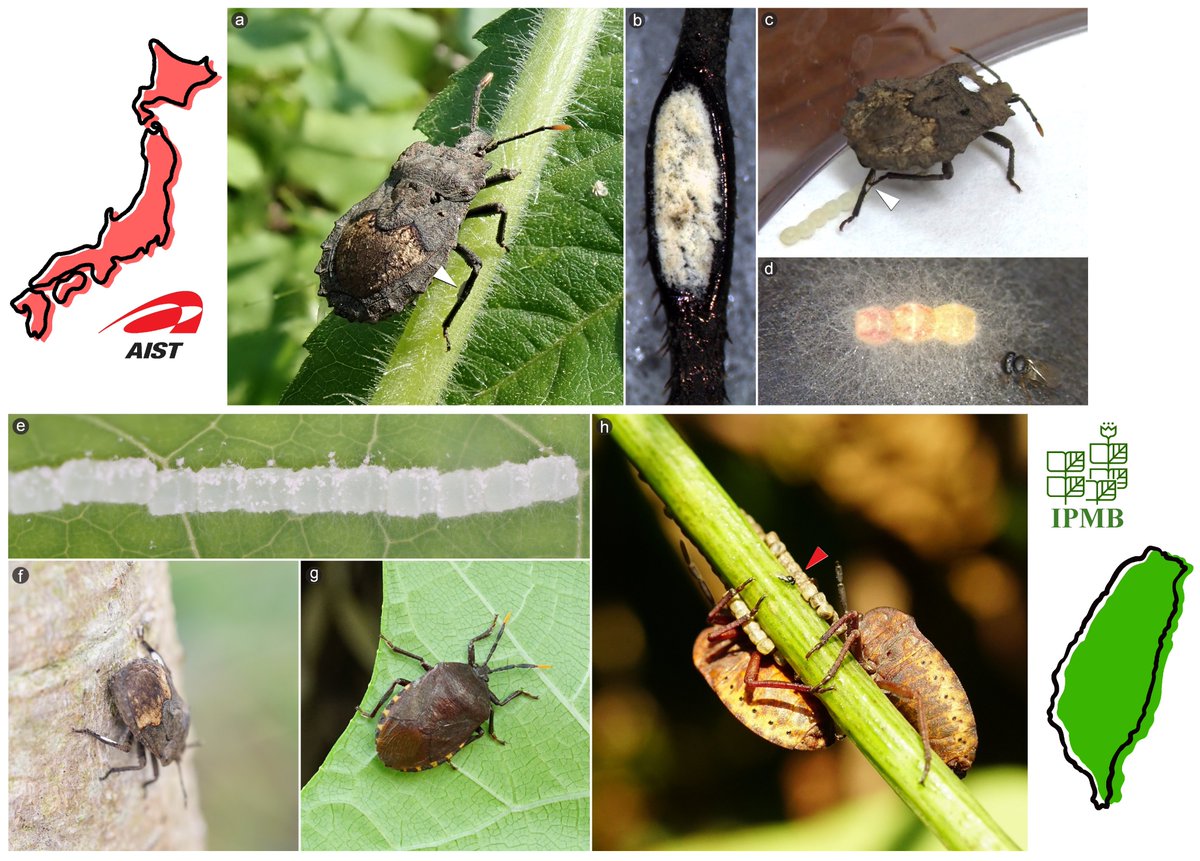
What looked like a hearing organ on a tiny stinkbug’s leg turned out to be something far stranger: a fungal nursery that mother bugs use to coat their newly laid eggs in protective symbiotic hyphae, shielding their offspring from parasitic wasps, researchers report in Science.
Learn more: https://t.co/VJC26m2iGf
Excited to share this work, which we established a pipeline to achieve near 30% #AMT in a specific floral stage, engineered #Agrobacterium strains to boost transient expression and genome editing by immune evasion. Great team work @IPMBSinica with @ChihHorngKuo@AdamWu9527 /1
A new kind of defensive symbiosis.
Stinkbugs cultivate fungi on their hindlegs and smear them onto eggs, forming a protective barrier against parasitic wasps.
https://t.co/wjkTfnNxBZ @ScienceMagazine
Great collaboration with @fkttkm, @AIST_EN, @IPMBSinica & @AcadSinica
Going to talk about our new work:
Population genomics of a thermophilic cyanobacterium revealed divergence at subspecies level and possible adaptation genes
#cyanobacteria#genome#evolution#Taiwan@biorxivpreprint preprint: https://t.co/OxRZVG1r7h
New work from our lab in @IPMBSinica
Delineating bacterial genera based on gene content analysis: a case study of the Mycoplasmatales–Entomoplasmatales clade within the class Mollicutes
In Microbial Genomics @MicrobioSoc#taxonomy#Mycoplasma
https://t.co/TZlaa4AhDD
The Complete Genome of the “Flavescence Dorée” #Phytoplasma Reveals Characteristics of Low Genome Plasticity
https://t.co/CnDx89H2rd
#mdpibiology via @Biology_MDPI
Genetic Drift and Host-Adaptive Features Likely Underlie the Cladogenesis of Insect-Associated Lachnospiraceae
@GenomeBiolEvol@sabreescience
https://t.co/mKiQgLiLVb
A Bacterial Expression Vector Archive (BEVA) for Flexible Modular Assembly of Golden Gate-Compatible Vectors
@FrontMicrobiol#MolecularCloning
https://t.co/OQj3pugw46
The Lai lab @IPMBSinica has launched a new lab website, featuring news, research and fun activities. Thanks Xuan LAI @tcanpu50 and Si-Chong @SichongW for creating this website. check it out to follow what is happening in the group https://t.co/GbVAKZ9nUg
Researchers have discovered a bacterium—named Thiomargarita magnifica—that challenges the prevailing view of bacterial cell size. It is larger than all other known giant bacteria by ~50-fold. Learn more: https://t.co/bvUSuR2ebK #ScienceResearch







![IPMBSinica's tweet photo. [Chuan Ku @chuanku_] Rampant nuclear–mitochondrial–plastid phylogenomic discordance in globally distributed calcifying microalgae
@tzutongkao @NewPhyt
https://t.co/NUWMeOkcmY https://t.co/3w6ak2MZvu](https://pbs.twimg.com/media/FVW2h2KUcAAtdcq.jpg)


