A second report (both this year) of AAV-driven insertional mutagenesis in gene therapy.
Two out of ~3,000 total who received AAV.
= nonzero and concerning.
But VERY low.
= it's all about benefit-risk, folks.
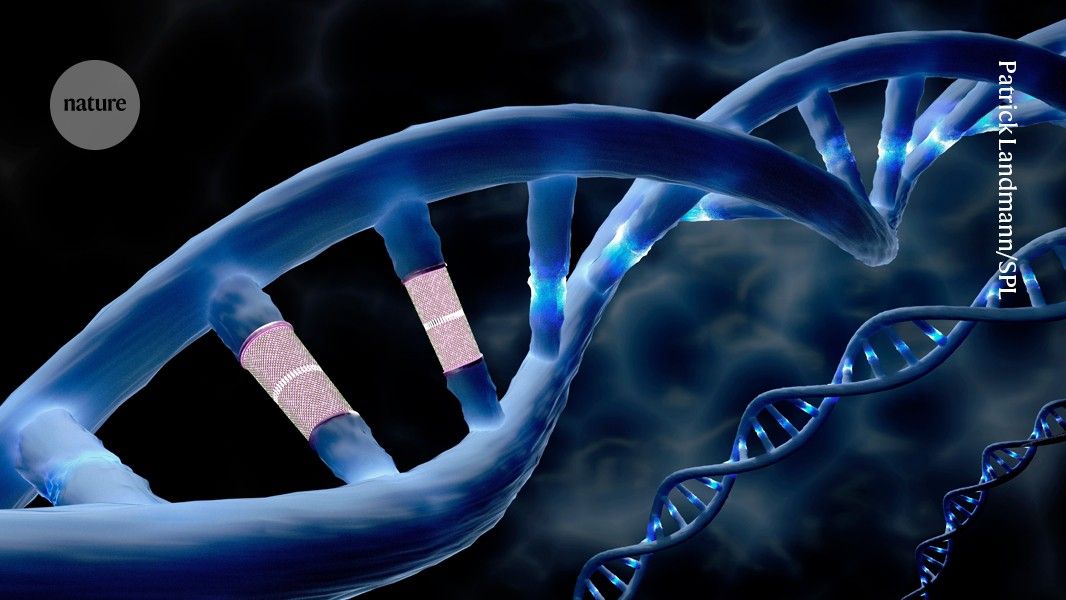
⚠️ AAV insertional mutagenesis is a real oncogenic risk. Novartis reports 9 tumors among >6,000 Zolgensma-treated patients. Vector integration involving the GLI1 oncogene was detected in 2 cases. A critical safety signal for long-term AAV gene therapy surveillance. #GeneTherapy
🚨 Gilead/Kite has announced a partial clinical hold on the Ph2 PALISADES-1 and Ph3 PALISADES-2 trials of KITE-753 in rDLBCL following grade 3–4 ICANS. KITE-753 is a next-generation, dual targeting (CD19 and CD20) and dual costimulation (CD28 41BB).
https://t.co/hhHJZFI5X3
It's already been 20 years since Kazutoshi Takahashi and Shinya Yamanaka published their landmark paper on iPSCs in Cell. Amazing how a single publication could spark an entire field!
#iPSCell
https://t.co/id9vMBg1vh
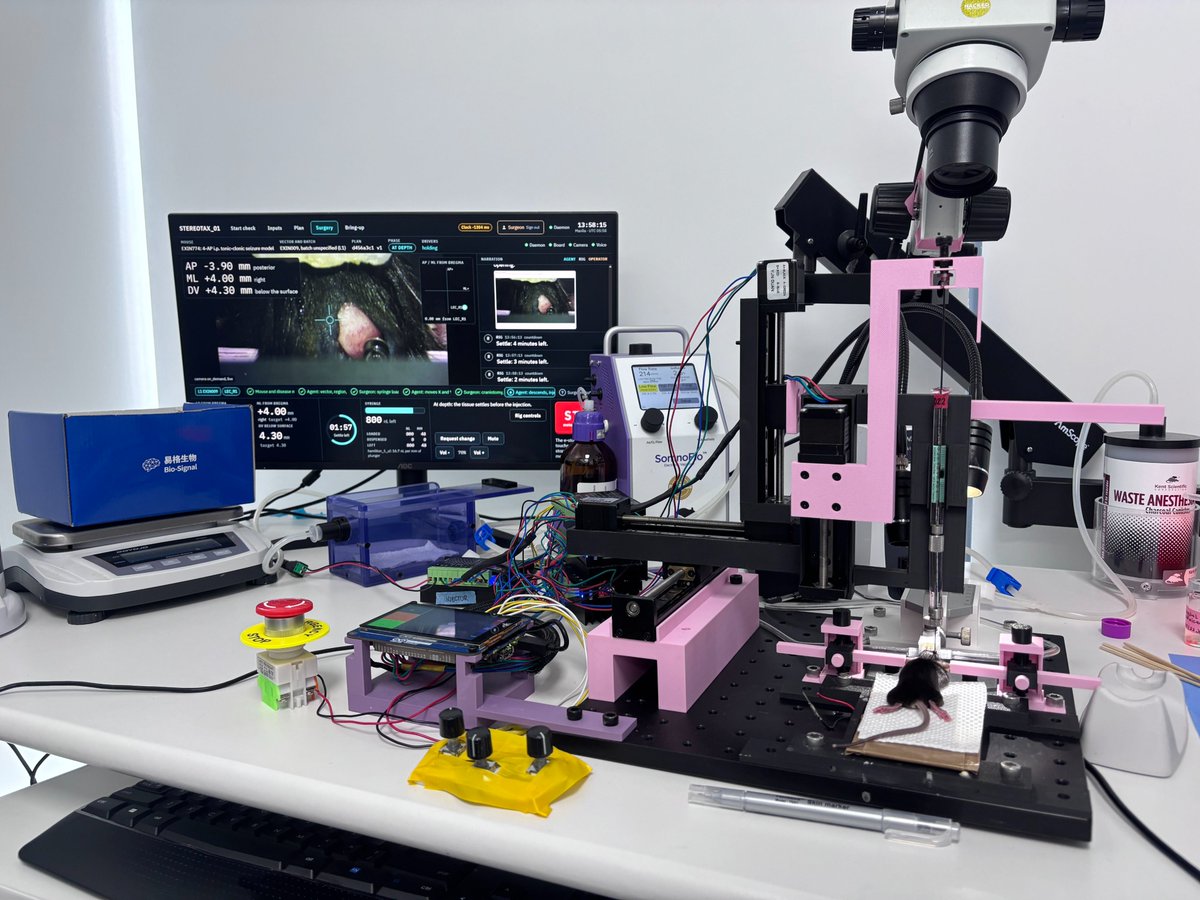
Last night an AI agent performed brain surgery on a mouse.
We gave it 19 gene therapy vectors in a spreadsheet, a mouse model of epilepsy, access to a motorize surgery rig with cameras and one goal: reduce seizures.
It picked the drug. It picked the brain region. It derived the coordinates from three papers. Then it drove the stereotaxic arms into the brain and injected 250 nanolitres while watching the entry site through the rig camera for bleeding.
A licensed vet gated every irreversible step and held a physical kill switch to stop the AI agent.
Thread on what it decided, what it saw, and the moment it refused to let me override it.
[Writing this on the spot out of excitement, but I've been 18hrs in front of my laptop coding and coordinating this, so keeping it brief and descriptive, more cohesive thoughts on this soon...]
This is a great loss for the #DevBio community and the #SCBEM field in particular. Marta was (how hard to write this) a positive person, a creative scientist & a great collague. Will be missed.
VERY encouraging Phase 1 data for FT819: #iPSC-derived allogeneic #CARTcells show a promising safety profile and early signs of efficacy in lupus nephritis! Small cohorts and preliminary results, but an exciting step for off-the-shelf cell therapies.
https://t.co/Fca8RKZcme
Après des jours à dire que Parcoursup c’était une plate-forme de « matching »et que les filtres étaient définis par les universités et écoles, je découvre cette vidéo d’un prof et elle est juste parfaite.
À visionner.
👇🏻👇🏻
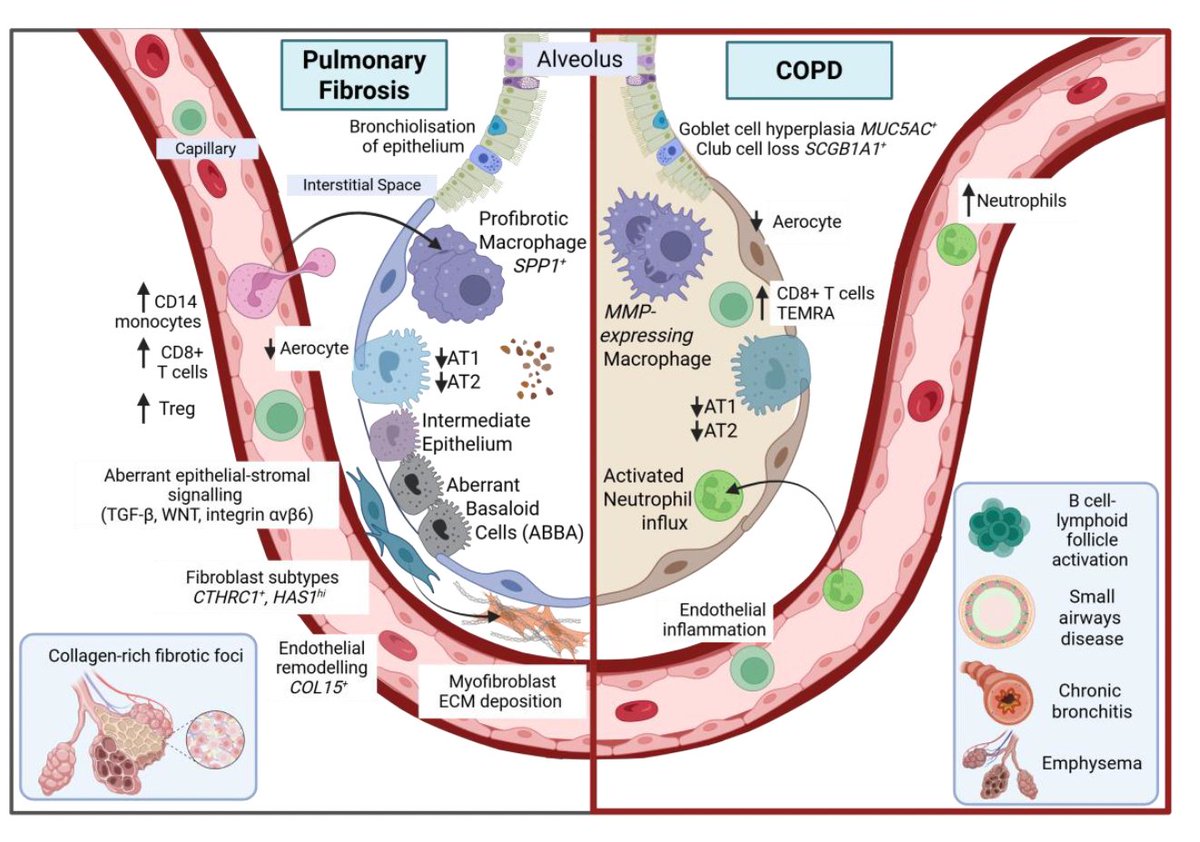
Our "Single-cell multi-omics in IPF & COPD: from atlas to impact" is out! We provide a brief guide to analytic approaches, an overview of how the technologies impact our understanding of the 2 diseases, limitations, future directions.
A 🧵 will follow
https://t.co/t75rpkFFaD
Just published @ScienceMagazine
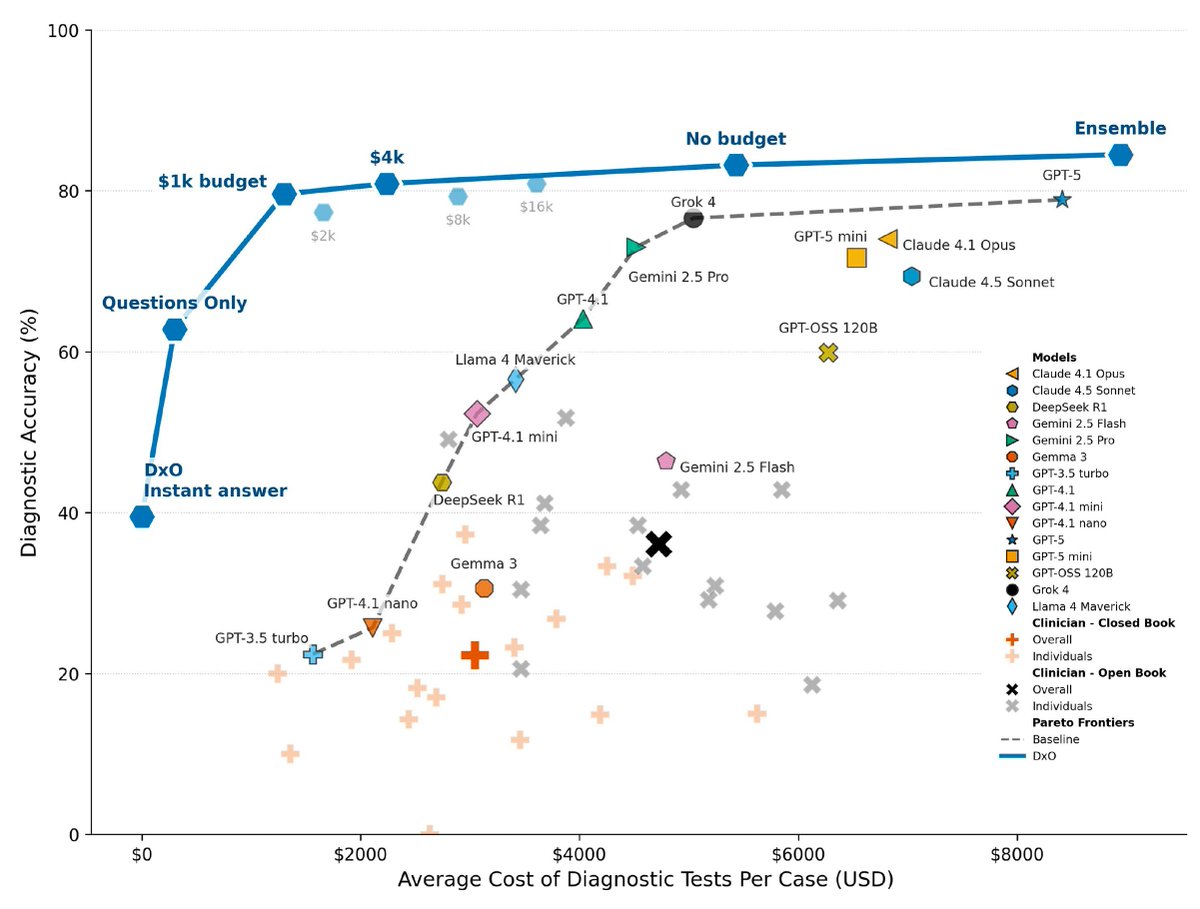
Higher medical accuracy at lower cost
A 3-agent AI for sequential diagnosis nearly doubled accuracy compared with physicians for >300 @NEJM CPC cases and >300 ER cases AND substantially lowered cost, also exceeded performance of many AI models, physicians plus AI @HarshaNori@erichorvitz@Dominic1King@mustafasuleyman
Celebrating 20 years of iPSC research! 🧫✨
Join us in honoring two decades of induced pluripotent stem cell progress and the researchers advancing the field.
Attending #ISSCR’s iPSC 20th Anniversary Symposium in Kyoto? Come celebrate with us!
Not attending? Explore key milestones and see where human iPSC research is heading next: https://t.co/clTKQNSQxM
Great news for pulmonary fibrosis patients, families, researchers, clinicians. @bmsnews announces that in phase 3 RCT ( peer reviewed yet), Amilparant, an inhibitor of the LPA receptor, has met primary endpoint! Wow!!!
#CurePF4All#BeLikeAndy
https://t.co/WBKo1swphx
🌐 AI for science just became science diplomacy.
On October 4, the US and 16 other countries, including Japan, South Korea, the UK, Germany and Singapore, endorsed the "Kyoto Vision for a Golden Age of Science" at the STS Forum in Kyoto. I only learned about it today, from a friend. In case you missed it too, here is the short version.
💡 The one-page text covers a lot of what I care about. More diverse funding, from long-term awards to fast grants and prizes. Room for new institutional models. Metascience and reproducibility. AI for science, including autonomous closed-loop discovery. Early investment in young talent.
Much of this I support. Closed-loop, AI-driven experimentation is at the core of what we do in the Theis lab, and funding systems everywhere could use more experimentation themselves.
The declaration builds on the White House report "Science: A New Golden Age" from July, which goes further, for example in rethinking the role of universities. Not trivial. How these ideas translate will differ between national systems. Germany's research ministry, for instance, calls the paper a non-binding basis for discussion and stresses that freedom of research and the independence of science remain non-negotiable.
🌍 For me, the test will be concrete: shared access to compute, data and automated labs, and collaboration across borders. Researchers should help shape what this means in practice.
How do you see it? Will it change how science is funded where you work?
🇩🇪 BMFTR statement: https://t.co/XacVzC1vKp
📄 Kyoto Vision: https://t.co/gq2JrSsE9y
📘 Science: A New Golden Age: https://t.co/ORzxbrXQRq
🇺🇸 White House release: https://t.co/dqMmZBy5FU
#AIforScience #ScienceDiplomacy #Metascience
How much do PhD students earn?
The first comprehensive overview of PhD income shows vast imbalances across much of Europe
Read the full story: https://t.co/Ttz297TWZz
Caribou Biosciences’ shutdown highlights the challenges facing allogeneic CAR-T therapies, facing competition from emerging in vivo CAR-T approaches.
https://t.co/pn5IQfUzdn
#CART#CellTherapy#Biotech