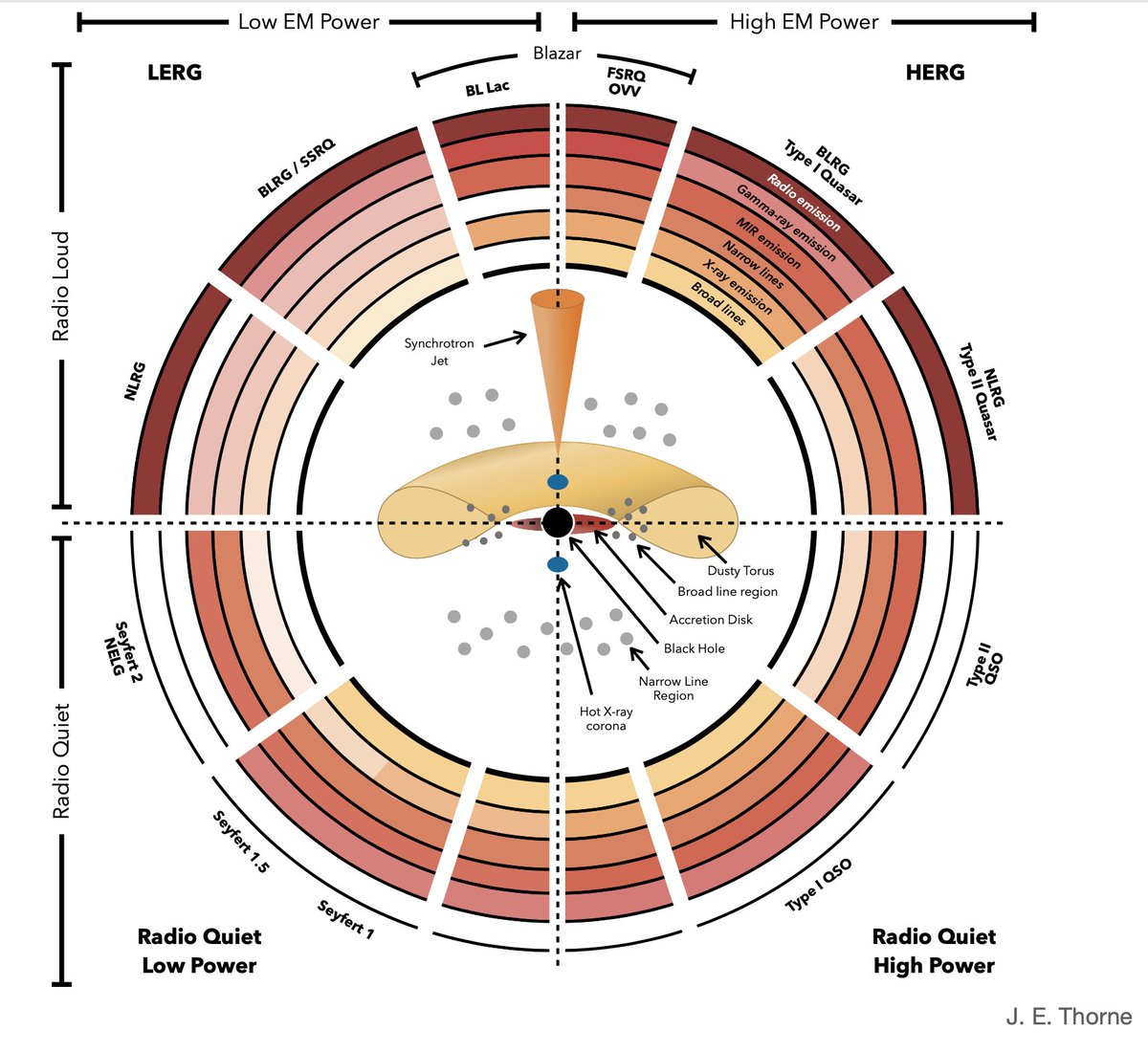
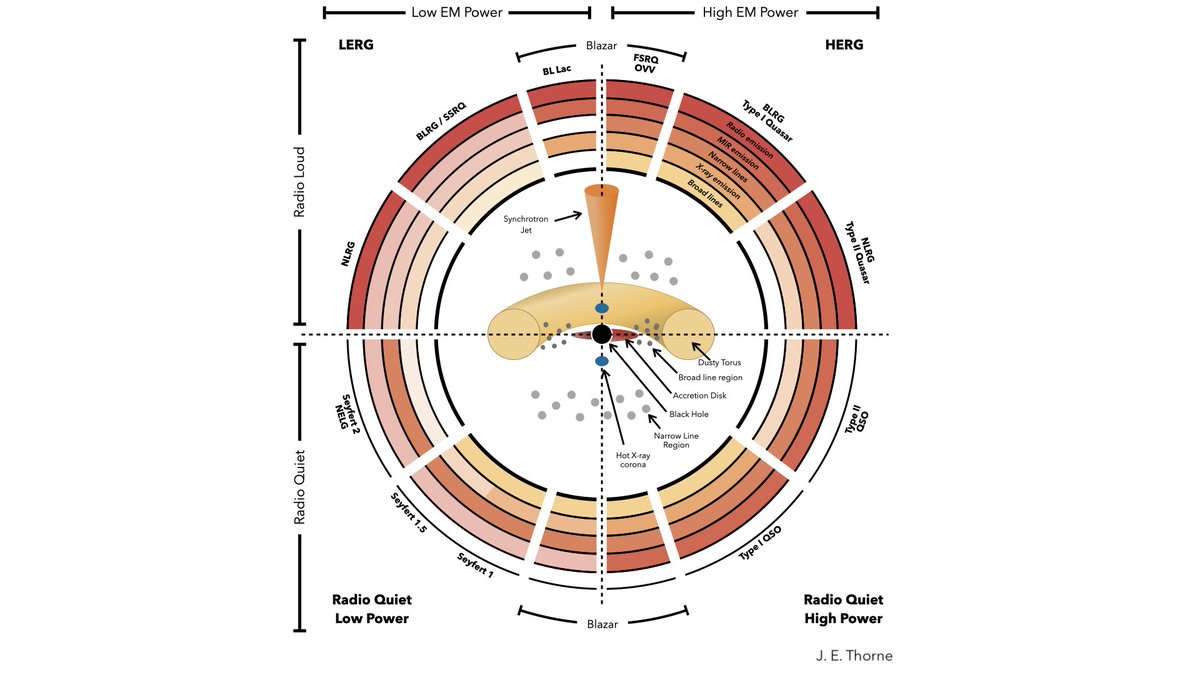
The diagram has been updated to include expected gamma-ray emission, and features a better representation of the geometry of the dust torus! Thanks to all who provided comments 😀
I’ve put together an AGN unification diagram split into radio loud/quiet and low/high EM power. I’ve added rings to show whether a particular combination of radio emission+EM power+geometry is expected to produce broad or narrow emission lines, or MIR, radio, or X-ray emission.
Anyone joining threads?
The people I follow on Twitter and Insta are two entirely separate circles, so trying to fill the intersection up some more! You can find me at the same handle 😃
⭐️Come do a PhD with us! ⭐️
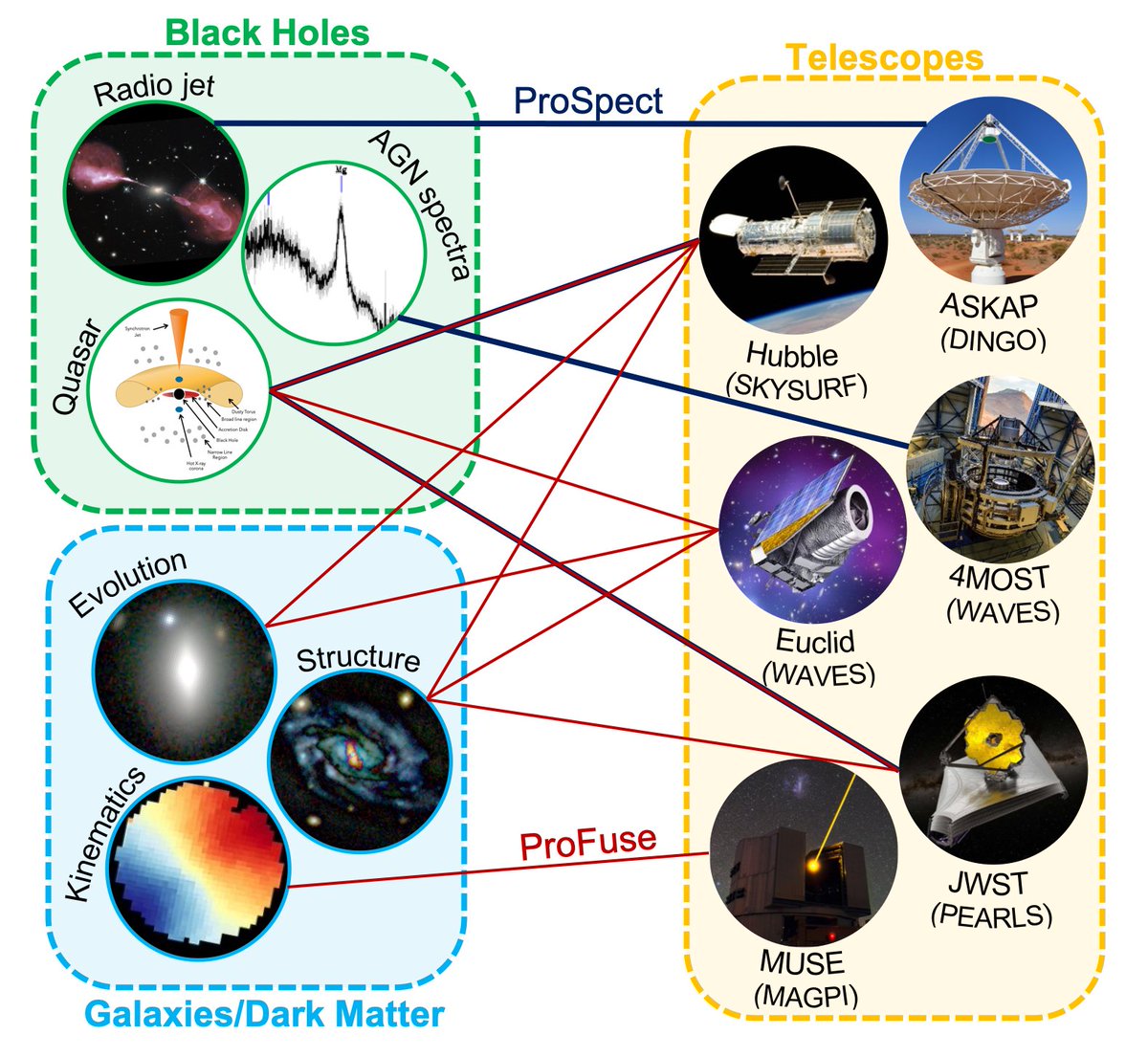
We're looking for excited and talented students to work on a range of projects, using #ProSpect and #ProFuse to study black holes and galaxies, using data from @NASAHubble, @ESA_Euclid, @NASAWebb, and plenty of other cutting-edge facilities!
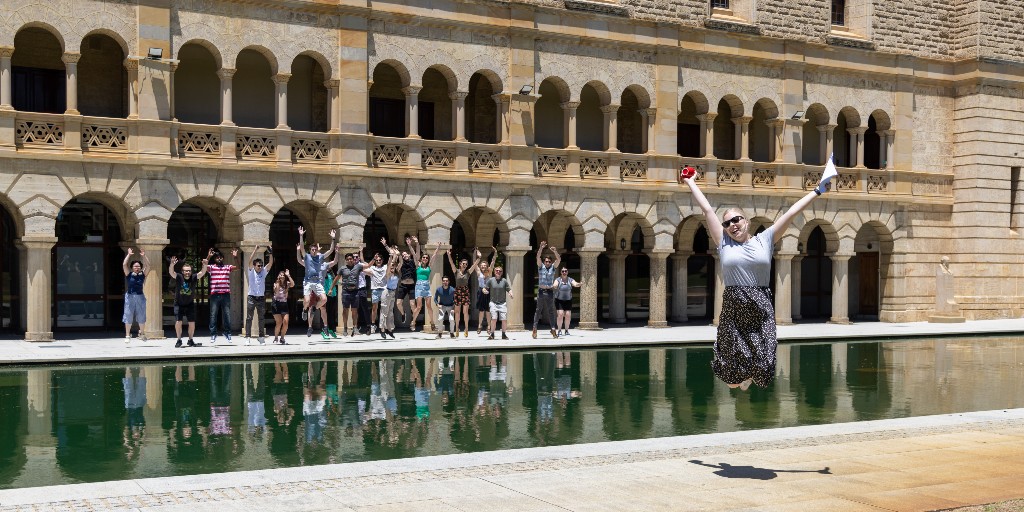
Congrats to *Dr* @_jessthorne for officially passing her PhD! Jess worked on DEVILS & GAMA data, focusing on uncovering the properties of galaxies using multi-wavelength data. Two big highlights were uncovering new AGN populations, and combining optical & radio data in a new way.
The final paper of my PhD has been accepted for publication!
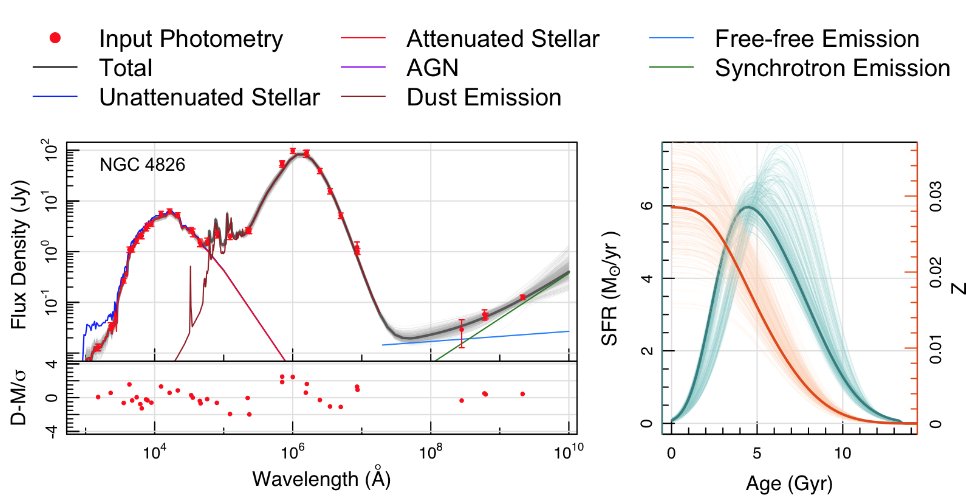
In the paper we explore the benefits of combining traditional FUV-FIR SED fitting with a two component radio continuum model!
https://t.co/slbOQqPx8U
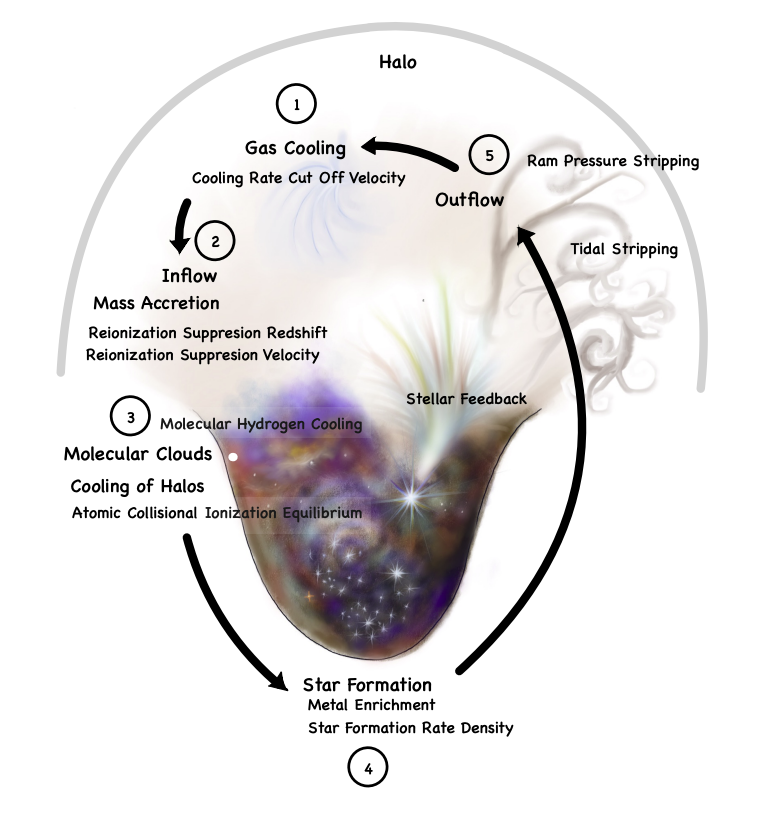
First she evolved metallicity in ProSpect.
Then she incorporated AGN.
Now, in the fourth ans final paper of her amazing PhD, @_jessthorne includes radio data by consistently modelling free-free and synchrotron emission!
Check out what she's modelling in galaxies now 👇
Yes, calculating when and where exactly we can watch an eclipse in its full glory can be surprisingly hard.
As Aaron Robotham + @SabineBellstedt (@uwanews) writes, there are complex cycles dictating the movement of the Sun and Moon in our skies.
https://t.co/QEiueOhmIR
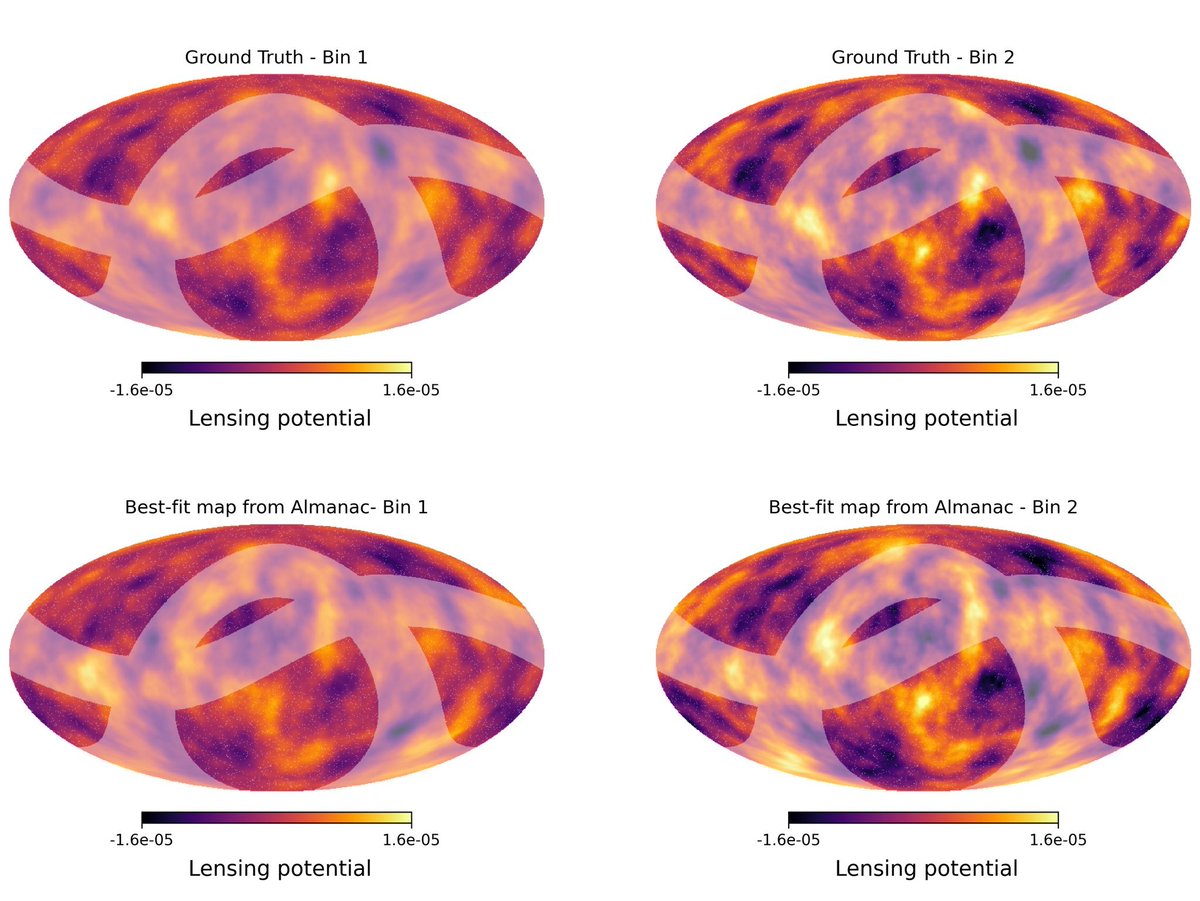
It is time to vote for the "Astro Plot of the Week" - pick one:
- Plot from Loureiro et al. (https://t.co/xf5OkPKQKJ)
- Plot from Thorne et al. (https://t.co/9IMvUlA6zS)
The poll is below - vote now, and spread the word!
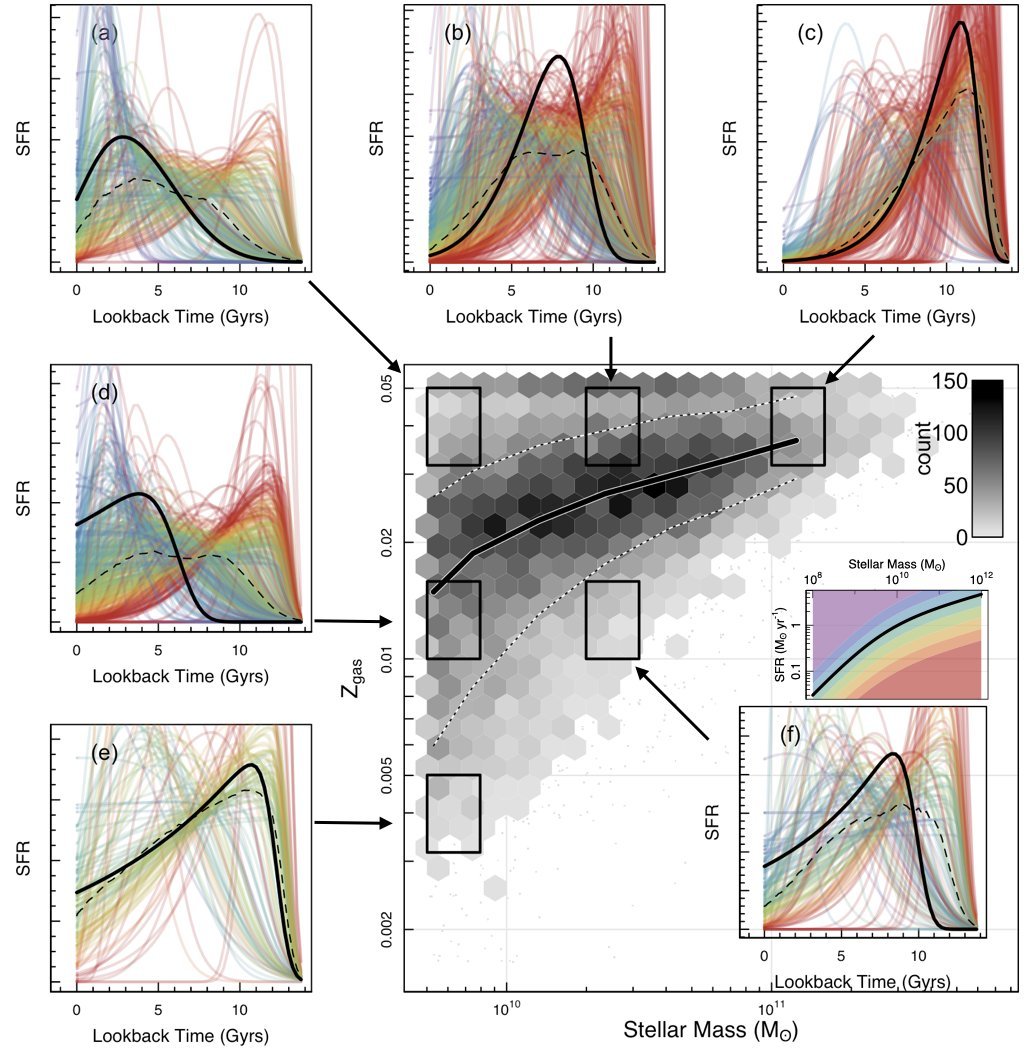
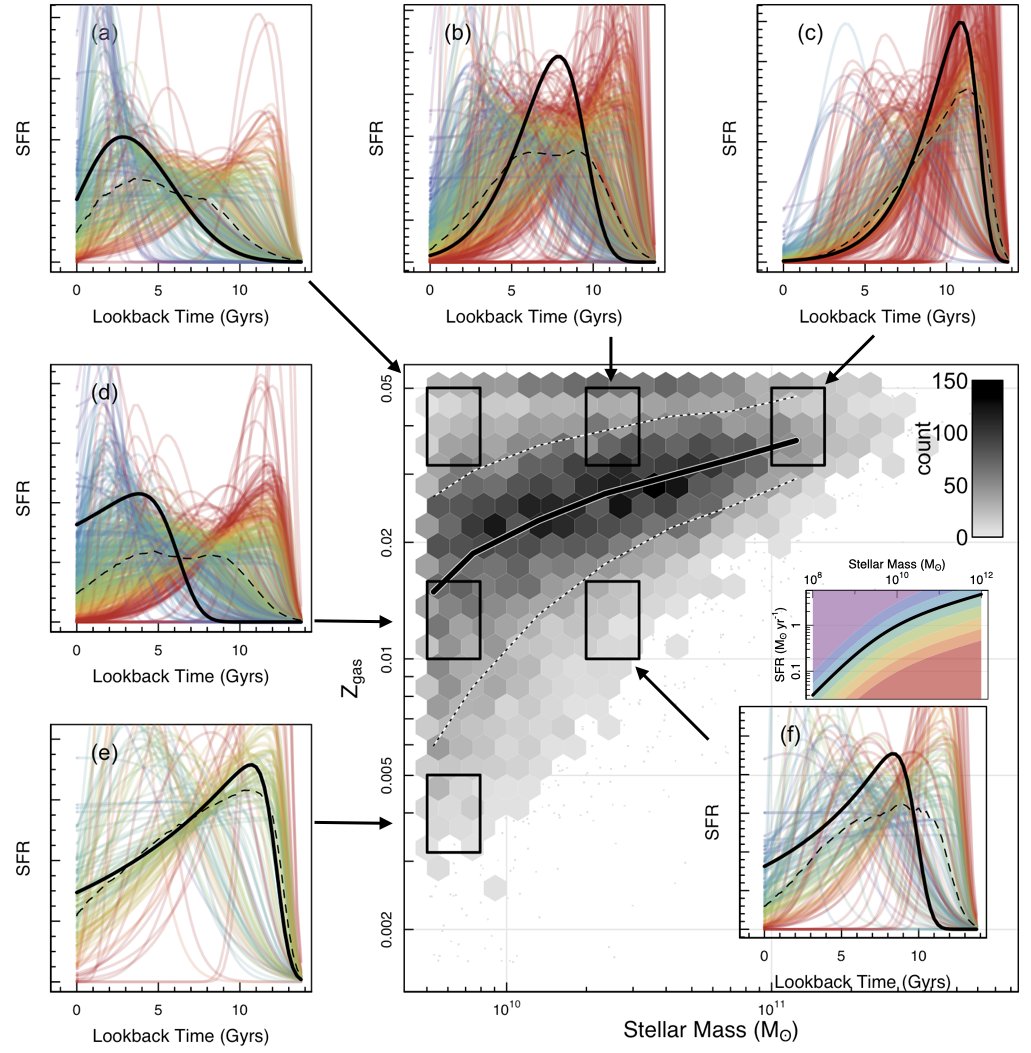
We also explore how the entire star formation history of a galaxy links to its location on the mass-metallicity relation.
This is shown in the most colorful plot of my PhD, but if you want to know more please check out the paper! 4/5
It is time to yet again vote for the "Astro Plot of the Week" - pick one:
- Plot from Weerasooriya et al. (https://t.co/gsr8S03XtF)
- Plot from Ristea et al. (https://t.co/Ee2d20acHN)
The poll is below - vote now, and spread the word!
Very happy to hear that ANU is raising the minimum PhD stipend from $28,854 to $34,000 in Oct - an increase of about $100 a week (scholarships are tax-free). Still not much money but definitely heading in the right direction.
6/ In summary, if you're not already using @zotero you definitely should think about it!
If you're worried about starting from scratch and abandoning your mammoth .bib file you can easily import that .bib file into Zotero! (you just won't have the pdfs saved in Zotero)
Zotero has saved me countless hours dealing with references, has helped me keep all my papers in the same place, and has helped me find references and information so much quicker!
This thread is an amazing introduction but I wanted to add a few astro-centric notes: 🧵
The BEST reference and citation management software for academics: Zotero
But not many academics know how to use it.
Here's how to get started 👇
Zotero 101: A step-by-step guide with visuals 🧵