A manifesto on Design Engineering.
Bring designers and engineers together earlier, prototype to learn, build systems and tooling that scale, and treat code as a design material.
Fewer handoffs and better products. Let’s build the future that actually ships.
Wrote a little something about how we approach things writing-first at DuckDuckGo.
We write the design decision before anyone opens Figma. In most orgs a mockup looks resolved even when the thinking isn’t. We decide in words, where being wrong costs an afternoon, not weeks.
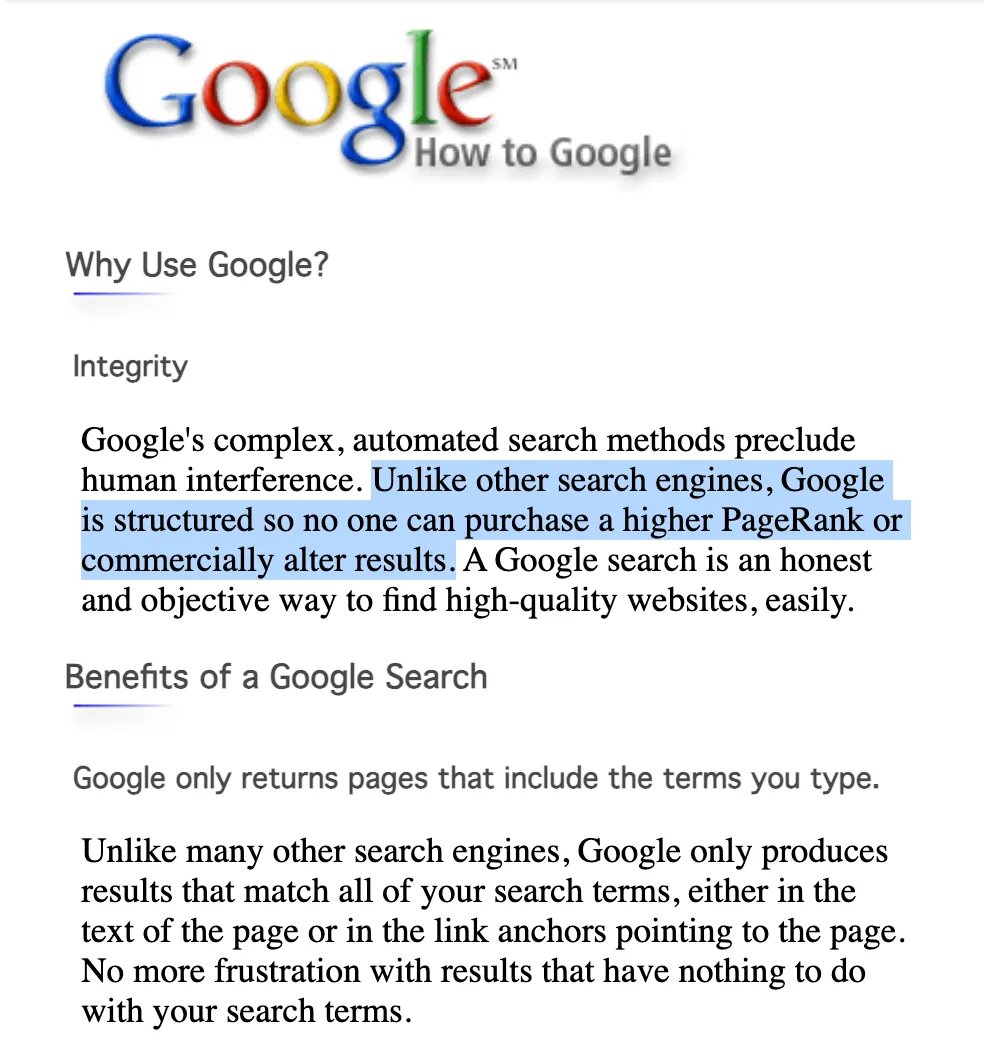
People don't want AI forced on them. DuckDuckGo lets you choose.
The result? Since Google's AI overhaul, our U.S. installs peaked yesterday at 76% above the pre-announcement average, and we broke our single-day search record. 🔥
It's not a blip, it's a movement. Fire Google.
In the last 6 months at @Ahrefs, we analyzed over 1 billion data points across 14 studies. Here's what we learned about AI search optimization:
1) "Best X" blog listicles are the single most prominent content format cited by AI chatbots. They make up 43.8% of all page types cited by ChatGPT specifically.
2) 67% of ChatGPT's top 1,000 citations come from sources marketers can't influence: Wikipedia (29.7%), homepages (23.8%), app stores (6.6%). Only 32.3% are influenceable content like educational pages, reviews, news, and blog posts.
3) 28.3% of ChatGPT's most-cited pages have zero Google organic visibility. These pages get cited repeatedly by ChatGPT despite not ranking in Google at all. A completely separate discovery layer.
4) ChatGPT only cites about 50% of the URLs it retrieves. It fetches dozens of pages per query but uses half as background context without attribution. This means that being retrieved and being cited are very different things.
5) Adding schema markup had zero meaningful impact on AI citations. AI Overviews actually dipped −4.6%, while AI Mode (+2.4%) and ChatGPT (+2.2%) showed changes indistinguishable from zero.
6) YouTube mentions have the highest correlation (0.737) with AI brand visibility out of all the factors we studied (including all the conventional SEO metrics like backlinks, page count, DR, etc). This held true for both Google-owned and OpenAI products.
7) AI Overviews reduce clicks to the #1 result by 58%. That’s up from 34.5% just 10 months earlier. The trend is accelerating.
8) 99.9% of AI Overviews appear on informational intent queries. Transactional, navigational, and local searches are almost entirely AIO-free. Shopping triggers AIOs just 3.2% of the time.
9) For a given search query, Google’s AI Mode and AI Overviews reach the same conclusions 86% of the time — but cite almost entirely different sources (only 13.7% citation overlap).
10) AI Overviews change every 2.15 days on average, with 70% of content differing between consecutive observations. But semantic similarity stays at 0.95. The words, sources, and entities constantly shuffle, but the actual meaning barely moves.
To get good animations from an AI you need to get good at telling it what you want:
- "stagger this list of items"
- "make this animation direction-aware"
- "spacial consistency", "crossfade", "layout animation",
I made a motion vocabulary for this:
https://t.co/ExAxpr31no
Since Google revealed its plans for an AI search overhaul, visits to our "No AI" search page have tripled…and they’re still rising!
Want to make it your default on Chrome or Firefox? Grab our No-AI extensions and banish AI-assisted answers, chat, and AI images.
This is how a top design engineer uses Cursor to ship features 2 weeks faster
He designs directly in code. Doesn't waste hours creating static mocks for all the edge cases.
👀 Full conversation on Sneak Peek:
https://t.co/qcAdcojPFt
@_kejk shows how he uses @cursor_ai to ship AI features super fast for @DuckDuckGo 👇