New #opensource toolbox to map water surface areas from #Landsat and #sentinel2 developed with Shirui Hao, available at https://t.co/2Sb6FAYL2f. It provides a very efficient raster-based process that can be deployed in @Google Earth Engine for monitoring large areas at low cost.
🛰️Big update!🌊
New EO platform at https://t.co/2hSXOABCFJ with updated satellite-derived shoreline change time-series from 1984 to 2024 with #CoastSat and #Landsat for Australia, California, Mexico, Japan, NZ, Peru, Chile, US East Coast (Delaware to Texas). #EarthObservation
I'll be attending the Space Tech Expo Europe tomorrow in Bremen, if anyone is also planning to be there would be nice to catch up and discuss the latest in Earth Observation!
#SpaceTechExpo https://t.co/EzMCaDXZM4
#CoastSat 3.0 is now live! https://t.co/yeEDCPVDCi
This release includes integration with the FES2022 global tide model (https://t.co/Xa87O967EA) developed by @CNES, which makes it now possible to apply a tidal correction and estimate beach slopes directly in CoastSat.
I am advertising a two-year postdoc related to remote sensing of chronic coastal floods. The position will be jointly at UNC Chapel Hill in the Global Hydrology Lab and in my research group, the Coastal Hazards Lab at North Carolina State University: https://t.co/iI1yobLOHd
🌍FIRST PAPER OUT🌍 Our open-source tool for mapping #coastalchange is now live! Using free #satelliteimagery and #AI, VedgeSat detects vegetation edges to assess coastal health & storm impact; great for global #climatechange risk management 🌊🌱🛰️ https://t.co/VVWQ44n4qK (1/5)
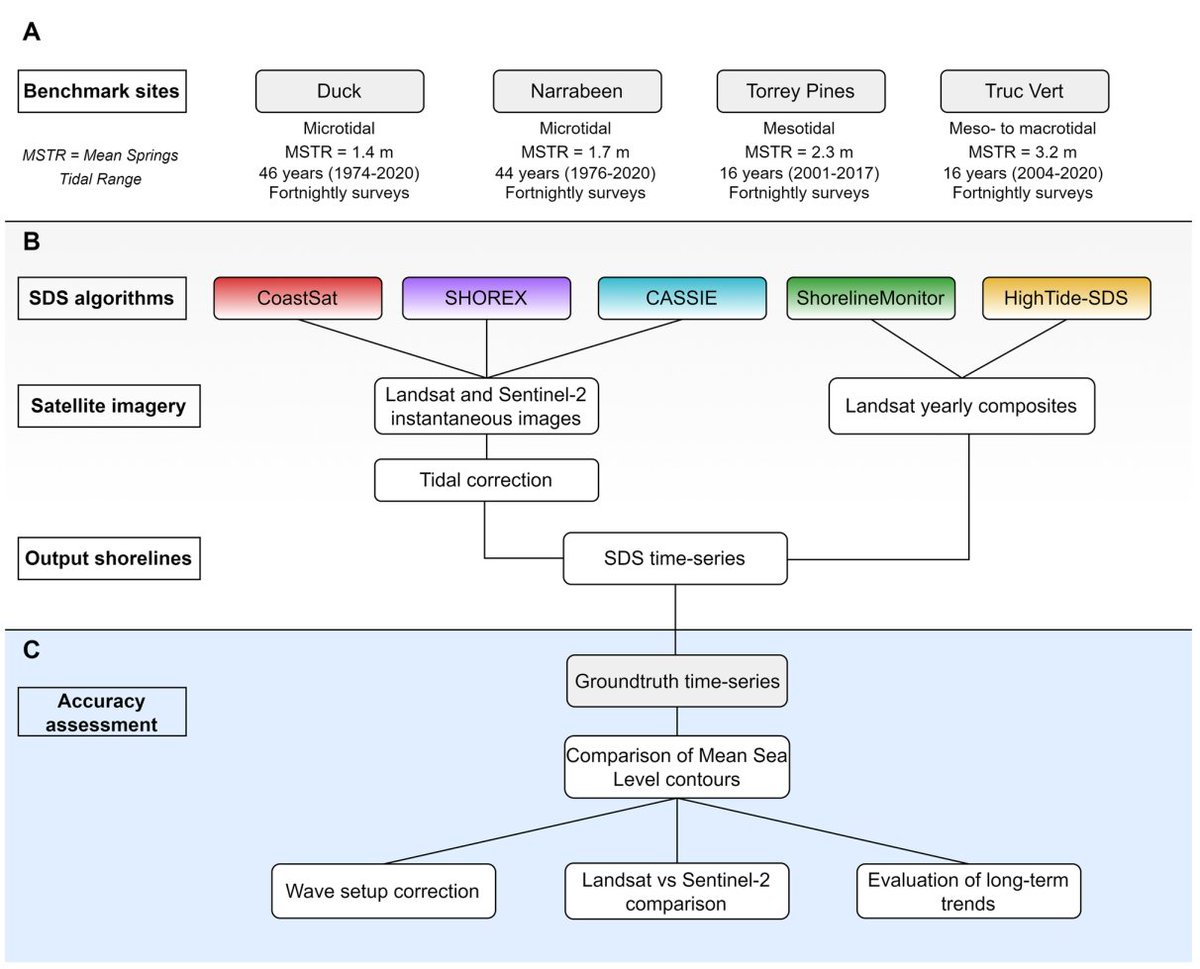
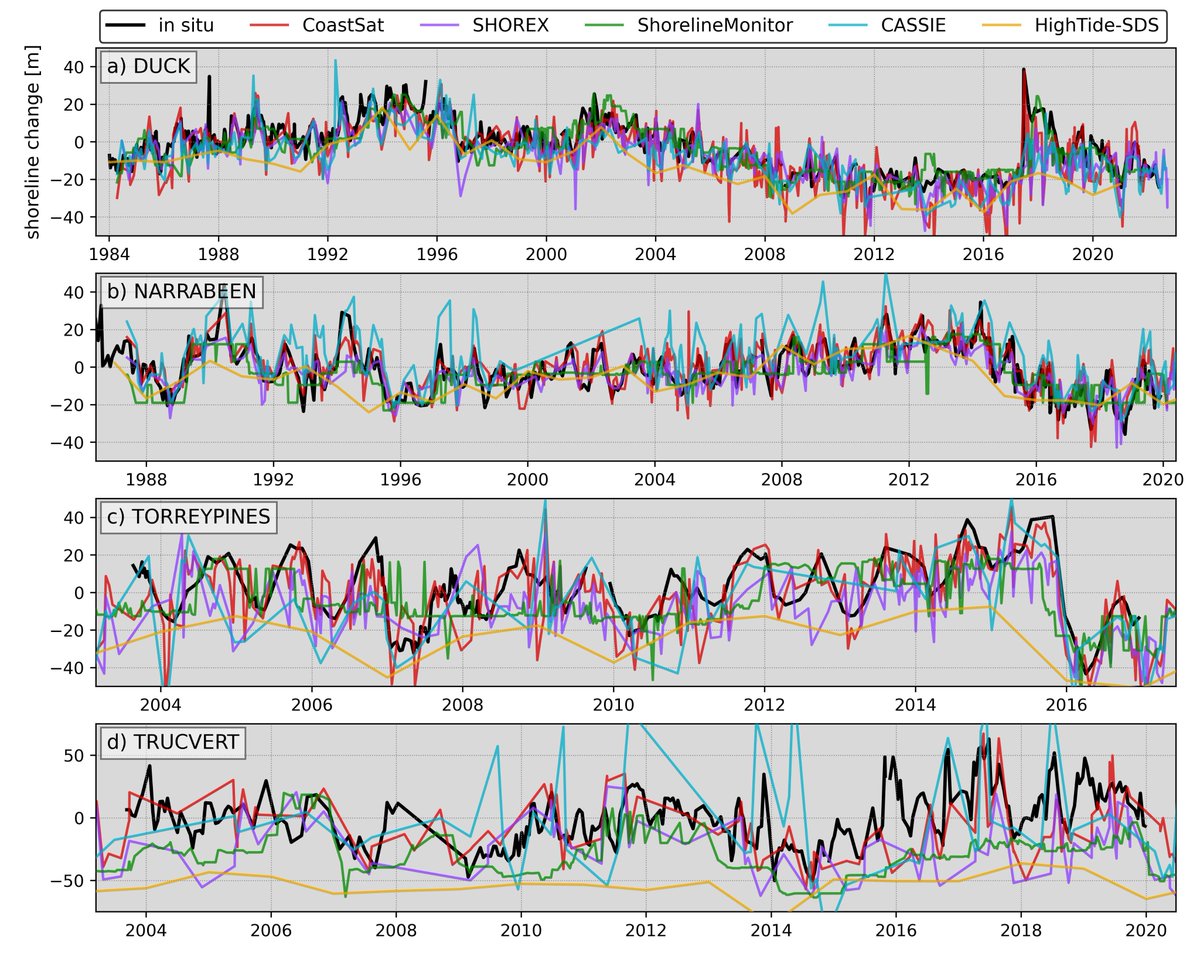
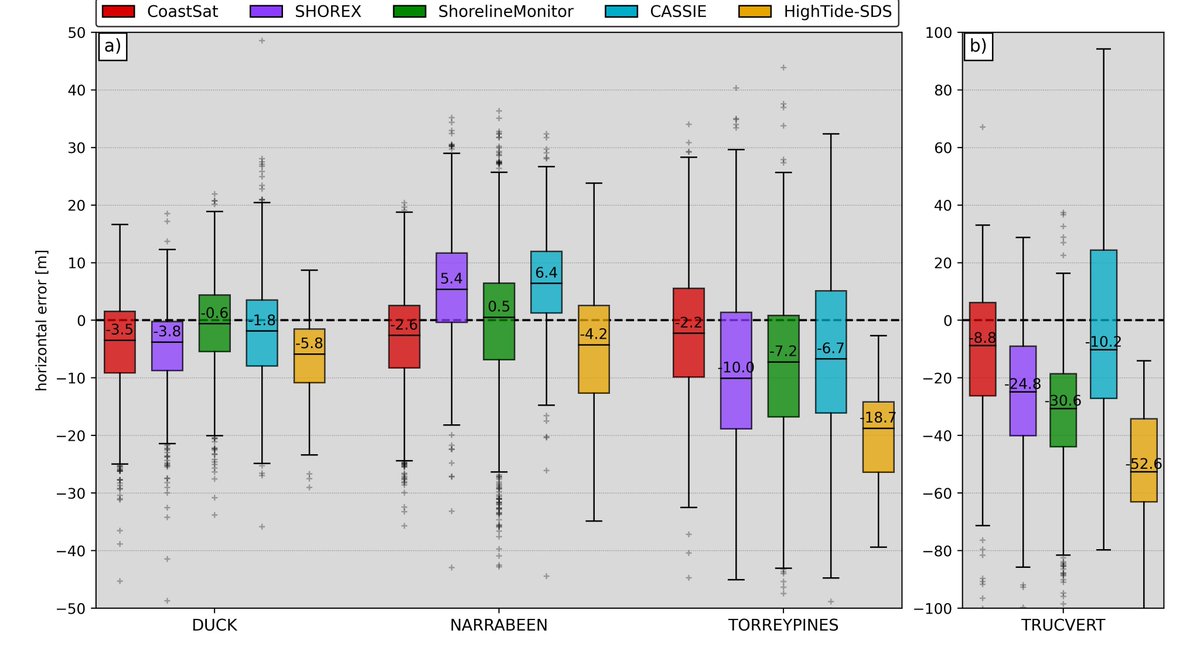
In a significant first for satellite-derived #shorelinemonitoring, researchers including @USGS have created a benchmarking framework aimed at evaluating the accuracy of shoreline change observations derived from #satellite#remotesensing: https://t.co/cNhVlEBIEP
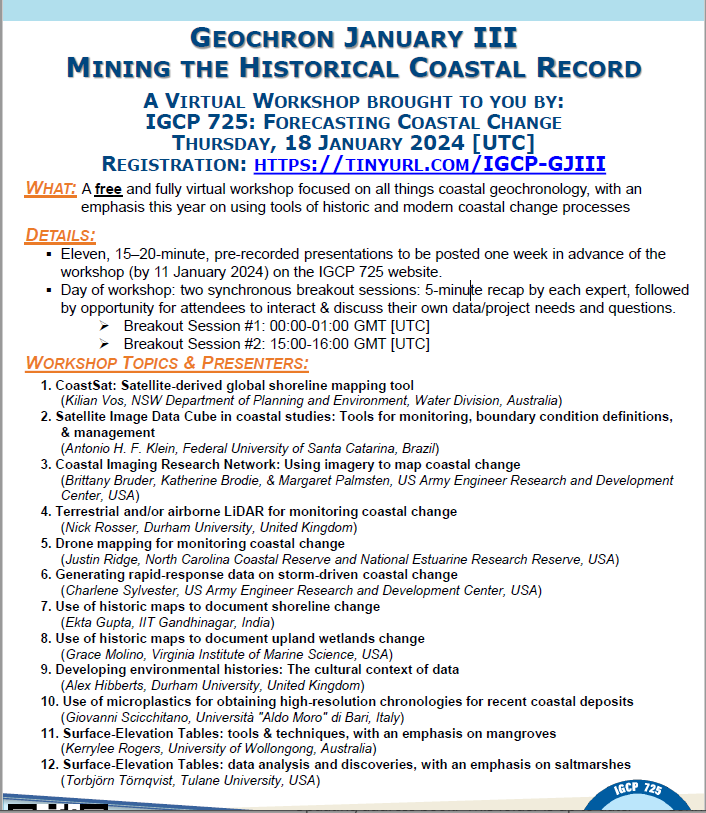
Last call to register for the
UNESCO IGCP Project 725 Virtual workshop on "Mining the Historical Coastal Record". It is free and only takes 1 minute to register (https://t.co/l492wPvtj0).
Full program below 👇 #freeworkshop#coastalchange
@UNESCO International Geoscience Program (IGCP) 725 on Forecasting Coastal Change is organising a free workshop on Mining the Historical Coastal Record on the 18th January 2024. Will include satellites, drones and even microplastics! Free registration at https://t.co/G1o5uYMtX7
@UNESCO International Geoscience Program (IGCP) 725 on Forecasting Coastal Change is organising a free workshop on "Mining the historical coastal record" on the 18th January 2024. Will include satellites, drones and even microplastics! Free registration at https://t.co/G1o5uYMtX7
📢New #CoastSat release (https://t.co/yeEDCPVDCi):
- create an animation with the mapped shorelines like below
- advanced time-series analysis including long-term trends
- option to adjust the s2cloudless probability threshold for better cloud masking
#coastal#Landsat#Sentinel2
📢#PhD vacancy! @TjeerdBouma and me seek a candidate for a 4-year, fully-funded project:
Enhancing estuarine flood resilience by tidal foreshore-management technologies.
✅ field & flume work, mud, transdisciplinary team
All info: https://t.co/ZOTQlbPJp9
@UUGeo@NIOZnieuws
I have uploaded on @EarthArXiv a preprint https://t.co/eaIGLuu3pT of the accepted version of our paper "Pacific shoreline erosion and accretion patterns controlled by El Niño/Southern Oscillation" published in Nature Geoscience. This is possible after the 6 months embargo period.
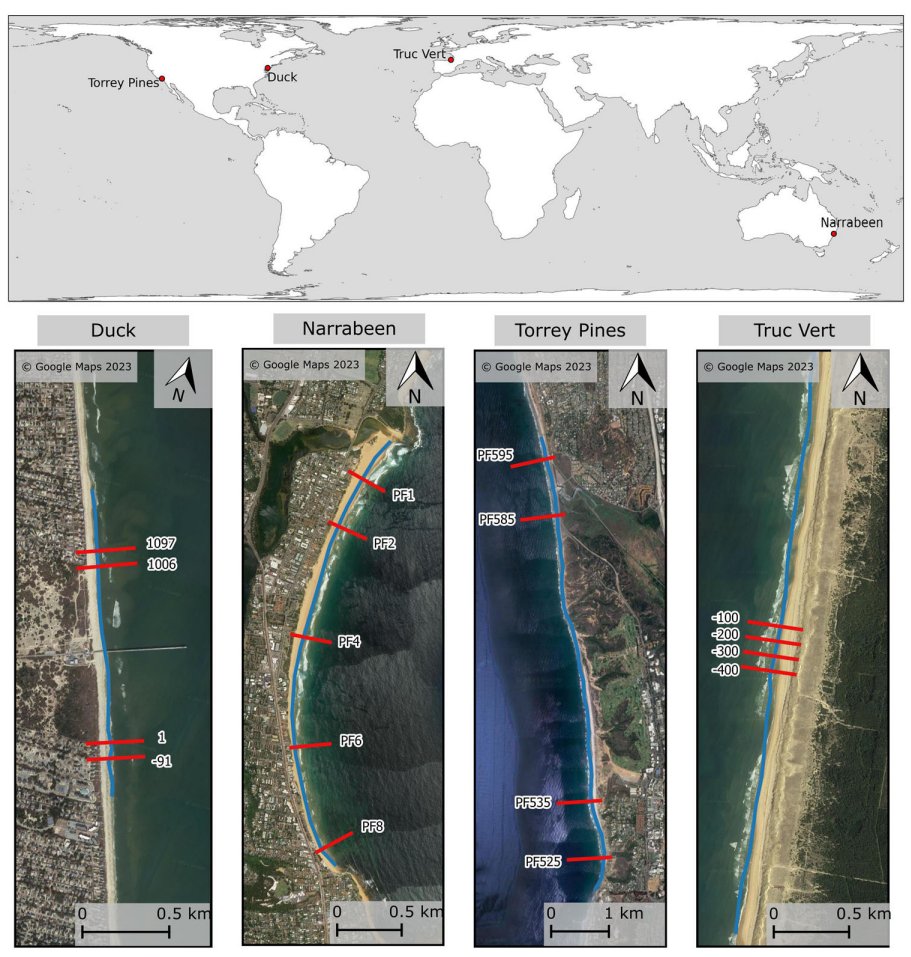
A benchmarking study of five satellite-derived shoreline mapping algorithms at four sandy beaches demonstrates a horizontal accuracy of 10 m in microtidal conditions.
@_kvos @UNSWWRL @KDSplinter
https://t.co/Vb5p8eZ5Kl
1/ 🎉 I'm really excited to announce the release of TorchGeo 0.5.0! This is a Python library for using PyTorch with geospatial data. The release covers 8 months of work, introduces many new features, and is all thanks to 20 global contributors! See https://t.co/n2IilPoybM
I would like to thank all my co-authors from the 5 different SDS teams who contributed greatly to this work and were super enthusiastic to share data and outputs throughtout the project.
👉"Benchmarking satellite-derived shoreline mapping algorithms" just published in @CommsEarth https://t.co/pVP4ILmZ6K
👉Great collaborative effort with researchers from around the world to benchmark 5 algorithms at 4 monitored sites.
👉Code available at: https://t.co/nJMurzpnrh
The repository https://t.co/nJMurzpnrh can be used to transparently test new developments and future enhancements in satellite-dervied shoreline mapping.
Join the 'SatelliteShorelines' organisation if you are interested in the topic! https://t.co/dLyepkOC4R