👋Long time no see!
I'm back! From now on, I'll be focusing on sharing scientific publications – either my own or the ones that pique my interest.
(🇮🇷Well, if you're familiar with my views, you know where I stand on politics & other hot topics🇵🇸. If not, no worries!🌍🌏🌎)
In #Microbiome
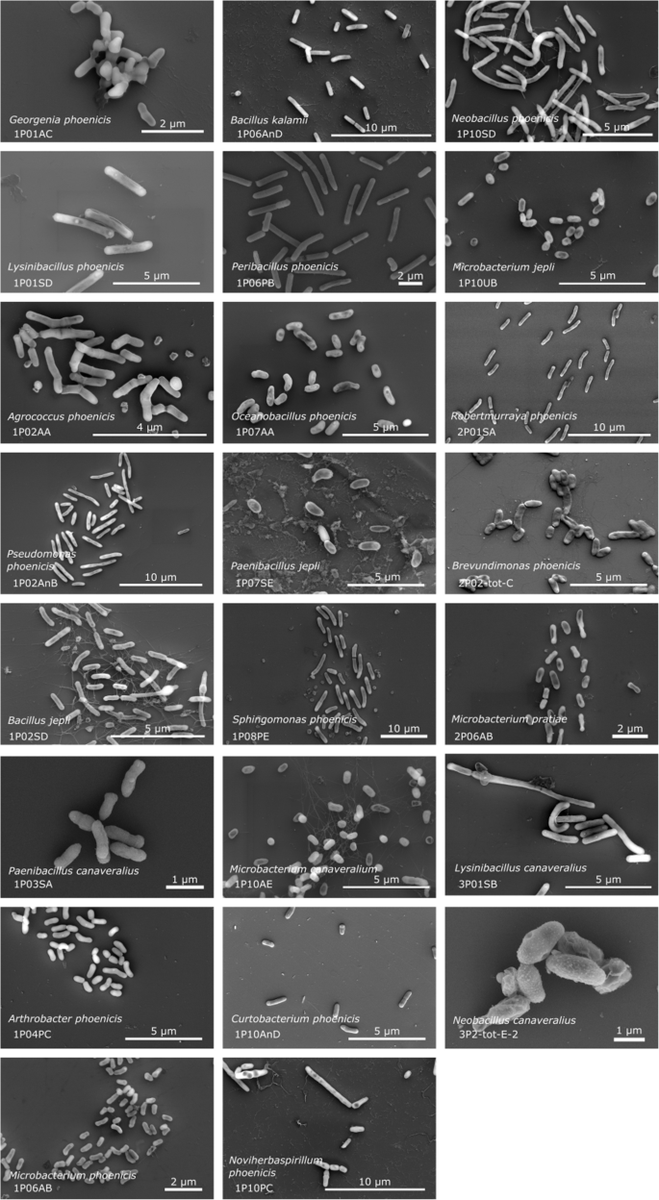
🚀Exploring how NASA's mission spacecraft assembly cleanrooms host 26 novel bacterial species
🦠These microbes form biofilms, resist various stressors & hold biotechnological potential
🚨https://t.co/Po9qKqcuUJ
today, an enzyme design paper from the Baker lab came out
its very, very hard to read
luckily, you dont need to! bc @eryney_ok and i toiled for hours to walk through it in @AsimovPress: explaining what enzyme they redesigned, how they did it, and the validation involved
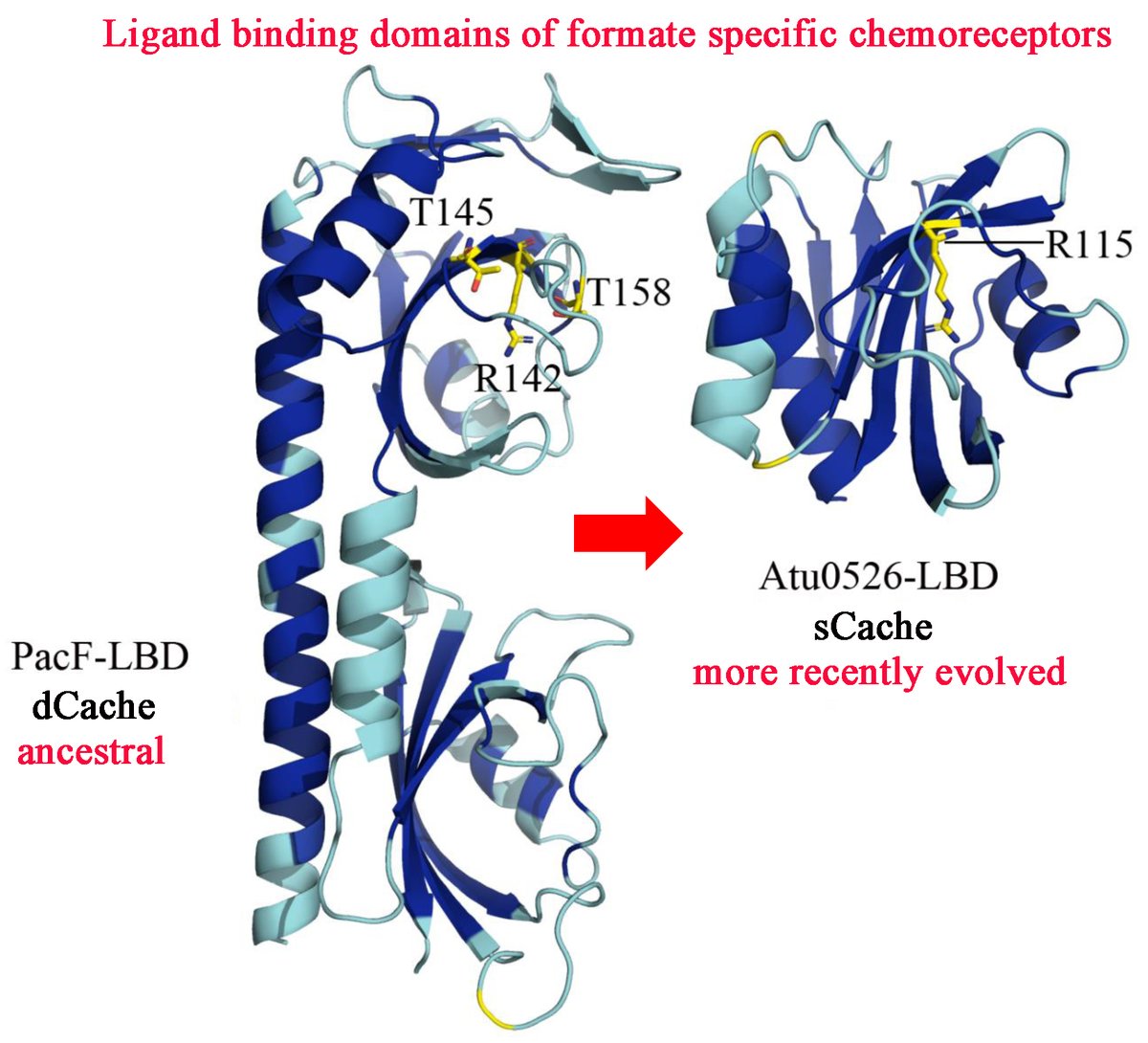
Very pleased to see that out in PNAS: Bacterial sensor evolved by decreasing complexity. Evolution is not always towards complexity. Yet another wonderful collaboration with @zhulinlab@gavirius and @miguel_matilla,@BLASTMeetings@SEMicrobiologia https://t.co/Qp3woqCrFZ
qPCR can measure expression of virtually any gene... in homogenized tissues. Here, we show an "in-vivo qPCR" equivalent, where we measure a sequence-specific transcript with synthetic serum markers and enzyme-based signal amplification.
https://t.co/pUisE5gesh
@iamjohnnyyu, @nalidoust, @kevansf, and I are excited to announce a historic achievement by our team at @vevo_ai: Tahoe-100M, a 100M single-cell transcriptomic atlas, measuring how thousands of drugs impact cells from 50 diverse cancer lines.
https://t.co/XT6wGV10aA
Biotechnologists are increasingly working to engineer microbes and then release them into the "real-world" to clean up pollution, etc.
A major demonstration of this was published yesterday, in a study showing that bacteria can be engineered to detect TNT explosives in soil.
***
It's called "An autonomous microbial sensor enables long-term detection of TNT explosive in natural soil." This work was done as part of a DARPA program to build engineered organisms for real-world capabilities. There are some obvious military applications here.
The study's authors engineered Bacillus subtilis microbes to detect TNT contamination in soil, showing they maintained functionality over a 28-day period.
The circuit works like this: First, the authors made a RIBOSWITCH (an RNA molecule that folds up and precisely binds to a target molecule; in this case TNT) using an online tool called the "Riboswitch Calculator." (Available here: https://t.co/zLEXhvMJzK) When this riboswitch grabs onto tRNA, its 3D shape changes, thus revealing a sequence encoding an INTEGRASE enzyme. Integrase enzymes grab onto specific DNA "codes" and then flip them around 180 degrees. They basically just switch the orientation of a DNA sequence.
Second, this integrase enzyme gets expressed within the cells. It grabs onto a DNA sequence (like a key fitting into a lock), and flips them around. The authors used the integrase enzyme to flip around the orientation of a PROMOTER sequence that controls gene expression.
And finally, once the promoter gets flipped around, a "response" module switches on. This response module can be anything; it could be a gene encoding green fluorescent protein, a pigment, or a gaseous molecule. It simply produces a detectable output, thus linking the presence of TNT to some kind of visual or odorous output.
When mixed with a small amount of TNT (4.5 mg TNT per kg) in soil, the B. subtilis cells had a 14-fold activation in their response output after one week. The cells maintained stable activation for over 21 days. The response does decay away after awhile, though; it has a half-life of about 5 days.
Now an obvious question is: Once you put these engineered microbes into the soil, how do you get them out again?
Well, you don't. But there is some good news in the paper: the engineered microbes compete with bacteria that naturally grow in the soil, and the population of engineered cells therefore diminish over time. After a month or more, the engineered bacteria were down to 1% of their initial population size.
Many similar studies are soon to come...
Full paper here: https://t.co/OzYPvTSLkf
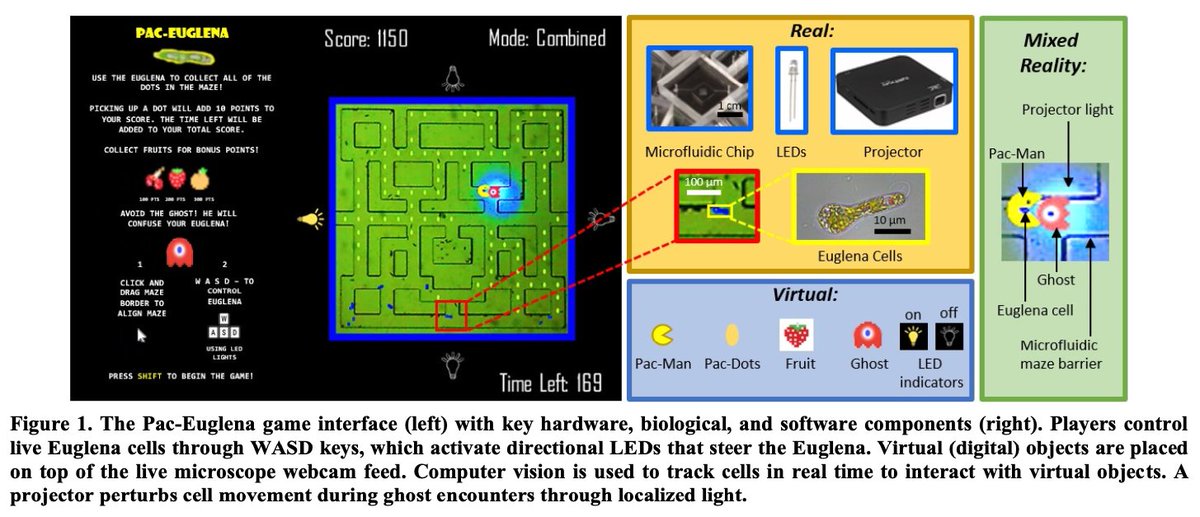
Playing Pac-Man with Living Cells 🦠
Euglena (a type of algae that responds to light) cells were placed in a microfluidic maze, which acts like a game board.
Players move the cell around using LED lights, situated on each edge of the board. The cells move away from light stimulation (after a time delay of about 1 second; very laggy!)
A computer vision system tracks the cell's position and overlays virtual ghosts + fruits to complete the Pac-Man game. This is one of my favorite papers, just because it ties together biology and computer science concepts in a creative way.
Protein language models (PLM) are goldmines; now we know what they learn.
📢Thrilled to share #interPLM: interpreting how >2500 bio concepts are captured by PLM via SAEs.
We also found many NEW concepts in PLM and use #LLM to explain what they are to fill in gaps in databases🧵
This light-sheet microscopy three-dimensional rendering shows a first-of-its-kind mouse whole-brain mRNA analysis at single-cell resolution.
Learn more in this week’s issue: https://t.co/TC95lPspFC
Thrilled to share that EVOLVEpro is now published @ScienceMagazine Since our preprint, we now demonstrate low-N eningeering of both antibody and enzymes. We hope this model will broadly useful to the protein engineering field. https://t.co/vMzLFNkcnD