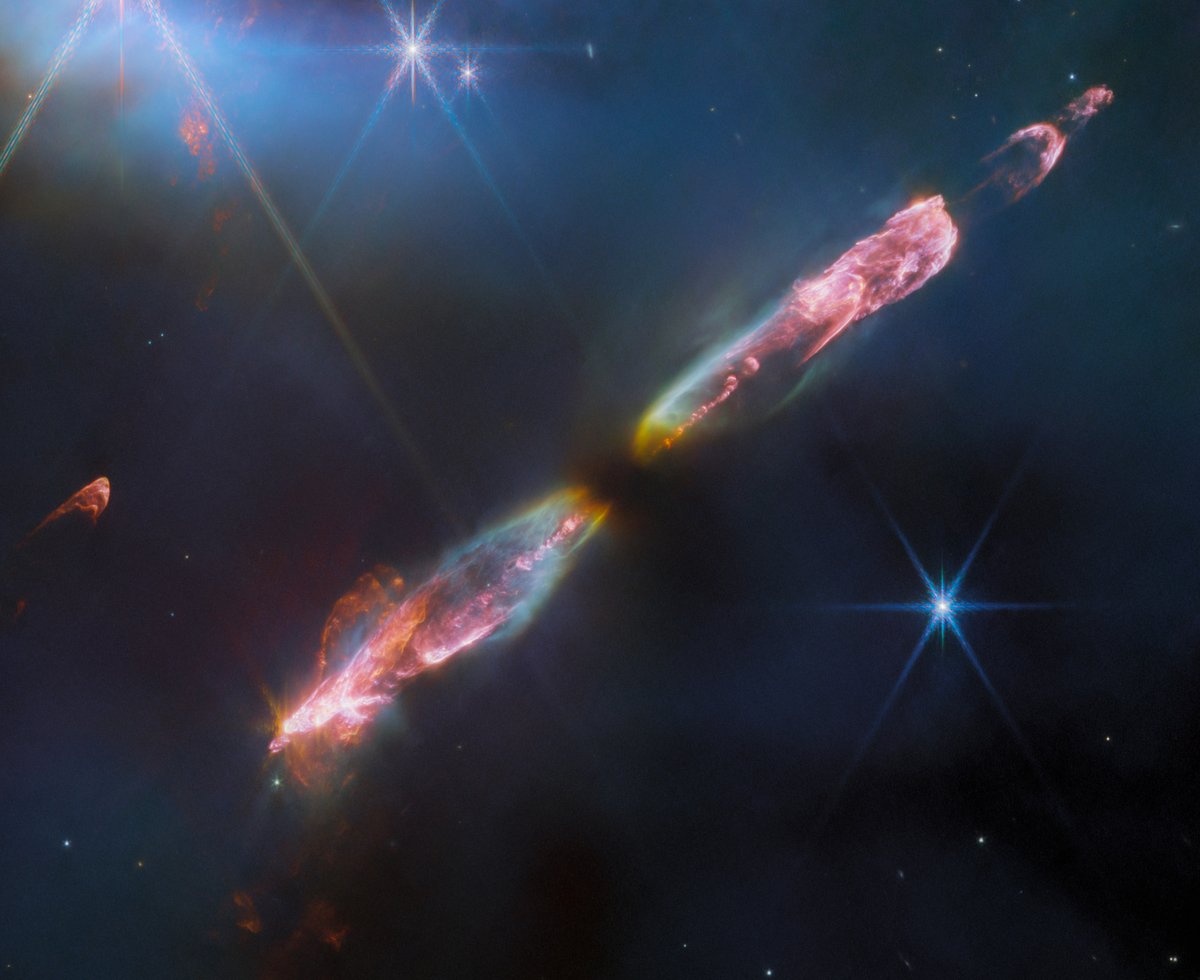
What might a baby picture of our Sun look like? 👶
Seen in this Webb image is a newborn star with supersonic jets of gas spewing from its poles. It’s only a few tens of thousands of years old here, but when it grows up, it'll be much like our Sun: https://t.co/vOato50SeZ
Spectacular Perseid Meteor Shower
The Perseid meteor shower is one of the most anticipated and prolific meteor showers of the year. It's a celestial dance of debris left behind by Comet Swift-Tuttle as Earth passes through its path.
#Perseids#PerseidMeteorShower
Countdown to a new star ⏳
Hidden in the neck of this “hourglass” of light are the very beginnings of a new star — a protostar. The clouds of dust and gas within this region are only visible in infrared light, the wavelengths that Webb specializes in: https://t.co/DtazblATMW
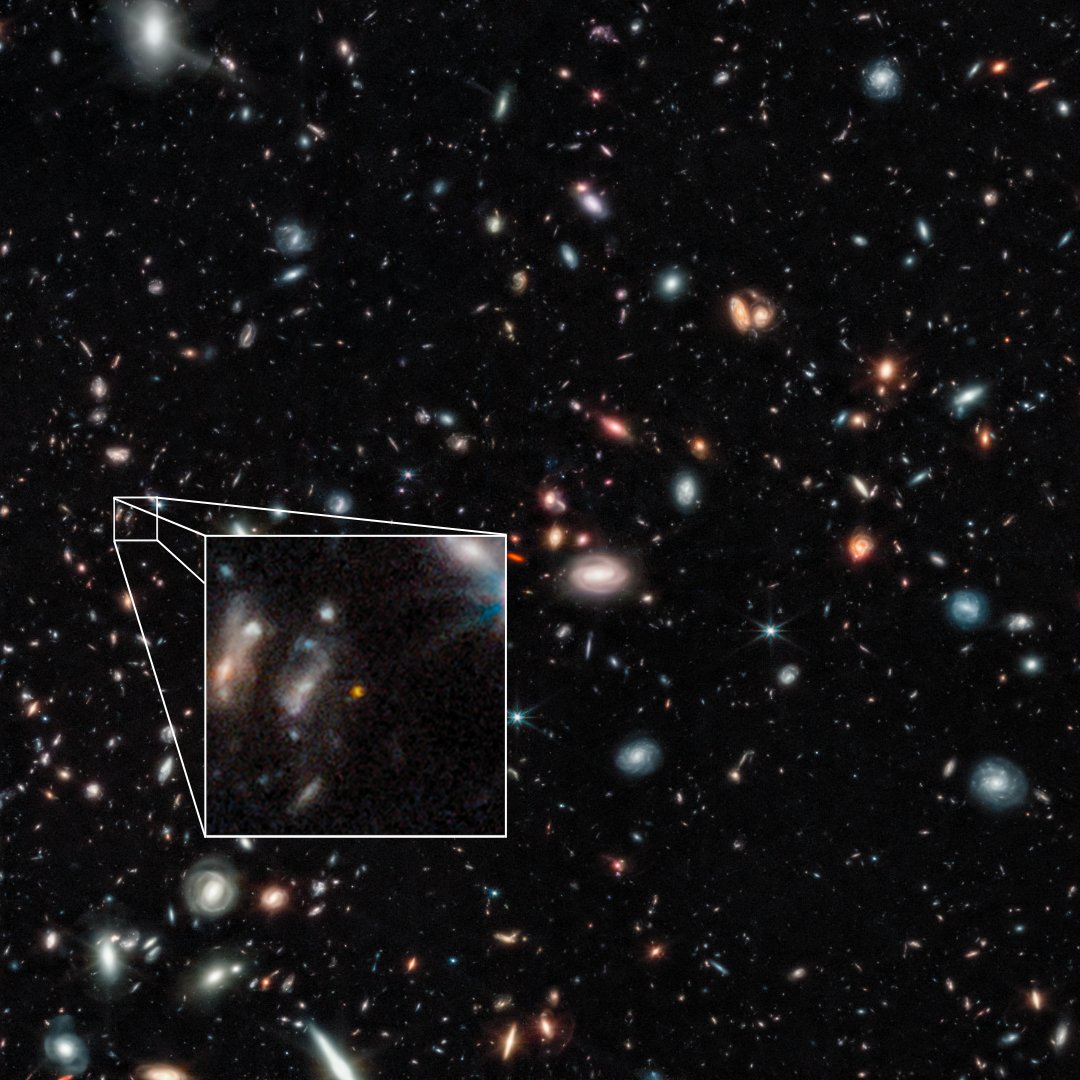
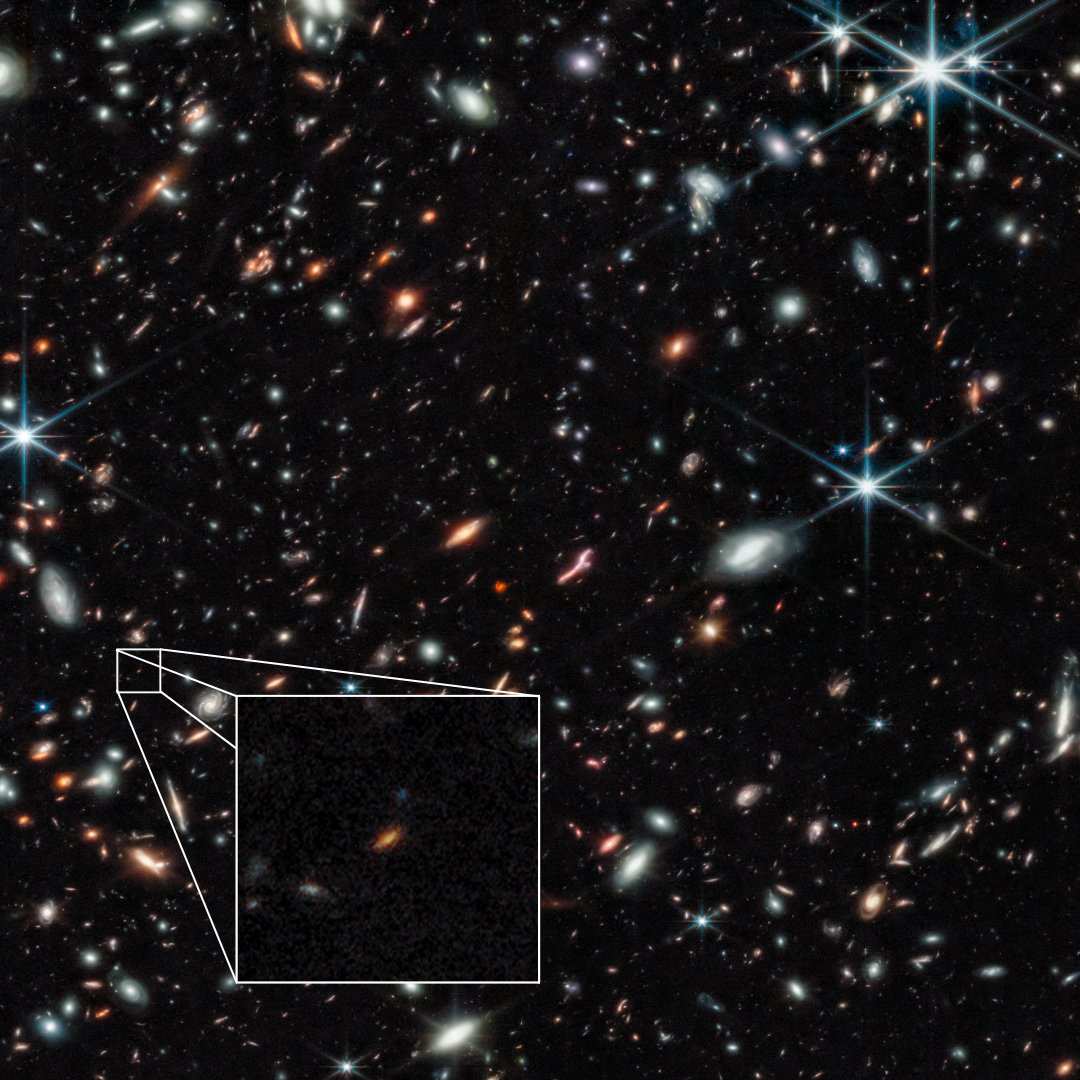
"This is a whole new chapter in astronomy."
Webb researchers found 2 early galaxies, one of which may contain the most distant starlight ever seen. These 2 unexpectedly bright galaxies could fundamentally alter what we know about the very first stars: https://t.co/1MrIy1TAkL
How do we study black holes? Where are the closest and most distant black holes? What would happen if you fell into a black hole? (Spoiler alert: it ... wouldn't be good.) 10 questions and answers about these mysterious objects in space: https://t.co/q6Bg0mQV2s
#BlackHoleWeek ⚫️
Scientists were taken by surprise when dozens of lightning strikes were detected within 300 nautical miles of the North Pole this past weekend https://t.co/WTkEqKS2vp
This week in 2011, our MESSENGER mission became the first spacecraft to orbit the first planet from the Sun. Among its findings, confirming the existence of water ice at Mercury’s shadowy poles. Meet Mercury: https://t.co/96KPCcMtO4
The countdown to perihelion is on! ⏰ In less than 12 hours, #ParkerSolarProbe will make its closest-yet approach to the Sun. It will face intense conditions while gathering unprecedented science data just 15 million miles from the Sun's surface: https://t.co/oOSGGc4fIv