The AI safety community constructed a memeplex in which “taking AGI seriously” was a prerequisite for being a serious and good person. When inside this memeplex (as many at Anthropic, some at OpenAI, and a few at DeepMind are) your vision narrows until the world feels extremely constrained. The whole future seems to flow through the “one ring” of controlling recursive self-improvement. And so even when you worry about AI itself seizing that one ring, you can’t generate better strategies than trying to control it yourself (directly via an AGI company, or indirectly via AGI governance).
I’m not saying this is a pure hyperstition. There’s a core truth underlying this perspective: AI will become extremely intelligent and capable, much more than it is today. But the current world is much more spacious and human-empowering than the future which Eliezer originally envisioned (a “brain in a box in a basement” taking over the world by surprise). And it would be even more spacious if this memeplex weren’t active. For example, Satya and Mark and Sundar only started taking AGI seriously because OpenAI forced them to—and even now they don’t really believe in superintelligence—and even if they did they couldn’t get most of their employees on board. Imagine how chill a “race” between Microsoft and Meta and Google would have been, compared with what we have today: Dario and Sam deep in the “one ring” memeplex while also personally loathing each other.
So the one ring memeplex has an escalating life-cycle. It infects people by letting them harness the narrative that they’re good people for taking AGI seriously, and that making other people take AGI seriously is a boon for the world (despite how terribly that’s gone so far). Then it shuts off their imagination—any sparks of creativity or plans that don’t steer towards the one ring are quickly shut down. Instead they make ChatGPT or the METR graph or other recruiting tools for the memeplex. And yes, they’ll acknowledge that previous versions of the memeplex were too extreme, and led to overly constricted action. But we don’t have time to worry about that, they’ll say, because AGI is coming by 2027/2028, and that’s the end of history. Somehow, though, almost everyone with that view has only a vibes-based definition of AGI. They don’t believe in Dyson spheres by 2028, or self-replicating nanotech by 2028, or brain emulations by 2028. They mostly can’t make concrete predictions, except that it’ll be enough AI that it puts all their plans on a deadline. (Shout-out to @DKokotajlo and @paulfchristiano though, who do make concrete predictions about things going crazy soon.)
It seems very hard to break out of this memeplex without just giving up. David Holz is maybe the world champion of that—the only person who was in a position to race for AGI and consciously turned away. Various agent foundations researchers have carved out space to think real thoughts, not the kind of panicky stabbing in the dark that usually passes for safety research. A few others (e.g. Salamon, Hoffman, Vassar, Andre, Sahil, Davidad) are pursuing more unusual paths. And of the people who burned out, I expect some will reorient to doing creative thinking.
For others, the main takeaway: yes, the future of AI will be wild. But so far it’s increased peak human agency, and openness to this trend continuing over the next decade will allow you to start creating something worth creating.
when I was 8, in an after school enrichment program, a teacher gave us a quiz, and one of the questions was: who is the richest person in the world? I remember thinking, how am I supposed to know this? I didn’t know how much money my parents had, much less other people. if this was common knowledge, my parents and grandma and brother never told me.
the answer at the time was bill gates, a name I had never heard before that day. now that I’m living in sf, now and again something reminds me of this memory— that you could be so rich that an 8 year old kid on the other side of pacific was just supposed to care about who you were
We're releasing a preview of OpenAI o1—a new series of AI models designed to spend more time thinking before they respond.
These models can reason through complex tasks and solve harder problems than previous models in science, coding, and math. https://t.co/peKzzKX1bu
@michael_nielsen too like the lightning / terra ignota by ada palmer! easily the most ambitious scifi I’ve come across in recent years. impossible to summarize, scifi + myth + history + politics + mystery, utopia and dystopia all in one
We’re taking OpenAI DevDay on the road! Join us this fall in San Francisco, London, or Singapore for hands-on sessions, demos, and best practices. Meet our engineers and see how developers around the world are building with OpenAI.
https://t.co/VI8UNJPJcf
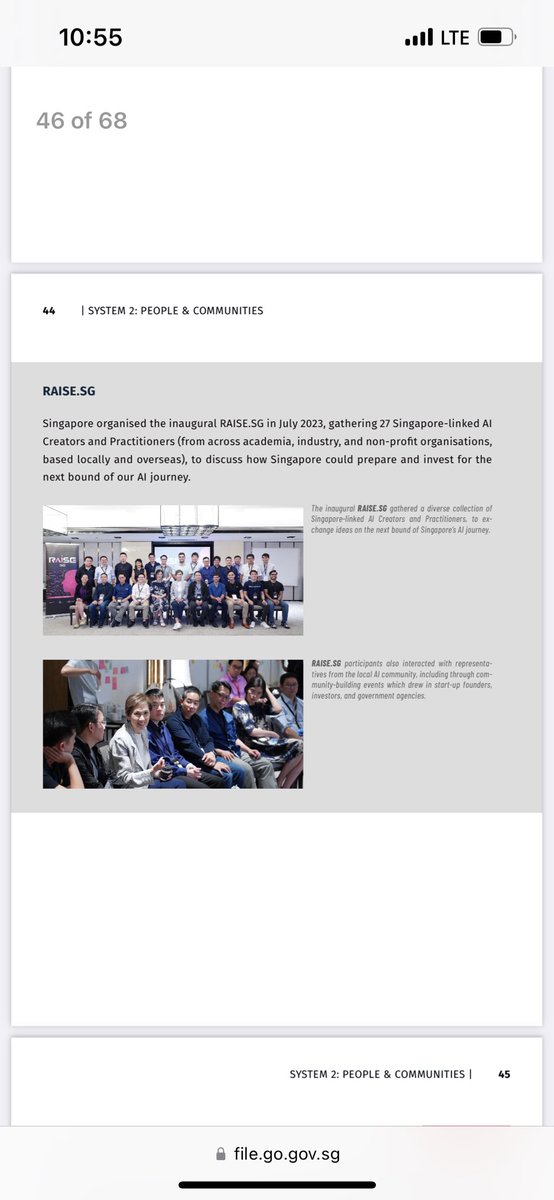
Singapore put out a national AI strategy recently you can read the report here. It’s smart Singapore is doing it right.
https://t.co/lCI8cEsxjl
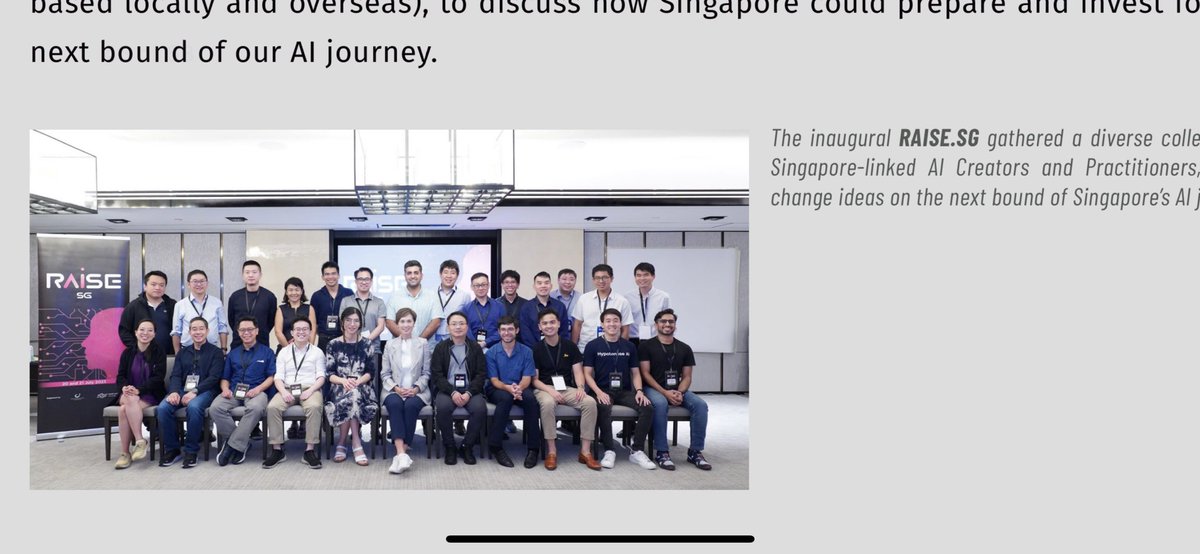
I’m super proud of my second home. In one of the weirder flexes of my life, I’m featured in this report due to a working group I participated in with the Singaporean government (ok I guess it’s that my photo is included but I did get to have a bit of input) (so is @swyx).
Part of being proud to have my photo in this report is that I think the US can learn from it.
1. They embrace AI as part of the public good. They see it as a way to uplift their economic strength and their people’s economic vitality. No fear. Only optimism. And they see government’s role to promote that growth.
2. They want reasonable regulations that promote growth, not those that are just checks on it.
3. They get that this is a competition. They believe the drivers of winning are compute (chips) and talent. That’s absolutely right.
A year ago today, I signed up to be on call for this low key research preview that we were demoing to the world. We built and shipped the product in about 8 days. Nobody, and I mean nobody could have predicted how the world was going to change. Here are some screenshots from a crazy first night.
Happy birthday, ChatGPT!
We have reached an agreement in principle for Sam Altman to return to OpenAI as CEO with a new initial board of Bret Taylor (Chair), Larry Summers, and Adam D'Angelo.
We are collaborating to figure out the details. Thank you so much for your patience through this.