New in Claude Code: auto mode.
Instead of approving every file write and bash command, or skipping permissions entirely, auto mode lets Claude make permission decisions on your behalf.
Safeguards check each action before it runs.
We're shipping a new feature in Claude Cowork as a research preview that I'm excited about: Dispatch!
One persistent conversation with Claude that runs on your computer. Message it from your phone. Come back to finished work.
To try it out, download Claude Desktop, then pair your phone.
Perplexity Computer is now on mobile.
Start any task on any device. Manage Computer from your phone or desktop with cross-device synchronization.
Available now for iOS in the Perplexity app. Coming soon to Android.
Tokenized Stocks sector is in a transition phase.
In 2025, stablecoins and tokenized T-bills are scaling at high speed. By contrast, tokenized stocks still grow slowly, even though their long term potential is just as large.
The reason is structural.
Stocks are more complex than cash or government bonds. They carry multiple rights such as voting, dividends, and claims on assets. There are also thousands of tickers. This makes it hard to build deep liquidity for each asset at scale.
Also, because stock rights are complex, tokenization models are very different from one another.
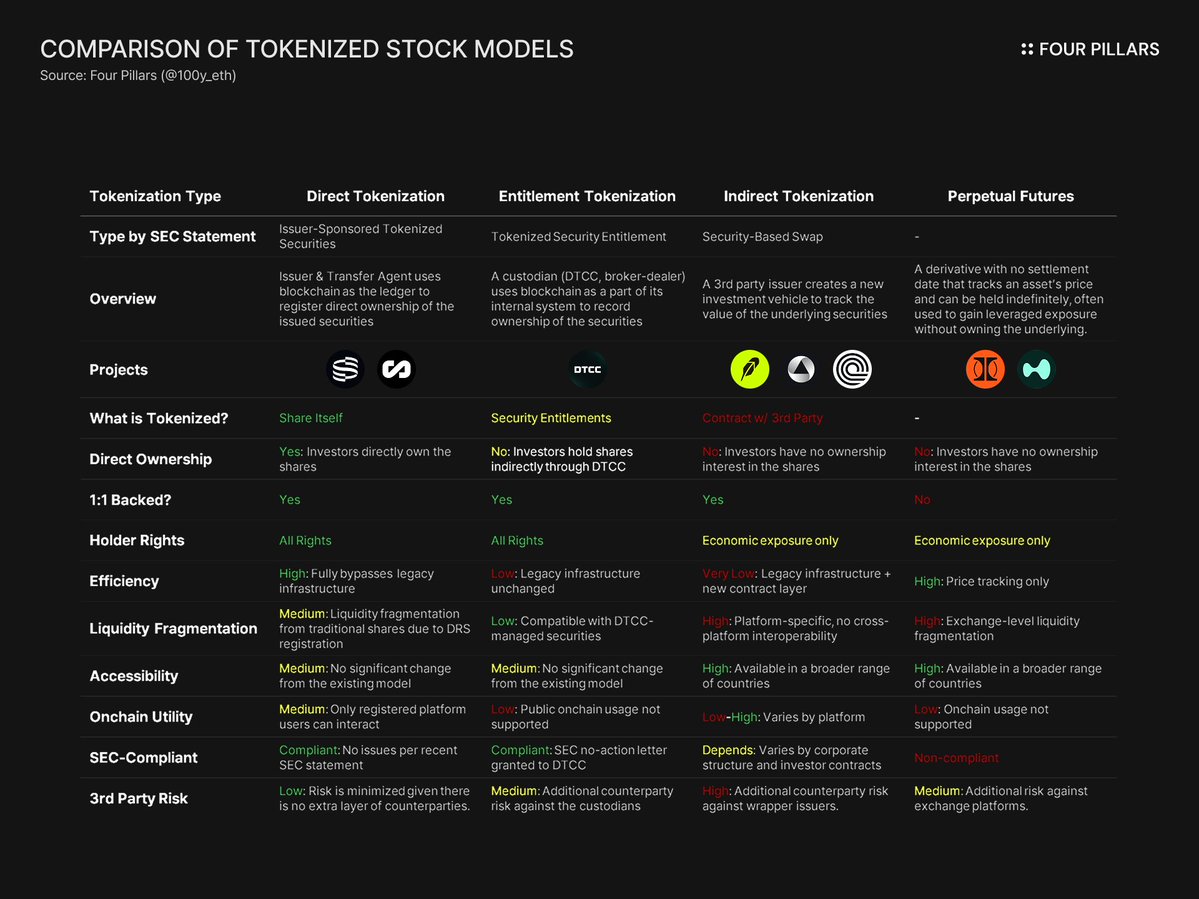
Many investors assume that stock tokens issued by @Securitize, @OndoFinance, @The_DTCC, @RobinhoodApp, and @tradexyz are essentially the same product.
They are not.
The tokenization model defines the true nature of the asset. It determines what the investor legally owns, what rights are guaranteed, and what risks are embedded in the structure.
The label may say “stock token,” but the underlying exposure can vary significantly.
After analyzing the current market, I grouped the main approaches into four categories:
- Direct Tokenization
- Entitlement Tokenization
- Indirect Tokenization
- Perpetual Futures
Each model comes with distinct trade-offs in legal clarity, counterparty risk, liquidity design, and regulatory treatment.
If you want a deeper breakdown of how each model works, their pros and cons, how different jurisdictions regulate tokenized stocks, and where the real business opportunities lie, see the report below 👇
Our tokenized Korean government bonds just got their first stablecoin partner! 🇰🇷
@KrwqCash acquired Korean sovereign debt through the Stablebonds, the first time Korean government bonds have been tokenized and used as stablecoin collateral.
Peter Steinberger is joining OpenAI to drive the next generation of personal agents. He is a genius with a lot of amazing ideas about the future of very smart agents interacting with each other to do very useful things for people. We expect this will quickly become core to our product offerings.
OpenClaw will live in a foundation as an open source project that OpenAI will continue to support. The future is going to be extremely multi-agent and it's important to us to support open source as part of that.
< 서울대 블록체인 학회 디사이퍼(Decipher)에서 2026년 16기 멤버를 모집합니다! 🚀 >
지원서 링크 :
https://t.co/xhumU6QbPX
지원하시기 전에 디사이퍼 미디엄의 16기 리크루팅 안내글을 "반드시" 정독해주세요! ☺️
미디엄 링크 :
https://t.co/Uw3J7MK0DA
[지원 대상]
디사이퍼는 소속, 전공, 나이와 무관하게 블록체인에 대한 진실된 자세로 학회 활동에 열정을 쏟을 수 있는 사람이라면 누구든 지원 가능합니다.
신입 학회원의 경우 1년간 필수로 참여하여야 하는 활동들이 많으므로 학회 활동에 빠짐없이 참여할 수 있고, 많은 시간을 할애하실 수 있는 분들을 모집합니다.
[지원 기한]
2026년 2월 22일(일) 23:59 까지
[지원 방법]
구글폼 링크(https://t.co/xhumU6QbPX)를 통해 지원합니다. 잘못된 정보 혹은 허위 사실 기재로 인한 불이익은 지원자에게 있습니다.
지원 전 디사이퍼 미디엄 16기 리크루팅 공지글을 반드시 정독 부탁드립니다.
[리크루팅 일정]
지원 기한 : 2월 13일(금) ~ 2월 22일(일) 23시 59분
서류 결과 발표 : 2월 25일(수) (합격자에 한해 메일 전송)
면접 : 2월 28일(토) ~ 3월 1일(일) 드림플러스 관악 (https://t.co/3jR6uPKtLn)
최종 결과 발표 : 3월 4일(수)
[디사이퍼 주요 활동]
・ 주 1회 정규 세션 (매주)
・ 서울대학교 블록체인의 실무응용 1 강의 수강
・ 신입 학회원 교육 세션
・ 주 1회의 팀별 주제 연구
・ 컨퍼런스(DE-FERENCE) 개최 및 발표
[문의]
[email protected]
When we released Claude Opus 4.5, we knew future models would be close to our AI Safety Level 4 threshold for autonomous AI R&D. We therefore committed to writing sabotage risk reports for future frontier models.
Today we’re delivering on that commitment for Claude Opus 4.6.
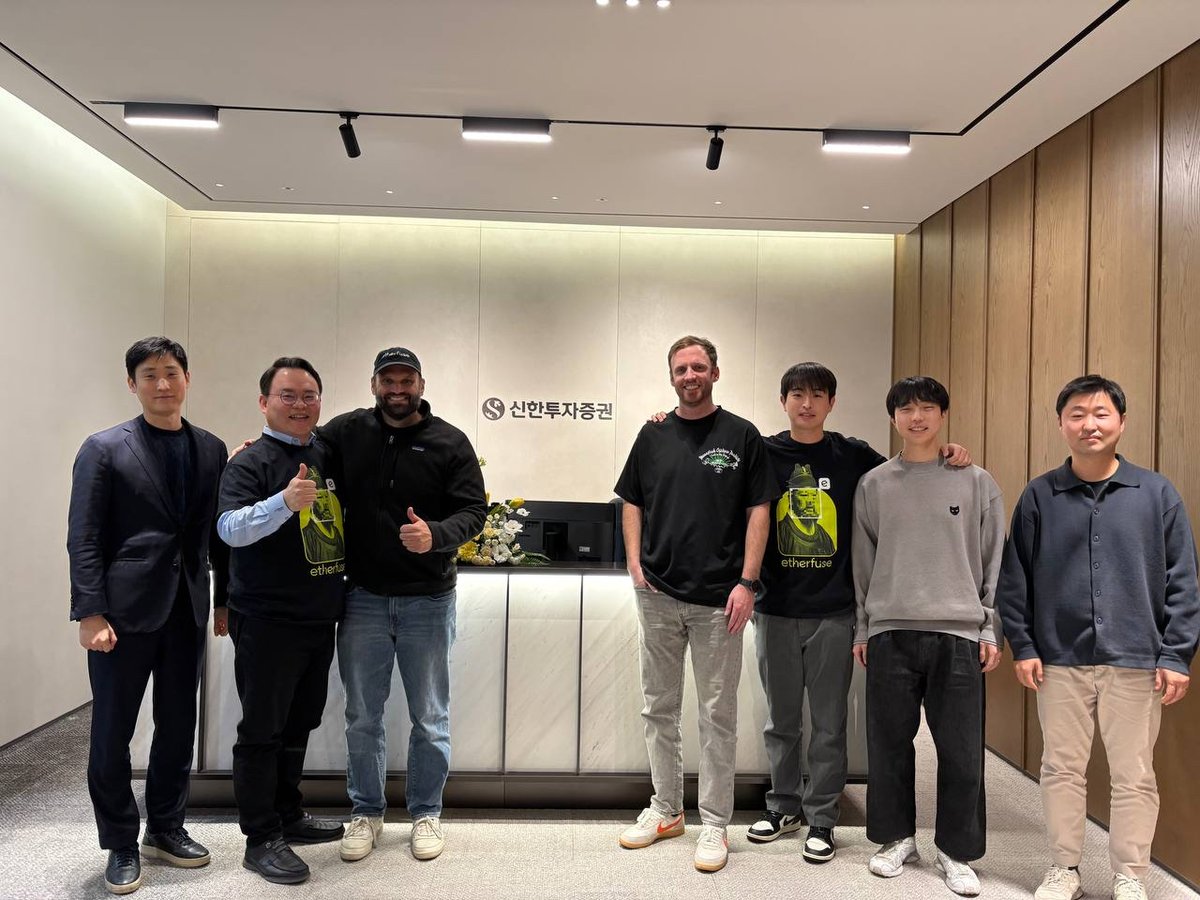
founding team @ shinhan HQ... sometimes a meeting is just a meeting, some times it is where history is made.
today's handshakes = future headlines
Korea 🇰🇷 was just the start... #StayTuned#beyondUSD
South Korea’s ruling party wants to apply ownership caps to CEXs like Upbit and Bithumb. Insane.
South Korea is currently debating a “Digital Asset Basic Act Phase 2” similar to the US Crypto Market Structure Bill, which aims to clearly define crypto. The ruling party and the opposition are clashing hard over it.
The biggest controversy right now is exchange ownership limits.
The ruling Democratic Party has officially announced that it will include exchange ownership caps in the bill.
Their justification is that under Korea’s Capital Markets Act, major shareholders of ATS platforms are capped at 15% ownership.
In other words, they are treating CEXs as a type of ATS and arguing that ownership limits are necessary for fairness.
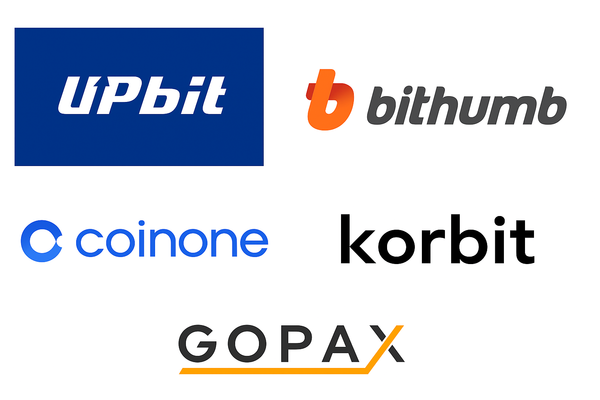
If this bill passes, major shareholders of all five major Korean CEXs (Upbit, Bithumb, Coinone, Korbit, and Gopax) would be forced to sell anywhere from 5 to 58%.
This is especially wild given that large Korean corporations like Naver Financial and Mirae Asset have recently been exploring acquisitions of Upbit and Korbit respectively. Ownership caps would have a massive impact on M&A activities.
The opposition party strongly opposes this. For a capitalist country to force the sale of ownership in companies that have already grown to massive scale feels no different from socialism.
NEW Pool: KTB is live to LP on Orca
@etherfuse partnered with Shinhan Securities and launched tokenized Korean government bonds
Now, anyone on Solana can trade and LP them
Global RWAs live on Solana, and they flow through Orca
For those unaware, SpaceX has already shifted focus to building a self-growing city on the Moon, as we can potentially achieve that in less than 10 years, whereas Mars would take 20+ years.
The mission of SpaceX remains the same: extend consciousness and life as we know it to the stars.
It is only possible to travel to Mars when the planets align every 26 months (six month trip time), whereas we can launch to the Moon every 10 days (2 day trip time). This means we can iterate much faster to complete a Moon city than a Mars city.
That said, SpaceX will also strive to build a Mars city and begin doing so in about 5 to 7 years, but the overriding priority is securing the future of civilization and the Moon is faster.


![DecipherGlobal's tweet photo. < 서울대 블록체인 학회 디사이퍼(Decipher)에서 2026년 16기 멤버를 모집합니다! 🚀 >
지원서 링크 :
https://t.co/xhumU6QbPX
지원하시기 전에 디사이퍼 미디엄의 16기 리크루팅 안내글을 "반드시" 정독해주세요! ☺️
미디엄 링크 :
https://t.co/Uw3J7MK0DA
[지원 대상]
디사이퍼는 소속, 전공, 나이와 무관하게 블록체인에 대한 진실된 자세로 학회 활동에 열정을 쏟을 수 있는 사람이라면 누구든 지원 가능합니다.
신입 학회원의 경우 1년간 필수로 참여하여야 하는 활동들이 많으므로 학회 활동에 빠짐없이 참여할 수 있고, 많은 시간을 할애하실 수 있는 분들을 모집합니다.
[지원 기한]
2026년 2월 22일(일) 23:59 까지
[지원 방법]
구글폼 링크(https://t.co/xhumU6QbPX)를 통해 지원합니다. 잘못된 정보 혹은 허위 사실 기재로 인한 불이익은 지원자에게 있습니다.
지원 전 디사이퍼 미디엄 16기 리크루팅 공지글을 반드시 정독 부탁드립니다.
[리크루팅 일정]
지원 기한 : 2월 13일(금) ~ 2월 22일(일) 23시 59분
서류 결과 발표 : 2월 25일(수) (합격자에 한해 메일 전송)
면접 : 2월 28일(토) ~ 3월 1일(일) 드림플러스 관악 (https://t.co/3jR6uPKtLn)
최종 결과 발표 : 3월 4일(수)
[디사이퍼 주요 활동]
・ 주 1회 정규 세션 (매주)
・ 서울대학교 블록체인의 실무응용 1 강의 수강
・ 신입 학회원 교육 세션
・ 주 1회의 팀별 주제 연구
・ 컨퍼런스(DE-FERENCE) 개최 및 발표
[문의]
contact@decipher.ac](https://pbs.twimg.com/media/HA8Z5FcaAAAtsgt.jpg)