How do task dynamics impact learning in networks with internal dynamics?
Excited to share our ICML Oral paper on learning dynamics in linear RNNs!
with @ClementineDomi6@mpshanahan@PedroMediano
https://t.co/vh7AImrrtn
📢Join us for the next UniReps x @ELLISforEurope
speaker series event, happening on July 1st at 4:00 PM CEST with @prlz77, Xavier Suau and Santiago Acevedo! 🚀
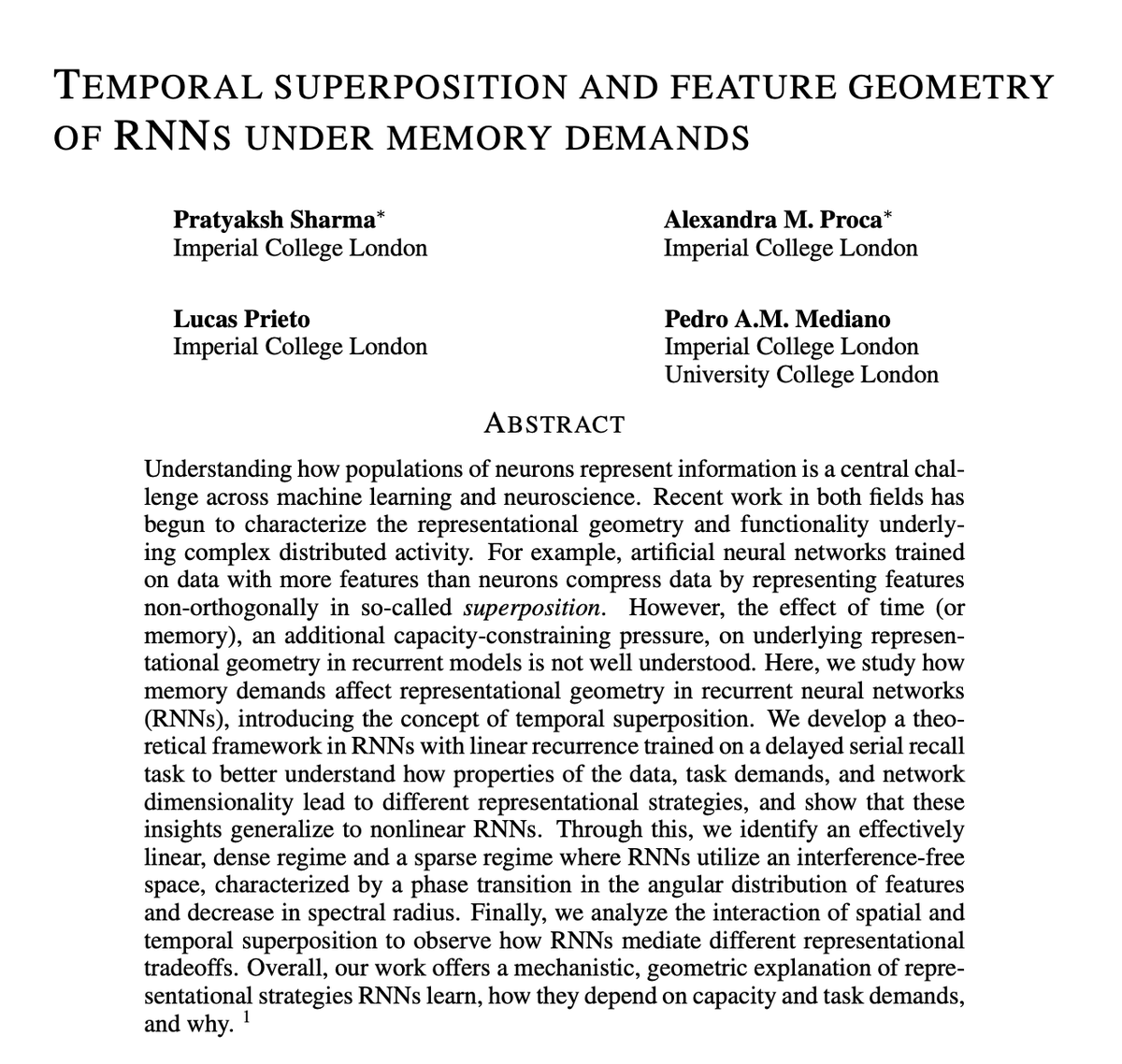
In summary, we expand the study of superposition to recurrent architectures, enabling us to study how temporal information acts as a capacity constraint and affects feature geometry. Our work highlights how superposition affects dynamics and is shaped by time.
Excited to share our ICLR Oral paper, co-lead with Pratyaksh Sharma, and with @lucas_prie@PedroMediano!
We study how feature geometry is shaped by memory demands in RNNs, introducing the concept of temporal superposition.
https://t.co/5g0zCZvSEe
We induce spatial superposition by using 5D input (A-E) and temporal superposition by increasing k. As memory demand (k) increases, the RNN drops features in favor of representing others for a longer duration. This representational tradeoff leads to a strategy that is all-or-none
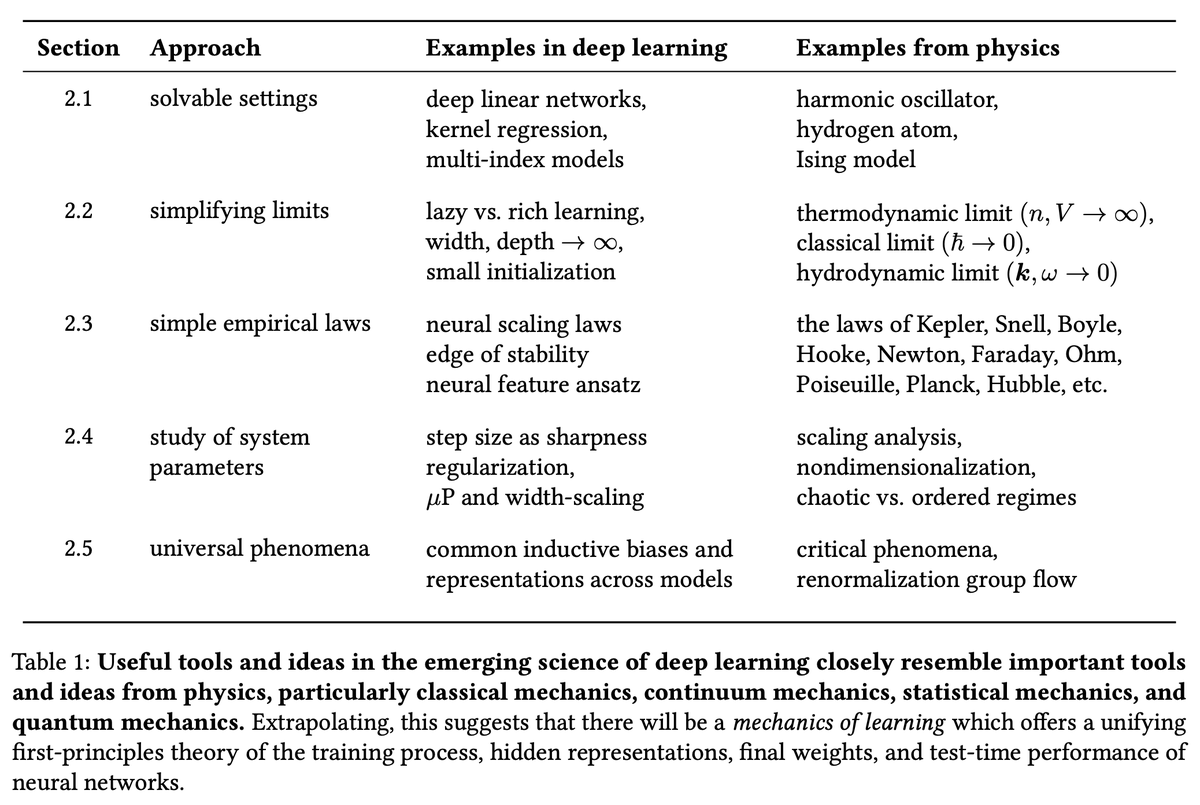
1/ Deep learning is going to have a scientific theory. We can see the pieces starting to come together, and it's looking a lot like physics!
We're releasing a paper pulling together these emerging threads and giving them a name: learning mechanics.
🔨 https://t.co/92nSIHameW 🔧
Excited to share new work @icmlconf by Loek van Rossem exploring the development of computational algorithms in recurrent neural networks.
Hear it live tomorrow, Oral 1D, Tues 14 Jul West Exhibition Hall C: https://t.co/zsnSlJ0rrc
Paper: https://t.co/aZs7VZuFNg
(1/11)