There's a new kind of coding I call "vibe coding", where you fully give in to the vibes, embrace exponentials, and forget that the code even exists. It's possible because the LLMs (e.g. Cursor Composer w Sonnet) are getting too good. Also I just talk to Composer with SuperWhisper so I barely even touch the keyboard. I ask for the dumbest things like "decrease the padding on the sidebar by half" because I'm too lazy to find it. I "Accept All" always, I don't read the diffs anymore. When I get error messages I just copy paste them in with no comment, usually that fixes it. The code grows beyond my usual comprehension, I'd have to really read through it for a while. Sometimes the LLMs can't fix a bug so I just work around it or ask for random changes until it goes away. It's not too bad for throwaway weekend projects, but still quite amusing. I'm building a project or webapp, but it's not really coding - I just see stuff, say stuff, run stuff, and copy paste stuff, and it mostly works.
Tadi pagi dengerin rekaman suara founder tailwindcss yang posisi perusahaannya lagi struggling dan harus layoff 3 staff engineer mereka. (ada gue retweet)
Kalo engga, uang perusahaan ga akan cukup untuk bayar gaji, cuma bisa tahan 6 bulan.
Penyebabnya income mereka turun terus.
Baru sadar setelah diliat baik-baik angkanya.
Total staff di perusahaan itu, termasuk pendirinya, ada 8 orang.
Harus pecat 3 orang agar bisa bertahan sedikit lebih lama, sambil mikirin gimana caranya naikin keuntungan perusahaan.
Teknologi yang mereka kembangkan, dipake banyak orang.
Tapi open source. Bisa dipake tanpa perlu bayar.
Jadi mereka harus pake "cara lain" agar dapat duit.
Jualan template premium yang menghidupi mereka, makin lama juga makin turun peminatnya, karna apa-apa sudah gampang pakai AI.
_
Somehow curhatan pengusaha begini, terdengar relate banget.
Gue pernah di posisi mirip.
Bedanya gue ga bikin sesuatu yang keren kayak tailwind sih.
Selain bikin stress, dengerin sharing begini, jujur melegakan juga.
At least gue tau kalo struggle di perusahaan kecil kek punya ku, dan di perusahaan level dunia ke punya Sir Adam itu, ya sama.
Kata kuncinya: HARUS CUAN.
Ga peduli seberapa fancy bisnis yang lo bikin.
Seberapa punya nama lo di industry.
Yang menentukan nasib, tetap uang masuk dan uang keluar.
Ngejar profitability di bisnis itu yang utama.
Ga untung, ya ngapain capek-capek.
_
Sir Adam ngungkapin kekesalannya sama orang-orang yang ngeributin hal-hal kecil di project opensource tailwind. Padahal Beliau lagi pusing banget nyari uangnya ke mana lagi.
Dia ngerasa, kadang banyak habis waktu di urusan sepele.
Sedangkan dia butuh fokus di tugas yang related to income generation.
Lagi-lagi, this hits hard.
Kadang emang energi banyak terbuang mengerjakan yang non-essentials.
Ga contributes to income growth.
_
Podcast Sir Adam pagi ini, cuma 30 menit, isinya cuma ngeluh, tapi bikin mata lebih terbuka dan jadi lebih sadar, jalan ke depan itu harus lebih aware sama apa.
_
Btw, ini cuma curahan pikiran random aja.
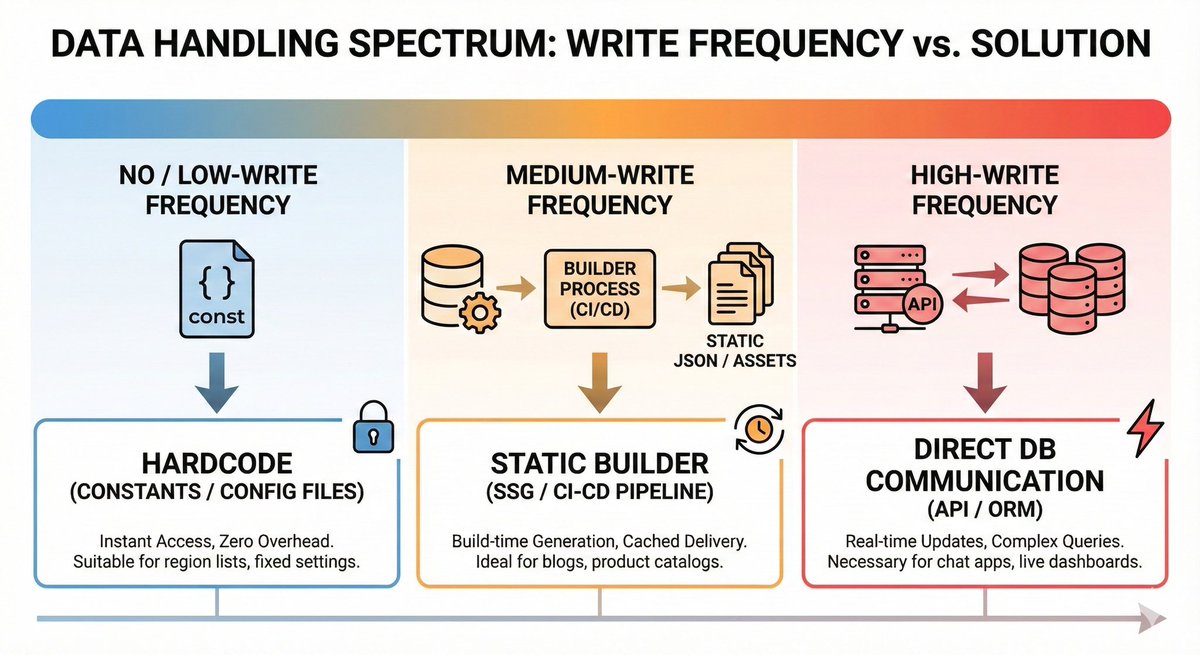
pakailah prinsip:
"just make all your data static until you need it to be high-write."
jadi selama data lu bukan "high-write", just make fucking static data.
Keep your Backend separate from your Frontend.
Keep your Backend separate from your Frontend.
Keep your Backend separate from your Frontend.
Keep your Backend separate from your Frontend.
Keep your Backend separate from your Frontend.
• Programming runs on math
• Logic comes from math
• Algorithms depend on math
• Data structures use math
• AI models are built with math
• Machine learning uses math
• Deep learning relies on math
• Linear algebra powers math-heavy systems
• Probability drives decisions
• Statistics shapes predictions
• Optimization finds the best path
• Cryptography secures with math
• Blockchain works through math
• Graphics render using math
• Simulations behave through math
• Physics engines calculate motion
• Game engines compute everything
• Robotics moves using math
• Signal processing transforms data
• Computer vision sees via math
• NLP understands with math
• Compilers translate through math
• Networking routes with math
• Databases organize using math
• Operating systems schedule via math
• Distributed systems coordinate with math
• Your entire tech stack survives on math
Still asking if math is needed for programming?
📊 Data Science in Plain English 🧠
Data Science isn’t “fancy math.”
It’s just finding patterns → making decisions.
Here’s the real workflow 👇
1️⃣ Collect Data
CSVs, APIs, databases, sensors — anything with numbers or text.
2️⃣ Clean It
Fix missing values, remove duplicates, organize columns.
(Yes, this is 70% of the job 😅)
3️⃣ Explore
What’s increasing? What’s dropping? What’s weird?
Charts > assumptions.
4️⃣ Build Models
Use Python tools (Pandas, Scikit-learn, TensorFlow) to:
predict sales
detect fraud
recommend products
classify images
5️⃣ Deploy & Monitor
Turn your model into something real — an app, dashboard, or API.
Real Example:
Netflix collects your watch history → ML model predicts your next favorite show 🍿
Why it matters:
Companies don’t guess anymore — they measure.
💡 Pro tip:
Data Science = 20% coding, 80% thinking clearly.
Data Science = turning chaos into clarity 🧠✨
It's all about usage data.
Instagram's head Adam Mosseri said almost all their recent growth comes from Reels, DMs (now Chat), and recommendations.
Users spend way more time watching short videos and messaging friends than posting or searching. UX takeaway: At scale, great design follows real user behavior ,not tradition. Put the actions people do most in the spots that feel effortless.