@Sillswood Hey Neil! Don't worry, the API will be back really soon, with new support for Regional Rumble, as well as your results from these email-only Sessions. We could get everyone into the first Sessions quicker this way. Have you got anything fun set up with Home Assistant?
🚨#SavingSessions alert: HELLO THERE 🚨
📅 6-7PM TODAY (11th Dec)
✉️ Keep an eye on your emails this afternoon to opt in
Earn 🐙480 (worth 60p) per kWh saved vs normal
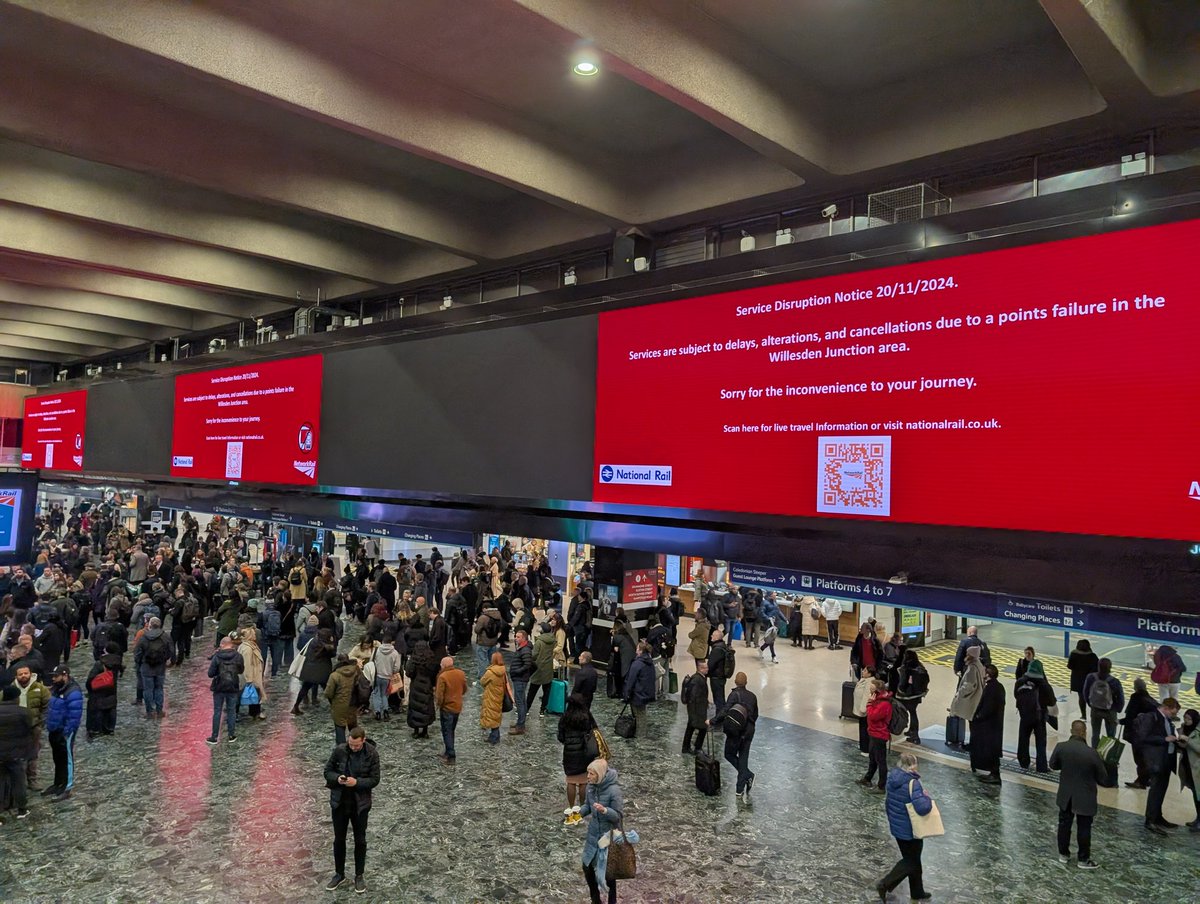
@jackfifield@NetworkRailEUS@LNRailway@transportgovuk@AvantiWestCoast@TfL Fairly sure they use the right arrow icon as "go to platform", and they don't actually point in the direction of the platform. Pretty poor on a sign immediately above both left and right turns. Equally, could be a mockup?
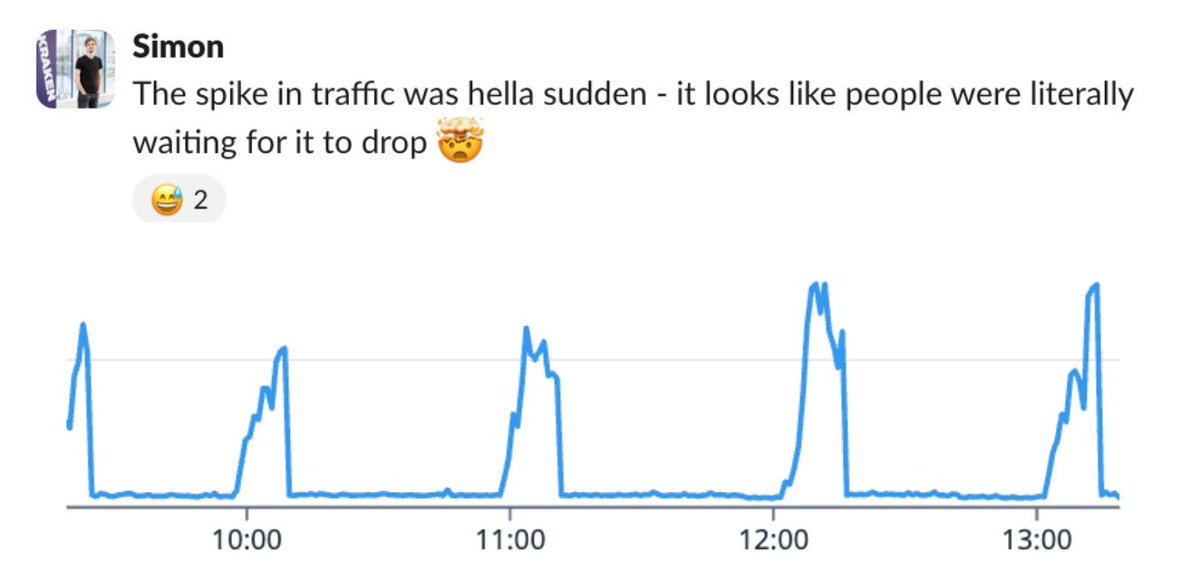
@ImTomEddy@adamfmk4@OctopusEnergy We scale automatically, as our traffic is highly variable. We do also plan ahead for known busy periods, but today was a new challenge: rate of change, rather than absolute scale. Now we know for next time! 🔮
@ImTomEddy@adamfmk4@OctopusEnergy This shows all rewards claimed this morning - the tall yellow bars are plushies! The current of light blue below is the shop discount. The plushies really didn't hang around!
The API scaled to >5x normal workers today, more than once.
https://t.co/fghKGi4nAi
Honestly, credit to TfL who do world class passenger comms and show us Londoners how good it can be. It's actually impressive how fast things fall apart the moment you get above ground.
As [a Network Rail employee] I want [a HDMI cable for the stupid megascreen] so that I can [unveil the worst information architecture you've ever seen in your life, complete with an unhinged branded QR code and nr-blue-on-white_200x50.jpg to a major transport interchange]
“Why should small countries in Europe that emit less than 1% of global emissions pursue a net zero agenda when there are much larger emitters like China?”
I was asked this earlier this week when I presented to the @scotenergyforum at @GeolSoc in London.
It’s a common challenge put to people like me who are supportive of the decarbonisation agenda. @_HannahRitchie@OurWorldInData has written what I think is an excellent response to this commonly asked question.
She provides 5 compelling reasons for why small and wealthy countries in Europe and elsewhere should reduce their emissions:
1. Rich countries have a moral responsibility
Rich countries are historically the largest emitters. For instance, the UK, though responsible for only 0.9% of current emissions, accounts for 4.5% of historical global emissions. Germany contributes over 5%. These nations should reach net-zero emissions quickly, not only to reduce climate impacts but also to allow poorer nations space in the global carbon budget to develop.
2. Every country must act, even those with ‘negligible’ emissions
While six countries contribute more than 2% of global emissions (China, the US, India, Russia, Japan, and Iran), many smaller countries collectively account for 36%—more than China alone. If these nations did nothing, a significant portion of global emissions would remain unchecked. Tackling climate change requires action from all countries, but low-income nations with minimal contributions and urgent development needs should be allowed to temporarily increase emissions while wealthier nations cut theirs.
3. Rich countries outsource their emissions
Many wealthy countries outsource emissions by importing goods produced elsewhere, but even when adjusting for this, their overall responsibility remains high. Even after accounting for “consumption-based” emissions, most rich nations continue to be significant contributors, and they must take action.
4. Innovating low-carbon technologies drives global progress
Small countries can make a significant impact by innovating and deploying low-carbon technologies, which helps lower costs for the rest of the world. For example, the cost of solar power has dropped by 99.8% since the 1970s, largely due to scaling up by wealthier countries. These innovations make it easier for developing nations to adopt cleaner energy without hindering growth.
5. Small countries can lead by example
Countries like Norway, responsible for just 0.1% of global emissions, can still set an example by adopting clean technologies. Norway’s electric vehicle revolution, where over 80% of new cars are electric, shows how small nations can demonstrate what’s possible, inspiring others to follow suit.
Full article here: https://t.co/PsWtjPCYIx