#SavetheDate | July 2-3, 2026 | Chennai
How can India build resilience against the next generation of health and biosecurity threats?
𝗔𝘁 𝘁𝗵𝗲 𝗢𝗻𝗲 𝗛𝗲𝗮𝗹𝘁𝗵 𝗖𝗼𝗻𝗳𝗲𝗿𝗲𝗻𝗰𝗲: 𝗜𝗻𝘁𝗲𝗴𝗿𝗮𝘁𝗶𝗻𝗴 𝗜𝗻𝘁𝗲𝗿𝗳𝗮𝗰𝗲𝘀 𝗳𝗼𝗿 𝗜𝗻𝗱𝗶𝗮’𝘀 𝗕𝗶𝗼𝘀𝗲𝗰𝘂𝗿𝗶𝘁𝘆 𝗮𝗻𝗱 𝗣𝗮𝗻𝗱𝗲𝗺𝗶𝗰 𝗥𝗲𝘀𝗶𝗹𝗶𝗲𝗻𝗰𝗲, jointly convened by the @DeccancentreIR, Krea University and MSSRF experts from across public health, veterinary sciences, environmental management, security, and policy will come together to explore how a One Health approach can strengthen India's resilience to emerging threats.
The conference will examine the intersections of human, animal, and environmental health, and discuss pathways to operationalise the National One Health Mission through stronger coordination, integrated surveillance, pandemic preparedness, and biosecurity systems.
Register your interest: https://t.co/t0kl2LN8ba
Please note: This is a closed-door event with limited seating. Registration is mandatory and participation will be confirmed based on availability.
We’re in the grip of extreme summer heat — with temperatures rising year after year due to climate change. But have you paused to think about who is most affected? Let’s take a closer look.
Extreme heat doesn’t impact everyone equally. Older adults, young children, outdoor workers, people with chronic illnesses, and those living in densely built or low-resource settings are among the most vulnerable.
▶️ Watch “Dangerous Heat: Who is at most risk” https://t.co/pTMiQR5u9w
Breaking news!
Dr Soumya Swaminathan @doctorsoumya has been elected as FRS, Fellow of Royal Society, one of the highest global hours that a scientist can receive.
@royalsociety
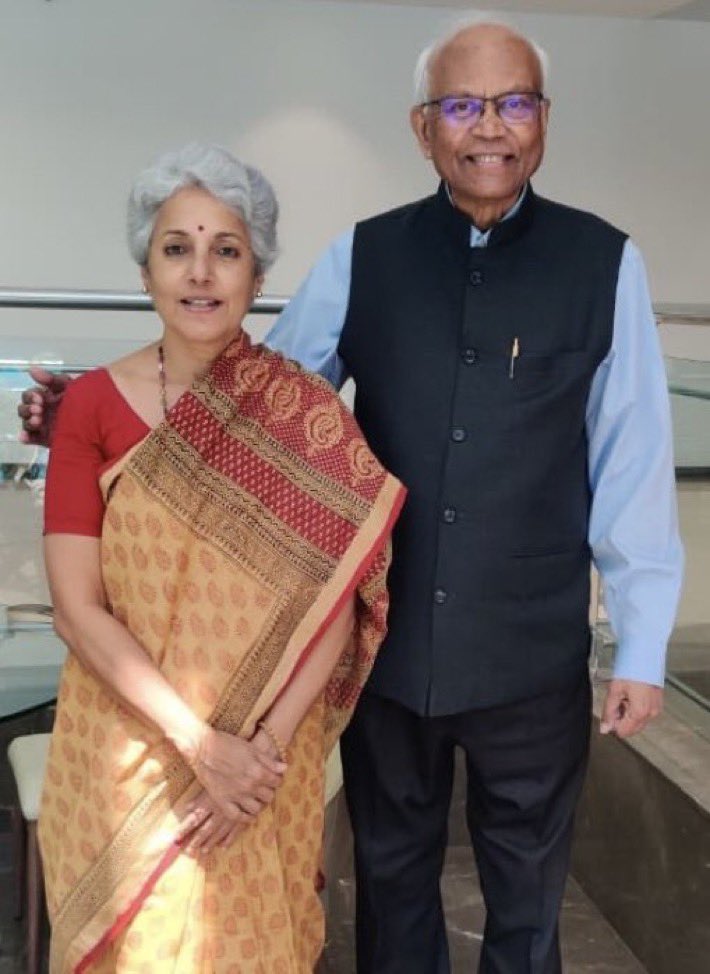
With her father Bharat Ratna Prof Swaminathan also being elected as FRS, this is the first daughter-father FRS duo from India.
Also she is the second Indian woman scientist being elected in 365 years history of Royal Society, the first being Prof Gagandeep Kang.
Very proud moment for Indian Science & indeed for us Indians.
Heartiest congratulations dear Soumya!
@PMOIndia@DrJitendraSingh@PrinSciAdvOff@CSIR_IND@ICMRDELHI@IndiaDST@DBTIndia@PuneIntCentre
We are in the middle of extreme summer heat. Have you wondered what it does to your body? Science has clear answers. Let’s look at it.
In the first episode of Science Simply, Dr. Soumya Swaminathan @doctorsoumya breaks down your body’s response to extreme heat and brings you actionable steps to cope with it. City planning ideas, early warning systems, and preventive steps can work. But they must be planned well and reach everyone, with no one left behind.
▶️ Watch 'What Extreme Heat Does to Your Body' on MSSRF's YouTube: https://t.co/N2hO3U93VL
#ScienceSimply
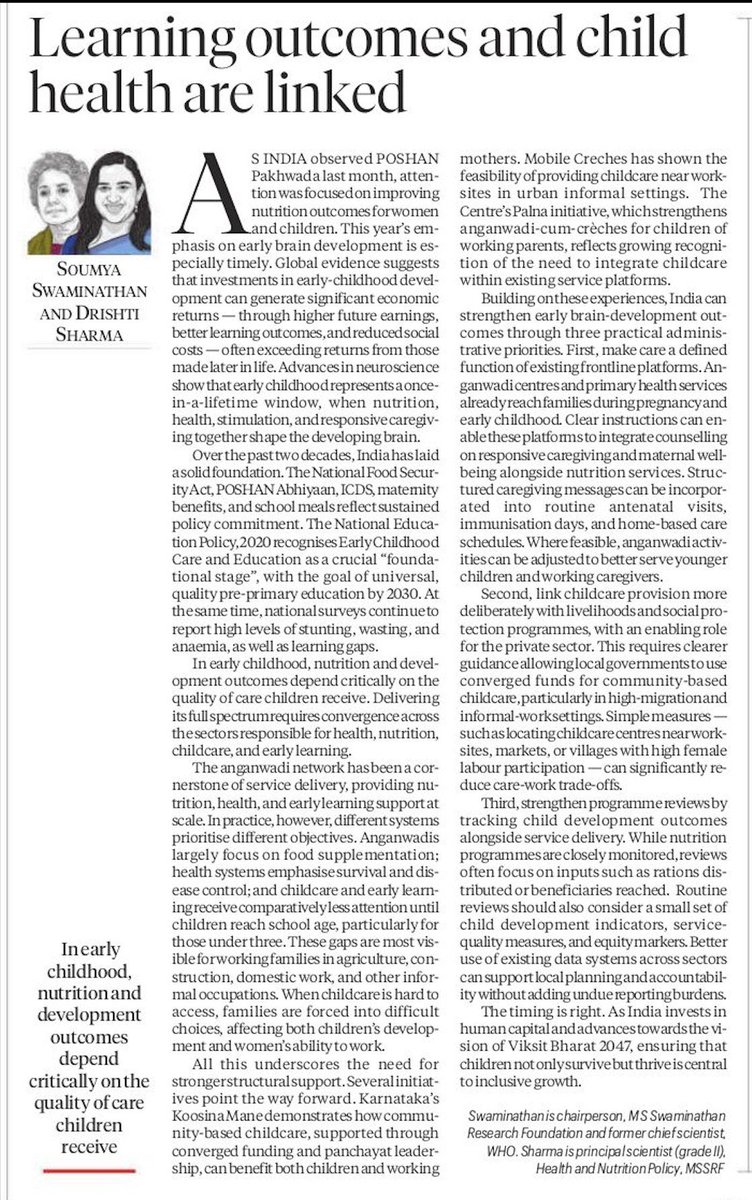
80% of a child’s brain growth happens in the 1st five yrs. That’s why #PoshanPakhwada 2026 had a focus on cognitive development- this needs good nutrition, a safe & caring environment & stimulation for infants & young children. @PMOIndia@NITIAayog@Annapurna4BJP@MinistryWCD
Asian Indian MODY Calculator: A practical step toward smarter genetic testing
💢Not every lean young diabetic is type 1, and not every family-history-positive case is type 2—some are MODY.
Authors
Viswanathan Mohan, Ulagamadesan Venkatesan, Anandakumar Amutha, Ramasamy Aarthy, Venkatesan Radha, Arunkumar Pande, Ranjit Mohan Anjana, Ranjit Unnikrishnan
Study message
This study developed an ethnicity-specific calculator for Asian Indians to estimate the probability of HNF1A-MODY or HNF4A-MODY, the two commonest forms of MODY.
Why this matters
MODY is often missed or mislabeled as type 1 or type 2 diabetes in young people.
That mistake can lead to wrong treatment, delayed family screening, and avoidable insulin use in some cases.
What the investigators did
They analyzed electronic records of 29,191 individuals with young-onset diabetes diagnosed before 30 years of age.
They identified 55 genetically confirmed HNF1A-/HNF4A-MODY cases and compared them with 1000 people with type 1 diabetes and 1000 with type 2 diabetes to build logistic regression models.
Key predictors used
The calculator was built using simple clinical and biochemical variables such as:
Age at diagnosis
BMI
Parental history of diabetes
HbA1c
HDL cholesterol
Stimulated C-peptide
Key findings
Eight predictive models were generated.
Models designed to distinguish MODY from type 1 diabetes showed excellent discrimination, with ROC-AUC 0.884 to 0.957.
Models designed to distinguish MODY from type 2 diabetes also performed strongly, with ROC-AUC 0.914 to 0.936.
Performance remained robust on internal validation, including five-fold cross-validation.
Clinical interpretation
This means that in Asian Indian patients with diabetes diagnosed before 30 years, a combination of phenotype + family history + basic biochemistry can meaningfully enrich the pre-test probability of MODY before sending expensive genetic testing.
Big practical pearl
Do not send every young diabetic for MODY testing.
But do not ignore MODY in every young diabetic either.
Use structured probability-based screening.
Who should trigger suspicion in OPD?
Think of HNF1A-/HNF4A-MODY when a young person has:
Diabetes onset before 30 years
Strong parental history across generations
Not markedly obese
Preserved endogenous insulin secretion
Atypical for classic type 1 diabetes
Atypical for routine youth-onset type 2 diabetes
Why an Indian-specific calculator is important
Western calculators may not perform optimally in Indians because of differences in:
Body composition
Age of onset patterns
Family clustering
Beta-cell reserve
Phenotypic overlap between T1D, T2D, and monogenic diabetes
This tool therefore addresses a real Indian diagnostic gap.
Practice-changing takeaway
This calculator can help clinicians triage whom to test genetically, improving diagnostic yield and reducing unnecessary testing costs.
CME INDIA style top pearls
MODY is underdiagnosed in young Indian patients with diabetes.
An Asian Indian–specific calculator has now been developed for HNF1A- and HNF4A-MODY.
Age at diagnosis, BMI, family history, HbA1c, HDL, and stimulated C-peptide are highly informative variables.
The model showed excellent ROC-AUC performance against both T1D and T2D comparators.
This is a practical pre-genetic screening tool, not a substitute for genetic confirmation.
It can improve cost-effective selection of patients for MODY testing in India.
Young-onset diabetes with preserved C-peptide and multigenerational diabetes history should always raise suspicion.
Precision diabetology in India must include monogenic diabetes recognition.
Bottom line
In Asian Indians with diabetes diagnosed before age 30, a phenotype-based MODY probability calculator can help pick the right patients for genetic testing and reduce diagnostic confusion between type 1 diabetes, type 2 diabetes, and monogenic diabetes.
Reference
https://t.co/qI7wBUrKA9
Heat waves aren't neutral—they're catalysts heightening women's anxiety while damaging well-being.
From MSSRF’s recent cross-sectional study on heat and women’s health, we share first-person accounts from women on the frontlines.
These voices reveal how rising temperatures compound physical exhaustion, mental distress, safety risks, and livelihood insecurity—underscoring the urgent need for gender-responsive climate policies.
Read the full report: https://t.co/eQdrCyCDMt
Detect early. Treat timely. End TB.
India is leveraging cutting-edge innovations, from AI-powered screening to rapid molecular diagnostics to transform the fight against Tuberculosis. Expanding access, improving turnaround time, and focusing on vulnerable populations are central to this effort.
Read this article to know more about how diagnostics are shaping India’s TB elimination journey.
#EndTB
#WorldTBDay2026
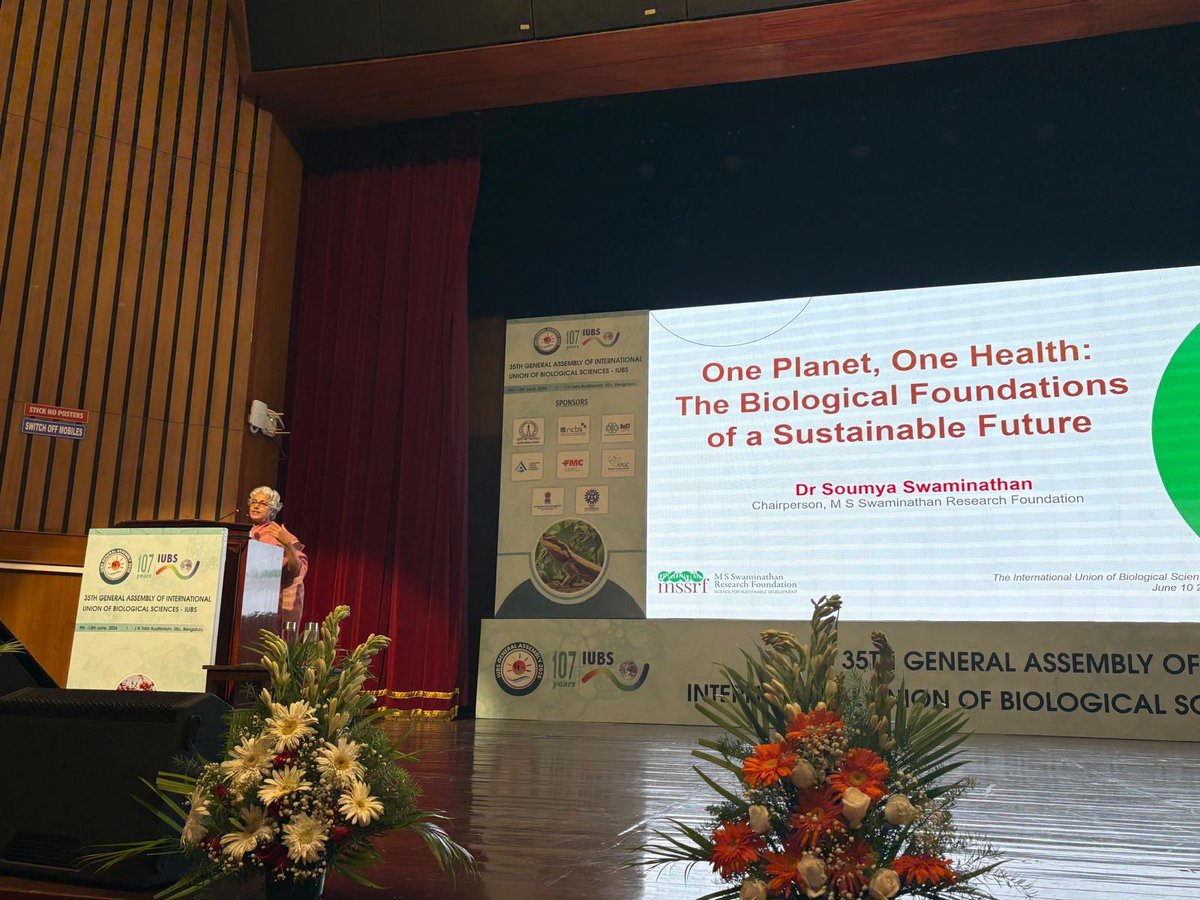
A privilege to deliver the @VillarsIdeas Distinguished lecture to a room full of people completely committed to Nature & Biodiversity. Could #Biohappiness be the next global framework to measure the health of planet & the people? @NITIAayog@UNEP@IUCN@JohnInnesCentre@UNDESA