The February issue is live! Multimodal single-cell CRISPR screens, pioneer factors, and transcriptional bursting are just some of the hot topics covered. Check it out!
https://t.co/iAVkkzaV5c
Thanks to Amandine Barral from the Zaret lab (@pioneerfactors) for the cover image!
@dagarfield@TrendsGenetics I would say yes. For example, overexpression of the pioneer factor Sox2 in human fibroblast leads to cell reprogramming. This has also been validated for many other pioneer factors in different cell contexts.
Pioneer factors — key regulators of chromatin and gene expression https://t.co/xOSqnzbq1L #Viewpoint by Martha L. Bulyk, Jacques Drouin, Melissa M. Harrison (@harrisonflylab), Jussi Taipale & Ken Zaret (@pioneerfactors)
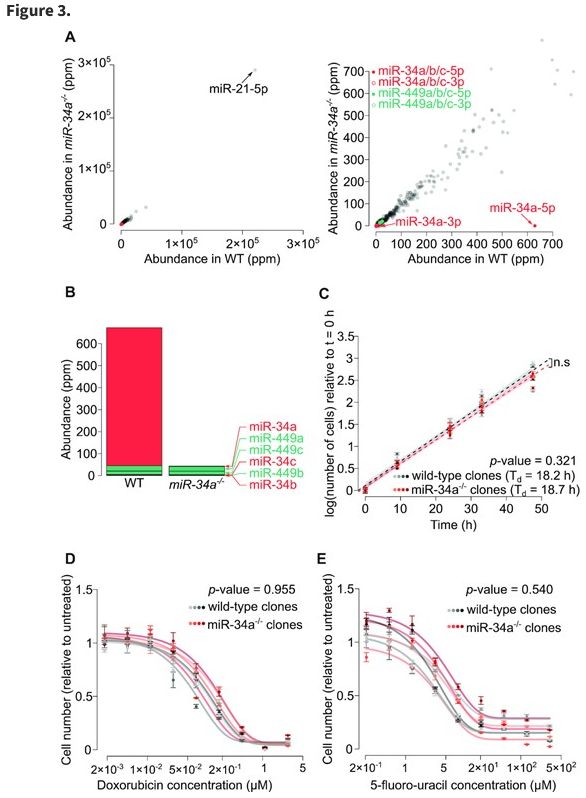
@IGH_MTP@CNRS_OccitaniE@umontpellier Mockly et al. show that the miR-34a microRNA is not a tumor suppressor (as assumed for the last 14 years) and therefore resolve several long-standing inconsistencies.
https://t.co/0pvVcSE2sJ
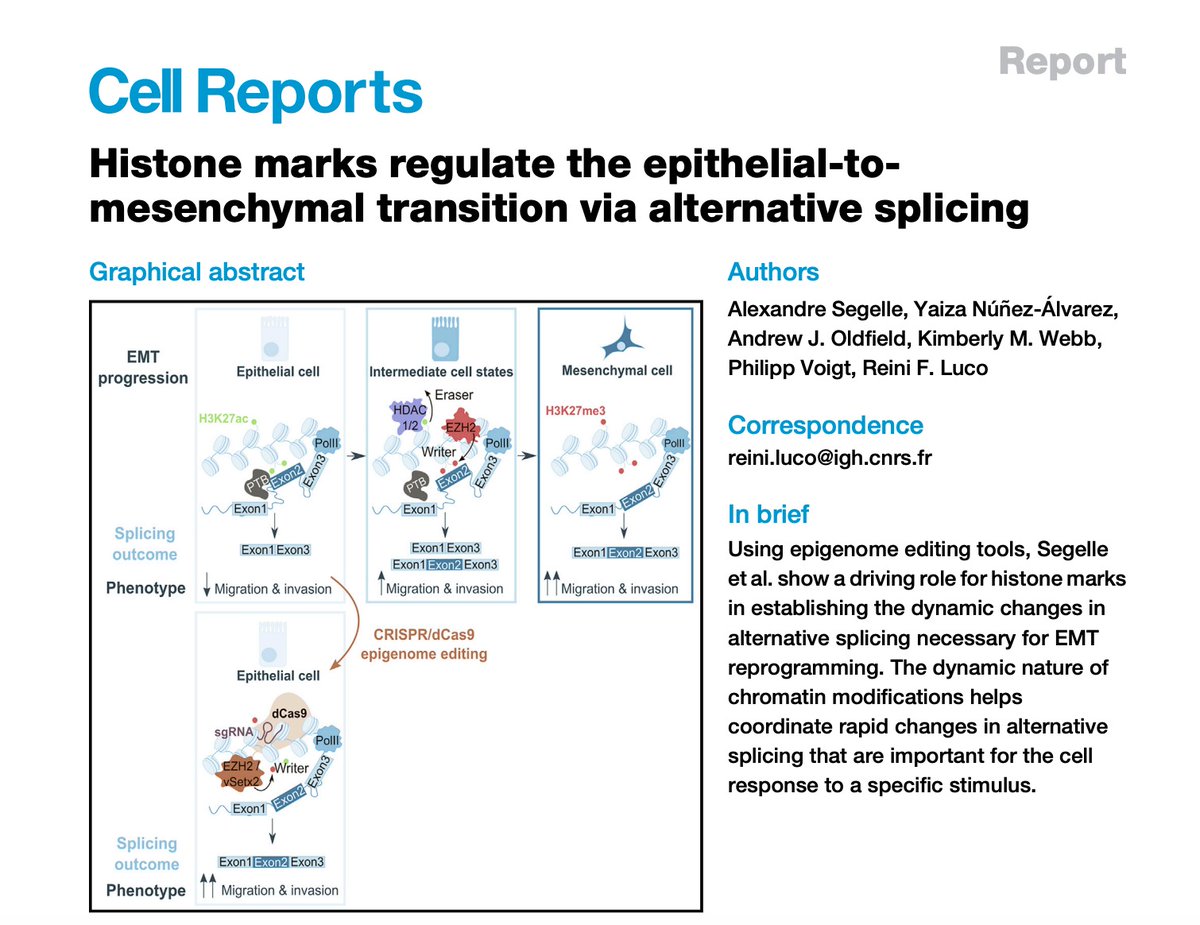
So happy to see out our latest work!!! An amazing intra and inter lab collaboration to show that locus specific epigenetic dCas9 induced histone modification changes are sufficient to change alternative splicing and change cell phenotype! @IGH_MTP
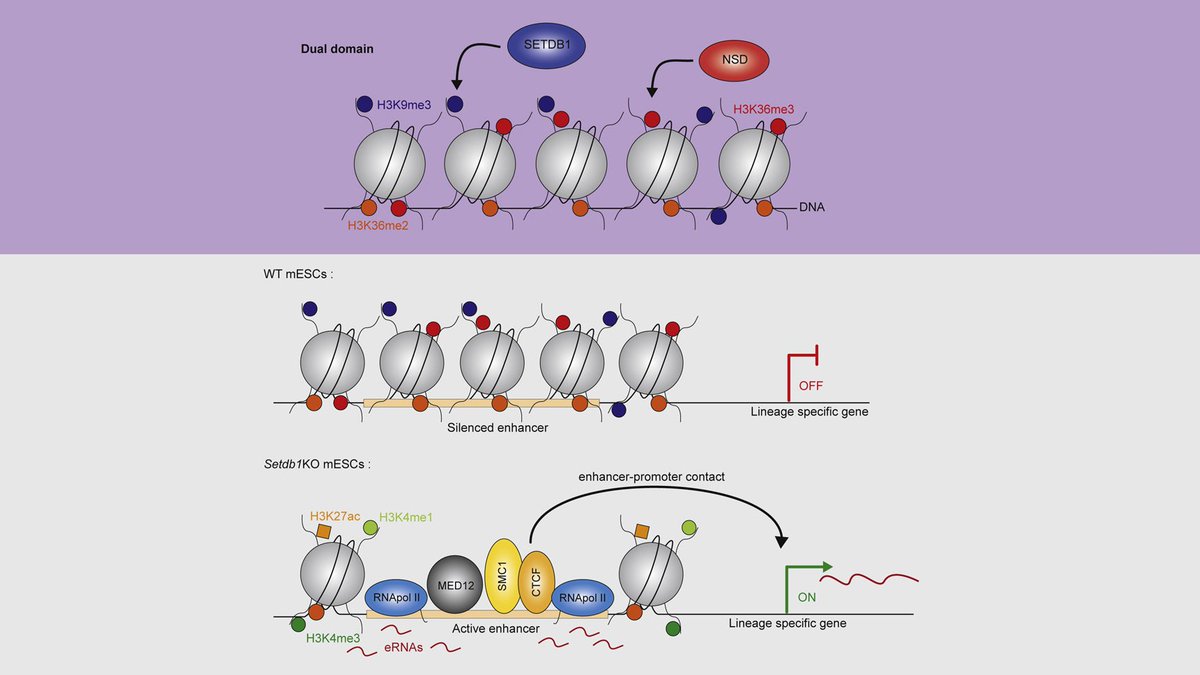
🔎 Montpellier University (@IGH_MTP) researchers characterized the function of an atypical heterochromatin, providing mechanistic insights into its involvement in the maintenance of #cellidentity.
#OpenAccess: 🔓 https://t.co/zxin0fwXty
Excited to share our paper : 'SETDB1/NSD-dependent H3K9me3/H3K36me3 dual heterochromatin maintains gene expression profiles by bookmarking poised enhancers' is now out in @MolecularCell
https://t.co/lmldpgnYOB
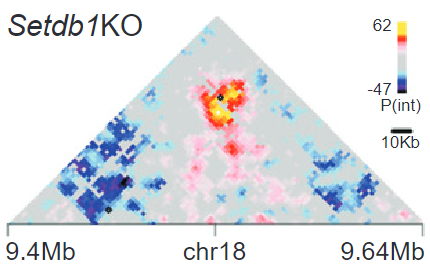
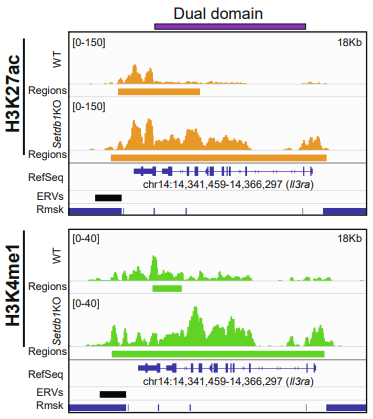
Upon SETDB1 removal, dual domains lose both marks. They gain active #enhancer histone marks, #H3K27ac and #H3K4me1, and gain #3D contact with upregulated genes