Salami Slicing
In a transactional context, sometimes your counterparty may try to essentially scam you for a small margin -- so thin that they hope you do not notice, or let it slide because it basically doesn't matter. By doing this over and over again, your counterparty hopes to accumulate some meaningful aggregate advantage.
This is an amateur technique, because Salami Slicers usually do not realize that:
1. People notice. They may not say anything. But oh man do they notice.
2. Being recognized as a Salami Slicer is extremely negative and will kill you in social and business contexts, because you are showing that you will compromise your ethics for trivial amounts of money (or whatever else is at stake). Nobody will trust you for anything significant if they know you're the type of degenerate to steal pennies while others aren't looking.
In fact, frequently, people will permit others to Salami Slice them as a kind of test -- will you do the wrong thing, thinking you can get away with it, for a small amount? A valuable signal. Thank you.
Skilled Salami Slicers will maintain some level of plausible deniability -- "I'm sorry, I forgot to keep this minor obligation", "oh I wasn't sure whether you were paying this or I was", "I thought I didn't have to do this thing because of that other thing", etc. But there are patterns to this, and you can sniff it out quickly. (For example, Uber's ETAs are always optimistic -- the cars are always late or on time, but never early. Huh.)
Some people will go 0-to-100 when they notice they're being Salami Sliced, because they understand what it says about their counterparty's view of themselves: it's extremely dehumanizing. If you try to strategically and deliberately deceive me for minuscule gains, then clearly your view of me is so low that you would cause me unlimited suffering if it was to your benefit. In a Schmittian sense, it's a hardcore Friend-Enemy distinction. Amateur Salami Slicers are occasionally surprised when they are spotted and receive the full Fuck You I'll Kill You, scorched-earth zero-mercy response: their counterparty understands the full symbolic reality of Salami Slicing.
I hate being Salami Sliced.
Get ready, friends. Anthropic appears to be preparing the release of its Mythos-level model.
Pricing: $16 per 1M input tokens / $80 per 1M output tokens.
The release is likely very close, possibly even in the same week as GPT-5.6. Competition is heating up again.
Gemini 3.5 Pro is about to face serious pressure. It better be a banger.
to be sure – this is in the context of chat based prompts.
Models like Mythos will continue to drive down intelligence needed for repeatable plays (tasks)
https://t.co/EwOg4zguAi
IMO not worth it, and maybe not doable.
1. Higher intelligence thinks better (and sometimes takes fewer turns)
2. Users like higher intelligence, and first token latency matters more than overall latency.
3. Benchmark performance != real life. Evals are tricky - even a basic sounding change to an eval prompt can be so different with production data, and thinking that you can't really beat higher intelligence
Mythos out in ~60 days or less, I'm thinking bitter lesson.
Introducing model routing to Factory.
Factory Router picks the right model for every task, automatically.
Maintain frontier performance while cutting costs by 25%.
Marc Andreessen:
"The job is not actually the atomic unit of what happens in the workplace. The atomic unit of what happens in the workplace is the task."
"A job is a bundle of tasks."
“Everybody wants to talk about job loss, but really what you want to look at is task loss.”
"As the tasks change enough, then that’s when the jobs change."
"Ten years from now, is your job title coder, or coder-designer-product manager, or is it just, ‘I build products,’ or is it just, ‘I tell the AI how to build products.’ Whatever that job is called, it’s going to be incredibly important, because the people doing that job are going to be orchestrating the AI."
@pmarca on Lenny's Podcast with @lennysan
A few random notes from claude coding quite a bit last few weeks.
Coding workflow. Given the latest lift in LLM coding capability, like many others I rapidly went from about 80% manual+autocomplete coding and 20% agents in November to 80% agent coding and 20% edits+touchups in December. i.e. I really am mostly programming in English now, a bit sheepishly telling the LLM what code to write... in words. It hurts the ego a bit but the power to operate over software in large "code actions" is just too net useful, especially once you adapt to it, configure it, learn to use it, and wrap your head around what it can and cannot do. This is easily the biggest change to my basic coding workflow in ~2 decades of programming and it happened over the course of a few weeks. I'd expect something similar to be happening to well into double digit percent of engineers out there, while the awareness of it in the general population feels well into low single digit percent.
IDEs/agent swarms/fallability. Both the "no need for IDE anymore" hype and the "agent swarm" hype is imo too much for right now. The models definitely still make mistakes and if you have any code you actually care about I would watch them like a hawk, in a nice large IDE on the side. The mistakes have changed a lot - they are not simple syntax errors anymore, they are subtle conceptual errors that a slightly sloppy, hasty junior dev might do. The most common category is that the models make wrong assumptions on your behalf and just run along with them without checking. They also don't manage their confusion, they don't seek clarifications, they don't surface inconsistencies, they don't present tradeoffs, they don't push back when they should, and they are still a little too sycophantic. Things get better in plan mode, but there is some need for a lightweight inline plan mode. They also really like to overcomplicate code and APIs, they bloat abstractions, they don't clean up dead code after themselves, etc. They will implement an inefficient, bloated, brittle construction over 1000 lines of code and it's up to you to be like "umm couldn't you just do this instead?" and they will be like "of course!" and immediately cut it down to 100 lines. They still sometimes change/remove comments and code they don't like or don't sufficiently understand as side effects, even if it is orthogonal to the task at hand. All of this happens despite a few simple attempts to fix it via instructions in CLAUDE . md. Despite all these issues, it is still a net huge improvement and it's very difficult to imagine going back to manual coding. TLDR everyone has their developing flow, my current is a small few CC sessions on the left in ghostty windows/tabs and an IDE on the right for viewing the code + manual edits.
Tenacity. It's so interesting to watch an agent relentlessly work at something. They never get tired, they never get demoralized, they just keep going and trying things where a person would have given up long ago to fight another day. It's a "feel the AGI" moment to watch it struggle with something for a long time just to come out victorious 30 minutes later. You realize that stamina is a core bottleneck to work and that with LLMs in hand it has been dramatically increased.
Speedups. It's not clear how to measure the "speedup" of LLM assistance. Certainly I feel net way faster at what I was going to do, but the main effect is that I do a lot more than I was going to do because 1) I can code up all kinds of things that just wouldn't have been worth coding before and 2) I can approach code that I couldn't work on before because of knowledge/skill issue. So certainly it's speedup, but it's possibly a lot more an expansion.
Leverage. LLMs are exceptionally good at looping until they meet specific goals and this is where most of the "feel the AGI" magic is to be found. Don't tell it what to do, give it success criteria and watch it go. Get it to write tests first and then pass them. Put it in the loop with a browser MCP. Write the naive algorithm that is very likely correct first, then ask it to optimize it while preserving correctness. Change your approach from imperative to declarative to get the agents looping longer and gain leverage.
Fun. I didn't anticipate that with agents programming feels *more* fun because a lot of the fill in the blanks drudgery is removed and what remains is the creative part. I also feel less blocked/stuck (which is not fun) and I experience a lot more courage because there's almost always a way to work hand in hand with it to make some positive progress. I have seen the opposite sentiment from other people too; LLM coding will split up engineers based on those who primarily liked coding and those who primarily liked building.
Atrophy. I've already noticed that I am slowly starting to atrophy my ability to write code manually. Generation (writing code) and discrimination (reading code) are different capabilities in the brain. Largely due to all the little mostly syntactic details involved in programming, you can review code just fine even if you struggle to write it.
Slopacolypse. I am bracing for 2026 as the year of the slopacolypse across all of github, substack, arxiv, X/instagram, and generally all digital media. We're also going to see a lot more AI hype productivity theater (is that even possible?), on the side of actual, real improvements.
Questions. A few of the questions on my mind:
- What happens to the "10X engineer" - the ratio of productivity between the mean and the max engineer? It's quite possible that this grows *a lot*.
- Armed with LLMs, do generalists increasingly outperform specialists? LLMs are a lot better at fill in the blanks (the micro) than grand strategy (the macro).
- What does LLM coding feel like in the future? Is it like playing StarCraft? Playing Factorio? Playing music?
- How much of society is bottlenecked by digital knowledge work?
TLDR Where does this leave us? LLM agent capabilities (Claude & Codex especially) have crossed some kind of threshold of coherence around December 2025 and caused a phase shift in software engineering and closely related. The intelligence part suddenly feels quite a bit ahead of all the rest of it - integrations (tools, knowledge), the necessity for new organizational workflows, processes, diffusion more generally. 2026 is going to be a high energy year as the industry metabolizes the new capability.
i have never experienced more flow state in my entire life than the past few weeks
the unbearable opportunity cost of literally doing anything other than making sure your fleet of agents are running 24/7 is a ridiculously motivating force
The non-obvious fact is that it’s not the first event that will usually kill you. It’s why cardiac rehab is the standard of care and can add up to 5 years of life expectancy (think heart physical therapy + education). But only around 10% of people complete CR because of access. If everyone did just that after an event, it would save millions.
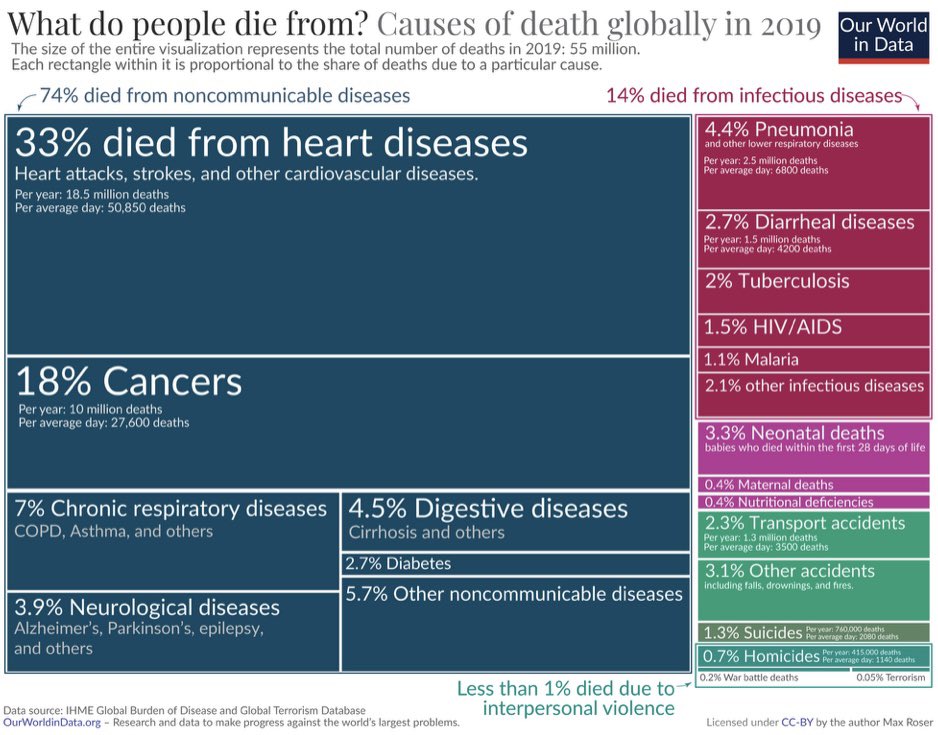
1 in 3 reading this will DIE from heart disease. The irony? The heart is a solved problem - almost all of those deaths are preventable. Take a Calcium CT Scan. $150. 30 minutes. Save yourself. Save the country billions. Heart attacks are a dumb way to die. 🤍🙏🇺🇸
@StuartBlitz Very few people deeply understand both how to build great products and what products could help health systems because iterations take longer (slow pilots, difficult sales, hard workflows, many stakeholders). Buying a health system may reduce cycle time for learning.
🥳Big news: @RewindAI is coming to Windows!
Today I shared the keynote stage with Intel CEO @PGelsinger to demo Rewind on Windows.
The demo includes Ask Rewind powered by Llama 2 running entirely locally!
Bonus: As of today, Rewind can also run on Intel-based Macs!
(1/4)
An interesting side effect of working on hard problems is that it opens up a talent pool that is unavailable to others because there are some smart people that also only want to work on hard problems, regardless of the probability of success.
We feel more directly involved in the creation of chatGPT output. We write the prompts and request the output be generated. When prompt engineering is only describing your problem (and not proposing/presenting solutions), this will shift.
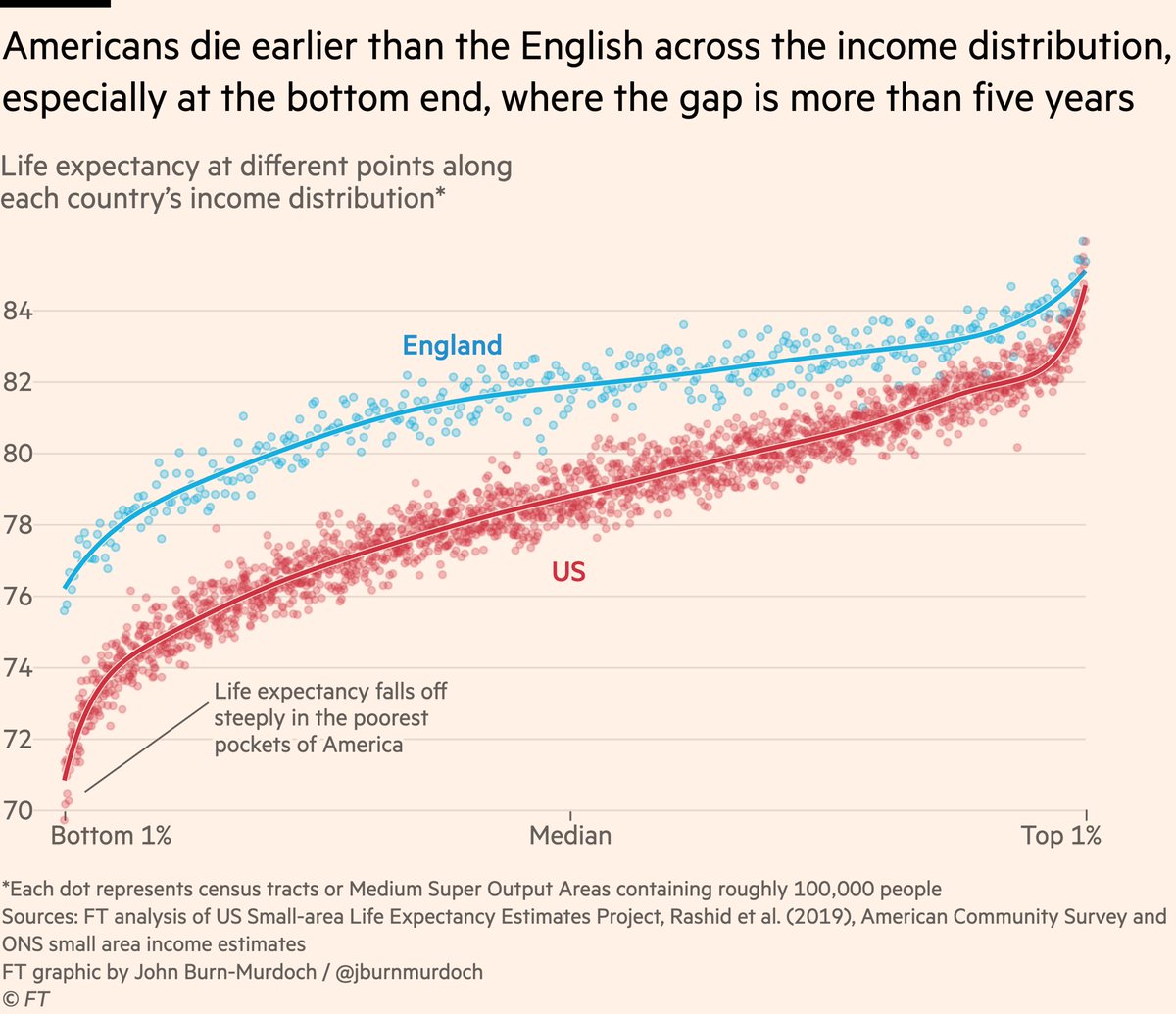
NEW: I’m not sure people fully appreciate how dire the US life expectancy / mortality situation has got.
My column: https://t.co/dBIhT9eZLv
And some utterly damning charts.
1) at *every* point on the income distribution, Americans live shorter lives than the English.
Welcome @Twitter! We're excited to launch our account today and share the latest with you about #cardiacrehabilitation. You can also find us on LinkedIn and Facebook:
https://t.co/LmWT3WrbmF
https://t.co/8Fu6nHyZJZ
https://t.co/BiV9yyMtm4
#cardiacrecovery
Seen @Aviator_co_ grow from the early days to now with customers like Slack, Square and Benching. Congrats on the launch team! Engineers, check them out!
We are excited to announce that we have raised $2.3 million in a seed round to help engineering teams manage broken builds, slow code reviews, flaky tests, complex dependencies and security compliance.
https://t.co/SOCjCUS0bx
We are excited to announce that we have raised $2.3 million in a seed round to help engineering teams manage broken builds, slow code reviews, flaky tests, complex dependencies and security compliance.
https://t.co/SOCjCUS0bx