In our new paper in @TrendsGenetics@CellPressNews, we highlight some fascinating tiny proteins—microproteins—which appear to be widespread in nature.
These small but mighty molecules can influence interactions within and between species, potentially reshaping entire microbial communities.
Even more exciting, they could serve as novel antibiotic sources!
Although the study of small open reading frames (smORFs) is still in its infancy, these findings show how microproteins can orchestrate microbial life, unveil new antibiotic possibilities, and expand our fundamental understanding of biology.
There’s so much more to explore!
Excellent work led by Benjamin Galeota-Sprung, Ami Bhatt @Stanford@StanfordDeptMed
Link to paper: https://t.co/THxDUkn7wG
Long-read every variant Sequencing (LevSeq) combining nanopore sequencing with dual barcoding to enable easy sequence-function data generation + validation in 2 engineering campaigns.
Yueming Long Ariane Mora Emre Guersoy Kadina E. Johnston Francesca-Zhoufan Li @francesarnold
https://t.co/gVxVEEZTul This work tried to decompose the factors that influence protein abundance.
Has similar work been done for transcript abundance? i.e. how predictive is chromatin accessibility and the dna sequence itself in predicting transcript abundance?
Protein isoform-centric therapeutics: expanding targets and increasing specificity https://t.co/SA8wZ9yoxA
Many genes encode multiple protein isoforms. This new review discusses targeting isoforms as a route to drugs with greater specificity and fewer adverse effects
De novo design of high-affinity protein binders with AlphaProteo @GoogleDeepMind
1/ AlphaProteo is a new machine learning system for designing high-affinity protein binders. It achieves 3-300x better binding affinities and success rates compared to existing methods.
2/ AlphaProteo allows for one-round screening, removing the need for multiple rounds of experimental optimization, making it faster and more efficient.
3/ Tested on seven target proteins, AlphaProteo produced binders with success rates between 9% and 88%. It also reported the first computationally designed binders for some challenging targets.
4/ The system achieved sub-nanomolar binding affinities, as low as 80 pM, for four targets, and low-nanomolar affinities for another three, all without high-throughput screening.
5/ Biological functionality was demonstrated by inhibiting VEGF signaling in human cells and neutralizing SARS-CoV-2 in Vero cells.
6/ Structural validation via Cryo-EM and X-ray crystallography confirmed that the binders folded as designed and bound the intended targets with high precision.
7/ AlphaProteo outperforms state-of-the-art methods like RFdiffusion, both in binding success rates and binding affinities across a range of challenging protein targets.
8/ The method has the potential to generalize to many research applications and difficult binder design problems, significantly reducing the labor and costs of experimental protein design.
📜Paper: https://t.co/I7wNEW53dm
Biomolecular Structure Prediction with HelixFold3: Replicating the Capabilities of AlphaFold3
🚀Open-source HelixFold3 to replicate the advanced capabilities of AlphaFold3🚀
1. HelixFold3 is introduced as a cutting-edge tool developed by the PaddleHelix team, designed to replicate the advanced biomolecular structure prediction capabilities of AlphaFold3. This tool represents a significant advancement in accurately predicting the structures of proteins, nucleic acids, and small molecule ligands, providing researchers with a robust solution for complex biological questions.
2. A major highlight of HelixFold3 is its open-source availability, which can be accessed through the official GitHub repository. The repository includes the inference code and the current model parameters, making it an invaluable resource for the research community. This open access encourages academic research and facilitates further development and innovation in biomolecular structure prediction.
3. The report details HelixFold3’s performance across various datasets, including protein-ligand interactions, nucleic acids, and protein-protein complexes. HelixFold3 outperforms several baseline methods in ligand docking benchmarks and achieves competitive accuracy in nucleic acid structure prediction. While it still lags behind AlphaFold3 in some protein complex predictions, ongoing developments promise further improvements.
4. HelixFold3 leverages multiple confidence metrics such as pLDDT, pAE, and pTM to evaluate the quality of its predictions. The strong correlation between these confidence scores and the actual accuracy of the predictions across different datasets demonstrates the reliability and robustness of HelixFold3’s predictions.
5. The development and open-source release of HelixFold3 reflect the PaddleHelix team’s commitment to advancing the life sciences by providing accessible and reliable computational tools. As the model continues to be refined and validated with larger and more diverse datasets, HelixFold3 is poised to become an essential tool for researchers in structural biology and related fields.
@PaddlePaddle
💻Code: https://t.co/b8KH61ymRH
📜Paper: https://t.co/Mq3BRw5e22
🚀Excited to announce: Open-source AlphaFold3 implementation! 🚀
I am thrilled to announce one of the models we have been building for the last 8-weeks at Ligo - an open-source implementation of DeepMind’s frontier model, AlphaFold3! Here’s what we have learned, a thread (1/11):
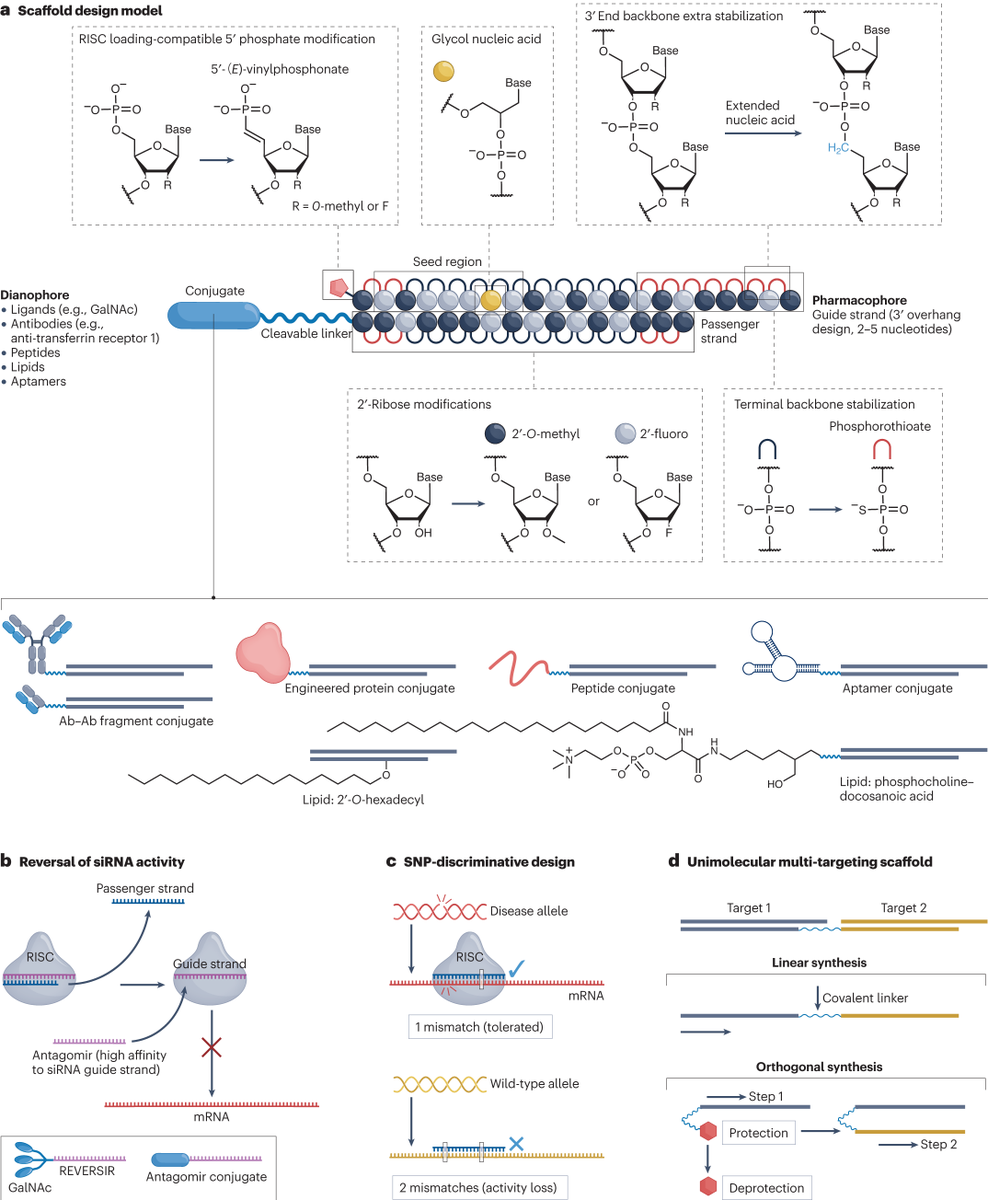
For readers interested in siRNA therapeutics such as Alnylam's vutrisiran, here's a comprehensive recent review https://t.co/BBH5NPYwt7 https://t.co/OnAB4DOwIl
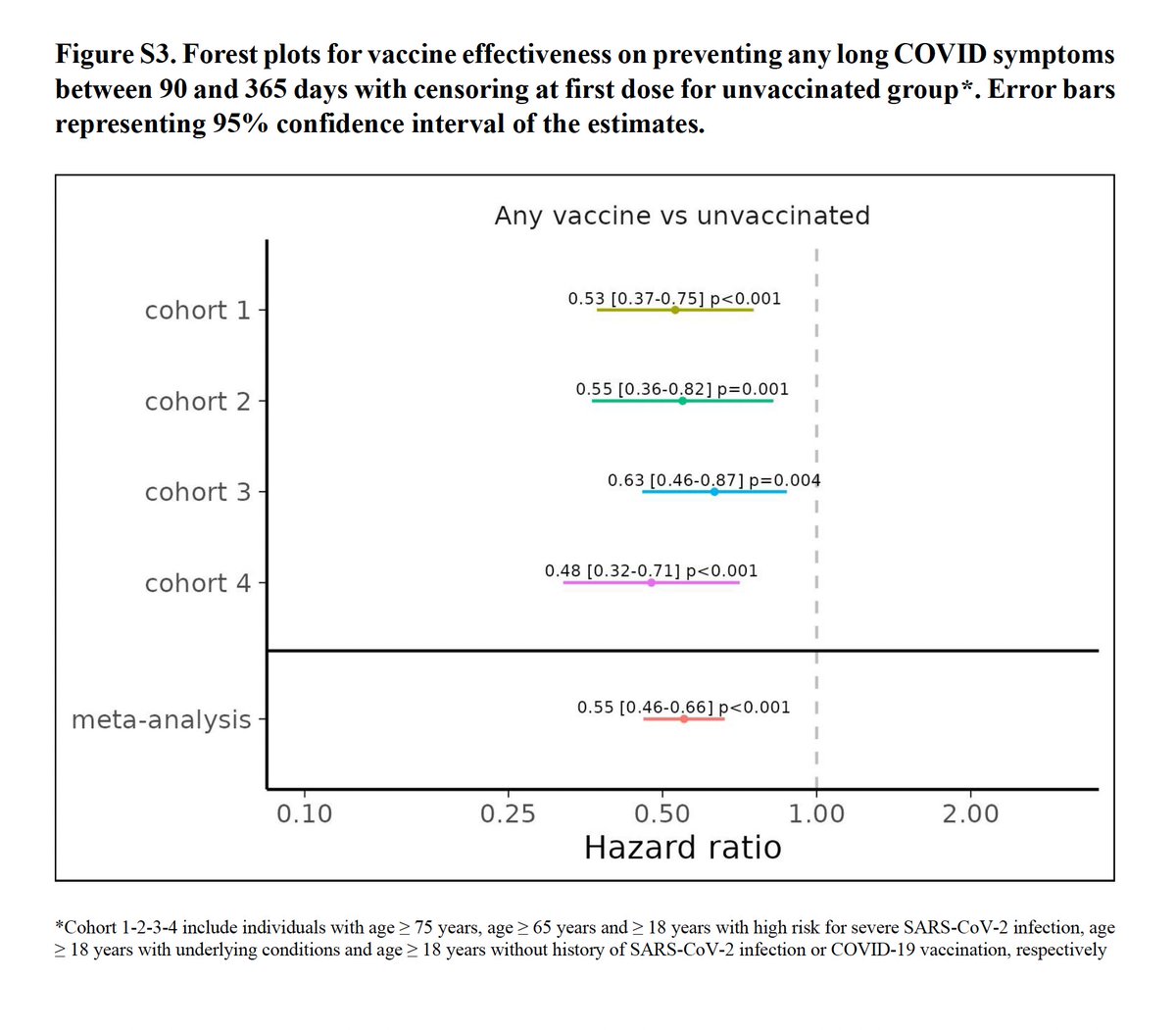
Vaccination reduced the risk of #LongCovid by ~40% in the entire population (5.4 million) of Norway
https://t.co/pwVRT1fhh8 and reduced cardiovascular and thrombotic events @NhungPharma@LancetRespirMed
Our latest work on #actin assembly is now online @ScienceMagazine!
We show how #formins bind and move with the growing barbed end of F-actin.
Awesome collab. between @Intein and Bieling labs @mpimoph, and big thanks to co-first author @maikaboiero
https://t.co/I6A17Jcz8a