https://t.co/Ov0IBWNFg4
Very pleased with our latest deal setting up a pharmaceutical platform with acquisitions in Egypt and in India and managed by a highly experienced management team.
Shohei Ohtani is the best baseball player in the world.
What most people don't know is he's been using a forgotten system of goal setting since he’s been in high school.
It's called the Harada Method & here's how it will help you achieve your biggest goals:
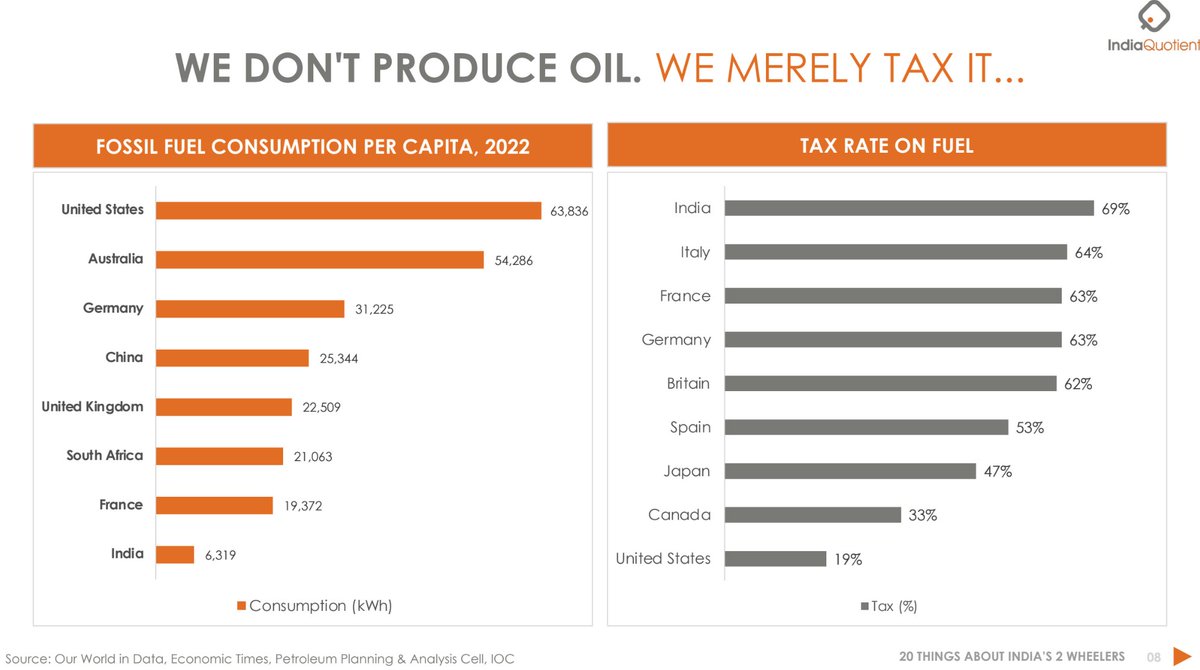
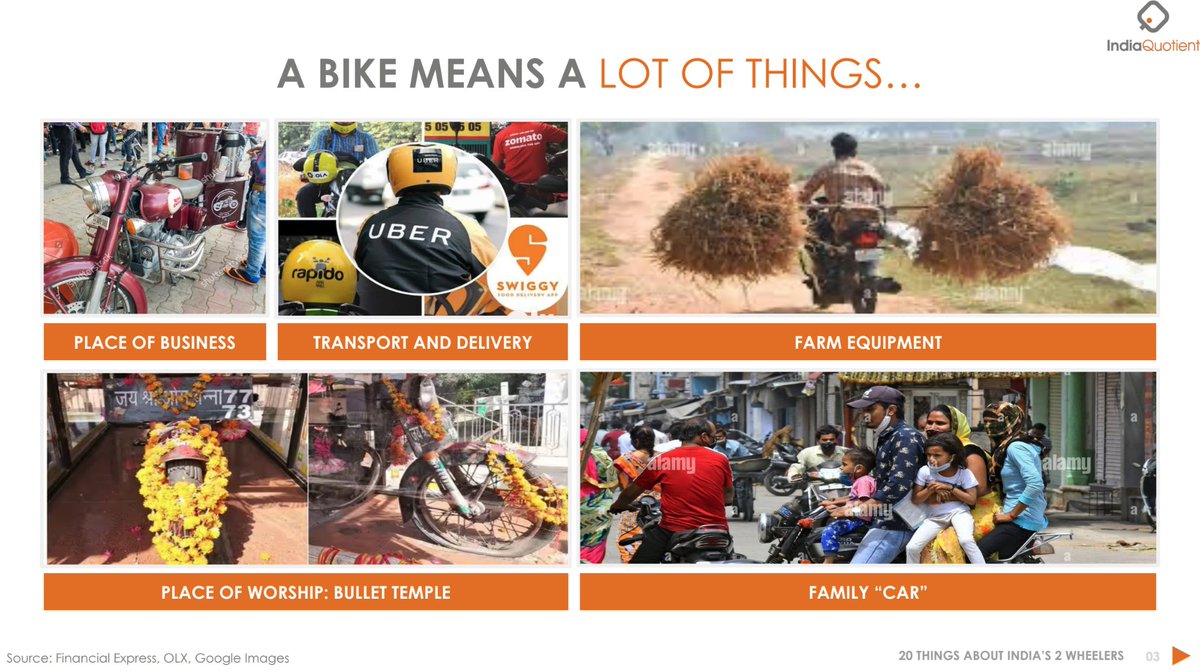
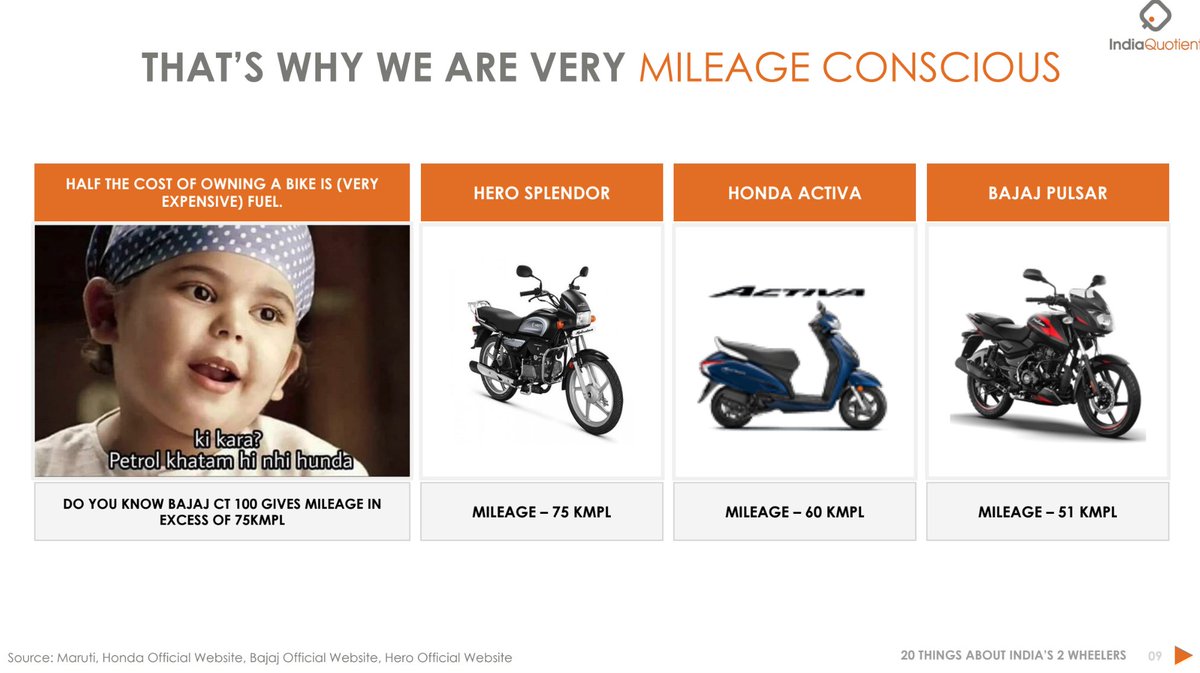
This deck about 2-wheeler opportunity in India by IndiaQuotient is a very good example of building a strong thesis through data-backed + emotional narrative
Full deck: https://t.co/RiU8y7KGHQ
“There’s something about ancient civilizations, both India & China, Christians did not convert. They converted segments…
…sensible, sensitive, but firm government will ride this patch. Soft government trying to accommodate everybody will lead to big mischief.”
- Lee Kuan Yew
The adoption of cellphones by Keralan fishermen is, I believe, the most stunning example of the contribution of information technology to market performance.
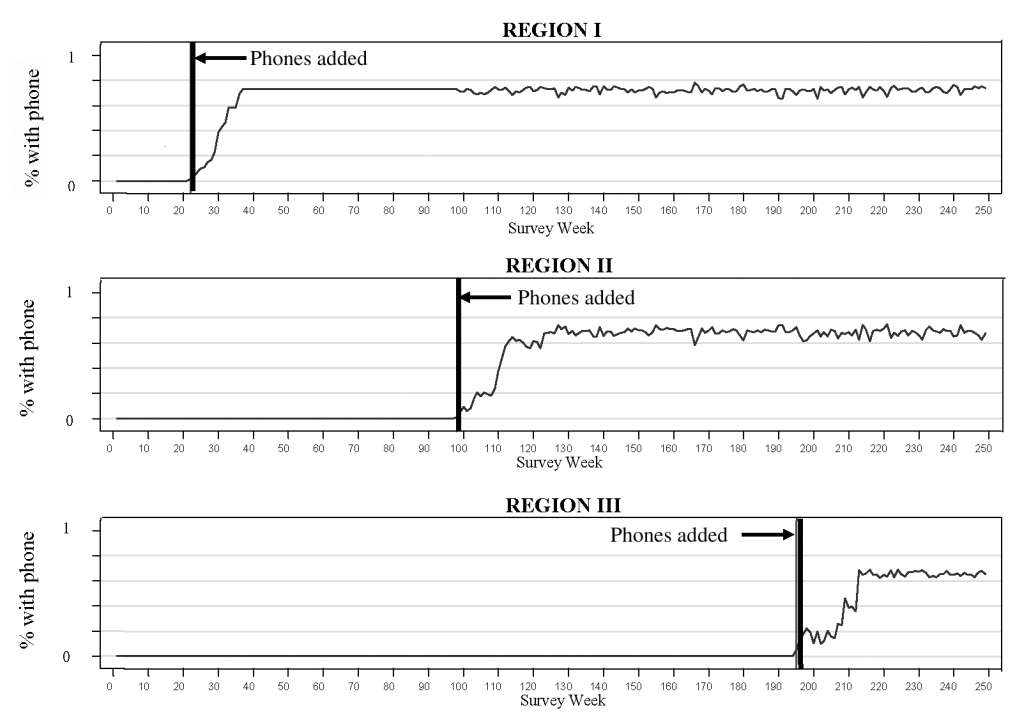
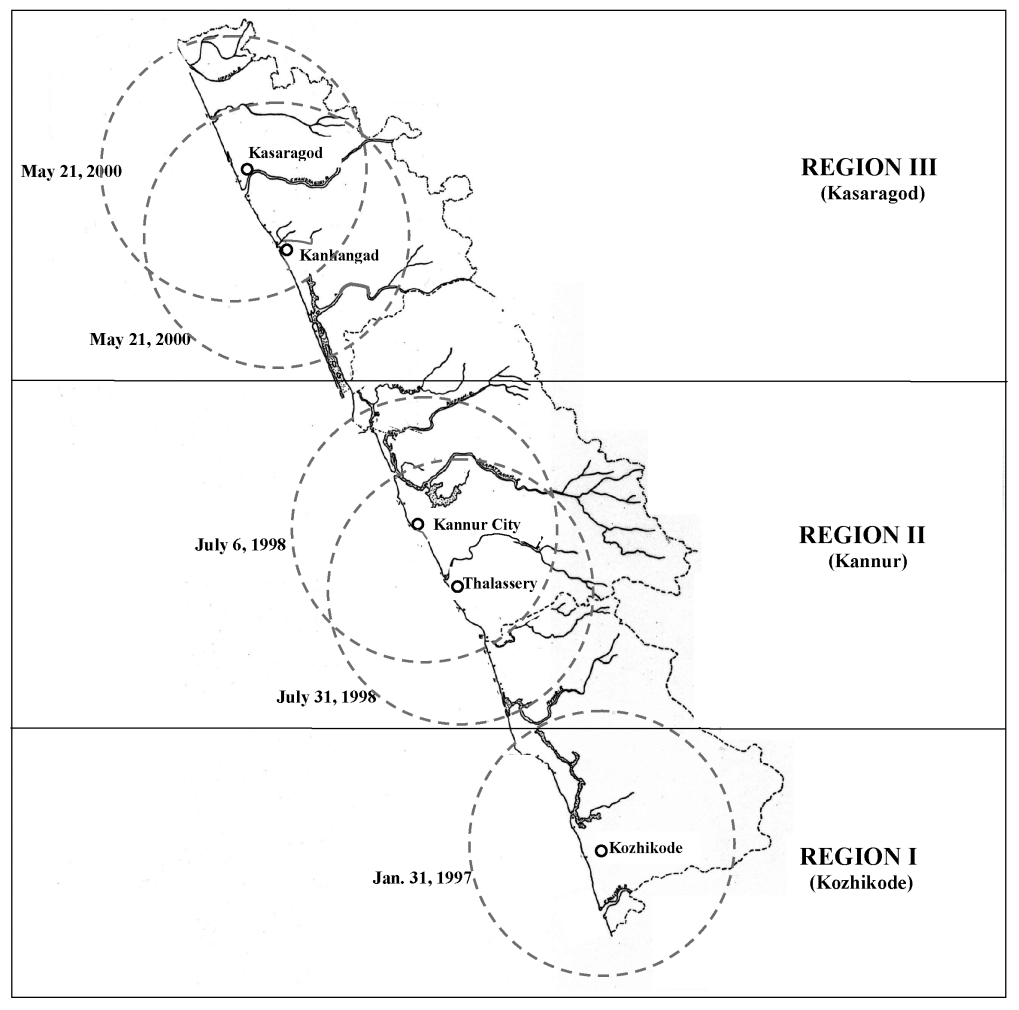
Take a look at this graph for background: in three different regions of Kerala, phones were adopted at different times.
Kozhikode got cellphones before Kannur, who got them before Kasaragod. Adoption by fishermen was fast when phones were finally introduced:
Now look at what happened to the price of fish after phones entered the scene:
The dispersion in prices virtually disappeared! The author of the study wrote about this that:
"Before any region had mobile phones, the degree of price dispersion across markets within a region on any given day is high, and there are many cases where the price is zero (i.e., waste). However, within a few weeks of mobile phones being introduced in Region I, there is a sharp and striking reduction in price dispersion. Prices across markets in the region rarely differ by more than a few rupees per kilogram on any day, compared to cases of as much as 10 Rs/kg prior to the introduction of mobile phones. In addition, the prices in the various markets rise and fall together and the week-to-week variability within each market is much smaller, since catchment zone-specific quantity shocks are now spread across markets via arbitrage. Further, there are no cases of waste in this region after phones are introduced.
"By contrast, price behavior in regions II and III appears largely unchanged after phones are introduced in region I. However, after mobile phones are introduced in region II, prices again become much less dispersed across markets on any given day, less variable within markets over time, and waste is ultimately eliminated, whereas region III again remains unchanged. Finally, the same pattern holds once region III adds phones."
Efficient information transmission enables efficient markets. It's amazing what technology can do.
Read the study here: https://t.co/JcgGQp3G0C
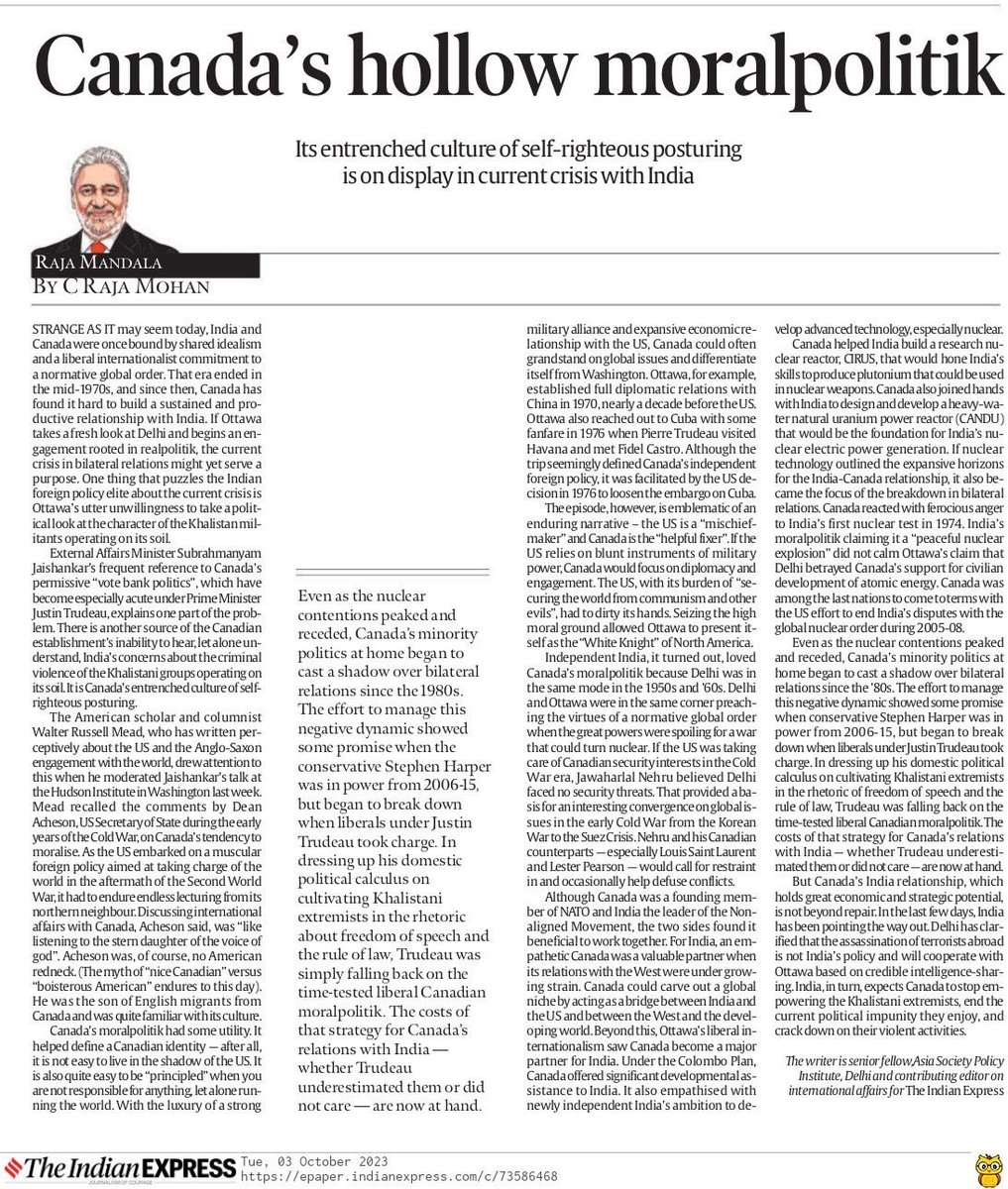
Sharp Edge:No purpose is served by reviving the Bharat-India debate. It was settled by the Constituent Assembly which kept both names.
India is an ancient name. Only
a fool or a liar would claim it was given by Brits
https://t.co/VkVBpHd04y via @theprintindia
Years ago, I worked for a large, multinational company.
Once a year, the CEO would visit our branch.
We prepared for weeks.
Facilities scrubbed. Company values cards on desks. Everyone in their Sunday best.
Nothing he saw was real.
I learned a valuable lesson: everyone lies to leaders.
Today, I’m the one leading a company and I know this rule applies to me.
I was bemoaning this to a friend who said,
This is how telephone poles end up in the middle of the road! No one’s willing to tell the boss he’s missing something.
The feedback I get is skewed, given by employees trying to either:
- Make me happy, or
- Cast them in a positive light
This makes it especially difficult to measure my effectiveness.
When you lead others, you have to learn how to self-evaluate.
Quarterly, I ask myself 5 questions:
Do I still love the people I'm leading?
In 20 years of leading people, I've seen how easy it is to start resenting those I lead. If you look out at the leadership landscape, you see this everywhere.
When you resent people, it gives you license to treat them however you want. You stop developing them. Your relationship becomes functional.
People can be difficult and disappointing. But great leaders fight to keep love at the heart of what they do.
If I want to lead well, I have to start with love.
Are the people I lead willing to admit their mistakes?
Toxic leaders inspire fear. Fear causes people to hide mistakes. Hidden mistakes become repetitive mistakes. Repetitive mistakes sink a business.
If I’m not seeing people raising their hands when they mess up, it means I’ve damaged their trust.
It’s my job to repair it.
Do the people I lead seek my input on things that aren't work-related?
I spent years doing leadership development in a Fortune 500 company.
I asked 1000s of people to describe the best leader they've ever had.
The most common answer: "They cared about me."
If employees are asking for my take on a problem they’re having at home, it’s a sign that our relationship isn’t transactional.
I won’t force my way into their personal lives, but I’ll gladly accept an invitation.
Are the people I lead solving their own problems?
In leadership theory, there’s the concept of the “heroic leader.”
Heroic leaders build organizations that revolve around them. They have the answer to every problem. They are the smartest person in the room.
If the people I lead aren’t solving their own problems, I’ve made myself the focal point.
And that’s the real problem.
Are the people I lead meeting my expectations?
Clear expectations are the core of strong leadership.
If people are consistently failing to meet mine, that means I’m either:
- Surrounded by a bunch of idiots, or
- Failing to define and communicate what I expect.
Leaders assume too much.
People don’t magically know what a good job looks like.
Most problems aren’t performance problems. They’re expectation problems.
***
Leaders rarely get the full truth.
Great leaders know this and develop a regular habit of pausing to question their effectiveness.
If you lead others and aren’t doing that, the telephone pole in the middle of the road is on you.
***
I'm David and I write about being more thoughtful as a spouse, parent, and business leader.
Follow me @wdmorrisjr for more content like this.
If you found this helpful, I'd be grateful if you'd share it with a retweet.
Your engagement encourages me to keep writing!
@hughweber Not silly at all!
I learned via this course and would highly recommend, but it has been a few years: https://t.co/4Nahcq0Jq1
Seems like @Replit's 100 days of code might also be a good fit!