Because Karachi’s infrastructure is not engineered by design, it’s ‘contracted’ to be as cheap as possible, to be good enough for the photo op, without consideration for longevity or long term costs, or sustainability or viability. This cycle of construction and reconstruction is great for the contractors, great for the contracting parties, and terrible for the economy. It’s also myopic, but rats for another tweet.
@ZulfiqarAhmed69 We are working on something similar, mapping in progress for the industrial sector at @PakAirQuality. Website here:
https://t.co/hUJCtwuH7J
@politicalmath Textile education is diminishing globally, including in Pakistan (a large and growing producer of textiles). Students are aspiring for other, non-traditional, career paths.
@faraz_r_khan Could be anything in a new construction. Glues, insulation, cabinets (from fiber board)….
Time to move to a new, but old, place? Made from old fashioned concrete?
This is not an April Fool’s announcement! 🤡
Hawanama has been dream, ten years in the making. Thanks to the PAQI team, especially Mahad Naveed and Rehan Ahmad it’s finally becoming real. 🚀
Hawanama, a state-of-the art data platform, not just for air pollution, but also for climate intelligence. With an AI chatbot to query the data, understand the sources, and evaluate the mitigation options.
Let us know what you think!
Solving Pakistan’s air pollution requires three things:
1️⃣ Identifying the sources.
2️⃣ Weighing the cost-benefit of mitigation actions.
3️⃣ Evidence-based policy implementation.
Meet *Hawanama* : PAQI’s new climate intelligence platform built to map the sources, forecast pollution, and model the solutions.
🚗 Live Now: The Alpha Release (Transportation) We are starting with the largest polluting sector. Because this crisis is too urgent to wait behind closed doors, our early-stage prototype is live. We are currently verifying the data, Emission Factors, and VKTs, but this baseline is here to start a conversation.
Take a look at your district's transport footprint. What stands out to you? Let us know your thoughts.
🔗 Explore and download the data from our Alpha prototype here: https://t.co/gIZ0rfENng
Stay tuned for more from the PAQI team.
@rogueonomist There’s a quasi monopoly on setting up such industries in Pakistan. Even though the equipment is cheap, the system won’t let them operate. Until we open this sector to the free market, it will stay the way it is.
@adam_tooze Pakistan seems to be managing this risk: A Pakistani ‘Aframax’ vessel has made its way through the Strait of Hormuz. More would surely follow.
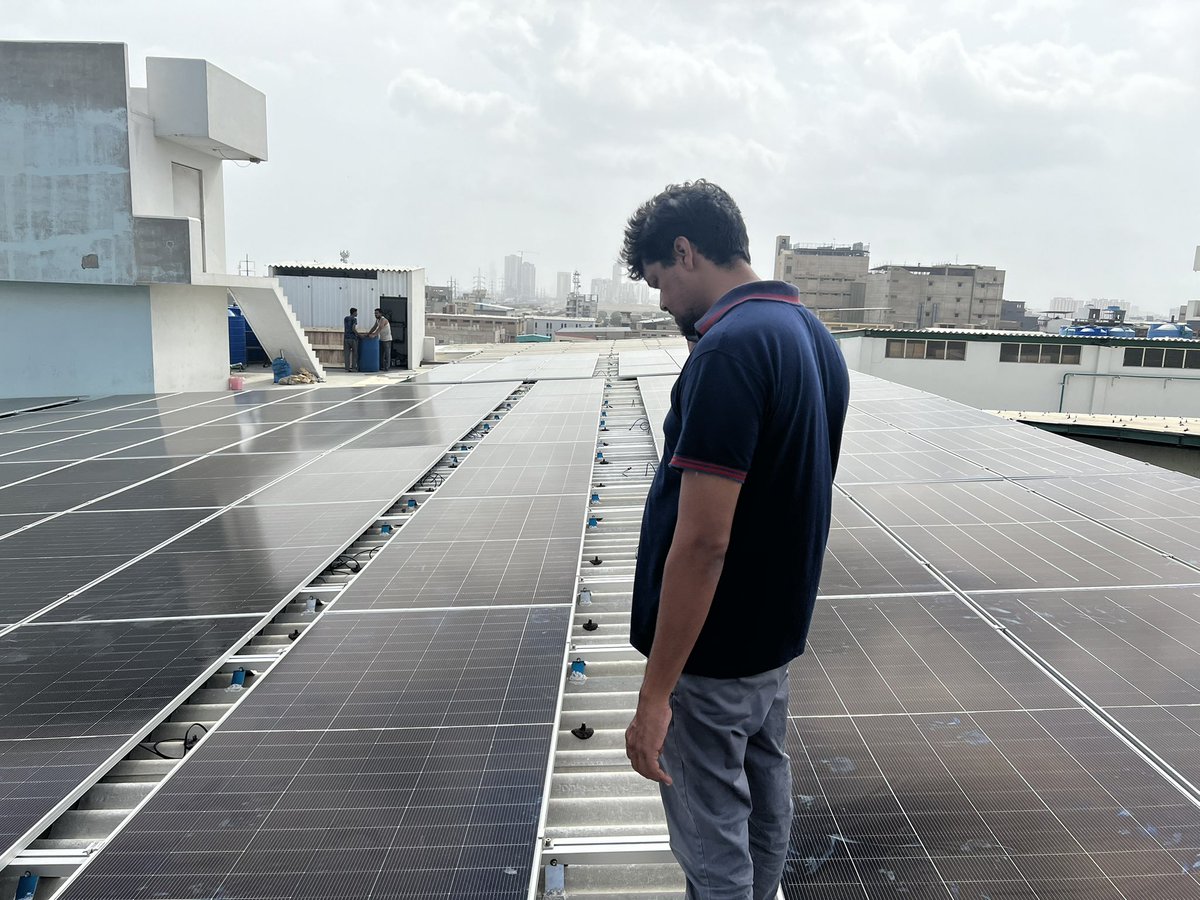
It’s not thanks to the solar boom, rather it was thanks to new gas pricing which made ‘captive power’ generation prohibitively expensive, even more than than the grid supply, which drove an expensive transition to the grid (CAPEX was forced onto the buyer), and with an unreliable grid supply (breakdowns and fluctuations), and incredibly high 18 month ROI for solar, it drove a solar boom.
For the short term, it’s a bitter pill, but over the mid- and long-term, this transition will result in very competitive industry, and with the green benefit of being low carbon or zero carbon industrial clusters.
Quite amazing how the side effect of a distorted policy decision can lead to excellent outcomes.
This has not only driven this shift from gas to grid to renewables (industry is adding wind power when possible in the wind corridor), but also the startup of large scale BESS adaption.
Without self sufficiency, industry cannot be competitive with currently distorted grid energy pricing.
So it’s more economics rather than anything else driving this transition.