only 2 people bought online tickets since this post 😭 i still need 120 online or IRL so i don’t lose money 😣 please share to your Parisian or alternative music lovers friends!!
1/ At 17 weeks pregnant, Emily Waldorf was suddenly faced with a life-threatening situation: Her baby’s foot was dipping out of her cervix.
Doctors told her the longer her cervix stayed open, the higher her risk of infection.
They knew how to treat her. There was one issue…🧵
Scientists confirm that adults with unmedicated ADHD often develop anxiety as a compensatory activation mechanism. The body learns that worry produces the chemistry the brain needs to start. The strategy works for decades. The cost is a body running on cortisol that was never meant to be a primary fuel.
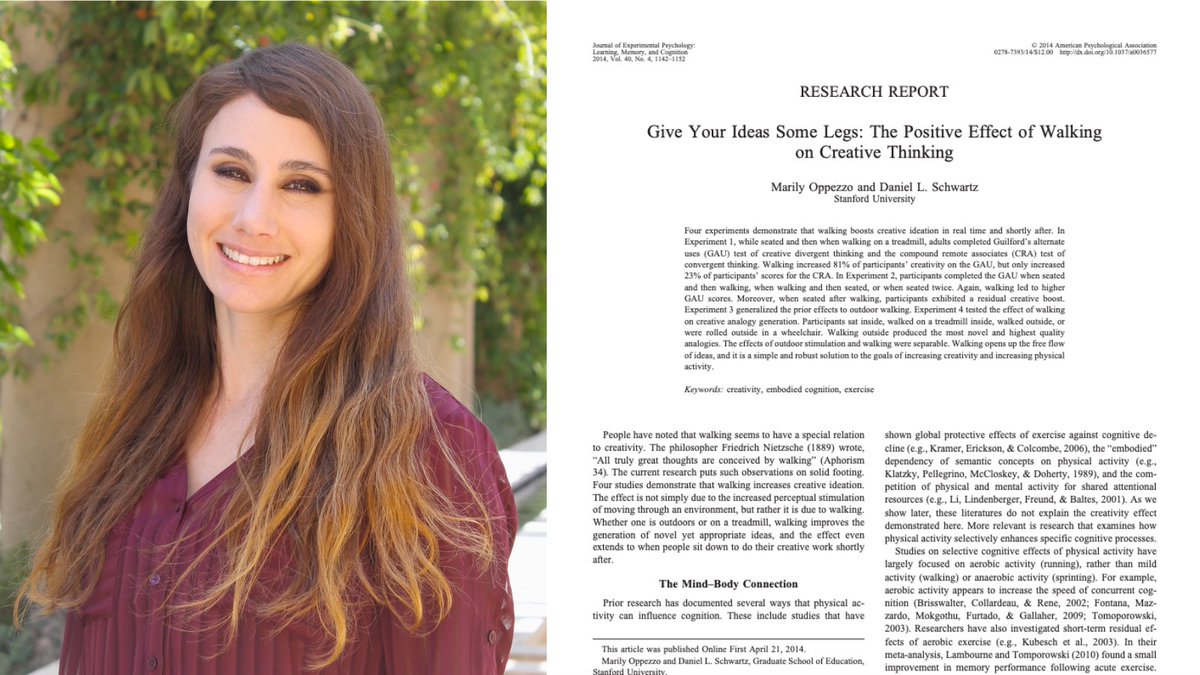
A Stanford psychologist spent 4 years proving that the simple act of walking generates 60% more creative ideas than sitting, and the experiment she designed to kill every alternative explanation is one of the most decisive findings in modern psychology.
Her name is Marily Oppezzo.
She got the idea for the study while walking with her advisor at Stanford to discuss her thesis topic, and the paper she eventually published in the Journal of Experimental Psychology in 2014 is sharp enough that it should have ended the seated meeting on the day it came out.
She ran 4 experiments on 176 people. Same person tested twice. Once sitting, once walking. The creativity tasks were the standard ones psychologists have used for decades to measure how good a brain is at generating novel useful ideas.
The result was almost too clean to publish.
81% of participants in the first experiment produced more creative ideas while walking than while sitting. In the second experiment, 88%. In the third, 100%. Every single person walked into a more creative version of themselves.
On average, people generated 60% more novel useful ideas the moment their legs started moving.
The skeptical question is the obvious one. Maybe it was the fresh air. Maybe it was the scenery passing by. Maybe it was the change of environment doing the work, not the walking itself.
Oppezzo killed every one of those explanations with one experimental decision.
She put people on a treadmill facing a blank wall. No scenery. No fresh air. No environmental change. Just legs moving in place while staring at white drywall. The 60% boost held.
Then she ran the experiment that closed the case completely. She took participants outside in two conditions. Half of them walked through a Stanford courtyard. The other half were pushed through the exact same courtyard in a wheelchair. Same outdoor stimulation. Same scenery passing at the same speed. The only difference was whether the legs were moving.
The walkers produced dramatically more novel high-quality ideas than the wheelchair group. The outdoors did almost nothing on its own. The walking did everything.
This is the part of the study that hit hardest when I read it the first time.
She also tested the opposite kind of thinking. Convergent thinking. The kind where there is one right answer and you have to narrow down to it.
Word puzzles where 3 words share a hidden fourth word that connects them. The seated participants did slightly better on these. Walkers got slightly worse.
Walking is not a general intelligence enhancer. It does one specific thing. It opens up the divergent search inside your brain. The part that generates options. The part that produces unexpected connections. The part that takes a problem and finds five ways into it instead of one.
When you need to converge on the single right answer, sit down. When you need to find the answer in the first place, get up.
The mechanism is now well understood. Walking selectively activates what neuroscientists call the default mode network, the system inside your brain that runs when you are not consciously focused on anything. The DMN is where mind-wandering happens. Where memories cross-reference each other. Where ideas that have been sitting in separate folders inside your head finally bump into each other.
When you sit at a desk and force yourself to concentrate, you suppress the DMN. When you walk at a natural pace, the executive part of your brain gets just busy enough handling the walking that the DMN comes online and starts doing the work that focus was blocking.
The most useful finding in the entire paper is the one almost nobody quotes.
The boost did not turn off the moment people stopped walking. Participants who walked first and then sat back down stayed elevated. Their next round of seated creativity work was still significantly better than people who had been sitting the whole time. The rest lingered for at least several minutes after the legs stopped moving.
You do not need to do creative work while walking. You need to walk before the creative work. The brain holds the state.
The history of this is the part that should haunt anyone who still does meetings in chairs.
Charles Darwin built a gravel loop behind his house in Kent called the Sandwalk and walked it 3 times a day for the rest of his life. The theory of evolution was developed one lap at a time on that path.
Nietzsche walked up to 10 hours a day during the years he wrote his most important books and openly said the work was conceived on his feet.
Beethoven composed for the morning and walked for 5 hours every afternoon with a pencil in his pocket for when something landed.
Kahneman said the best thinking of his Nobel Prize-winning career happened on leisurely walks with Amos Tversky. Steve Jobs refused to take important conversations sitting down. He held them on foot.
Every one of them was using the system Oppezzo would not measure until 2014. They just did not know what to call it.
The question worth sitting with is the one almost nobody asks.
Every meeting you have ever attended sitting around a table was a meeting held at a fraction of the brain power that was actually available to the people in the room. Every brainstorm that got stuck inside a conference room. Every problem you tried to solve at a desk and gave up on. Every idea you could not quite get to.
The intervention is the easiest one in modern science. No supplement. No app. No subscription. No training program. Just a pair of legs and 15 minutes.
The Stanford lab proved it. The philosophers knew it. The neuroscience explains it.
And almost everyone reading this is still trying to think their way out of problems sitting completely still.
doctors are like, "but surely you'd feel safe to unmask around ME, the guy who is professionally obligated to be face-to-face with sick people all day every day?"
Folks need $ for PPE in Congo and other African countries.
The situation is bad, but many people there care about mitigating Ebola.
Sadly Western Imperialism and Colonialism make it hard (war, slavery from mining, trade etc).
Any help is appreciated:
https://t.co/vrf6zzTo5s
The USDA has kept raccoon rabies out of the central United States for over 30 years by air-dropping fish-flavored ravioli from helicopters.
Each one is a small packet coated in fishmeal with an oral rabies vaccine inside. Raccoons, foxes, coyotes, and skunks find them by smell, bite through, and swallow.
Many animals that consume the bait develop immunity, helping build a protective barrier across populations.
The bait is generally considered safe for pets and tested in many non-target species.
The USDA's Wildlife Services has been running this since 1995. Without the bait program, raccoon rabies very likely would have spread much further west.
A federal program you've probably never heard of is protecting your pets and your kids by feeding wild animals ravioli from a helicopter.
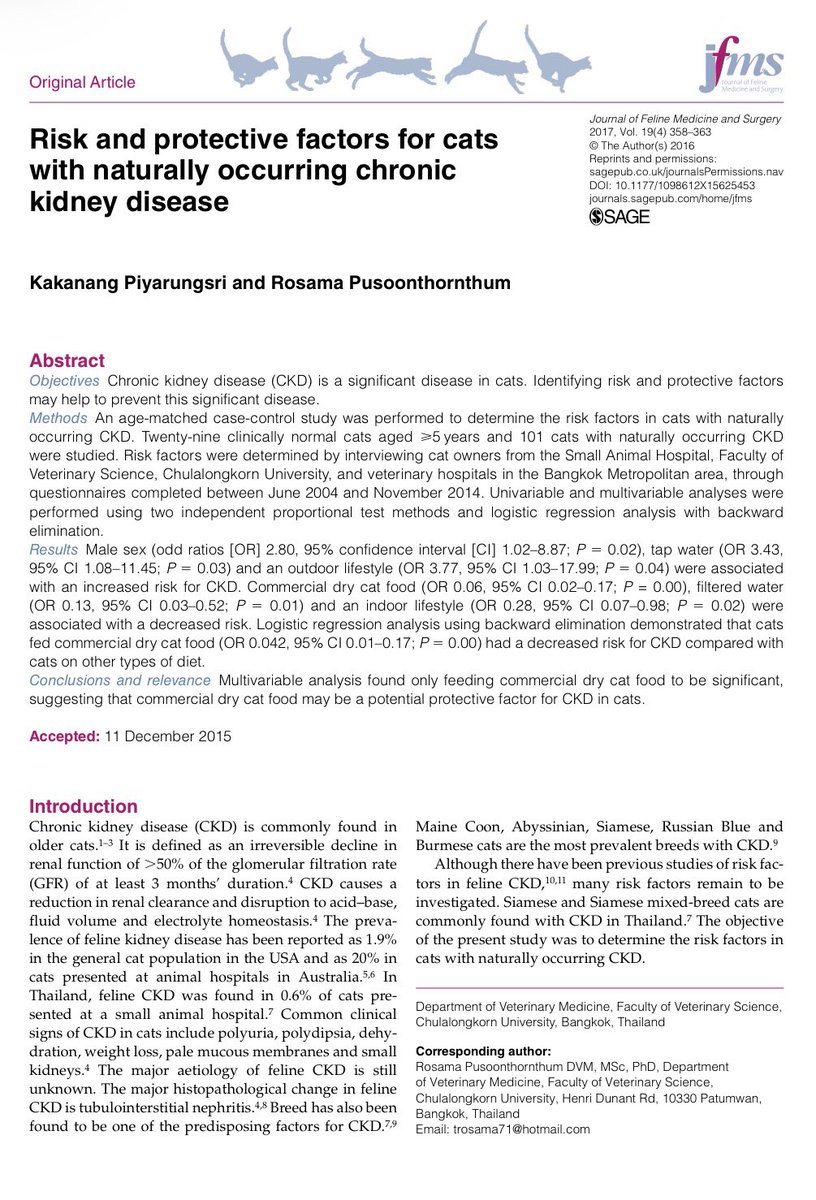
Cats who drink filtered water live longer.
Cats who drank primarily filtered water had 87% lower odds of developing kidney disease. Tap water led to 3.4x higher risk.
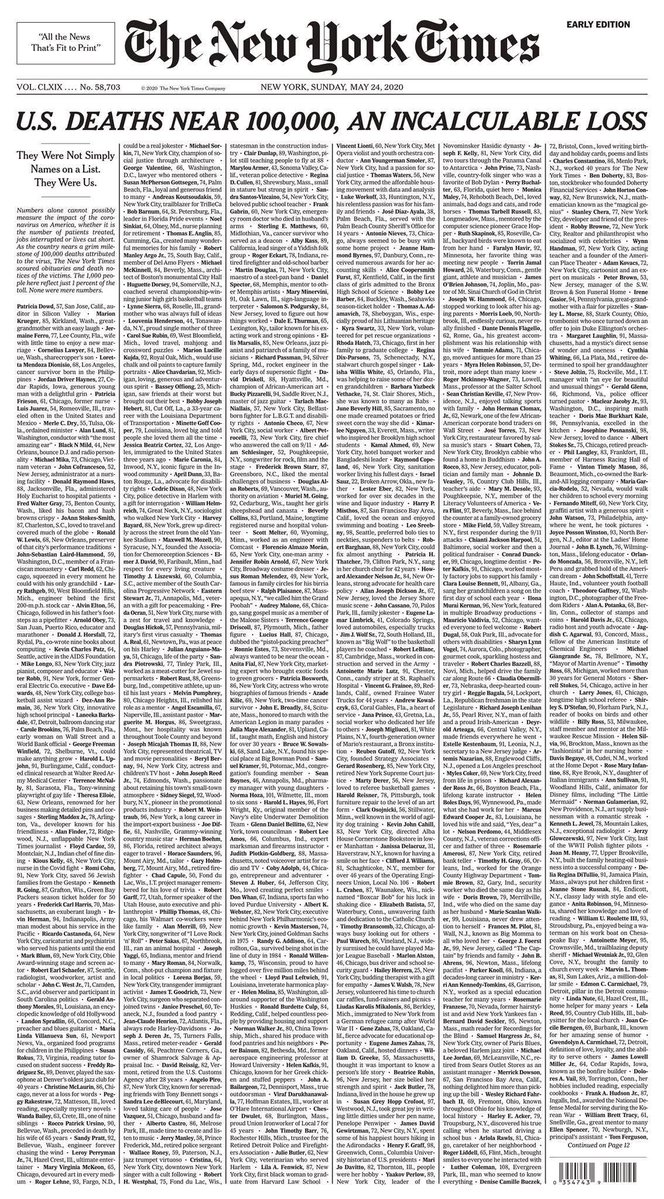
I mask for the folks I lost to Covid before masking protocols. I mask because I still grieve for people who didn’t get a chance to mask. It’s respect. It’s protection. It’s both mourning and protest.
"during covid and stayed high" uhhh i wonder if it's bc we're still in a pandemic but all our goverments and public health organizations decided eugenics is easier than change