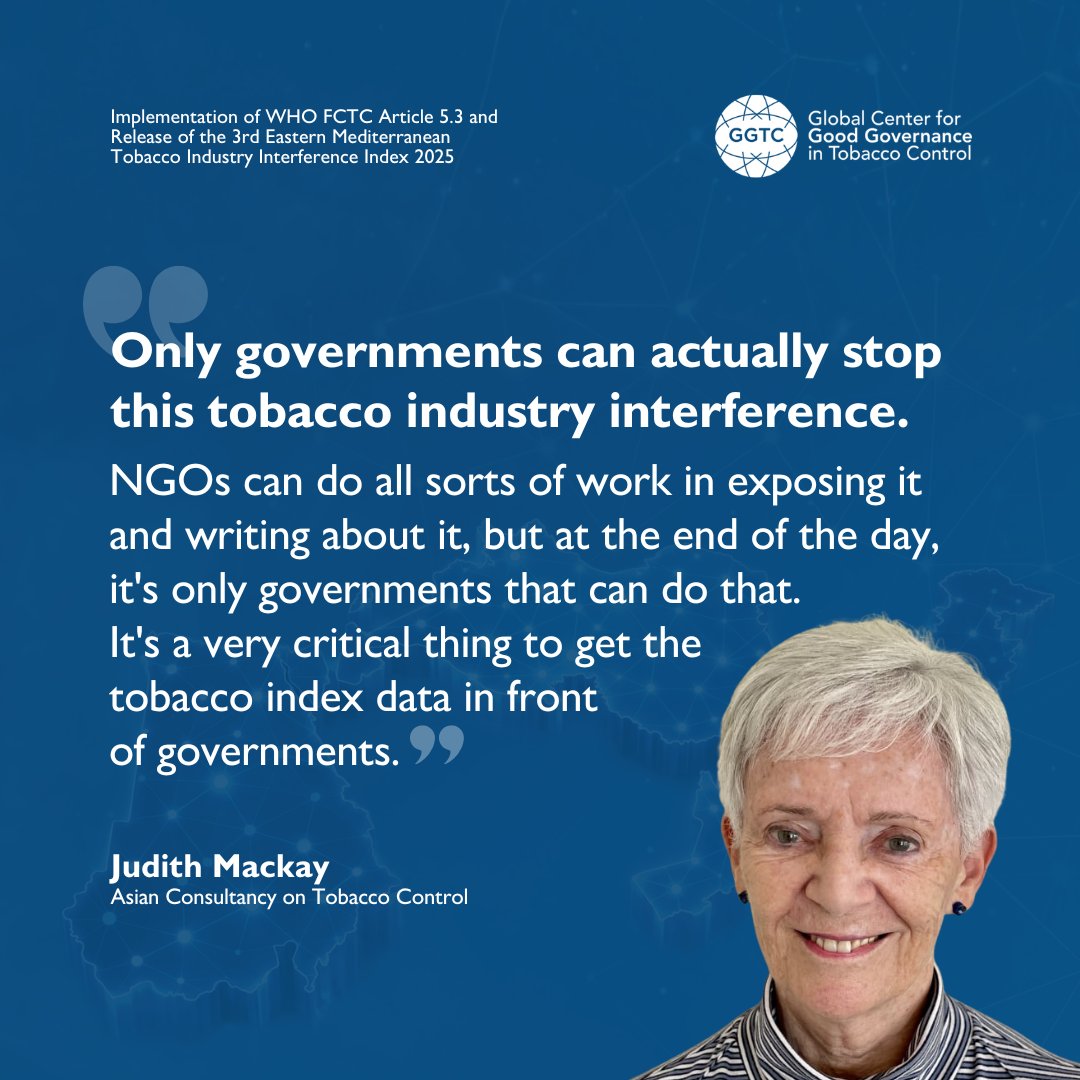
Civil society and public health advocates play a critical role in exposing tobacco industry tactics, but governments remain central to implementing and enforcing protections against industry interference under WHO FCTC Article 5.3.
During the webinar on the implementation of WHO FCTC Article 5.3 and the release of the 3rd Eastern Mediterranean Tobacco Industry Interference Index 2025, speakers highlighted the importance of ensuring that policymakers have access to evidence documenting tobacco industry influence and interference.
Explore the Eastern Mediterranean Tobacco Industry Interference Index 2025 and related regional resources: https://t.co/NXVrdThzBe
#TobaccoIndustryInterference #Article53 #GGTC #TobaccoControl #EMRO
Article 5.3 of the WHO Framework Convention on Tobacco Control obligates governments to protect public health policies from tobacco industry interference. This includes rejecting partnerships, avoiding conflicts of interest, and strengthening safeguards against industry influence.
At the launch of the 3rd Eastern Mediterranean Tobacco Industry Interference Index 2025, speakers emphasized the importance of a whole-of-government approach in addressing tobacco industry tactics and reinforcing accountability mechanisms across sectors.
Explore the Eastern Mediterranean Tobacco Industry Interference Index 2025 and related regional resources: https://t.co/AHuZlGzvcC Health Organization (Eastern Mediterranean Regional Office)
#TobaccoIndustryInterference #Article53 #GGTC #TobaccoControl #EMRO
On World No Tobacco Day, the conversation on tobacco control goes beyond awareness. It is also about strengthening the institutions, systems, and coordination needed to sustain long-term public health action across Africa.
This year’s theme, “Unmasking the appeal – countering nicotine and tobacco addiction,” underscores the urgent need for stronger implementation capacity, coordinated policy engagement, and resilient public health systems.
Across 11 African countries, ACBF’s Tobacco Control Program has supported organizations working to strengthen governance systems, institutional coordination, project management, monitoring, and policy engagement in support of stronger tobacco control implementation.
The program has also advanced gender-responsive approaches to tobacco control while strengthening regional collaboration aligned with the WHO Framework Convention on Tobacco Control and COP11 outcomes.
Through this support, partner organizations are reinforcing the systems and structures that help sustain smoke-free initiatives and protect public health over the long term. Organizations such as the Nigeria Tobacco Control Alliance, the Africa Centre for Tobacco Industry Monitoring and Policy Research (AITM), the International Institute for Legislative Affairs (IILA), and the Mathiwos Wondu-YeEthiopia Cancer Society (MWECS) have demonstrated strong leadership in advancing tobacco control efforts through improved institutional systems, strengthened policy engagement, and expanded capacity within their respective contexts. Their continued work is helping to build more sustainable and effective public health responses across Africa.
The initiative reflects a broader commitment to advancing stronger institutions and healthier societies in line with Agenda 2063.
Learn more about the work, experiences, and perspectives of these organizations and how they are helping shape stronger tobacco control systems across Africa:
https://t.co/3DQ6tsDmsr
#WorldNoTobaccoDay2026 #TobaccoControl #Agenda2063 #WHO #ACBF
Don’t be fooled by flavours.
Most e-cigarettes contain nicotine, which is highly addictive and can quickly get you hooked.
They also produce tiny particles that can travel deep into your lungs, along with toxic chemicals such as formaldehyde and heavy metals.
E-cigarettes can harm your lungs and heart.
Don’t let e-cigarettes take over your life.
Les corps des personnes décédées d'#Ebola peuvent encore vous infecter avec le virus. Des enterrements dignes et sécurisés sont essentiels pour contenir l'épidémie.
Pour en savoir plus.⬇️
#ViralFactsAfrique@viralfacts
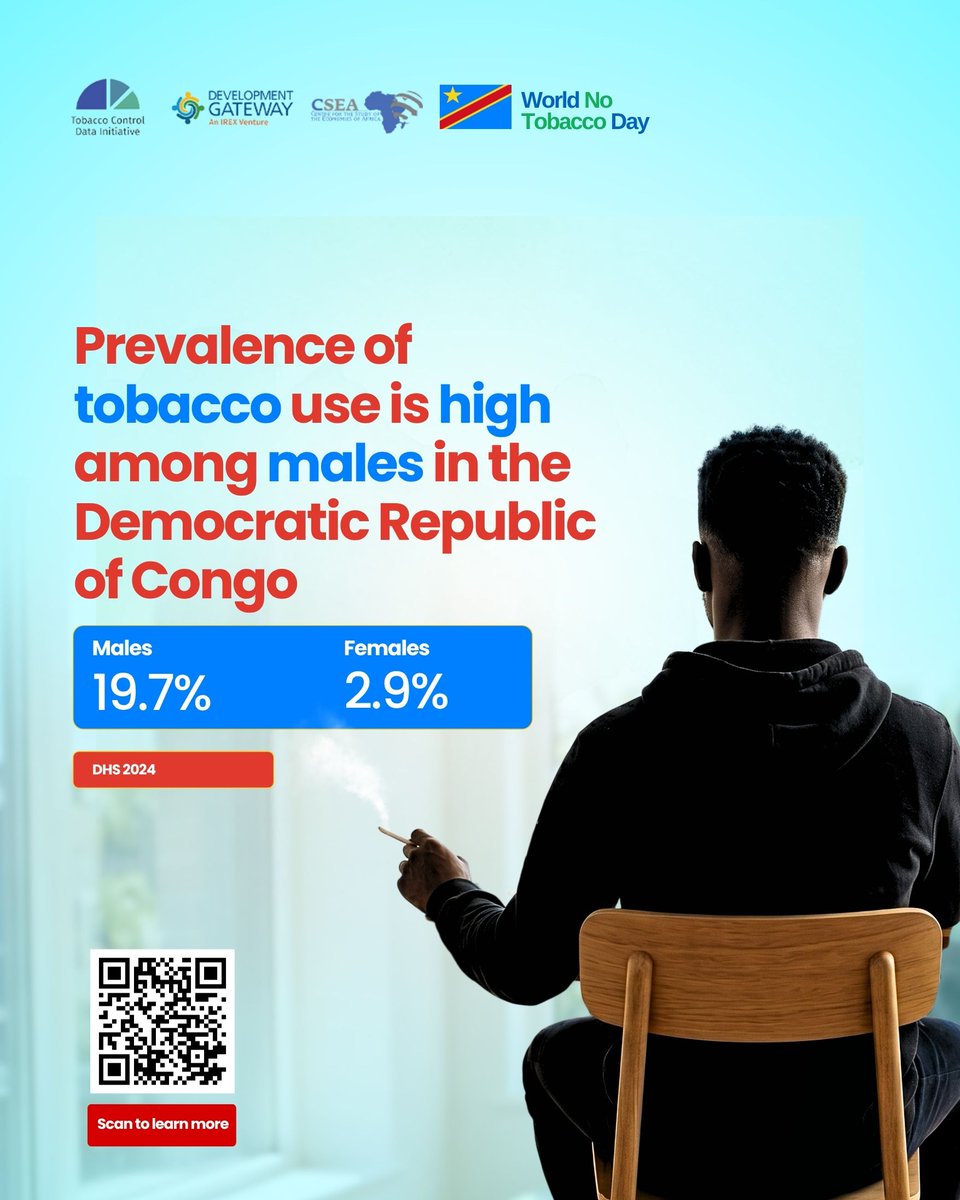
In the #DemocraticRepublicofCongo, the overall tobacco usage (ages 15–49) rose from 10.3% in 2014 to 12.6%, with a high male demographic consumption dominated by manufactured cigarettes (DHS 2024).
Learn more about tobacco prevalence:
https://t.co/2LOXKWPIci @ACCTRDC
#WNTD2026
Did you know?
Around 15 million adolescents aged 13–15 worldwide already use e-cigarettes.
This is a public health emergency — and we all have a role to play. Join the movement and take action ⬇️
🚫 Ban flavours
Make flavours a thing of the past.
⚙️ Regulate product design
Less appealing. Less addictive. Less toxic. Less harm.
📦 Plain packaging
Reduce appeal. Save lives.
📢 Ban advertising, promotion and sponsorship
Out of sight. Out of mind.
🌿 Tobacco- and nicotine-free public places
Clean air is everyone’s right. Protect people.
💙 Support quitting
Break the cycle of nicotine addiction.
💰 Increase taxes
Less affordable. Less accessible.
#FCTCSavesLives
https://t.co/8gA6kHZXH7
En mission à #Kampala, Dre @anne_anciiaWHO a salué une réponse coordonnée pour stopper l’épidémie en 🇨🇩& en 🇺🇬.
🔹Surveillance
🔹Recherche des contacts
🔹Prévention & contrôle
🔹Diagnostics
🔹Coordination transfrontalière
La confiance des communautés reste au cœur de la riposte.
Voici quelques conseils pour réduire le risque de #cancer :
🚭 Ne fumez pas
🏊 Faites une activité physique régulière
🌽 Mangez plus de fruits et légumes
✅ Maintenez un poids santé
🍷 Limitez votre consommation d'alcool
Nous pouvons vaincre le cancer !
Célébrons ensemble la Journée de l’Afrique !
« L’ONU est fière de collaborer avec les pays d’Afrique pour bâtir l’avenir pacifique, prospère et durable que méritent les Africaines et les Africains. »
— @antonioguterres
https://t.co/XgBPNiweFn
Près de 13 ans après sa signature par la RDC l’AN adopte le projet de loi autorisant la ratification du Protocole OMS pour éliminer le commerce illicite des produits du tabac Le texte sera transmis au Sénat
@ACBF_Official@FCTCofficial@AfricaNoTobacco@CTFKGlobal#tobaccofreedrc
Points saillants des Nouvelles sur les Épidémies concernant la maladie #Ebola causée par le virus #Bundibugyo, en 🇨🇩 & en 🇺🇬 ��� 16 mai 2026.
🔴 Au 15 mai, un total de 246 cas suspects et 80 décès (dont 4 décès parmi les cas confirmés) ont été signalés.
https://t.co/eb2fiaYbvz
La 79e session de l'Assemblée mondiale de la Santé (#WHA79) s'ouvre lundi 18 mai, à Genève.
L'AMS est le principal organe décisionnel de l'OMS & regroupe 194 États membres.
Les délégués de tous les États membres se réuniront pour définir les priorités & les politiques de l'OMS.
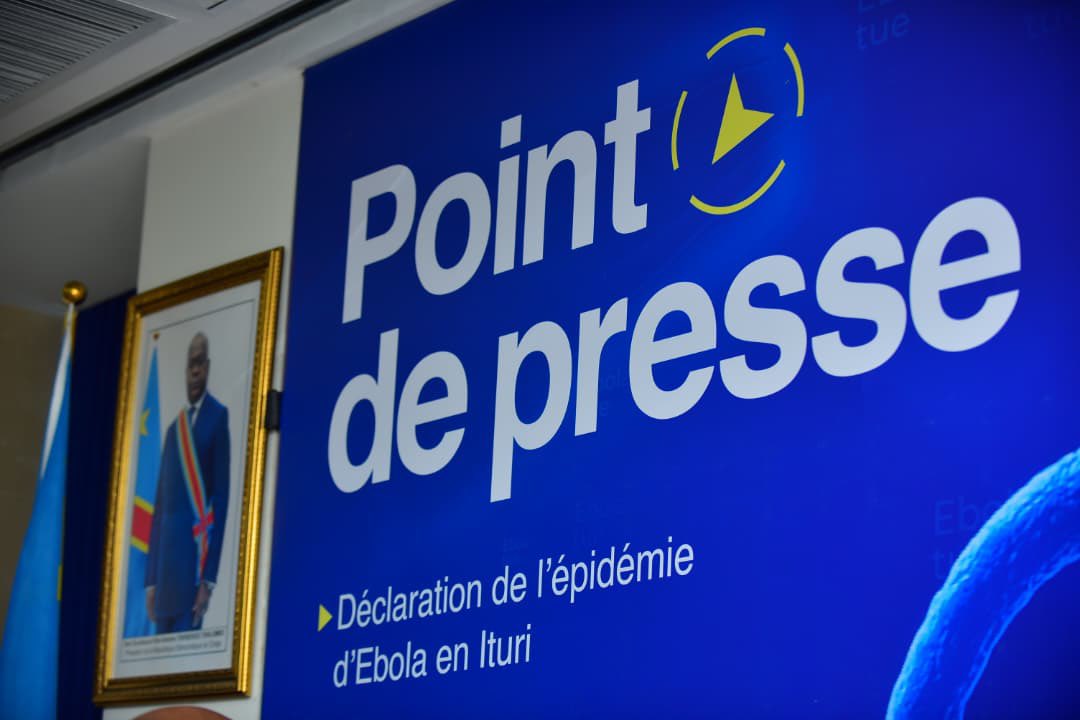
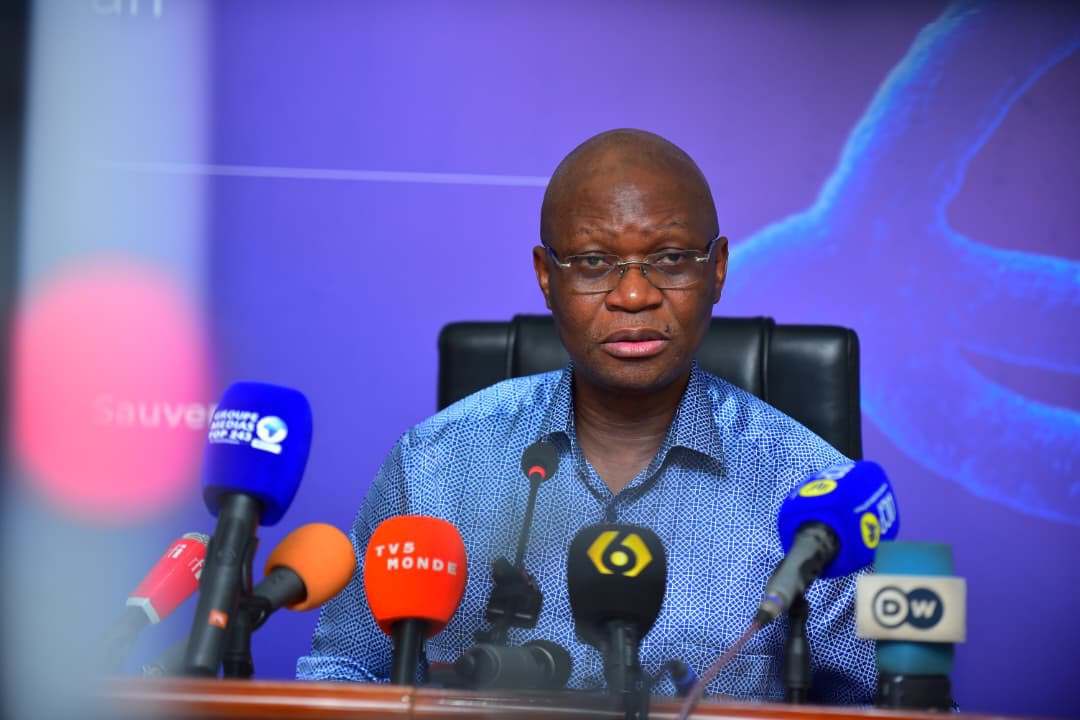
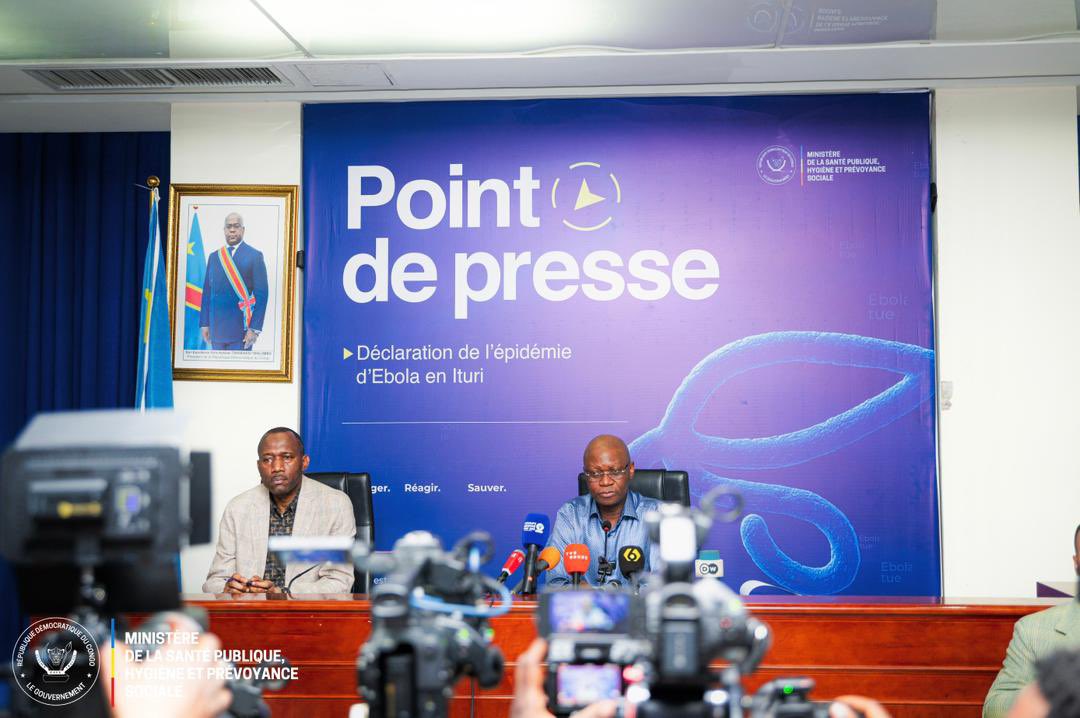
Le samedi 16 mai 2026, le Ministre de la Santé Publique a déclaré au nom du Gouvernement la 17ᵉ épidémie d'Ebola en RDC.
📍 Province de l'Ituri — Zones de Rwampara, Mongwalu et Bunia.
Souche Bundibugyo confirmée par l'INRB.
8 cas positifs · 246 suspects · 80 décès.
Réponse activée. Équipes déployées. Prise en charge gratuite.
Appelez le 151 immédiatement si vous observez fièvre et saignements dans votre entourage.
Seize fois déclarée. Seize fois vaincue.
La 17ᵉ ne sera pas différente.
Au lendemain de la déclaration officielle de la 17ᵉ épidémie de Maladie à Virus Ebola, faite lors du point de presse du 16 mai 2026, le Ministre de la Santé Publique, Hygiène et Prévoyance Sociale s’est rendu ce 17 mai à Bunia, chef-lieu de la province de l’Ituri, afin de s’enquérir personnellement de l’évolution de la situation sanitaire et de renforcer la coordination de la riposte sur le terrain.
Cette mission témoigne de l’engagement du Gouvernement à assurer une réponse rapide, coordonnée et efficace, aux côtés des autorités provinciales, des équipes médicales et des partenaires de santé.
La protection des populations demeure la priorité absolue.
#RDC #Ebola #Riposte #SantéPublique