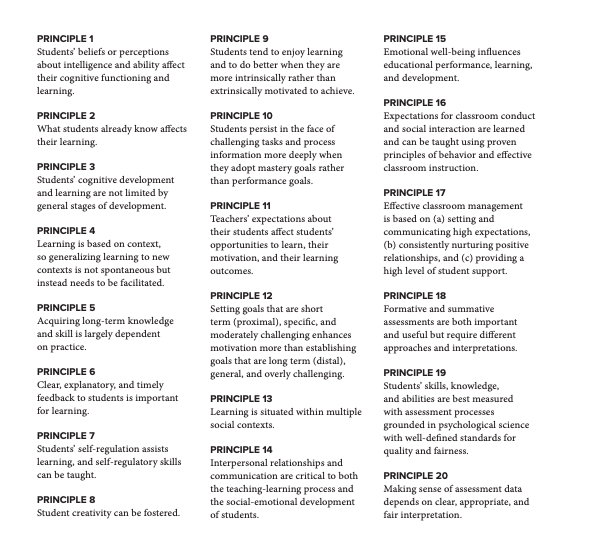
What accelerates learning? Our researchers unpack the science of learning in MIND Education’s latest e-book: How to Accelerate Learning with Neuroscience. https://t.co/PStQTpvaUg #AcceleratedLearning#Neuroscience#AccelerateLearning
#Didyouknow if you register for the full week of Lexia's first ever #ScienceOfReading Week, you will receive exclusive access to the film, ""@RightToReadFilm".
Register now for #LexiaSORWeek! You don't want to miss this webinar series! https://t.co/atnoGmdEyD
What teachers & students THINK is working often conflicts with what scientists have discovered about the learning process.
That can make teaching and learning harder than it needs to be.
More in my latest Forbes post:
https://t.co/1pSyJJ9Gwh
What do teachers do over break? Read! Just finished @joboaler's newest book, Limitless Mind, and could not put it down. Boaler offers 6 keys to unlocking students' learning potential, supported by fascinating and relevant neuroscience research. Highly recommend for all educators.
Much of teaching is attention management: knowing where students' attention is at all times.
The more students struggle, the more they learn.
Learning is effortful, but not all effort leads to learning.
(2/2)
#latb58
Sound bites from @SChewPsych's talk at the @learningandtheb conference:
People think that teaching is giving students information. Teaching is much more than that. It’s about creating an environment where students can learn.
(1/2)
“If you encourage struggle, if you remind kids that they can learn anything, we now know there are no limits to what they can learn.” @joboaler, Stanford math professor, on her best advice for early math educators.
https://t.co/zizKs9wvLI
It seems so obvious, but:
Students learn more when they have to THINK HARDER.
In this case: the benefits of the #testingeffect result from the additional thought required.
h/t @cbokhove
https://t.co/T26zQ17LRD
Loved reading this paper. Well synthesized and practical. A helpful guide for educators to think about effective teaching as a means for enhancing student learning.
Research helping teachers know WHAT TO DO? Valuable.
Research helping teachers know HOW TO THINK? Priceless.
In this paper, @SChewPsych and @BillCerbin provide wise frameworks and helpful suggestions.
https://t.co/6ELL9qyGQo
You can meet Dr. Chew at our February Conference.
2020 education research highlights:
- Neuroscientists urge schools to keep cursive
- Tips to make virtual classrooms work
- What happens when students live near coal power plants
- Researchers weigh in on the Reading Wars
My latest on @edutopia:
https://t.co/L1veiaDeVa
How Can Cognitive-Science Research Help Improve Education? The Case of Comparing Multiple Strategies to Improve Mathematics Learning and Teaching - Bethany Rittle-Johnson, Jon R. Star, Kelley Durkin, 2020 https://t.co/3kR9AF2jWq
This meta-analysis looks at #retrievalpractice in actual school classrooms (not psychology labs).
It finds:
* RP works! And, works better if RP quizzes count toward the grade (that's a surprise)
* Prompt feedback helps
* Short answer > multiple choice
https://t.co/Nmu5yjymIt
When do elementary school students go off task?
This research summary from the @hechingerreport focuses on
* the length of the lesson
* whole-group vs. small group
* classroom decor
A useful framework for student #attention.
https://t.co/491SB9SKQV