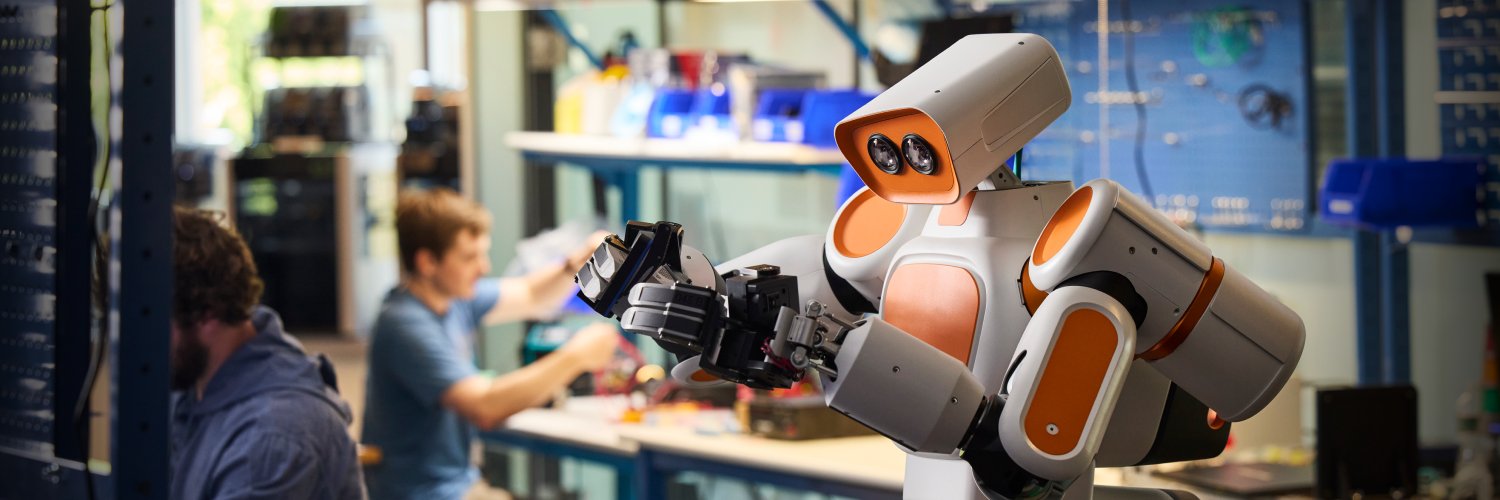
Frontier AI is not perfect. So how do you deploy robots that must meet the highest performance standards while still learning? Learn jointly to do the work and to call for help! Read below to learn about on of our key ingredients in continuously learning in production.
How can you know when you don’t know? At Walden, our robots continuously learn more than just tasks from deployments: they also learn when they should ask for help.
This requires a fundamentally different full-stack approach to data, training, inference, and operations. The payoff is accelerated deployments at the frontier, showing compounding in the field already today. And customers going from “how long will it take” to “can it do this next?”
See how: https://t.co/949r9YLTm6
Exactly. That's why you have to be fullstack in Physical AI: a good roboticist "takes full responsibility and measures themselves by the success of the product" as a whole. No excuses. That's the hard thing about hard things! (Everyone should read @bhorowitz 's book!)
I didn't know Amazon had deployed over a million robots, and even more surprisingly they manufactured most of these robots in-house!
@spaceguytye, CTO of Amazon Robotics for the last decade, spoke about how much work still begins when a robot leaves the lab. There is no getting around this even for the most experienced deployment team out there.
A system may look convincing in testing, but when it reaches the real operating environment, something is always wrong. Nothing like reality to humble you. Even today, Amazon starts in one corner of one floor of one warehouse, works through problems sequentially, and expands from there.
A million deployed robots buys you an extraordinary amount of experience (and data). It does not let you assume the operating environment will cooperate. There is substantial work available to teams that can turn improving models into fast deployment operations a customer will actually run.
Consider what has to happen after a robot performs a task successfully:
1. Someone has to connect it to an existing process.
2. Decide what happens when something goes wrong.
3. Give an operator a useful way to intervene.
4. Recover without turning a small exception into a production stoppage.
5. Then collect enough evidence to know whether the next revision helped.
Each of those decisions changes the product; and each depends on the facility and the people in it.
@rodneyabrooks made this clear in another session moderated by the excellent @rocketalignment. In an industrial deployment, there are really three customers: the corporate buyer, the facility manager and the person beside the machine. They experience the same deployment through different problems:
- The buyer wants the investment to pay off.
- The facility manager wants production to run smoothly.
- The person on the floor wants an interaction that makes sense and does not make the job frustrating.
My bet is that teams with a repeatable way to satisfy all three (and more) will become increasingly valuable as model capabilities improve. They will know which task is worth doing, which failure matters, and what the customer can tolerate while the system gets better.
This is a demanding kind of work. It requires spending time in the facility, hearing conflicting requests and deciding which problems the system must solve. It also creates an opening for companies willing to take responsibility for the full customer experience.
How do our robots keep learning on the factory floor? @RussTedrake explains how help from people becomes part of their training in Nikkei Robotics. Thanks to @norikotakiguchi for the conversation.
Read via @NIKKEIxTECH: https://t.co/Qz2yxH5jya
How could general-purpose robots change manufacturing beyond automating one task at a time?
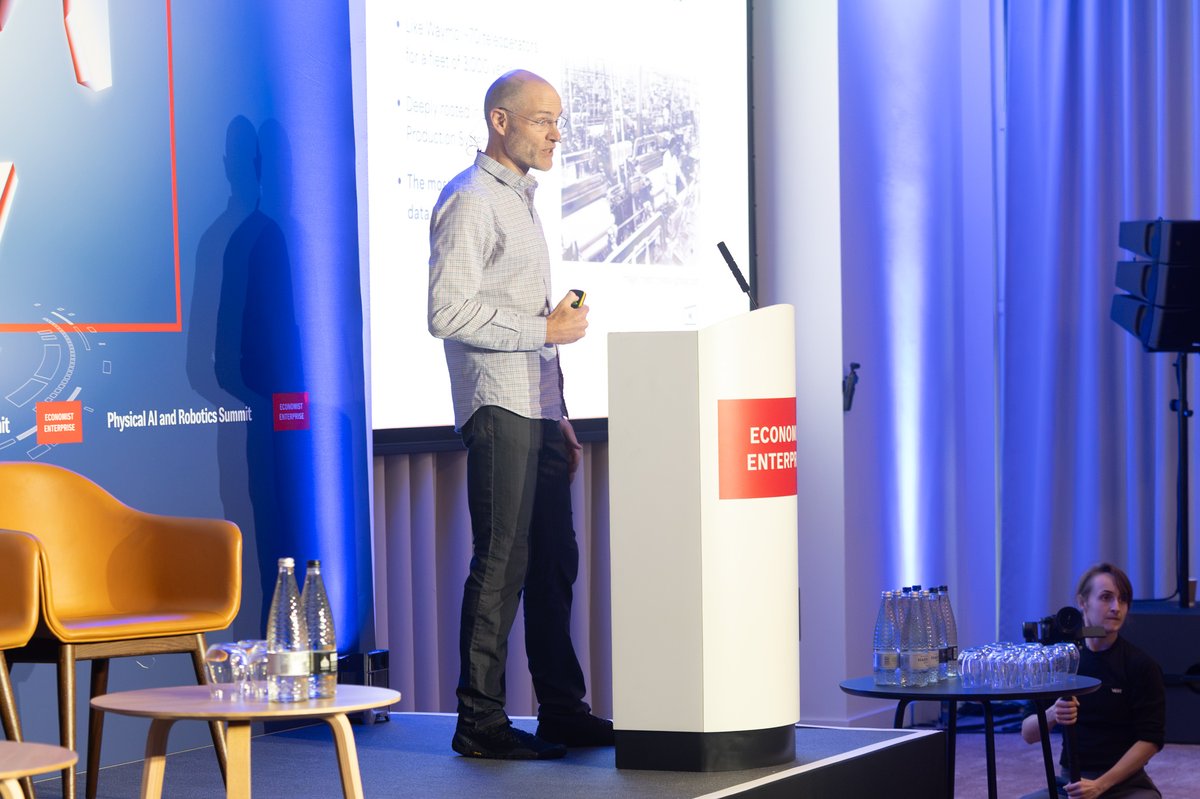
Our CEO @RussTedrake raised that question as he helped kick off @EconomistEvents' Physical AI & Robotics Summit, exploring the arc of progress in robotics and what advances might be next.
Our co-founder and CEO @RussTedrake will be in London on October 13 for @EconomistEvents' Physical AI & Robotics Summit. He’ll discuss how robots are learning to adapt, the technical challenges that remain, and what it takes to deploy these systems at scale.
If you’re attending, come find Russ! He’ll be speaking at 8:55am BST.
https://t.co/bpC21gGYXd
More robot secrets shared soon, this time by someone that knows much more about them than me: our CTO @Ben_Burchfiel ! PS: I wish I had time to do the Lyon one, but we're too busy cooking something very exciting at Walden...
Our CTO @Ben_Burchfiel will be at @tulipinterfaces' Operations Calling alongside @nvidia, Litmus and @ThirdWaveAi. They’ll talk about how Physical AI can help teams investigate problems on the line before the evidence is gone, including the work of connecting different systems and deciding where people still need to make the call.
Thanks to Tulip for having us. Come find Ben in Somerville on October 6-7!
https://t.co/bIcNsRtZ2I
❤️ Ilir gets it (he has seen A LOT of robotics companies). Physical AI is insanely hard, but we know "the Walden Way" works: we see it continuously improve in production, and we are scaling way faster than we initially thought. Time to accelerate!
A robot that works 90% of the time is completely useless in a factory.
@adnothing from @WaldenRobotics had a really good session at @CoreWeave's Fully Connected today on what happens when you stop optimizing robotics for demos and start optimizing for deployment.
One thing he kept coming back to was this:
You have to earn the right to be on the factory floor.
Customers don't care that your model looked great in the lab. They already have a process that works, people doing the job, quality targets, cycle times and some pretty scary spreadsheets with numbers like 99.5%.
Your robot has to work on THEIR terms.
And that's where Walden's approach gets interesting.
They don't assume the AI has to be perfect before deployment. But they also don't ask a factory to tolerate a useless robot for a year while it collects data.
Instead, the robot works autonomously and can call for remote assistance when it gets into a situation it doesn't know how to handle.
That intervention does two things.
The job still gets done.
And the correction becomes some of the most valuable data you can give the system.
Adrien called these on-policy corrections. The stuff you only get once the robot is actually out there doing the work.
His line on this was probably my favorite:
“There’s no amount of scratching your head in a lab that will tell you the things we learned.”
That's also why Walden is so focused on deployment data.
You can collect huge amounts of demonstrations, video and synthetic data. Eventually you still put the robot into a real factory and discover everything your researchers didn't think about.
And then there was the hardware... Walden's first robot is on wheels.
Which is funny because their CEO @RussTedrake has spent more than a decade working on legged robots.
But Adrien's explanation was basically: we're deploying in factories. Very few people are doing backflips in factories. 🤣
Wheels give them more stability, more battery, more compute on the robot and, importantly, the ability to stop safely at pretty much any point.
That's probably what I liked most about the whole talk.
Very advanced AI... very little interest in making the robot look impressive for the sake of it.
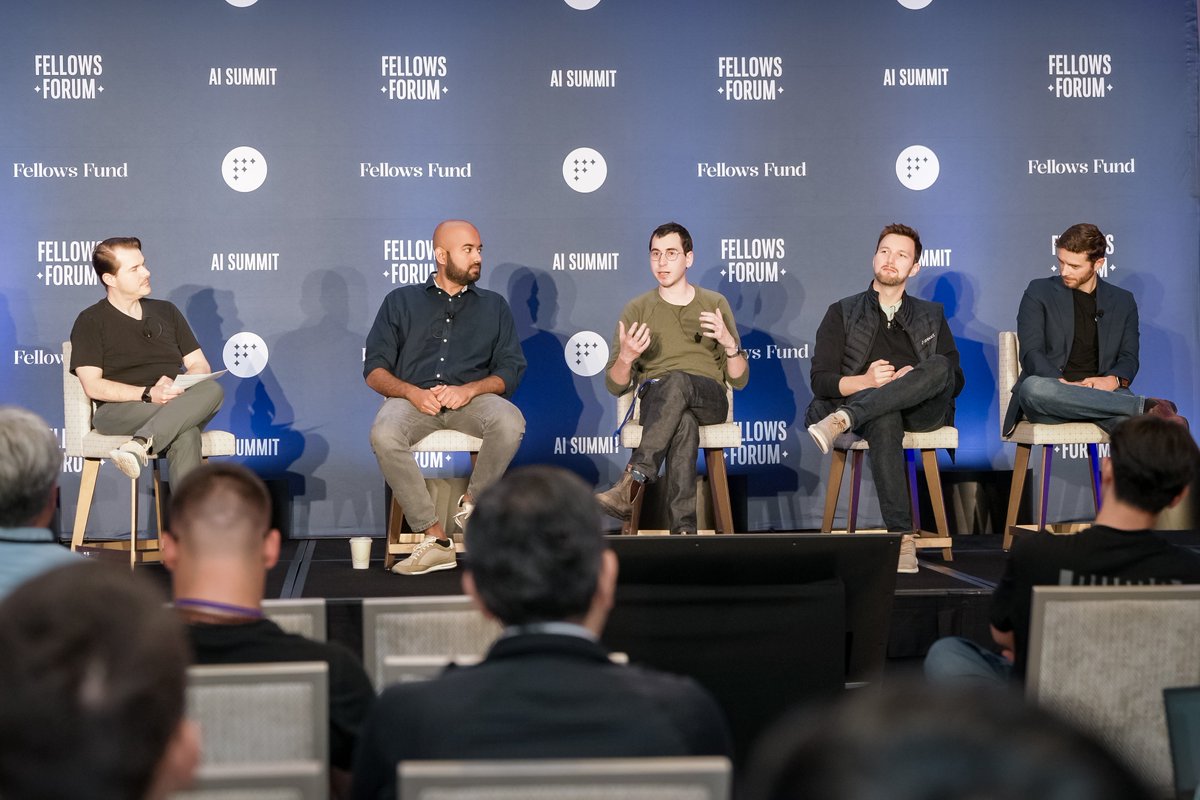
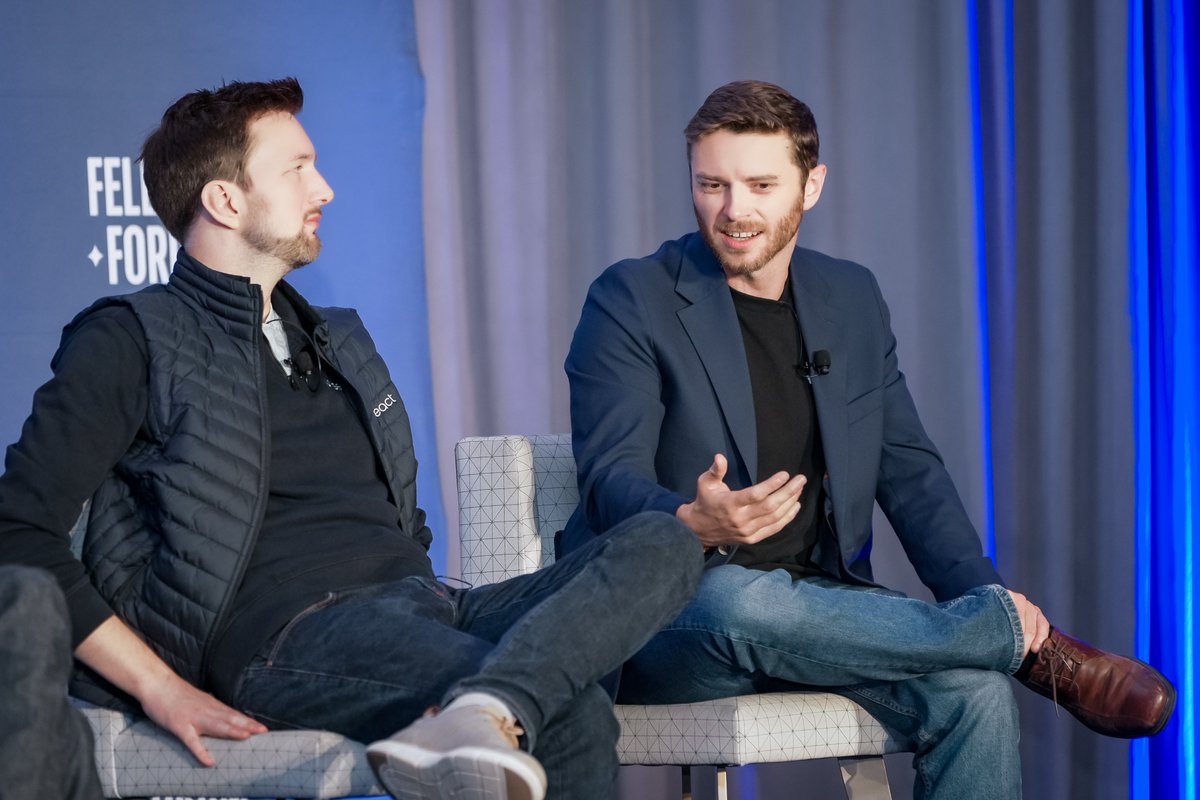
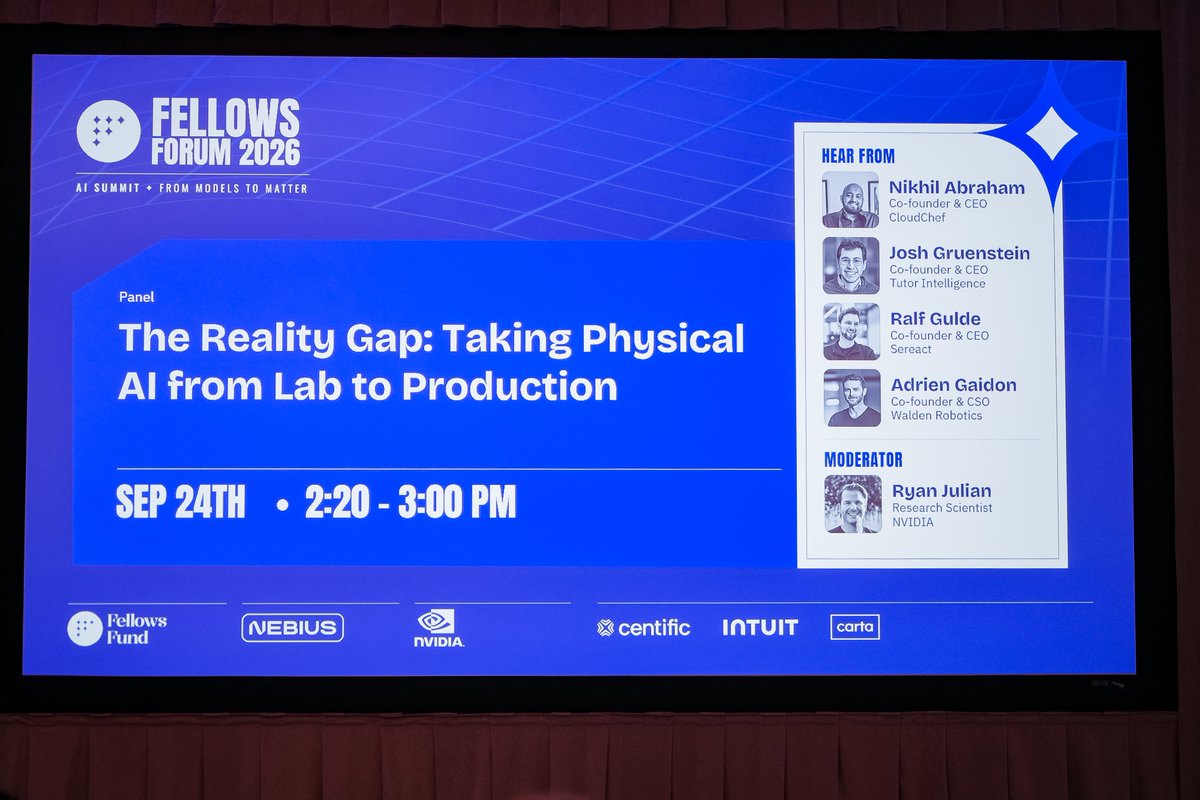
Where a robot's autonomy sits today matters less than how fast it learns, and whether that learning is accelerating. At Fellows Forum, our co-founder @adnothing discussed why that second-order view matters and how we approach it.
Between brute-forcing a general model and knocking out use cases one by one, there is a third way. At Walden, the AI drives the robot and a remote assistant steps in when needed. The engineering challenge is meeting production requirements while generating high-value on-policy training data, prioritizing information gained over data volume alone.
Watch the panel: https://t.co/gwIDkXPoGo
Come learn some robot secrets! Walden is accelerating the deployment of frontier Physical AI in the most demanding (and rewarding) manufacturing environments. I'll share how we continuously improve from deployments by working with and alongside people.
Happening today at @CoreWeave Fully Connected: our co-founder and Chief Strategy Officer @adnothing takes the stage at 2pm PT / 5pm ET for his technical session, then joins @theCUBE live at 4pm PT / 7pm ET. Tune in: https://t.co/GGQ7YVYoWE
Claude Founder House is coming to SF Tech Week (Oct 6–8) and Stockholm (Oct 14).
Come for talks, workshops, and office hours with our team, plus time to meet others building with Claude. Whether you're a founder, a CEO, or a builder, there's a session for you.
Good evals are gold in robotics too! Super excited to talk about how we're accelerating and scaling the deployment of general-purpose robots at Fully Connected this week! PS: I remember fondly the first FC where Lukas @l2k , Shawn @shawnup , and the W&B mixture of experts invited me ❤️ This year seems to be huge! Thanks friends and CoreWeave for having me again!
How do you know a new robot policy is ready for production? At Walden, we evaluate task success alongside autonomy, interventions, speed and transfer.
On Thursday, Adrien Gaidon joins @theCUBE live from @CoreWeave’s Fully Connected. Tune in for a discussion of the training and evaluation loop behind our general-purpose robots, and what we’re learning in manufacturing.
Tune in Oct 1 at 2pm PT / 5pm ET for Adrien’s technical session, then 4pm PT / 7pm ET for his live interview on theCUBE: https://t.co/PWDiQ8B3G8
Oh 100%! And I think it's partly because power users / Ant MTS are often like that too (anecdotally in my network). But the desktop/phone apps are very good too, and I use them as well. Different tools for different jobs/folks. Do you think there is a big unaddressed need/market between cc and the Claude/codex apps?
The holy grail for robotics is being able to generalize: doing work in unseen places
We rented 30 homes in the Bay Area and are doing tasks without any new training
What does it take to get robots out of the lab and onto the factory floor?
Our CEO @RussTedrake joined @BradPorter_ on Deployed to talk DARPA lessons, wheels vs. legs, factory safety, and why deployment is all about the details.
https://t.co/1kIj5CzJjz
I ❤️ that chocolate 😋 The real world is an endless (non-stationary!) stream of such examples. Scaling requires continuous learning from deployments (from foundations to specialists). One of the lessons from self-driving that transfers to mobile manipulation.
A video from a Pi robot deployed at Dandelion Chocolate, fully autonomous w/ no interventions. 🤖
Deploying robots has taught us surprising lessons about the gap between proof-of-concept (i.e. building one box) and real-world utility (productively building boxes for hours).
I expected that the hard part is building the box, since it’s the most dexterous, but that wasn't what we found. Counterintuitively, the hardest part was reliably stacking the boxes. Our original table-mounted robot had poor visibility of the stack without special separately-mounted cameras. Plus, stacking requires more generalization (each box is placed in a different location), and an imprecisely-placed box can lead the entire stack to collapse many boxes later.
We recently switched this deployment over to a mobile robot, and it's fun to watch the robot being completely self sufficient for multiple hours. 🙂 Data and feedback from real world use-cases like these are quite valuable for the π pre-trained model as we scale!
Stacked event with many of my favorite people! Join us for some hard earned insights about how to rapidly deploy general-purpose robots that are broadly useful across industries and learn continuously in production!
Robotics and world models take center stage at @FellowsForum 2026 on September 24, cohosted by @Fellows_Fund and @nebiusai, in partnership with @nvidia.
For founders and researchers building Physical AI, how often do you get to hear from this many leading robotics and world-model teams in one place?
We’re bringing together leaders from @NVIDIA, @GeneralistAI, @RhodaAI, @odysseyml, @Waymo, @DynaRobotics, @CloudChef, @Tutor Intelligence, @SereactAI, and @WaldenRobotics, for a full day of intensive discussions on how AI learns, understands, and acts in the physical world.