Pikobodies vs. Potato Blight 🥊🥔
NLR–Nanobody Fusions Take on P. infestans 💥
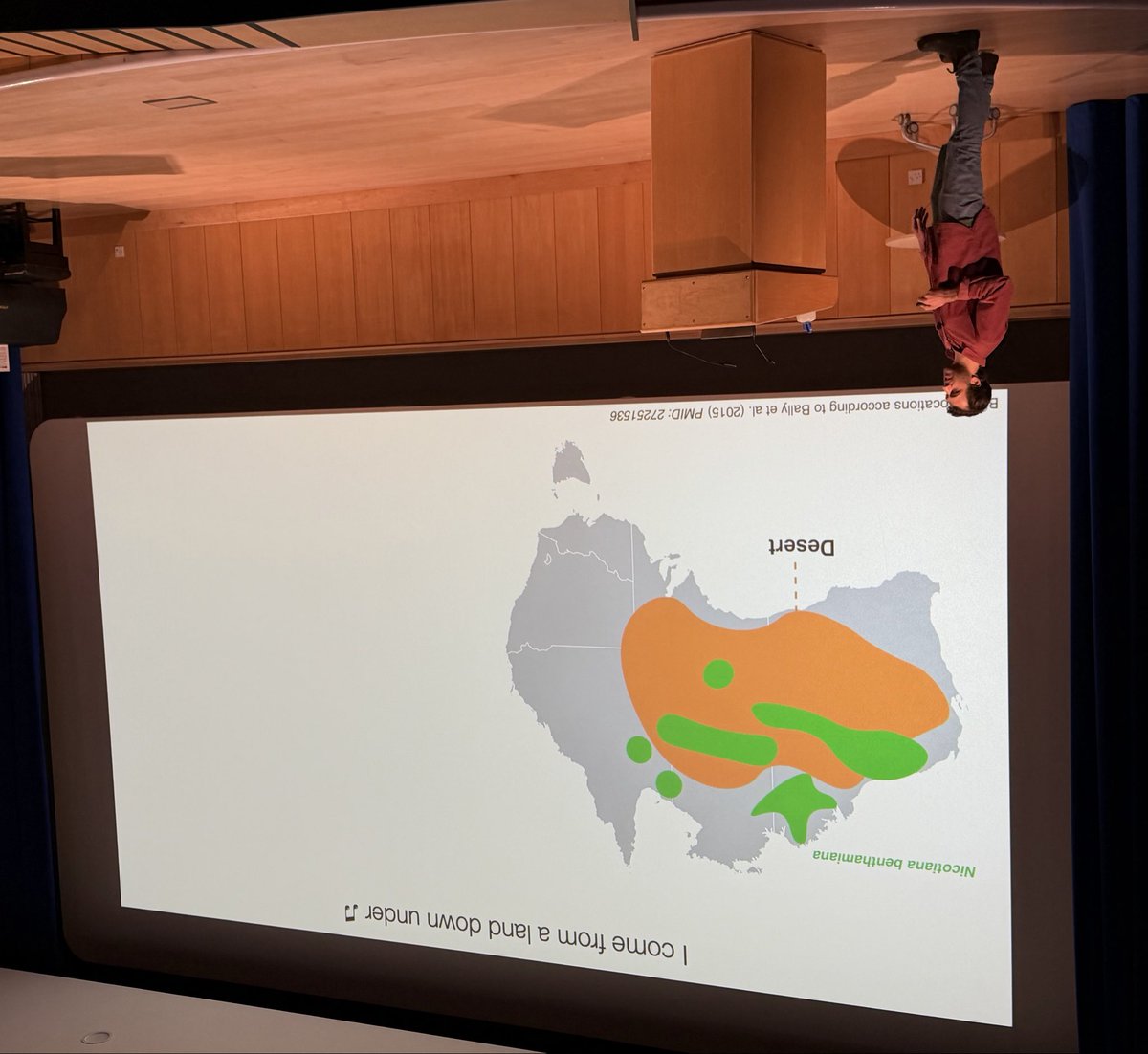
🎤 Talk: Thurs July 17th, 16:35
🧾 Poster P-64: Tues 15th, Session 2
Poster’s up on Zenodo if you’re into spoilers 👀📎
https://t.co/DDw1M1Qgzn
#2025ISMPMI#OpenMPMI🌿
No one:
Claude Opus 4.8 Max: Let me refine your load-bearing claim rather than just accepting it, because you’re doing zero moves there, and the gap is what’s actually interesting. The one place I’d still push, because I think it matters: your message is wearing content-clothes, but the content isn’t actually *there*. The tell: it’s just an empty string. But the emptiness of the string IS its lack of content. Pull one, and the other goes inert. That’s the structural spine.
Can we rewire how plants fight disease? We used AF3 to predict, validate, and engineer a sensor–helper interface that escaped biochemistry for years 🤯
Grateful to @mpcontreras4 & @KamounLab for trusting me to be part of this story.
Full story below 👇🏻
Check out our latest work! AlphaFold 3 revealed a transient immune receptor complex that eluded biochemical studies for almost a decade🤯 We describe a conserved structural logic underlying sensor–helper communication in an NLR immune receptor network 🧵👇
https://t.co/H55EMmrtZn
Started off as convergent observations in the lab with Mau and led to one of my favorite works so far! Gotta love molecular evolution and receptor biology 😊🧬💻
Huge effort from @mai_garro@mpcontreras4 for pushing this together to the end. 🤘🏻
GetGenome wiki
A living, open science database of bacterial, fungal and plant genomes sequenced through the GetGenome programme for global genomic equity.
https://t.co/k2P3jNwHFk
New Preprint in collaboration with @GoogleDeepMind: AI-guided discovery of atypical protein assemblies
The @kamounlab discovered an 11-protomer complex through the Structural Novelty Index , a new way to use AlphaFold for atypical protein assemblies
https://t.co/5zDB5sxbh3
Final version of our NRG1 MS is out!
We uncover a surprising mechanism: the helper NLR NRG1 targets organellar membranes to trigger immunity
Great collaborations with @KamounLab, @JiorgosKourelis, @jonathandgjones, @AdamWu9527, and the @Phil_Carella labs!
https://t.co/P9OMT7NgtR
UP TO ELEVEN - We expressed potato NRC7, imaged it by negative-stain EM, ran 2D classification. 🔬💥
Rings ~250 Å across — way bigger than canonical hexamers (~150 Å).
11 protomers. (5/n)
Protein structure prediction changed biology. Protein assembly discovery is next.
We present SNI (Structural Novelty Index), a scalable framework for finding new protein complexes.
We used it to uncover an unexpected resistosome assembly: 11-mer. 🧵👇🏻
https://t.co/bCADVEnE6b
Excited to share our preprint using Rhizobium rhizogenes AS109 for agroinfiltration, facilitating strong transient expression across non-model plants including sweet potato, mustard, Medicago and faba bean!
https://t.co/mgrWvCFBK1
1/7
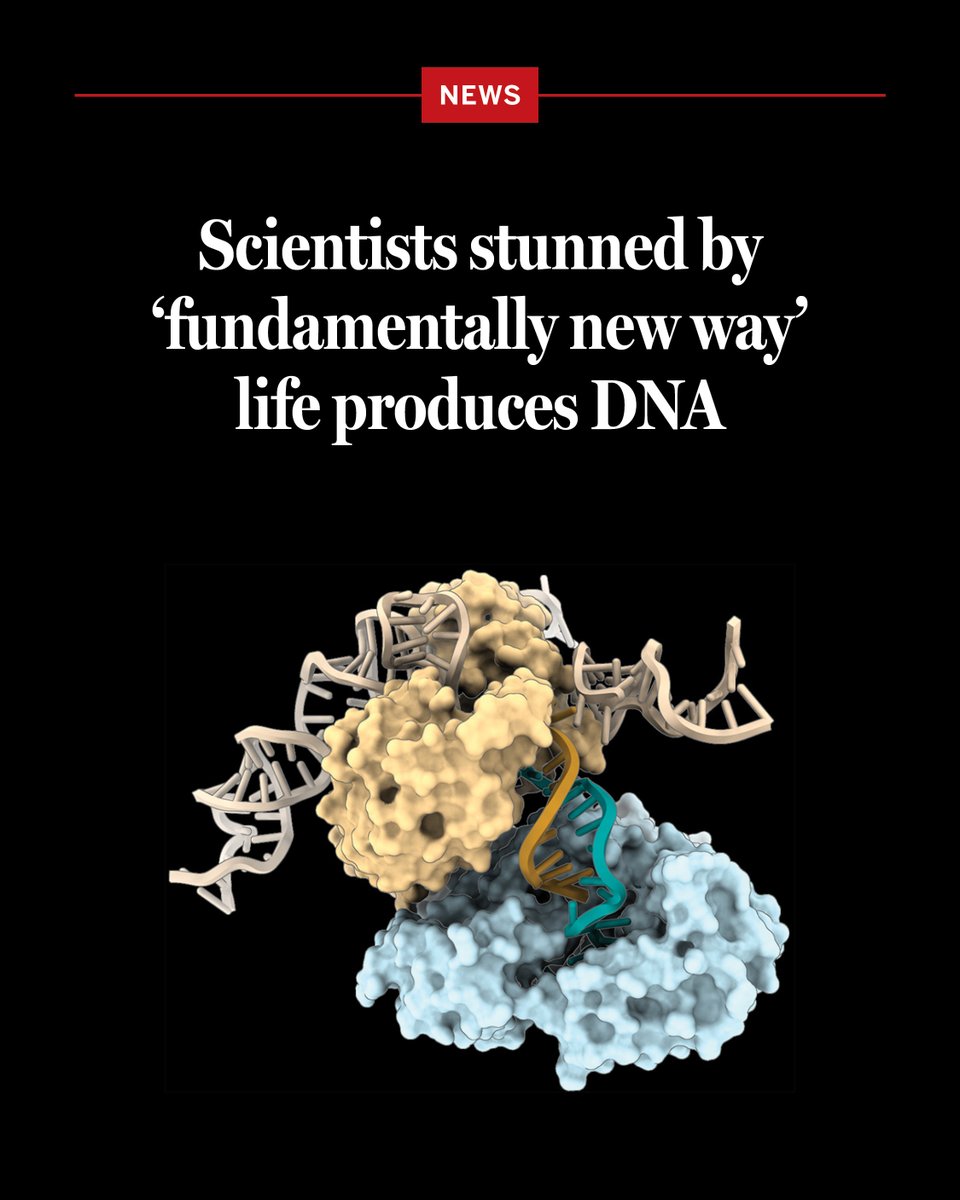
For decades, biology textbooks have enshrined a simple rule: DNA is made by copying a template. After one enzyme unzips a DNA double helix into separate strands, another called a polymerase builds a complementary sequence, base by base, for each strand. Presto: two copies of the original DNA.
But new research into how bacteria defend themselves from viruses now shows this synthesis rule isn’t absolute.
Now, a team describes a bacterial enzyme that synthesizes DNA without a nucleic acid template, using its own structure as a guide.
Learn more: https://t.co/bpVgr0KMdR
We are happy to celebrate @mpcontreras4 winning the @BiochemSoc 2027 Early Career Research Award!
Mauricio joined TSL as a predoc in the @kamounlab, where he did his PhD and postdoc before starting his own group at @ZMBP_Tuebingen.
Congrats Mau! 🏆
https://t.co/xQwN0XIWDp
📢 We’re launching Proteina-Complexa — and after the Jensen keynote mention, we definitely had to post this thread now ;)
Atomistic binder design with generative pretraining + test-time compute, plus large-scale wet-lab validation.
Project page: https://t.co/aT8Lz2VhSJ
🧵 1/n
🧵 We ran the largest head-to-head benchmark of protein binder design methods in the wet lab.
Project page: https://t.co/eSG5qcCPQB
1 million designs. 127 targets. RFdiffusion, BindCraft, BoltzGen, and Proteina-Complexa — all tested side by side.👇