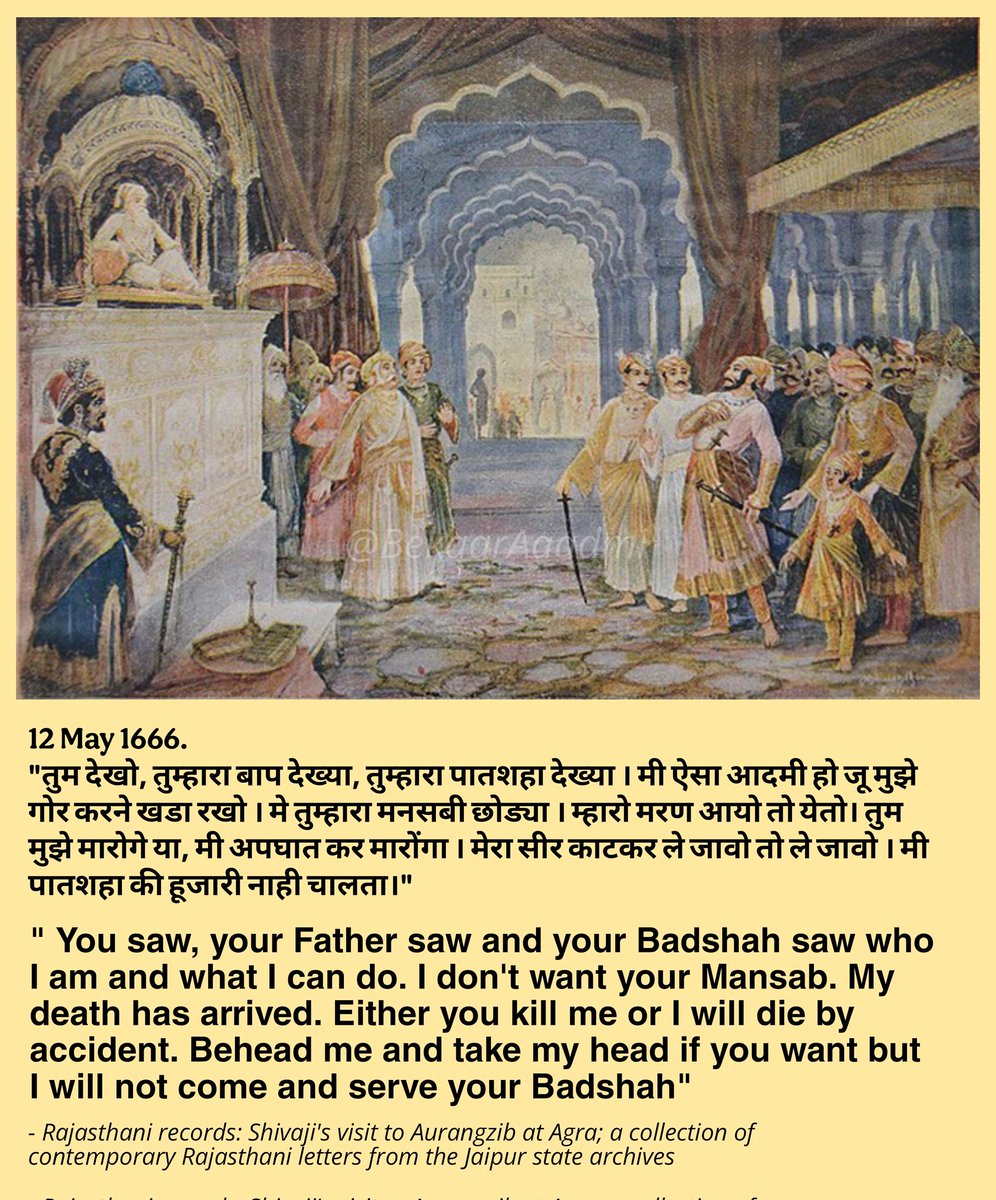
India launched a private rocket, a hydrogent train, a barrier free expressway, three war ships, new long range missiles & misside defence shield, won Physics Olympics gold medals, Quantum communication, virtual magnet motor & fast breeder reactor just to divert attention from Jantar Mantar protest. What a terrible country 😡
What I found when I visited Ankit Sharma's area after his body was found in a drain adjoining Tahir Hussain's building
1. This is a view of the other side of the road where Tahir Hussain's building stands and where Ankit was dragged and killed. Clicked on 27 Feb 2020
I’m not electing a PM to address the press, I’m electing him to govern. Press conferences mean zilch if you’re a jacksh*t administrator where bombs go off left & right and inflation peaks before salaries do.
We need to bypass the so called "standard", reductive textbook narratives that often treat ancient indian achievements as mere "accidental primitive labor" & Kailasa Temple is 1 such example. We need to treat it like a project that required a level of mathematical precision, spatial visualization & resource optimization that rivals modern aerospace/architectural design.
Advanced tech does not necessarily mean electricity/lasers/computer chips. In civil engineering, advanced tech is defined by the systems, instruments & mathematical models used to manipulate massive amounts of energy & matter with near-zero tolerance for error.
To carve Kailasa from the top down out of a single volcanic mass, the ancient Sthapatis (master engineers) had to solve problems that modern CAD software handles today.
Before a single chisel touched the stone, the entire multi-story complex including its internal rooms, floating balconies, drainage systems & columns had to be mathematically mapped out in 3Ds. In a traditional building, if a room is misaligned, we can tear down a wall & rebuild it. In rock-cut monolithic architecture, we cannot put back rock that has been carved away.
A single 5" calculation error on the roof would cause a column on the 3rd floor below to completely miss its load-bearing alignment, collapsing the ceiling. The then engineers used a highly sophisticated system of geometric grids based on micro-measurements (Angula & Hasta). They used a technique called Volumetric Prototyping. They modeled the mountain as a massive 3D coordinate matrix (X, Y, Z axes), translating a highly advanced, non-surviving theoretical blueprint seamlessly onto the undulating, uneven surface of a natural cliffside.
Carving 400000 tons of basalt, hardened volcanic lava rich in silica & iron cannot be done by simply swinging ordinary iron tools. The tools would blunt/deform/break within mins. The construction period correlates with India's absolute peak in Wootz steel production. This was a form of nanotech where iron was smelted with specific carbon-rich organic materials in sealed crucibles, creating a matrix of ultra-hard iron carbides (cementite).
Now to move 100s of 1000s of tons of rock rapidly w/o modern explosives, they likely used controlled thermal stress. By heating targeted fracture lines along the basalt's natural crystalline planes using massive, localized fires & then instantly dousing them with cold water, they forced the rock to cleanly shear itself apart along flat planes. This is a highly calculated application of thermodynamics.
In ancient India, advanced scientific & engineering knowledge was not published in open-source public libraries. It was fiercely guarded within highly specialized, hereditary engineering guilds (Shrenis/Vishwakarmas). Knowledge was passed down from master to apprentice via encrypted architectural texts (Vastu Shastras) & oral mathematical mnemonics.
This kept the IP secure from foreign theft, but it made the entire scientific system highly vulnerable to a SPOF. If a single elite guild of master builders was wiped out in a war, the complex mathematical formulas for calculating rock stress & monolithic geometric projections died with them instantly.
When British colonial historians arrived in India, they encountered marvels like Kailasa. Accepting that ancient Indians possessed a level of structural engineering, metallurgy & geometry that surpassed 18th century Europe was a direct threat to the colonial narrative of the "civilizing mission." They claimed Kailasa was built simply by throwing a massive, infinite army of "primitive, cheap slave labor" at a mountain with simple stone chisels over 100s of yrs.
This narrative deliberately substituted brute force for brain power. It ignored the complex geometry, the structural dynamics & the materials science, reducing a masterpiece of hyper-advanced calculation to a mere story of "many people digging for a long time."
To the Western media,
Many people who migrate from India to your countries no longer identify themselves as Indian. They prefer to be known by their religious, linguistic, or regional identity, and some openly express hostility toward India.
So when one of them commits a crime, please respect their chosen identity and report them accordingly. Don't label them as Indians. If they reject the identity when it suits them, don't impose it when it doesn't. We don't want any association with them.
#Obsession
Simply brilliant, reinforcing hope in a thriller cinema..
Curry Barker, Editor as much as the Writer - Director keeps you absolutely hooked.
Inde Navarrette literally and figuratively kills it!
Experience only in Dolby Cinema🔥
Next in line :
#Backroom#DisclosureDay
Anyone feeling an ounce of sympathy for him should remember the systematic violation of hundreds of women over the years and the brutal death of over 300 of the BJP cadres which left their families destroyed..
This is nothing!
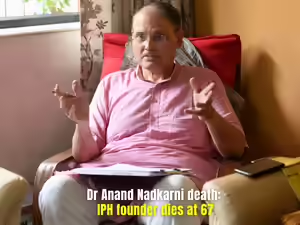
Renowned psychiatrist, author and social activist Dr Anand Nadkarni died at 67 after a prolonged illness on Friday.
https://t.co/Al2DfXoYCK
Best known for founding the Institute for Psychological Health (IPH) in Thane and co-founding Muktangan de-addiction centre, Nadkarni spent decades making mental health conversations accessible beyond hospitals and clinics.
'Ravi Pandit - A Brilliant Mind, A Great Man'
A Chartered Accountant and MIT graduate, who returned back to India in the 1970s... and set up a top tier IT-Engineering Company - specializing in Automotive, over three decades back. KPIT today develops systems for many of the top automotive companies around the world.
A passionately curious, brilliant mind - constantly trying to learn about new things, latest technologies and emerging trends. Remember many discussions with him on some topics.
A visionary in the new energy field - championing green hydrogen, EVs, batteries. Someone who drove the R&D for India's first indigenous Sodium-Ion battery, in partnership with top research institutions.
An active leader in the community - involved in many leadership initiatives across MCCIA, Pune International Center, Janwani and other organizations.
A mentor and role model for many of us individuals and organizations.
A supporter of many philanthropic initiatives (in a low key manner).
A guide to the boards of many institutions and companies.
And a lot more...
Om Shanti 🙏
@KPIT@MIT@PuneIntCentre@MCCIA_Pune@jnanaprabodhini@rameshmashelkar@Girbane