This is why we built @KiraGenBio.
Base editing made CAR-T possible for patients like Alyssa, CURED of T-cell leukemia after every other option failed. We built the U.S. version at @BeamTx.
Help us make more stories like Alyssa’s for patients with GBM and other solid tumors!
After leukemia treatments failed, Alyssa Tapley, at age 13, was told she would die. Then, doctors tried an experimental gene-edited therapy. She became the first human to try the treatment made possible by U.S. federal funding. Now 16, she’s cancer-free and planning her future. https://t.co/392jN0pRdL
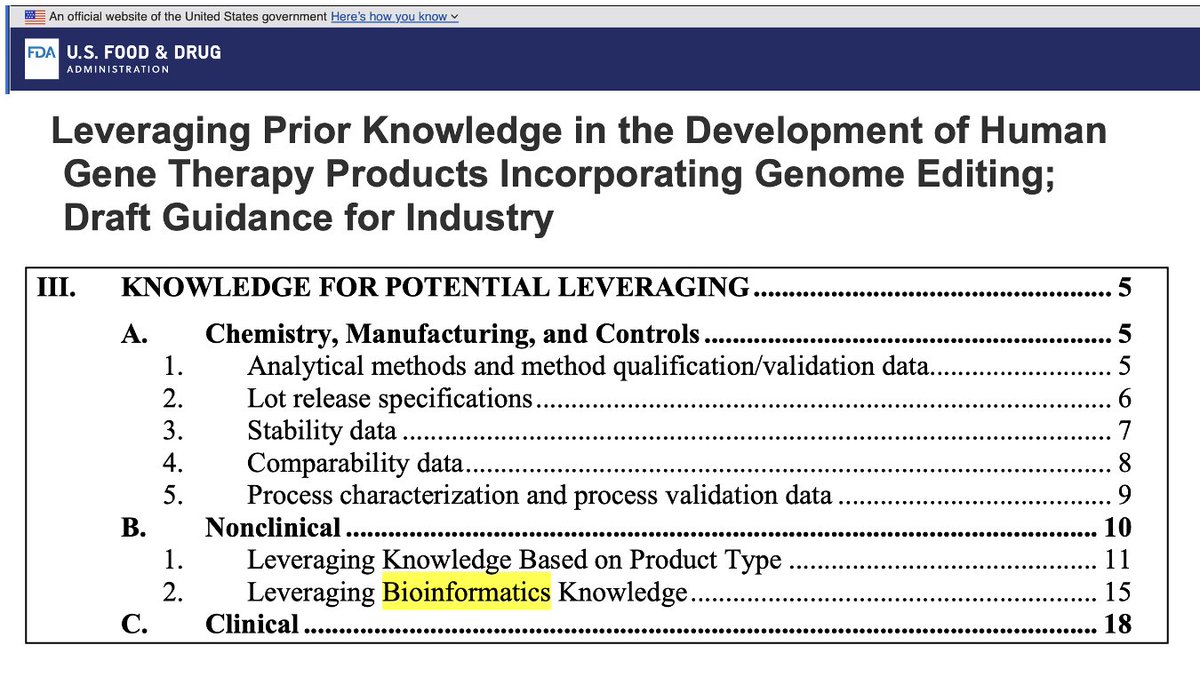
New FDA guidance for Cell&Gene Tx / #GeneEditing can use public / previous CMC, non- & clinical info,
including OFF-TARGET* data, to streamline reg submissions.
Builds on Plausible Mechanism guidance.
Keep Leveraging this Prior Knowledge!
*msg to discuss specificity data
Hello CRO friends! We @SirenBio are preparing a @thermofisher Oncomine Clinical Research Grant and need a US-based sequencing partner who can process deidentified human clinical trial tumor and blood specimens using ONLY Thermo Fisher Oncomine assays on ONLY Ion Torrent/Thermo platforms. Is this you? Please DM me.
People who don't follow cancer research often ask me why we haven't cured cancer. That perception masks a wonderful reality: We make amazing, stepwise progress every year, and the result is that many people live much longer today than they would have previously.
Right now we're in the thick of the annual meeting of the American Society of Clinical Oncology, the biggest research meeting on new cancer medicines, and this morning a bunch of really important studies dropped. I'm going to review them here.
This first image is the result for daraxonrasib, a treatment for pancreatic cancer that is generating consdirable excitement. The green line is the probability of living for patients who got the new drug; the gray one is the chemo control group.
If you follow cancer drugs, a chart like this will make your breath hitch a little. I'm going to review these and some other data here.
🔆NT-175, a CRISPR-engineered autologous TCR-T therapy shows efficacy in heavily pretreated metastatic #pancreaticcancer. 5/7 achieved PR and 6/7 had clinical benefit
- In the trial, a 1-time infusion resulted in ORR 40.9% in refractory advanced solid tumors.
@OncoAlert#ASCO26
good post from @JTLonsdale on what could be done by the FDA to increase American biotech competitiveness. Top of the list: streamline Phase I regulations.
Our current Phase 1 trial regulations require 12–18 months of preclinical work that Australia’s version of an IND (in Australia called a CTN) have shown unnecessary; the US regulations are a top-down, Soviet legacy of the mid-20th century that is straitjacketing us and delaying innovation. If we implement the Australian learnings, including 3rd party or medical center trial oversight (who review the IND instead of the FDA) we can speed up patient access to novel drugs while saving FDA reviewers’ time and taxpayer dollars.
The leading research institutions of the world like MD Anderson Cancer Center and Memorial Sloan Kettering should be empowered to decide when and how they launch Phase 1 trials, within regulatory frameworks.
https://t.co/blVgJWyz5i
We need an Innovation Review Voucher, where a USA innovator (not others) can apply, based on their innovation in a drug category or molecule, for super fast regulatory approval, AND a transferable and subdividable 3 year commercial exclusivity, which covers the structure and close derivatives.
Applications would be 90 day decisions, with a standard that a reasonable person would conclude that the technology was used or copied by the entity. In practice, this should prevent USA innovation from being decimated via less funding flowing in (which hurts patients in the long run), and if the commercial delay is critically important the vouchers are tradeable, and can be granted to more than one party at the discretion of the holder, so patients are protected.
Prob have like ARPA H like structure or some new DOC panel to do it.
@1752vc@HarryStebbings I think it’s reductive to let a degree define a founder’s ability. As a scientist who went back for an MBA, I’m confident it made me a stronger founder. But just like an MBA doesn’t guarantee a great founder, not having one doesn’t prevent someone from becoming one either.
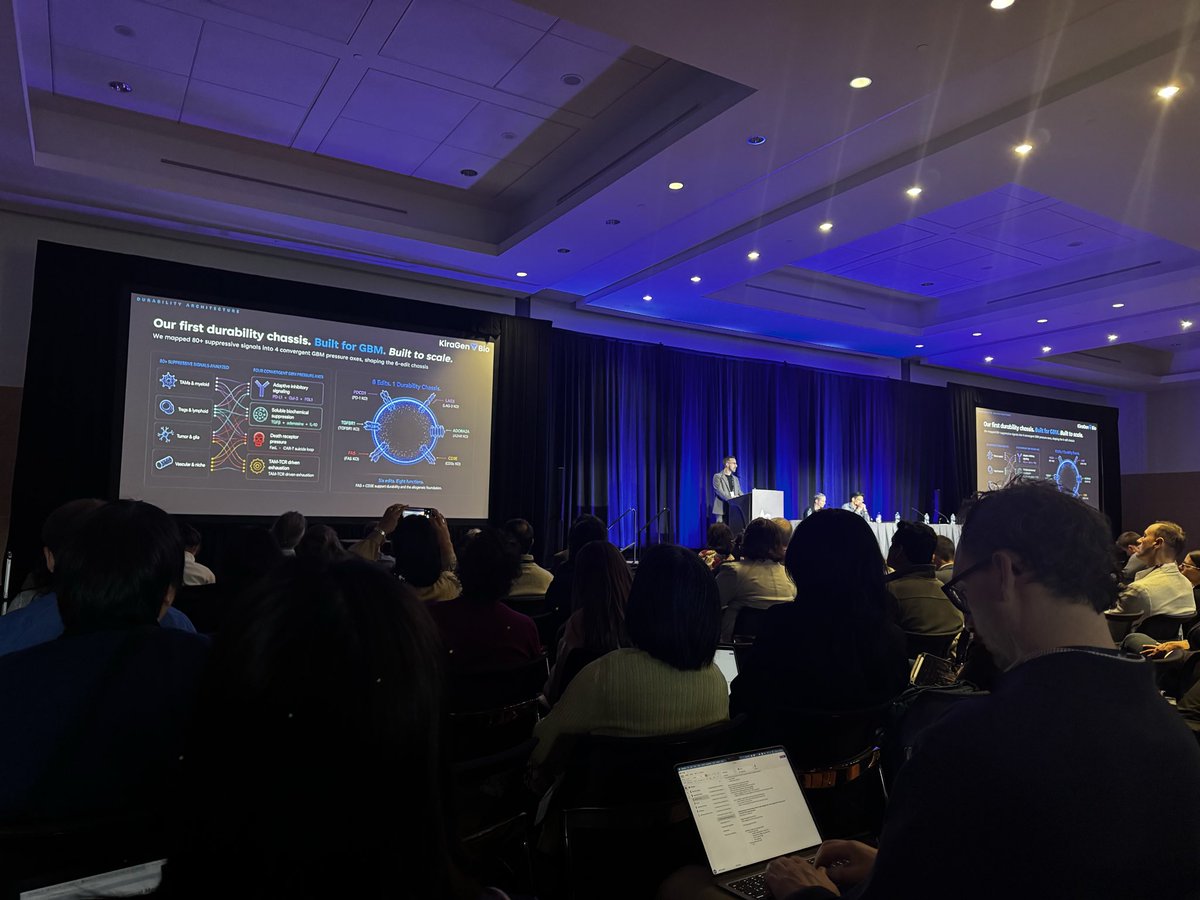
It was such a blast to get to officially show off @KiraGenBio's first TME durability chassis + lead GBM program (and sneak peak of whats next) at @ASGCTherapy! More to come soon :)
@aedwards02 (@KiraGenBio) presents on Multiple knockouts with prime/base editors to make allogeneic CAR-T cell therapies that can resist all of the most critical TME suppressive signals
We're at @ASGCTherapy today sharing something we've been heads down building: using our AI models to scale base editing for personalized medicine.
The gap between what's theoretically correctable and what we can actually fix today is huge. We think AI can close that gap.
Not there? Peter Cameron, our SVP of Gene Editing, breaks it down here. Interested in learning more? Shoot us a DM.