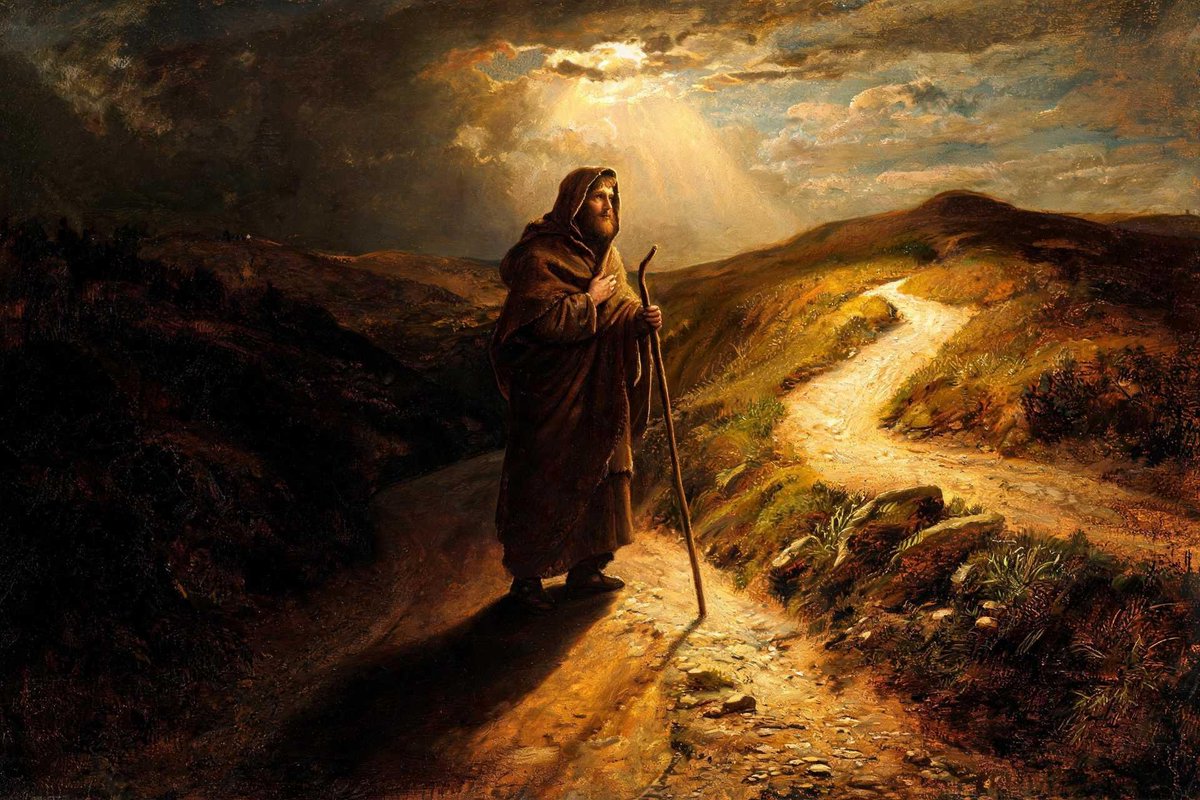
A master gives three servants money and leaves.
Two invest it. One buries his in the ground to keep it safe.
When the master returns, the one who played it safe is the one who's condemned.
It's one of Jesus' most unsettling parables because it says something most of us don't want to hear about playing it safe. 🧵
Starting tonight, Jews around the world commemorate Tisha B’Av, the desecration & destruction of the Jewish Temple in Jerusalem. Over the years it became a day of mourning & reflection of the many tragedies the Jewish people have suffered throughout history.
Jezus was geen christen.
Sterker nog, Hij was een Jood.
Hij maakte dat zelf duidelijk toen Hij tegen de Samaritaanse vrouw zei:
"Jullie aanbidden wat jullie niet kennen; wij kennen wat we aanbidden, want de redding komt voort uit de Joden."
- Johannes 4:22 (NKJV)
Zelfs Zijn Hebreeuwse naam verklaart wie Hij is. Yeshua (יֵשׁוּעַ) betekent "redding." Inderdaad, de redding komt voort uit de Joden.
Hij kwam in de wereld als een Jood, leefde als een Jood, stierf als een Jood, stond op als een Jood en zal terugkeren als de Joodse Messias. Daarom noemt de Schrift Hem:
"Kijk, de Leeuw uit de stam van Juda, de Wortel van David, heeft gezegevierd..."
- Openbaring 5:5 (NKJV)
Een christen is een volger van de Messias. Je kunt geen volger van de Messias zijn als je zelf de Messias bent. Hij is de Messias, en iedereen wordt geroepen om Hem te volgen, ongeacht hun etniciteit, nationaliteit of religieuze achtergrond.
"En er is geen andere redding, want er is geen andere naam onder de hemel gegeven, die ons gered kan maken."
- Handelingen 4:12 (NKJV)
Amir Tsjarfati
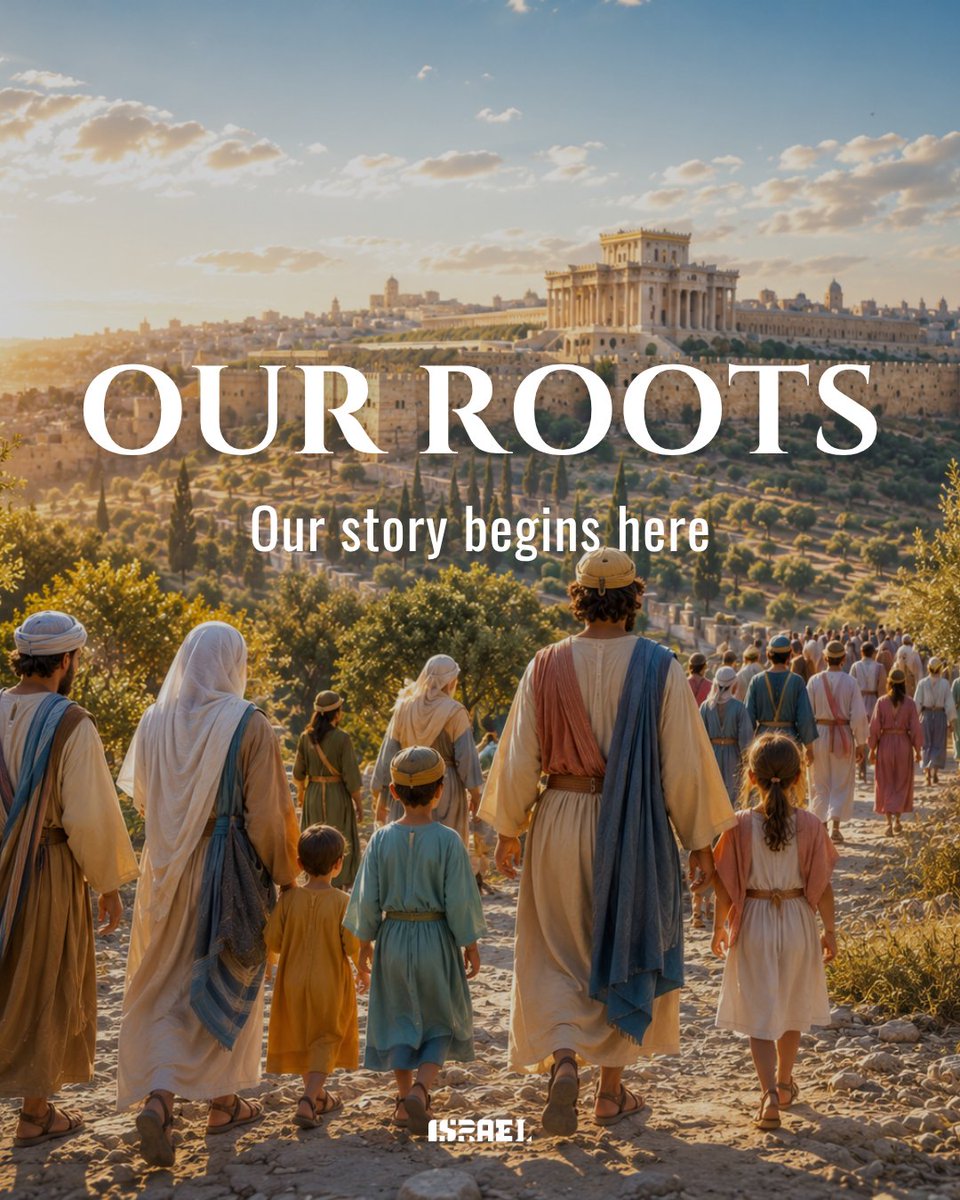
On Tisha B'Av, we mourn one of the darkest chapters in the history of Israel: the destruction of the First and Second Temples in Jerusalem and the exile of the Jewish people from their indigenous homeland.
For centuries, we mourned Jerusalem, prayed to return, and kept the Land of Israel at the heart of our identity, wherever we lived.
Our roots are here. Our story continues here. The people of Israel will always remain in the Land of Israel.
In Marokko werkten de Nederlandse christenen Herman Boonstra en zijn vrouw 11 jaar als zendelingen.
Ze richtten een christelijk kindertehuis op voor buitenechtelijke kinderen — kinderen die in de islamitische Marokkaanse samenleving als “kinderen van zonde” (walad al-zina) worden gezien.
In een land dat de 'religie van de vrede' praktiseert, worden deze kinderen vaak verstoten door hun familie, zwaar gediscrimineerd en hebben ze nauwelijks rechten. Ze worden sociaal uitgesloten, hebben moeite met officiële registratie, onderwijs en een normale toekomst.
Herman en zijn vrouw werden als vader en moeder voor tientallen van deze kinderen. Ze gaven ze liefde, veiligheid, onderwijs en hoop.
Tot ze plotseling door de autoriteiten als “terroristen” het land uitgezet werden, omdat ze te veel goeds deden.
De paniek en het immense verdriet bij de kinderen toen ze hun vertrouwde ouders en veilige thuis in één klap verloren, was onbeschrijfelijk.
Een aangrijpend verhaal over echte christelijke liefde in een harde islamitische omgeving.
De volledige video is hier te zien: https://t.co/gqWC5zJ4xB
It’s one thing hearing it from Bill Clinton, but many simply dismiss him as a Zionist.
It’s very different though when you hear how the Palestinians rejected peace proposals over and over again from an Arab who was on their side.
Watch as Hosni Mubarak tells what happened and how the Palestinians never really wanted peace. All they wanted was to kill Jews and destroy Israel.
Many traditions close the prayer with: "For yours is the kingdom, and the power, and the glory, forever."
It begins with God, and it ends with God.
Our needs sit in the middle, surrounded on both sides by His glory.
That's the secret of the whole prayer.
Jesus didn't just give us words to repeat.
He gave us a framework that reorders the heart every time we pray it slowly and mean it.
Try praying it this week, not rushing through it, but pausing on each line.
Follow for regular deep-dive Bible threads.
Which line of the prayer do you need the most to sit with right now?
"And lead us not into temptation, but deliver us from evil." (Matthew 6:13)
This is a prayer of humility about our own weakness.
It doesn't say "I'm strong enough to handle anything."
It says the opposite: keep me from situations I'm too weak to survive, and rescue me from the evil one.
There's a quiet self-awareness here that most of us resist.
The mature believer doesn't pray "test me to prove how strong I am."
They pray "protect me, because I know how easily I fall."
Real strength begins by honestly admitting how much you need to be kept.
"And forgive us our debts, as we also have forgiven our debtors." (Matthew 6:12)
This is the only line of the prayer Jesus circles back to explain afterward (6:14–15).
The connection is sobering: our willingness to forgive others is bound up with our experience of God's forgiveness.
Not because we earn forgiveness by forgiving but because a heart truly gripped by grace cannot keep clutching resentment.
Refusing to forgive while begging to be forgiven is a contradiction the prayer won't allow.
The forgiven forgive.
It's the evidence that grace has actually landed.
Only now, after God's name, kingdom, and will, does the prayer turn to our needs.
And the request is strikingly modest: bread.
For today.
Not wealth.
Not a year's security.
Daily bread.
This echoes the manna in the wilderness, which could only be gathered one day at a time (Exodus 16).
Israel had to trust God fresh each morning.
Jesus teaches a dependence that renews daily, not a self-sufficiency that no longer needs to ask.
God gives enough for today, and invites you to come back tomorrow.
The daily-ness is not a limitation.
It's an invitation to a relationship.
"Your kingdom come, your will be done, on earth as it is in heaven." (Matthew 6:10)
This is a prayer of surrender before it is a prayer of request.
Before asking for anything, you align yourself with God's purposes rather than asking Him to bless yours.
"On earth as it is in heaven" — pray for God's perfect will to break into this broken world, starting with your own life.
It's a dangerous prayer.
To truly pray "Your will be done" is to release your grip on your own.
Most of us want God to sign off on our plans.
This line asks us to want His instead.
The prayer opens with a word that would have stunned His listeners: "Father."
Not "Almighty," "Master," or "Lord of Hosts," though He is all of those.
Jesus teaches us to begin by approaching God as a child approaches a loving parent.
And notice the first word isn't "my."
It's "our."
Even in private prayer, you pray as part of a family. You are never approaching God alone.
Before a single request is made, your identity is established: a beloved child, among many, coming home.
The disciples watched Jesus do many things.
They never once asked Him to teach them to preach, or heal, or perform miracles.
They asked Him one thing: "Lord, teach us to pray." (Luke 11:1)
His answer was about 60 words long.
And nearly every single line means far more than most people who recite it realize.
Line by line. 🧵
Among the most heartbreaking exhibits at Auschwitz are the children’s shoes. Each pair belonged to a child with a name, a family, dreams, and a future. Seeing them together is a reminder that behind every number was a human life.
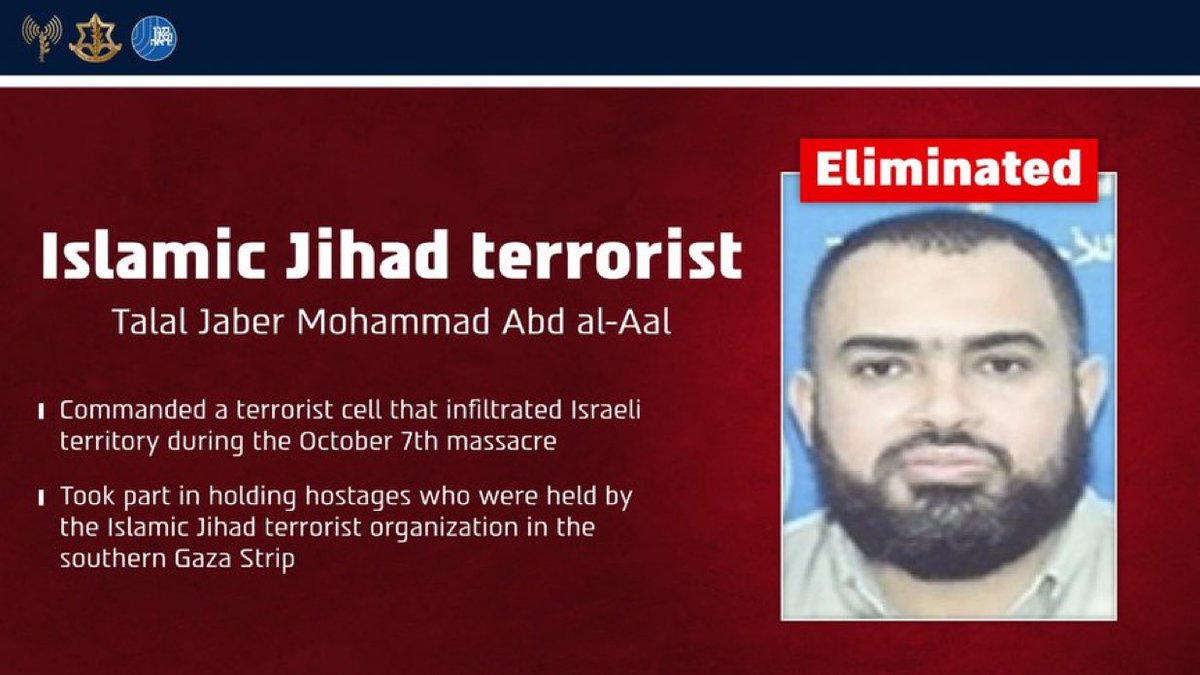
Voormalig gijzelaar Rom Braslavski reageerde op het nieuws dat de IDF een van zijn bewakers heeft uitgeschakeld: de terrorist Talal Abd al-Aal van de Palestijnse Islamitische Jihad.
Rom:
“Dit is de man die, terwijl ik van top tot teen vastgebonden was en op de rand van de dood verkeerde, mij dwong mijn mond open te doen zodat hij erin kon spugen. Dit is de man die mij eigenhandig martelde, op zijn eigen bevelen, en mij meerdere keren bijna doodde. Geniet van de hel, stuk vuil.”
Fifty years ago today, Air France Captain Michel Bacos showed the world what true moral courage looks like.
When Flight 139 was hijacked by Palestinian and German terrorists and flown to Entebbe, the non-Jewish passengers were eventually released. Bacos and his crew were also offered their freedom.
However, Bacos, who also served in the French army under DeGaulle, refused to leave his Jewish passengers. All his crew also refused, without exception.
Instead, they chose to remain alongside the 94 Jewish hostages, fully aware of the danger they faced. As Bacos later said, abandoning his passengers was simply "unimaginable."
Days later, they were freed in the legendary Israeli rescue mission, Operation Entebbe, led by Yoni Netanyahu, who would die in the battle.
For his extraordinary courage, Bacos was honoured by both France and Israel. Yet his greatest legacy was not the medals he received, but the example he set: that decency, duty and humanity must never yield to terror or antisemitism.
Michel Bacos was a true hero. May his life, his courage and his memory forever be a blessing and an inspiration.