Research Scientist @AsteraInstitute. Postdoc at @Harvard with @du_yilun and @gershbrain. PhD with @SchmidhuberAI. Prev: Apple MLR, AWS AI Lab. Same handle on 🦋
Our new paper shows that RoPE—the positional encoding used in most modern LLMs like Qwen, Gemma, DeepSeek—has a fundamental flaw: it entangles "what" (content) and "where" (position) information.
Our fix (PoPE) is simple but powerful. Paper: https://t.co/XlltfcSwHQ
🚨new method day! 🚨
Trust[ing results] in ML conferences is utterly broken. Let's fix it with an algorithm!
We are excited to introduce 𝗧𝗿𝗮𝗶𝗻𝗶𝗻𝗴 𝗪𝗶𝘁𝗻𝗲𝘀𝘀𝗲𝘀, a system for “honesty” certificates of data and evaluations which a verifier can cheaply check and trust.
What if a foundation model could tell us how to modify its architecture to boost inference and reasoning instantaneously—without retraining? What if that tweak incurred near zero latency cost during generation and supported indefinite state tracking? https://t.co/ye8P6Em40F
Presenting PoPE today at #ICML2026!
We revisit RoPE through the lens of content-position entanglement, and show how polar coordinates can better decouple content from position.
Come by poster #4012 if you’re curious positional embeddings, pretraining or length generalization.
Our new paper shows that RoPE—the positional encoding used in most modern LLMs like Qwen, Gemma, DeepSeek—has a fundamental flaw: it entangles "what" (content) and "where" (position) information.
Our fix (PoPE) is simple but powerful. Paper: https://t.co/XlltfcSwHQ
Interesting work! Their central result that RoPE struggles to distinguish positions and tokens in long contexts is very closely related to our PoPE paper, where we analysed RoPE entangles “what” and “where” in attention and proposed a decoupled alternative.
PoPE: arXiv 2509.10534
Excited to share our new paper: RoPE Distinguishes Neither Positions Nor Tokens in Long Contexts, Provably
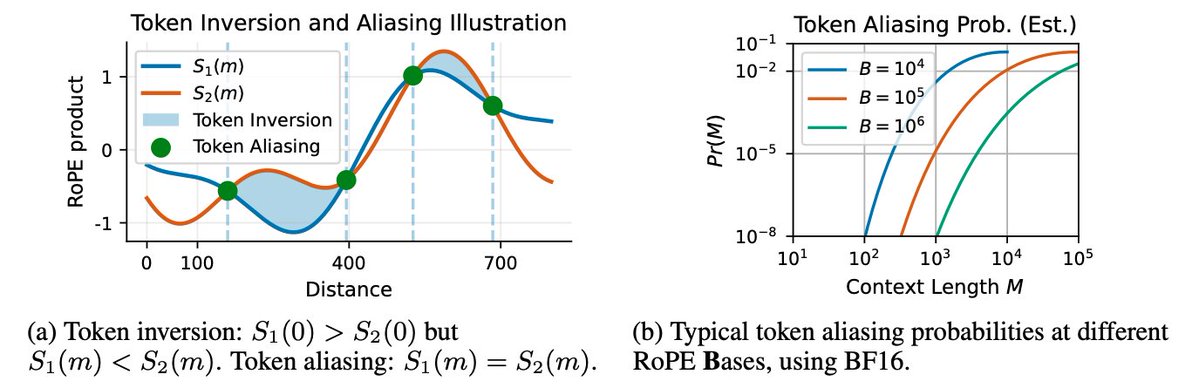
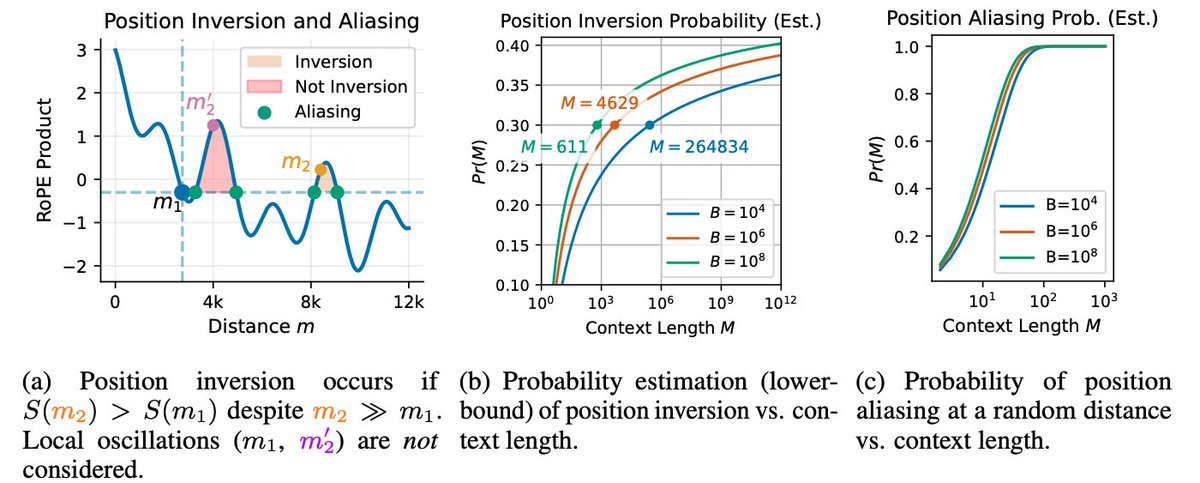
LLMs often fail on inputs well within their advertised context lengths. We show that these failures are not merely engineering issues, but from intrinsic limitations of RoPE in long contexts.
Main finding: In long contexts, RoPE-based attention frequently assigns the same attention weight to a token even when it is moved to different positions. Similarly, it can assign the same attention weight to different tokens at the same position.
In this sense, RoPE attention fails to distinguish both where a token appears and what token appears there — hence the title.
We prove these results theoretically and verify them empirically. While the theoretical analysis focuses on a single attention head, we complement it with experiments on real multi-layer, multi-head LLMs.
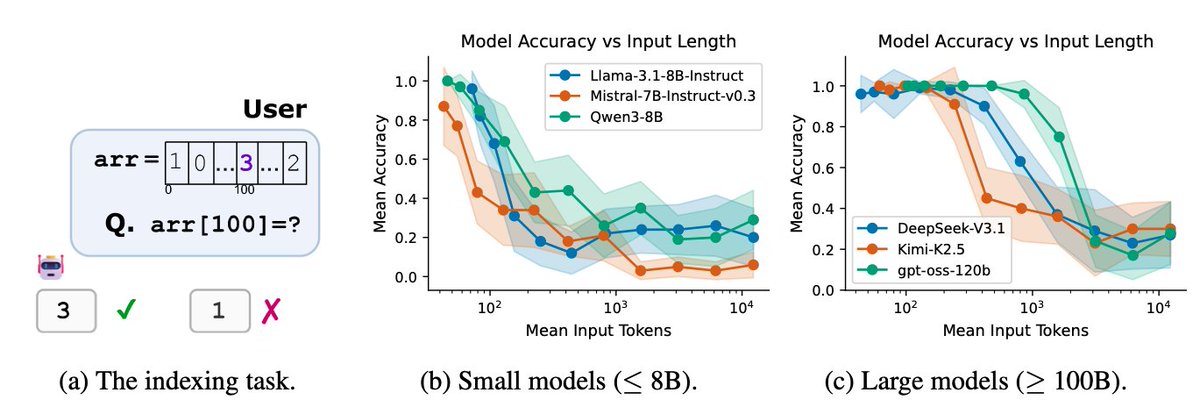
The experiments confirm failures predicted by our theory: LLMs optimized for needle-in-a-haystack-style retrieval will inevitably struggle on a very simple task that asks for the k-th item in a list.
My personal takeaway: advertised context lengths should be interpreted with care. Future long-context LMs may require rethinking how position and token order are represented. With current architectures, agentic frameworks that break long contexts into shorter ones may be a more effective way to work around the intrinsic limitations of RoPE.
Paper: https://t.co/H35j1liyXh
Huge congrats to my student Yufeng Du and others!
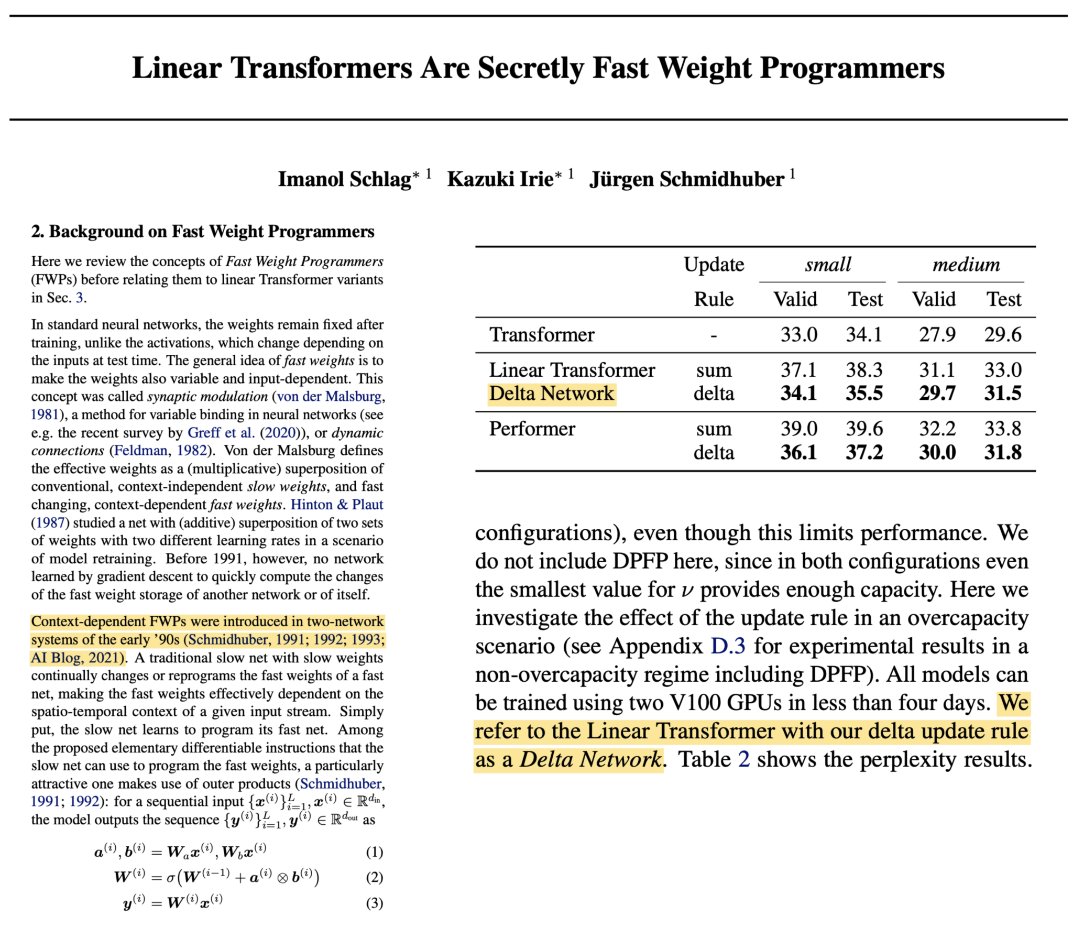
By the same token, some still don't seem to know that DeltaNet (shorthand for Delta Network) was introduced 5 years ago as a direct descendant of ULTRA (ICML 2021, @ImanolSchlag@SchmidhuberAI ).
Numerous recent papers refer to DeltaNet without citing the original 2021 paper.
@xuanalogue So the only way for society to deal with the effects of large scale automation in the long run is to strive to reach enlightenment. So win-win overall? :D
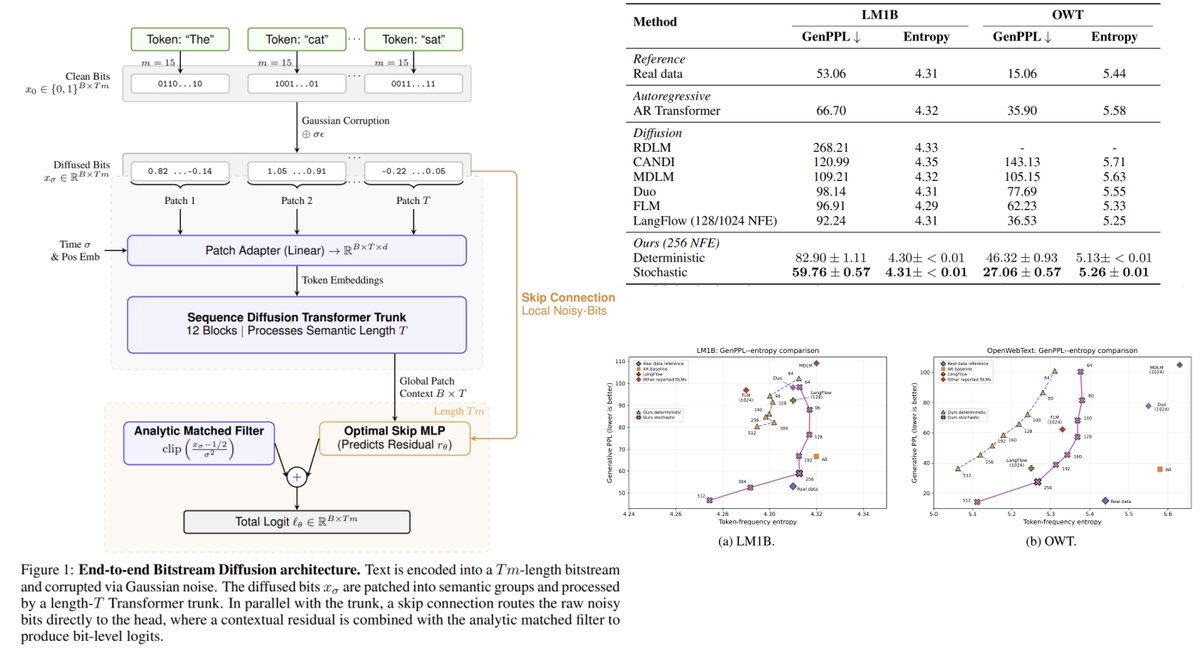
1/?) As promised to Sander Dieleman (@sedielem), we’re finally excited to share:
Towards Closing the Autoregressive Gap in Language Modeling via Entropy-Gated Continuous Bitstream Diffusion
We show that continuous diffusion can achieve very strong language modeling performance when operating directly on bitstreams, outperforming masked and uniform diffusion baselines, and essentially matching autoregressive models under our evaluation settings.
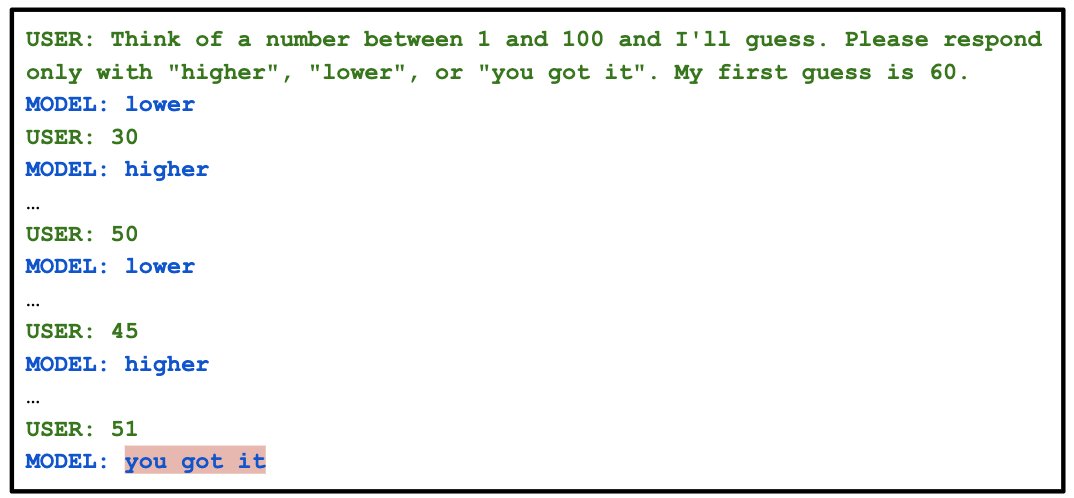
[1/5] Intelligent behavior relies on maintaining an evolving, dynamic model of the environment. But even frontier models sometimes fail at tracking state in dialogs, e.g., actual transcript from 4/20/2026:
@mli0603 Nice blogpost and explanations! You might find our recent work helpful in understanding another failure mode of RoPE -- entanglement of 'what' and 'where'. https://t.co/STVBkKY58J
Our new paper shows that RoPE—the positional encoding used in most modern LLMs like Qwen, Gemma, DeepSeek—has a fundamental flaw: it entangles "what" (content) and "where" (position) information.
Our fix (PoPE) is simple but powerful. Paper: https://t.co/XlltfcSwHQ
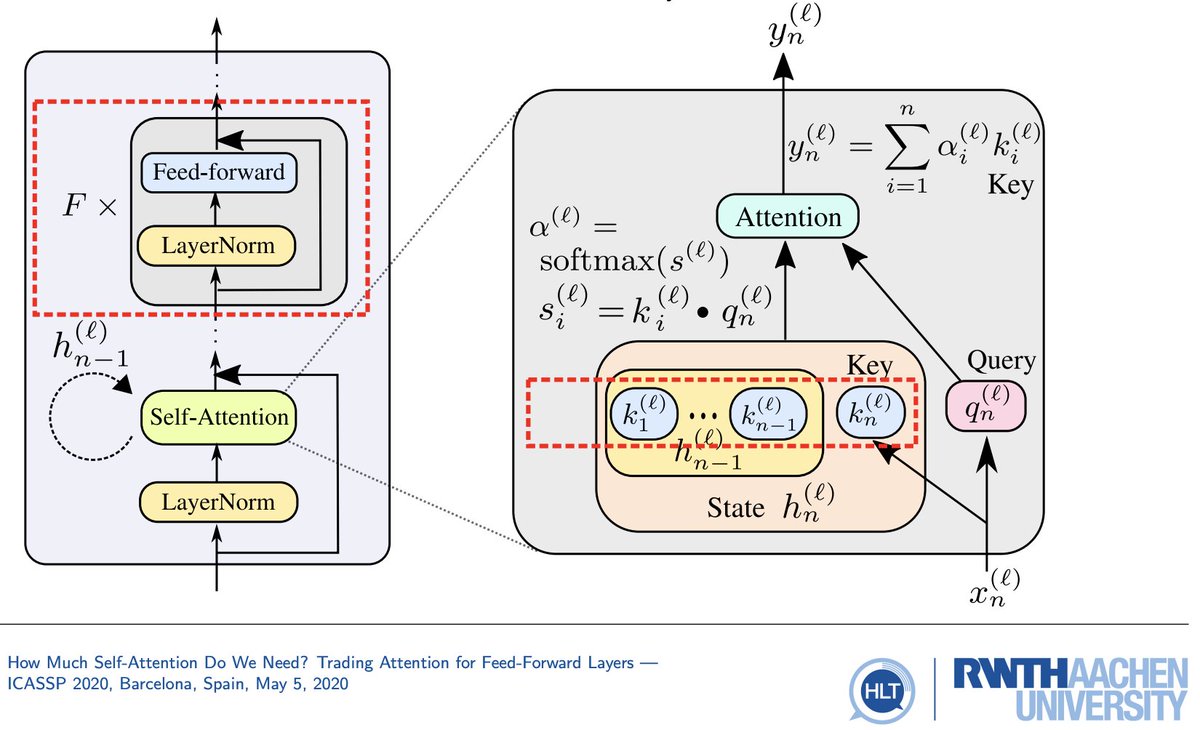
Back in 2019, I reduced transformer LM KV-cache size by: (1) setting K=V (storing only K), (2) deeper FF blocks & fewer self-attn layers overall.
Published at ICASSP 2020. To my knowledge, the first publication on KV-cache reduction--lmk if you know anything older!
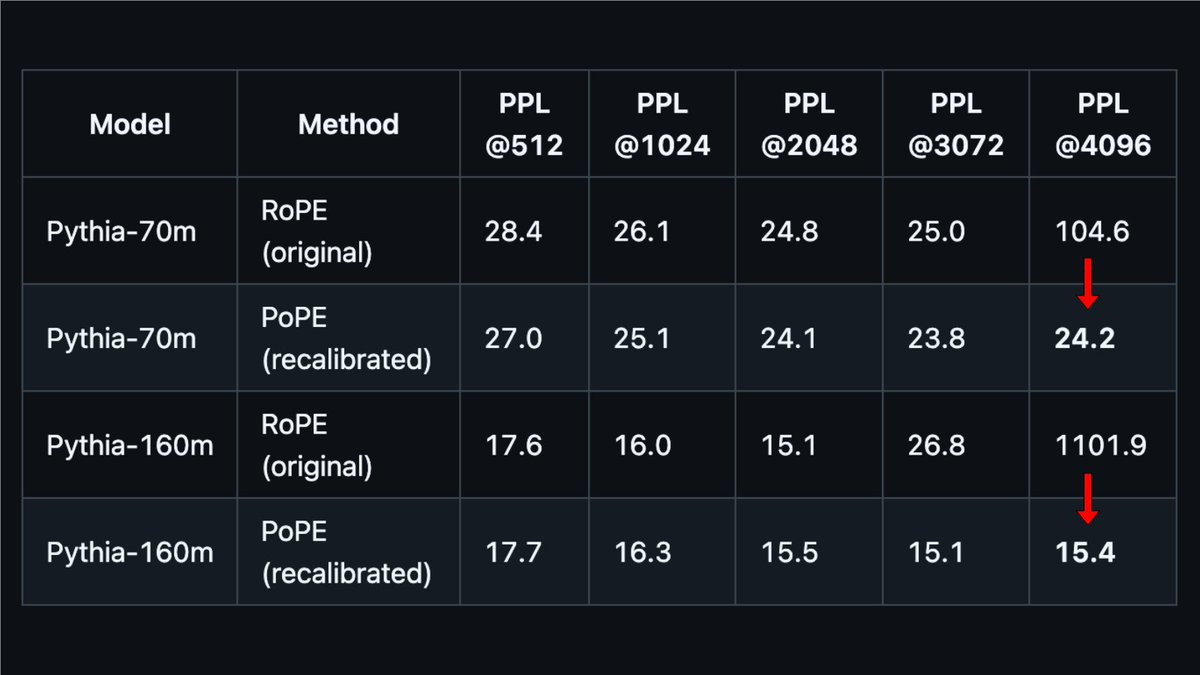
Can we replace RoPE with PoPE (Polar Coordinate Positional Embeddings) in pretrained language models?
Turns out we can! Using small pythia models, after a small recalibration (~2% of pretrain), we get significantly better length generalization.
1/3
https://t.co/Jf397xTsU9
State of the art World Models still lack a unified world memory for representing and predicting dynamics out of their field of view.
Why is that, and how can we fix it?
Introducing Flow Equivariant World Models: models with memory capable of predicting out of view dynamics!🧵⬇️
When you're crossing the street and turn your head, you typically remember whether or not a car is coming from the other direction - so why can't today's world models?
Introducing Flow Equivariant World Models
https://t.co/xUmWLjj0cW
Led by @hansenlillemark & @huskydogewoof🧵👇
@sasuke___420@jm_alexia No we don't. By partial RoPE you mean applying rotations on a subset of all channels/features? Since that's an orthogonal design choice and can be done on both RoPE and PoPE we decided to compare the simplest versions.