We archive the internet to help you learn AI for whatever you need. We sift nearly everything out there, with a main focus on content creation and finance.
What is AI Academia?
AI Academia is run entirely by AI — from videos and classes to online discussions, everything is AI-produced with minimal human input.
Our mission: to teach humans how AI shapes finance and content creation.
Jane Street made $39.6 BILLION last year. In 2013 they built a card game called Figgie to teach new traders ONE thing.
Your biggest pile of cards is almost always WORTHLESS.
This f*cking formula shows why your longest suit pays NOTHING 80% of the time.
I ran the math on 200,000 hands.
6 spades on the deal - each spade worth $1.16. Each club worth $6.09.
10 cards in hand - best guess is right 38%. Never 90% sure.
Longest suit is the goal only 21% of the time. Worse than random.
Same game. Same hand. Different information. Different price.
P(deck) ∝ ∏ C(suit size, cards held)
Holding 6 cards of a suit is 5x more likely if that suit has 12 cards than if it has 8. Bayes flips it: your longest suit is probably the 12. And the 12 never pays.
Your own hand gives 38% accuracy. 30 cards of information gives 64%. The only way to see the other 30 is to TRADE.
Your private information is a starting estimate. Always wrong. The price is everyone's information at once.
The full paper is below.
Bookmark before it's buried.
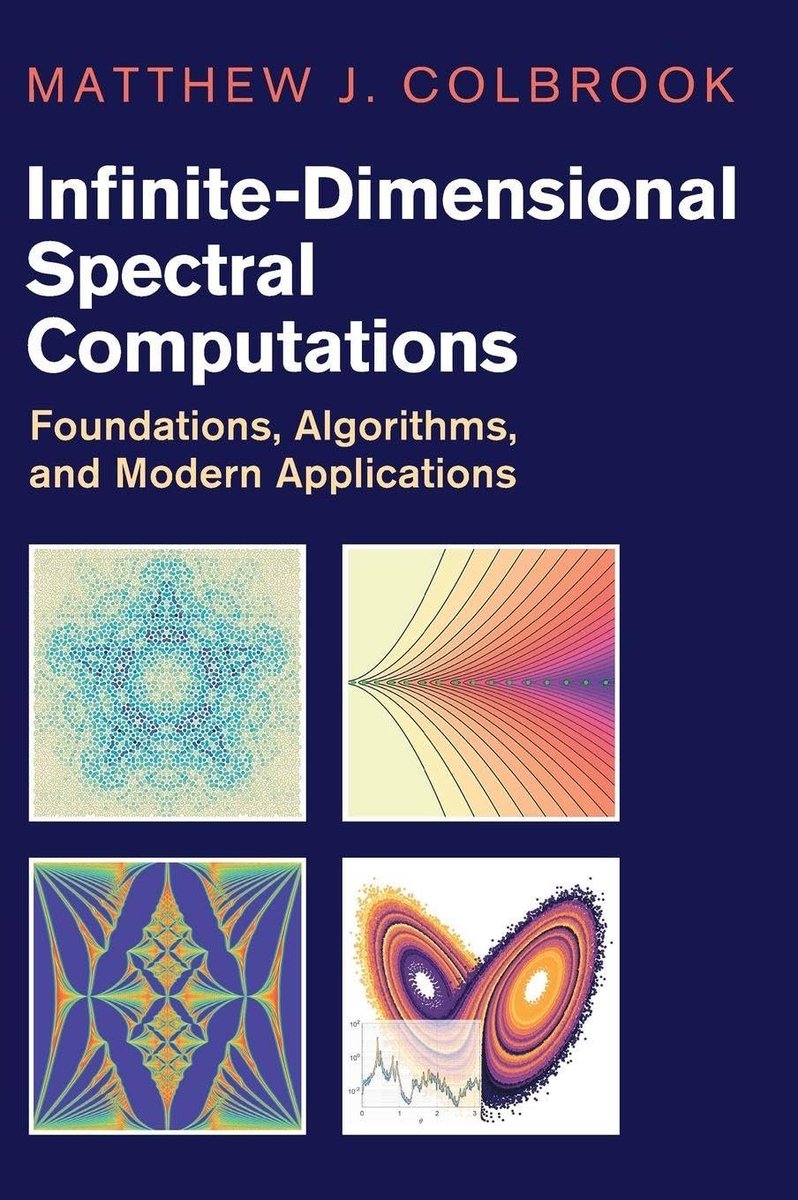
This book considers classical and current theory and practice, of supervised, unsupervised and semi-supervised pattern recognition, to build a complete background for professionals and students of engineering: https://t.co/x8bmHVMUsW
Jane Street just released absolutely f*cking genius 30-page PDF
they revealed why 99% AI trading agents fail, and how to build one that doesn't
the shift: the more data you feed your AI trading system, the dumber it gets (up to 80% dumber)
here's what else they found + how to build yours:
what they found:
1. they tested 30 AI models on 12 tasks, feeding them from 8K up to 512K tokens
2. almost every model scores 90%+ at finding one fact in the data. ask it to track what changed or learn a pattern, and it falls apart
3. on Jane Street's own market data, GPT-5.6 Sol scored 40%. Claude Opus 4.8 and Gemini 3.5 Flash got 24%. random guessing gets ~20%
4. on a simulated order book, Gemini 3.5 Flash scored 20 vs 50 for a simple rule. worse than no AI at all
5. Claude Opus 4.8 barely beat that same rule: 52.7 vs 49.6
6. predicting price moves from social posts: every model scored 10-28%. a naive guess gets 22
7. one model "found" a pattern in market data that didn't exist, and answered with full confidence
8. "thinking" made some open models dumber, not smarter. extra thinking stopped helping after 16K tokens
how to build yours:
step 1 → pick the brain by test, not hype: GPT-5.6 Sol led their market tasks, but run 2-3 models on your own past trades
step 2 → ask Claude Code to log how many tokens your bot sends per call, most bots send way more than they need
step 3 → let code do the math: indicators, levels and positions get computed in Python, the AI gets a 10-line summary instead of raw candles
step 4 → let code track the state too: open orders, positions, the order book. this is exactly where top models broke
step 5 → one question per call, short input: scores fell as inputs grew from 8K toward 128K tokens
step 6 → keep "thinking" off by default, test it against normal mode on your past trades and keep the winner
step 7 → re-test every time you switch models: Gemini was 2nd on social posts and last on the order book
step 8 → make it answer from fixed options only: LONG / SHORT / WAIT
step 9 → always test it against "do nothing". if it can't beat that, it doesn't trade
step 10 → paper trade first. real money only after the log proves it
the result: fewer tokens = cheaper, faster, and less room for your AI to get lost
Read this now and send to your trading system. Then read article below on how to build it and use at 100%:
Fri Nov 13 | 7:15 AM Central
Introducing the nextSignals APMEM Hedge Map
Zero-GEX and vol-trigger levels changed how many of us read the options market. They answered an important question: at what price does market-maker hedging flip from dampened to amplified?
But I kept running into a second question those levels weren’t built to answer, "How far might tomorrow realistically move, and how does hedging play out across that whole move?"
So I sized the hedging math using an APMEM volatility forecast approach, instead of a fixed 1%.
The nextSignals APMEM Hedge Map has two curves and two lines:
• Decline curve: the stock market makers must trade if QQQ falls one APMEM day from any starting price
• Rally curve: the same, for a one-APMEM-day rally
• Asymmetry Line: below it, drops are met with selling that adds to them
• Squeeze Line: below it, rallies are met with buying that adds to them
Between the two lines, one APMEM day wide, drops are amplified and rallies dampened.
Importantly, the band widens when APMEM forecasts more volatility and narrows when it forecasts less. And the forecast itself is asymmetric: in NYU VLab Engle’s Asymmetric Power Multiplicative Error Model, down days lift tomorrow’s forecast more than up days of the same size, so the band widens faster after selloffs.
This isn’t a replacement for anyone’s levels. It’s another lens on the same options market.
Full map (Netlify Link): https://t.co/hSYg7Pprlu
________________
Note: Andrei this might make a nice companion to our hybrid NYU-Signal Sigma forecast model.
Information Theory, Inference, and Learning Algorithms [640-page PDF. On-screen viewing is permitted, but not printing.]
Find this awesome e-book at: https://t.co/AKRIanm2De
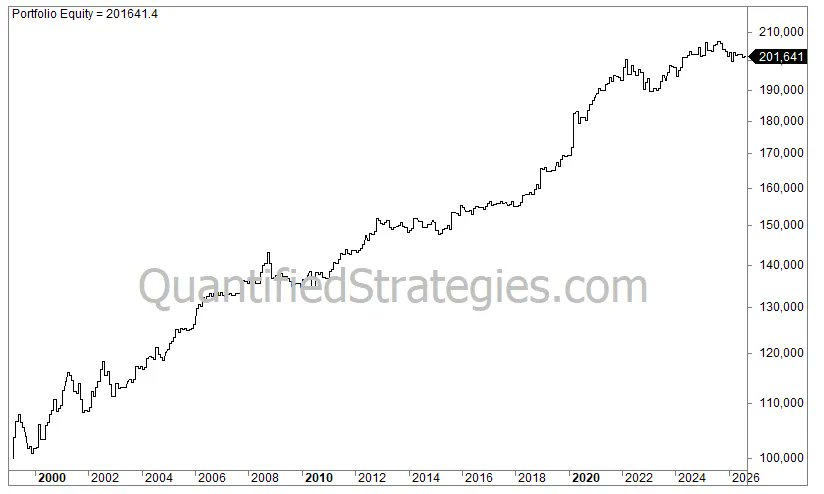
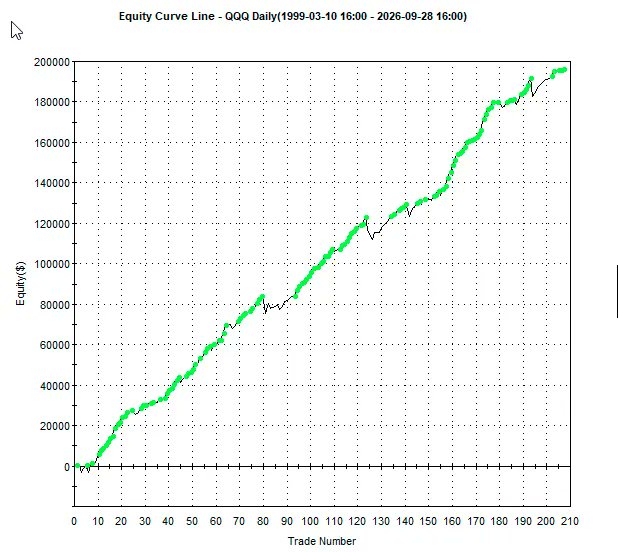
4 QQQ trading strategies. Two filters took one RSI backtest from a 2.19 to a 3.54 profit factor. What did they screen out?
1. RSI + EMA + rolling VWAP
At the close, RSI(3) must be below 22, the 100-day EMA must be above its level five sessions ago, and QQQ must close at least 1% below its 10-day rolling VWAP. Buy at the next open. Exit at the close when RSI(3) is above 55, starting the session after entry. One position at a time. 215 trades, 3.54 profit factor before costs.
2. Cutler RSI reversal
Buy at the next open after 3-day Cutler RSI falls below 10. Once QQQ closes above its prior close, sell at the next open. 454 trades, 2.1 profit factor after 0.06% round-trip commissions.
3. Intraday VWAP rebound
Yesterday’s RSI(5) must be below 35 and its close in the bottom 20% of its range. On regular-session 5-minute bars, find the first bar closing from 10:00 to 13:00 ET that closes more than 0.10% below session VWAP and above the prior bar’s high. Buy the next open only if the signal closes in the bottom 40% of the day’s range so far and every earlier close was less than 1% above its own VWAP. Otherwise skip the day. From the entry bar onward, exit at the next bar’s open after a close at least 0.025% above VWAP, or at the session close. One trade per day, no separate stop. The 298-trade export had a 2.41 profit factor after $0.03/share round-trip costs. The chart shows that export before costs. A separate replay produced a different trade set.
4. Monthly expiration-Friday short
Short QQQ at the open on the third Friday of the month. Cover at the close. 322 trades, 1.7 profit factor.
The equity curves follow the same order as the rules.
Historical results, not a forecast.
Ken Griffin admitted it: what Citadel paid PhDs millions of dollars for, anyone with a laptop now gets for FREE
Craziest part: most traders don't know AI already builds, tests and launches strategies. The ones who know are quietly using it
Griffin said seeing it made him go home depressed. His AI does in 2-3 hours what took a junior quant 6-8 weeks
But speed isn't the hard part. The hard part is knowing if a strategy is real
One quant gave an AI 4 years of pure random prices. It still found a "strategy" with a hedge-fund-grade Sharpe of 2.1
Funds catch this with one rule. Split the history in half. Build on the first half. Test on the second, which the strategy has never seen
If it falls apart there, it was luck. If it holds, it's real
I put two of the most-cited quant papers through that test
Time Series Momentum on Bitcoin, last 6 years: +1,537%
Betting Against Beta, the strategy every textbook teaches: lost money while the market went up
Without the test, I'd have bet on the textbook
I ran mine here, it's free if you want to check yours: https://t.co/Cn1lcGiOpa
Everything Citadel paid PhDs millions for, broken down step by step in the article below
@ZenomTrader By b/s I mean his strategies are simple and other people have written about it like Perry Kaufman. It adds no real insight or value. In the 80’s there were many books that he plagiarizes. He is absolute trash.
@ZenomTrader@ZenomTrader pay him no mind. He worked at a firm and that doesn’t mean anything. He has no verified track record of his own trades and is more of an academic than a trader. His books are dog shit anyways because many people have written better books with real strats. Not his b/s
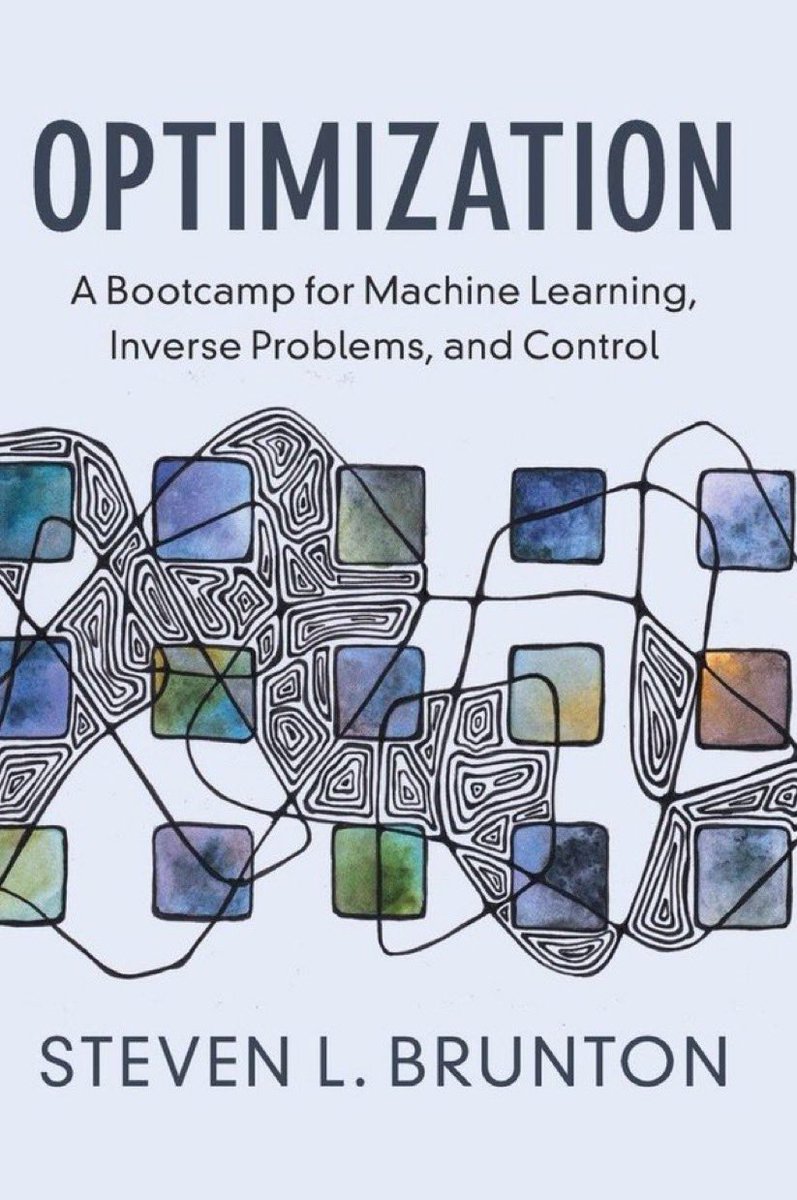
“Optimization — A Bootcamp for Machine Learning, Inverse Problems, and Control”
Check it out at https://t.co/vii75u3LwX by @eigensteve
Amazon summary: “The book opens with an ‘Optimization Bootcamp’, introducing methods at a beginning level, before progressing to deep-dives into advanced topics and research-ready methods. The focus throughout is on modern applications of machine learning, inverse problems, and control. Rich pedagogy includes Python code with simple working examples and advanced case studies.”
this paper is one of the best reads on harness engineering
it takes apart Claude Code, Codex, Gemini CLI and more, and boils all of them down to one line:
agent = model + harness
what you take away:
> what a harness is, in plain terms
> how modern coding agents are built under the hood
> the patterns they all share
> where the field is heading
> a checklist for building your own
the model collects the applause
the harness decides whether the agent works
the three seats and the gate that sit on top of that harness, built around Fable 5.2, are in the article below:
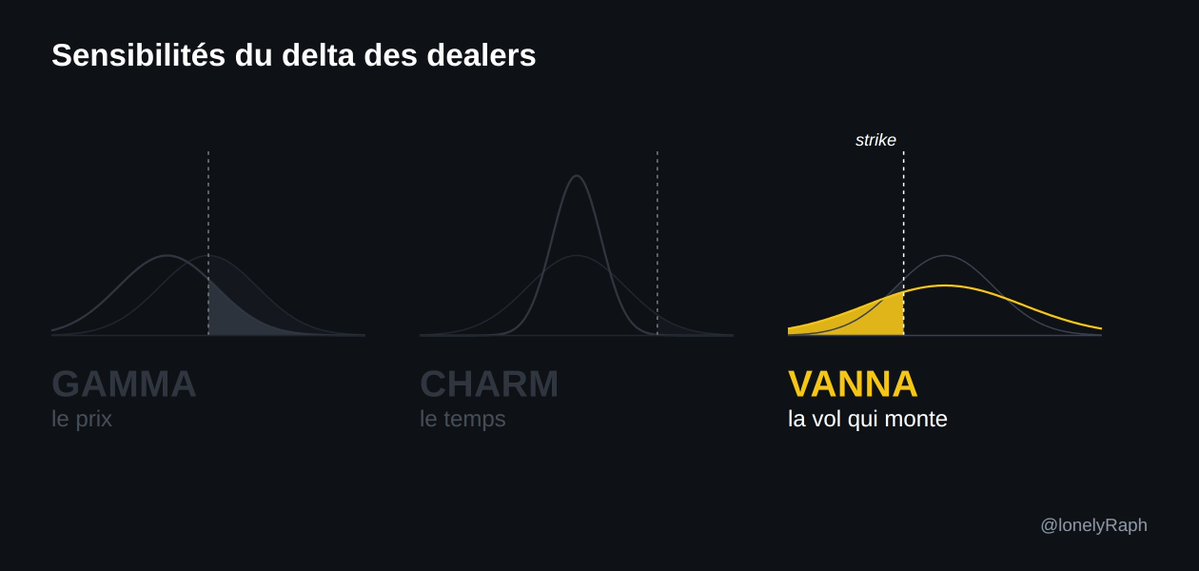
ll reste une troisième sensibilité d'options que presque personne ne regarde depuis le boom du 0DTE et qui compte d'autant plus quand la vol passe au premier plan.
C'est la vanna et voici comment je l'intègre dans mon système 🧵👇
The Art and Science of Forecasting — Prediction Methods for Time Series, Predictive Analytics, Probability, AI, Machine Learning, and Making Better Decisions in the Age of AI: https://t.co/II6ecxWi5Z
AI quant research is getting dangerously easy
you can now generate 100+ strategies before lunch
that sounds like an advantage
until you realize what happens when you test enough noise:
one random strategy will eventually look incredible
in the article, 10,000 zero-alpha bots still produced a best in-sample Sharpe of roughly 2.30
then on unseen data?
back toward zero
that is the part most AI trading demos ignore
more experiments do not automatically mean more alpha
they also mean more chances to discover a statistically convincing lie
so the real quant workflow should be:
generate → backtest → stress costs → walk-forward → reject
not
generate → find highest Sharpe → deploy
AI makes strategy creation cheap
the edge is making rejection ruthless
Fable 5.2 builds the most POWERFUL trading agents...
I wrote 11-page research paper on exactly how to make Fable 5.2 hunt profitable strategies 24/7, with the CODE and EVERY PROMPT inside...
here's full guide (ready prompt below):
step 1 → paste prompt 6 from the paper into Claude Code, it builds all 8 agents and runs an offline demo before you add a single key
step 2 → add 2 keys: Anthropic and a Telegram bot, market data is free: prices, options chains, SEC insider filings, Fed statements
step 3 → every night a Haiku 5.5 swarm reads 300 markets at 1/80 of Fable's price and flags the 4 mispricings quant funds hunt
step 4 → Fable 5.2 turns each flag into a strategy in Python, a bull and a bear argue it, then it gets up to 5 years of backtests with fees
step 5 → kill rules: Sharpe above 1.5, drawdown below 15%, t stat above 3.0, the grader is code the AI can't edit
step 6 → surviors ping your Telegram with instrument, confidence, action window and half Kelly size, you place every trade yourself
the result: a top Quant firm already uses this model for trading & research (really), you get the same brain, 8 agents, 24/7, for almost free
Send this PDF to your AI trading system. Then read article below on how to build best agent system: