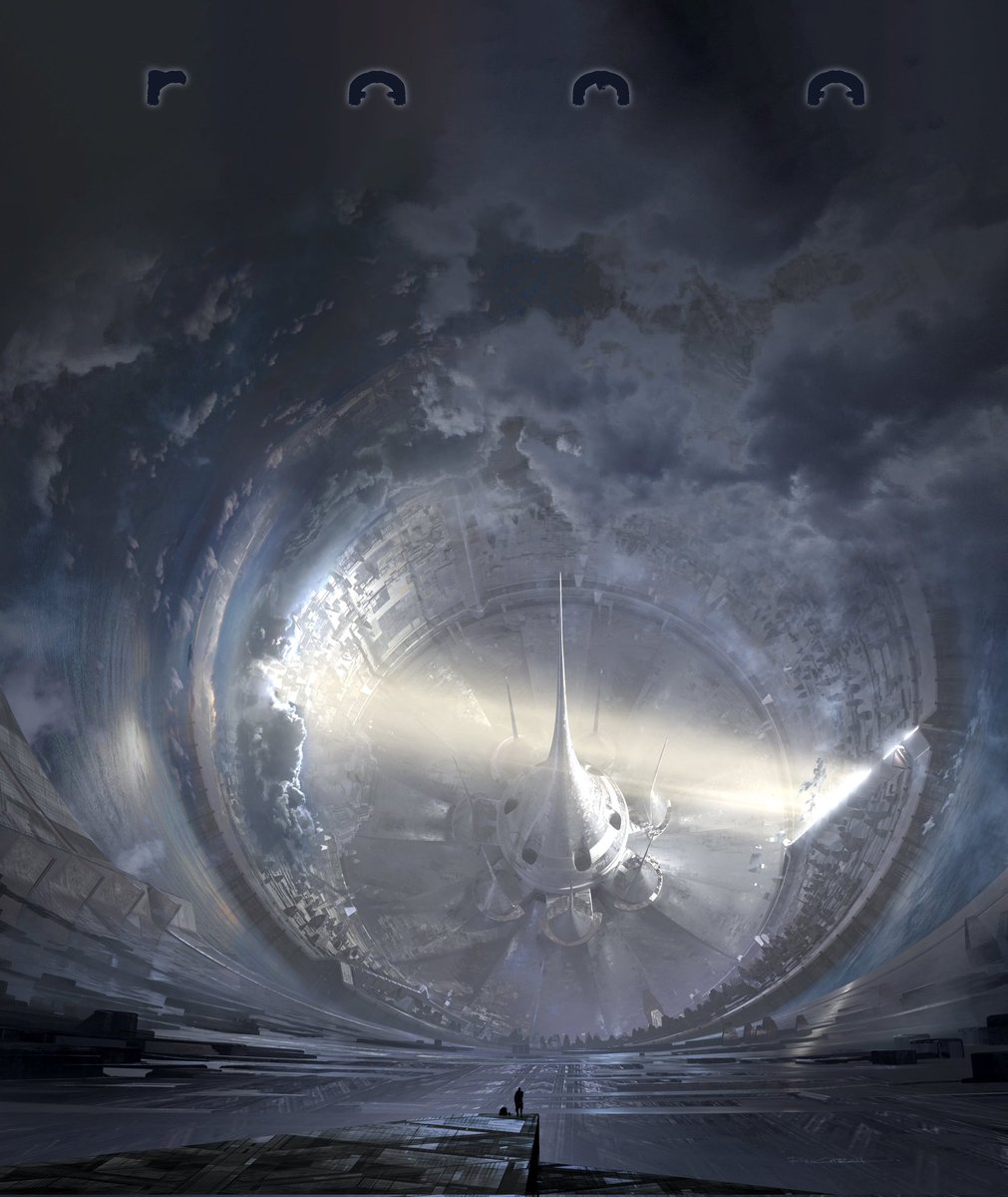
“The Church knew there was no halting Progress; but slowing it, slowing it even by half a century, giving man time to reach a little higher towards true Reason; that was the gift she gave this world. And it was priceless. Did she oppress? Did she hang and burn? A little, yes. But there was no Belsen. No Buchenwald. No Passchendaele.” - from 𝘗𝘢𝘷𝘢𝘯𝘦, 1968
For everyone commenting on the Vatican and Pope Leo’s Magnifica Humanitas on AI, I would encourage a reading of this alternate history
It directly addresses what would happen if the Church and governments oppressed new technology because “the modern man was not trained to use power well well”. As you read, you realize this technologically stunted world is not better nor worse, just different. Each decision on technology comes with its own tradeoffs on good and evil.
Christopher Olah, a Canadian billionaire businessman and researcher who co-founded AI giant Anthropic, sitting in the Synodal Hall and speaking next to Pope Leo said, closing his speech:
"I'd like to close with a request.
We need more of the world - religious communities, civil society, scholars, governments - to do what His Holiness has done here: to take this seriously, to look closely, and to push events in a better direction.
We need informed critics who will tell the labs when
we are failing. We need moral voices that the incentives cannot bend.
Today is just the beginning - the start of a long collaboration between those of us who are building this and those who can see what we, from inside, cannot.
Today is a powerful illustration of the form this global project of good will might take.
Let it also be a decisive first step toward a hopeful future for magnificent humanity."
The Pope rightly warns that AI must serve human dignity, not become a tool of domination or exclusion.
But if we hand governments sweeping power over AI development in the name of safety, how do we prevent it from being used to censor, surveil, and control citizens — as Orwell foretold in 1984?
This is the real alignment problem.
“Quis custodiet ipsos custodes.” Who will guard the guardians?
“Power tends to corrupt, and absolute power corrupts absolutely.”
The oldest questions of human nature and authority don’t disappear in the AI age. They become newly relevant.
“The Church knew there was no halting Progress; but slowing it, slowing it even by half a century, giving man time to reach a little higher towards true Reason; that was the gift she gave this world. And it was priceless. Did she oppress? Did she hang and burn? A little, yes. But there was no Belsen. No Buchenwald. No Passchendaele.” - from 𝘗𝘢𝘷𝘢𝘯𝘦, 1968
“The Church knew there was no halting Progress; but slowing it, slowing it even by half a century, giving man time to reach a little higher towards true Reason; that was the gift she gave this world. And it was priceless. Did she oppress? Did she hang and burn? A little, yes. But there was no Belsen. No Buchenwald. No Passchendaele.” - from 𝘗𝘢𝘷𝘢𝘯𝘦, 1968
Vast is expanding into high-power satellites. Introducing our new line of high-power satellite buses that leverage the technologies we’ve developed in-house for our Haven-1 space station and validated with the success of our Haven Demo mission. https://t.co/aITDUjQOzF
The "why" of government space is market formation. Go first. Prove the architecture. De-risk the economics. Then get out of the way. That's not waste — it's how LEO became a $500B economy. Cislunar needs the same playbook. https://t.co/EHb2VBnuUs
Unironically, if Starship turns out to be extremely successful and space exploration really ramps up by the late 21st century, then by the 22nd or 23rd century humanity might look back at America as the first true aerospace empire, the one that pushed humans into the space frontier. People in the future could end up admiring the U.S. the same way we look at Rome today, as a civilization that laid the foundation for everything that came after.
100%!!! The advantage of Cislunar space, especially the highly accessible asteroid population that TransAstra has identified, is that there is an economic reason to go there. Namely, we can harness the materials needed to build massive industries, such as data processing, in space.