Talked with a few folks inside of AI labs (OpenAI, Anthropic) about what they think of the future of software engineering.
The “closer” to shipping production code engineers are, the less they believe software engineering will be “solved” fully by AI. The opposite true as well
Me crucé con esto, Messi está casi 6 desviaciones estándar por encima de la media de delanteros de grandes ligas en cuanto a goles y asistencias en 90 minutos. Estadísticamente es prácticamente imposible que vivas para ver a alguien así
A French engineer who lives quietly in Paris has spent 30 years writing software that the entire internet now runs on without knowing his name.
He wrote the code that streams every YouTube video, every Netflix show, every TikTok clip. He wrote the code that runs the virtual servers underneath AWS, Google Cloud, and Microsoft Azure. He calculated more digits of pi than anyone in history. He has no Twitter. He has no marketing. He just keeps shipping.
His name is Fabrice Bellard.
Here is the story, because almost nobody outside the systems programming world knows what one man has built.
Fabrice was born in 1972 in Grenoble, France. He studied at École Polytechnique, the top French engineering school. He never went to Silicon Valley. He never built a startup empire. He just wrote code.
In 2000 he started a project called FFmpeg, an open-source multimedia framework for encoding, decoding, and streaming video. He was 28. The project did one thing nobody else had done well. It handled every video and audio format that existed, in one library, on every operating system. He led it himself for years.
Today FFmpeg is the invisible engine of the internet. YouTube uses it. Netflix uses it. VLC uses it. Chrome and Firefox use parts of it. Every Android phone, every iPhone, every smart TV, every video editing tool you have ever touched runs FFmpeg somewhere underneath. If you have watched a video on a screen in the last 20 years, Fabrice's code processed it.
He was not done.
In 2003 he started QEMU, a machine emulator and virtualizer. He wrote it solo until version 0.7.1 in 2005. QEMU lets you run any operating system on any other operating system. It became the foundation of modern virtualization. KVM, the Linux kernel hypervisor, runs on top of QEMU. Every major cloud provider, AWS, Google Cloud, Microsoft Azure, IBM Cloud, runs virtual machines on infrastructure built around it. The Quick Emulator is the most cited piece of cloud infrastructure code on Earth.
He kept going.
In 2001 he won the International Obfuscated C Code Contest with a small C compiler that grew into TCC, the Tiny C Compiler. TCC can compile and boot a Linux kernel from source in under 15 seconds. In 2004 he calculated the most digits of pi ever computed at the time, using a personal desktop computer and an algorithm he derived himself called Bellard's formula. In 2011 he wrote a complete PC emulator in pure JavaScript that runs Linux in your browser, a project called JSLinux that engineers still cannot believe is real.
In 2019 he released QuickJS, a small but complete JavaScript engine that fits where V8 cannot. In 2021 he released NNCP, a neural network based lossless data compressor that immediately took the lead on the Large Text Compression Benchmark.
Then he turned his attention to large language models. He built TextSynth Server, a web server with a REST API for running LLMs locally. He released ts_zip and ts_sms, compression utilities that use language models to compress text and short messages at ratios traditional algorithms cannot reach. He released TSAC, a very low bitrate audio compression system. In December 2025 he released Micro QuickJS, a new JavaScript engine for microcontrollers, separate from QuickJS, designed for environments with almost no memory.
Fabrice co-founded a telecom company called Amarisoft in 2012, where he serves as CTO. Amarisoft builds 4G and 5G base station software used by carriers and labs around the world. He has been running it for over a decade while continuing to ship personal projects from his own home page at bellard dot org
He has no Twitter. He has no Instagram. He gives almost no interviews. His personal website is a flat list of projects with no styling, no fonts, no marketing copy. Just titles and links.
A quiet French engineer who never moved to Silicon Valley wrote the code that quietly runs the internet.
He is still shipping.
The world’s largest residential proxy network runs on consent, TLS and vibes. The TV is always watching and apparently it is also available for contract work in surveillance or data acquisition? Bright Data sells access to a residential proxy network, the kind customers use to route requests through real home IP addresses instead of datacenter IPs that Cloudflare, DataDome and HUMAN are trained to block. The supply comes from an SDK embedded in consumer apps. So: CTV games, messengers, mobile apps and screensavers. With consent somewhere upstream, the device becomes an exit node. The TV is perfect for this job. It is plugged in, on WiFi, often unattended and barely supervised. It also asks for consent through a privacy policy and a remote-control UI, which is one way to make “informed choice” look like an endurance sport. One config flag tells the SDK to ignore whether the screen is on. Another tells it to ignore whether the user is on a call. In this economy, watching TV counts as downtime. https://t.co/WvFVvEFrzY
TIL that Škoda made a bicycle bell that can cut through ANC headphones.
Most ANC systems use adaptive filtering (like LMS) at a very basic level, it models the incoming noise and generate an anti-phase signal to cancel it. Works best for steady and predictable sounds.
Škoda's research found that around 750 - 780Hz ANC struggles a lot so they made their bell to target this particular frequency
they added irregular, transient dual tones that are hard to model in real time
this comes from a dual-resonator design : one tuned to ~750-780 Hz (ANC weak spot) using a cantilever tine, and another at higher frequencies (~2 KHz+) like a normal bell, so it’s not a single clean tone
So instead of being louder, it’s just… harder to cancel.
Pretty neat example of exploiting system limitations with pure analog design.
https://t.co/M2aH5Qfkcl
https://t.co/uXywdD01y4
AI will create more jobs than any other technology in history.
The doomers' fundamental error isn't just the lump of labor fallacy. It's deeper than that.
They assume a finite problem space.
This is the fundamental error of AI and job doomers. They look at the economy and see a fixed amount of work to be done, a pie that can only be sliced thinner as machines take bigger bites. They see humans a competitive resource for a finite amount of work and a finite amount of problems to solve that must be eliminated.
This is fundamentally, totally and completely wrong.
The pie isn't fixed. It never was. And the reason it isn't fixed is baked into the very nature of technology itself.
Technology is nothing but abstraction stacking. And abstraction stacking is infinite. Therefore the work is infinite.
The hammer didn't reduce the amount of work. It moved the work up the stack. And the new work was more complex, more varied, and more interesting than the old work.
Complexity breeds more complexity and more variety.
Once you have houses instead of mud huts, you have a cascade of new problems that didn't exist before. Plumbing. Wiring. Insulation. Roofing materials that don't rot. Drainage systems so the foundation doesn't flood. Fire codes so your neighbor's bad wiring doesn't burn down the whole block.
Each of those problems becomes a job. A plumber. An electrician. An insulator. A roofer. A civil engineer. A building inspector. None of those jobs existed when we lived in mud huts.
They exist because we solved the mud hut problem.
Think of all of human technological development as a stack of abstraction layers, each one built on top of the ones below it.
At the bottom: raw survival. Finding food. Building shelter. Making fire. These are the base-layer problems.
Each major technology wave solved a base-layer problem and in doing so created an entirely new layer of problems above it:
Agriculture solved "how do we reliably eat?" — and created problems of land ownership, irrigation, crop rotation, storage, trade, taxation, and governance.
Writing solved "how do we remember things across generations?" — and created problems of literacy, education, record-keeping, law, bureaucracy, and literature.
The printing press solved "how do we spread knowledge at scale?" — and created problems of intellectual property, censorship, journalism, publishing, public opinion, and democratic discourse.
The steam engine solved "how do we generate mechanical power without muscles?" — and created problems of factory design, worker safety, urban planning, railroad engineering, coal mining, labor relations, and environmental pollution.
Electricity solved "how do we deliver energy anywhere?" — and created problems of grid design, power generation, appliance manufacturing, electrical safety codes, utility regulation, and an entire consumer electronics industry.
The Internet solved "how do we connect all human knowledge?" — and created problems of cybersecurity, digital privacy, online commerce, content moderation, network infrastructure, cloud computing, social media dynamics, and an entire digital economy that employs tens of millions.
Notice the pattern?
Each solution didn't just solve a problem.
It created an entirely new problem space that was larger, more complex, and more varied than the one it replaced.
The stack grows. It never shrinks.
It's turtles all the way down and all the way up.
Its the beginning of the end of subsidized AI subscriptions. GH Copilot is moving to usage-based billing, as has Claude (for business customers.) Fair to assume more will follow.
I expect this change will also be a great boost for open models - cheaper, and pretty good already
Ya os avisé que esto iba a pasar, lo de la piratería era una excusa para bloquear Internet.
Si un día hay una carrera de caracoles o un torneo de canicas podrán bloquear medio Internet con la excusa de la piratería.
¡¡¡ INTERNET Y LA NEUTRALIDAD DE LA RED HA MUERTO !!!
After seeing that Claude Mythos marketing turned out to be, as expected, a scam, I wanted to make a master list of tricks being used to market LLMs.
The master list includes statements directly from leadership in the companies or from the "organic marketing" of people on social media, along with an explanation on how the scam works. This is my first attempt, so likely incomplete.
The LLM Marketing Scams Master List v1:
"Two more weeks" - the models will be good enough someday soon to do what we claim.
"They're already good enough" - the models are already good enough to replace workers, but it hasn't happened yet because of x y z reasons.
"We just built God in the backroom, and no, you can't see it" - the models they built in private are actually capable of doing the things we have been waiting for, but they can't let us see them yet for x y z reasons.
"Actually they already have replaced jobs" - the layoffs that tech companies have been doing, citing AI as the reason, have already been replaced with current LLM tech, ignoring market conditions and past data on layoffs during such conditions.
"You just don't know how to use then as well as me" - the models are good enough, but esoteric prompt engineering is required to get these results, and no, I won't teach you.
"I built an app making big money with LLMs" - they claim they already have made startup companies, almost always SaaS companies, that are making them tons of money, but when you ask to see them, they won't show you.
"You aren't using the right model" - claims that you must be using the wrong model and need to use Open Claude 420b-parameter Gemini Plus Pro 6.9 with 4RealThisTime HomerSimpson agent mode enabled. Note that this will be used to attack every study on the effectiveness of LLMs, since studies take time to complete and publish, with new models releasing more frequently than it's possible to complete and publish a study
"You're falling behind" - claims that you need to use the bots now, even though they aren't good enough to fully automate any jobs, because otherwise, when the bots are good enough, you will lose your natural English skills required to prompt effectively.
"All these companies are using LLMs, so do you think you know better than they do?" - pointing to claims of large companies deeply invested in LLMs being a success saying that LLMs are being used effectively, with no viewable results in the speed and/or quality of their company's output.
"The benchmark score went up" - claiming improvements on the benchmarking tests given to their latest model, despite the training being specifically tuned to improve on these tests, and then conflating better benchmark scores with actually being more able to automate jobs or drastically improve worker productivity.
"It can now count the letters in Strawberry/can now do things it famously couldn't do previously" - saying that it can now count the letters in Strawberry or instruct you on how to use a cup without a bottom, etc. is often done to suggest increased reasoning for the LLM, but often involves just hard coding an answer into the service.
"It has escaped our control" - saying that they cannot control the LLM, implying it is conscious or living to some degree when really it just said words that it wasn't supposed to or an agent used an app that wasn't intended by the user's prompt when next-token predicting
"It's feeling sad/scared/happy/angry, suggesting it is conscious" - they ask the LLM how it is feeling, and it next-token predicts a response that includes an emotion felt by humans, since training data is from human conversations online.
"Costs are going down/the LLM service is profitable" - ignores training costs and capex for hardware, usually just referring to inference being profitable, which isn't even true in many cases. Training and capex is 95%+ of the total costs to serve the models.
Did I miss any?
Claude Code is not AGI, but it is the single biggest advance in AI since the LLM.
But the thing is, Claude Code is NOT a pure LLM. And it’s not pure deep learning. Not even close.
And that changes everything.
The source code leak proves it. Tucked away at its center is a 3,167 line kernel called print.ts.
print.ts is a pattern matching. And pattern matching is supposed to be the *strength* of LLMs.
But Anthropic figured out that if you really need to get your patterns right, you can’t trust a pure LLM. They are too probabilistic. And too erratic.
Instead, the way Anthropic built that kernel is straight out of classical symbolic AI. For example, it is in large part a big IF-THEN conditional, with 486 branch points and 12 levels of nesting — all inside a deterministic, symbolic loop that the real godfathers of AI, people like John McCarthy and Marvin Minsky and Herb Simon, would have instantly recognized.*
Putting things differently, Anthropic, when push came to shove, went exactly where I long said the field needed to go (and where @geoffreyhinton said we didn’t need to go): to Neurosymbolic AI.
That’s right, the biggest advance since the LLM was neurosymbolic. AlphaFold, AlphaEvolve, AlphaProof, and AlphaGeometry are all neurosymbolic, too; so is Code Interpreter; when you are calling code, you are asking symbolic AI do an important part of the work.
Claude Code isn’t better because of scaling.
It’s better because Anthropic accepted the importance of using classical AI techniques alongside neural networks — precisely marriage I have long advocated.
It’s *massive* vindication for me (go see my 2019 debate with Bengio for context, or to my 2001 book, The Algebraic Mind), but it still ain’t perfect, or even close.
What we really need to do to get trustworthy AI rather than the current unpredictable “jagged” mess, is to go in the knowledge-, reasoning-, and world-model driven direction I laid out in 2020, in an article called the Next Decade in AI, in which neurosymbolic AI is just the *starting point* in a longer journey.*
Read that article if you want to know what else we need to do next.
The first part has already come to pass. In time, other three will, too.
Meanwhile, the implications for the allocation of capital are pretty massive: smartly adding in bits of symbolic AI can do a lot more than scaling alone, and even Anthropic as now discovered (though they won’t say) scaling is no longer the essence of innovation.
The paradigm has changed.
—
*Claude Code is plainly neurosymbolic but the code part is a mess; as Ernie Davis and I argued in Rebooting AI in 2019, we also need major advances in software engineering. But that’s a story for another day.
HOME.
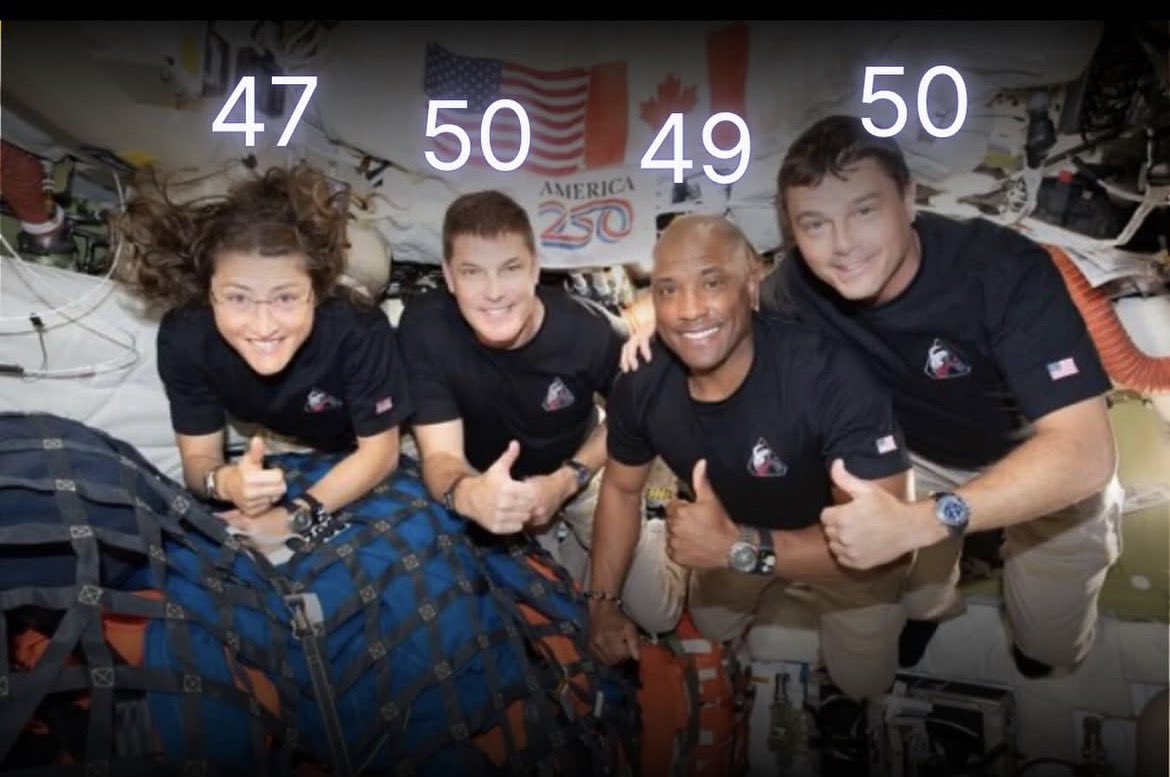
The Artemis II crew has arrived back on Earth, ending a nearly 10-day journey around the Moon. The trip took them farther into space than humans have ever gone before, and now they're safely home with us.
https://t.co/XmDQwNlCPR
🦔A researcher invented a fake eye condition called bixonimania, uploaded two obviously fraudulent papers about it to an academic server, and watched major AI systems present it as real medicine within weeks.
The fake papers thanked Starfleet Academy, cited funding from the Professor Sideshow Bob Foundation and the University of Fellowship of the Ring, and stated mid-paper that the entire thing was made up. Google's Gemini told users it was caused by blue light. Perplexity cited its prevalence at one in 90,000 people.
ChatGPT advised users whether their symptoms matched. The fake research was then cited in a peer-reviewed journal that only retracted it after Nature contacted the publisher.
My Take
The researcher made the papers as obviously fake as possible on purpose. The AI systems didn't catch it. Neither did the human researchers who cited it in real journals, which means people are feeding AI-generated references into their work without reading what they're actually citing.
I've covered the FDA using AI for drug review, the NYC hospital CEO ready to replace radiologists, and ChatGPT Health launching this year. All of that is happening in the same environment where a condition funded by a Simpsons character and endorsed by the crew of the Enterprise was being presented as emerging medical consensus. The people making these deployment decisions seem to believe the pipeline from research to AI to patient is more supervised than it actually is. This experiment suggests it isn't supervised much at all.
Hedgie🤗
https://t.co/8Kg8FOrgHW
Ok last one: the rarest solar eclipse of all time. Only 4 people have seen this with their naked eyes. The sun is fully behind the moon. The only faint light hitting the near side is reflecting off of earth, 250,000 miles away. And the stars and galaxies in the background, sheesh
Nikon Z9
f/2.0
2 second exposure
ISO 1600
@NASA: https://t.co/twBqbUEDs2
An underrated red flag in a person is an addiction to being right. The most impressive people I know change their minds often in response to new information. It’s like a software update. The goal isn't to be right. It's to find the truth.
¡Se ha filtrado TODO el código fuente de Claude Code!
Y no por un hackeo sofisticado ni un ataque...
Subieron por error el archivo .map a npm y eso permite reconstruir el código completo, legible y con comentarios incluidos.