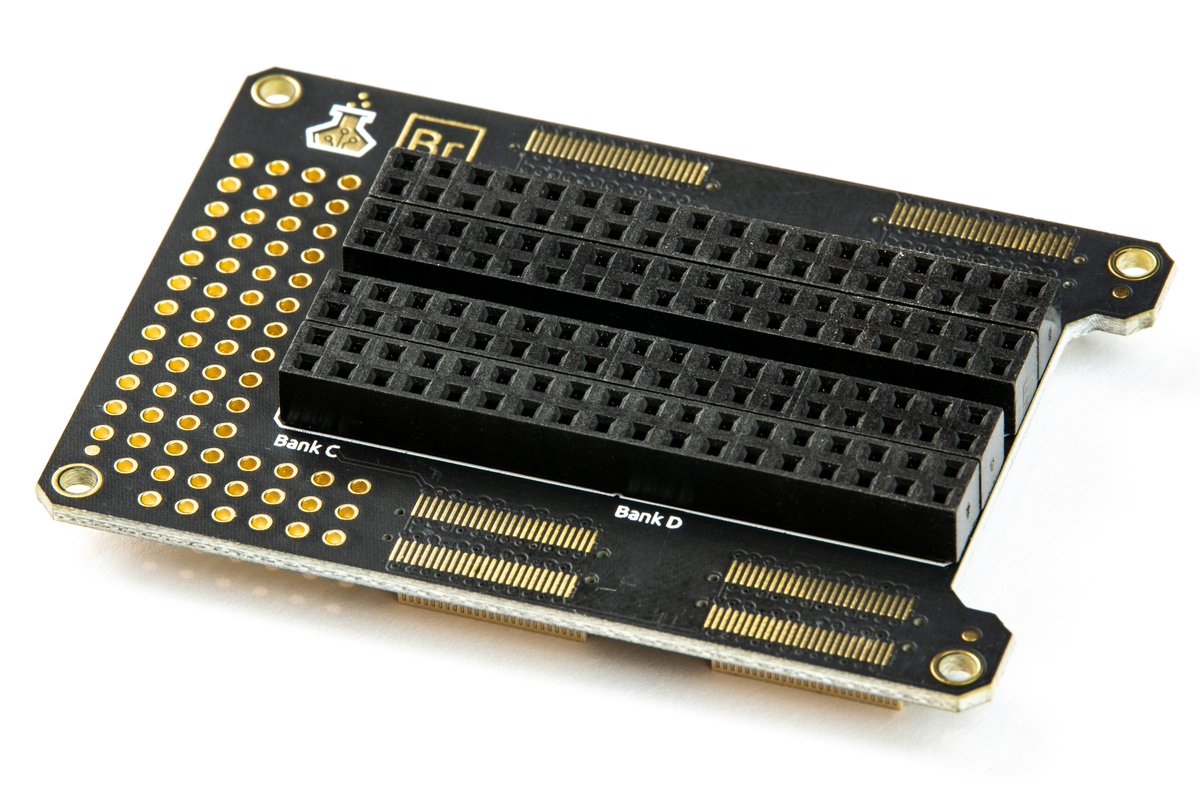
@wmarone@sparkfun The IO boards being sold still lack the resistors. We have a tutorial showing how to fake the pulldowns on the Cu. If you have an Au you can use the built in pulldowns
My latest for @IEEESpectrum: Build a Kinetic Sculpture With @sparkfun and @alchitry's Au #FPGA Board (Full write up at https://t.co/imiKcrAuna ) https://t.co/pvGfU38obp via
@ico_TC @thingsrobmade @sparkfun It's been a while since I played with it so it definitely warrants another look but last I used it I believe I had issues with inouts not behaving as expected. Also timing wasn't verified then (maybe is now?)
With the @Alchitry FPGA board release, we've set up a resource page where you can learn more about FPGAs, the boards we offer, and how you can use them! The page includes four guides to get you started programming your first #FPGA and the steps beyond. https://t.co/DpWOsQsX3N
@ico_TC @thingsrobmade @sparkfun The official Lattice toolchain is definitely recommended although the setup can be cumbersome. The open source ones just aren't quite ready for regular use
We're now producing @Alchitry FPGA boards, including two new #FPGA options - the Xilinx Artix 7-equipped Au, and the Lattice iCE40 HX-equipped Cu boards - and two "Elements" that support each of the FPGA's capabilities and logic cells. Get yours here: https://t.co/2ca6Nzzjst
@im_eningeer I appreciate the heads up here! However, the diode we are using is totally fine for the Cu. On page 19 of the data sheet it states it can be up to 3.46V unless you are programming the NVCM (then it needs to be under 3V). You can't program the NVCM on the Cu so no issues.
@WillFlux By default, yes, but with some minor tweaks you can configure it for two of either (some solder jumpers and populating/removing a resistor net).