@typesafe@fastinoAI 4/4Whether on-prem or in the cloud, decoupling extraction from verification cuts API latency and boosts precision in #GraphRAG pipelines.
Deep dive by @lyonwj: https://t.co/h9SmVGHBWA
Stop using slow, costly LLMs for Knowledge Graph validation.
Instead, use System One judgment models like #Jev (@TypeSafe) & #GLiNER2.5-Decide (@FastinoAI) to rapidly verify graph edges and spot modality traps (hedges, denials, forecasts). 🧵👇
System One models follow a simple pattern: "GLiNER Proposes, Decide Disposes" 🧠
1️⃣ Extractor generates candidate triples
2️⃣ Judgment model verifies if claims are actual facts vs. non-facts & aligns them with ontology rules.
A Kubernetes rollout can get stuck even while your application keeps serving traffic.
In this tutorial, Praneeth shows you how to diagnose stalled rollouts with a hands-on lab.
You'll investigate image-pull errors, failed readiness probes, scheduling issues, and rollout recovery.
https://t.co/VSBGzlCp32
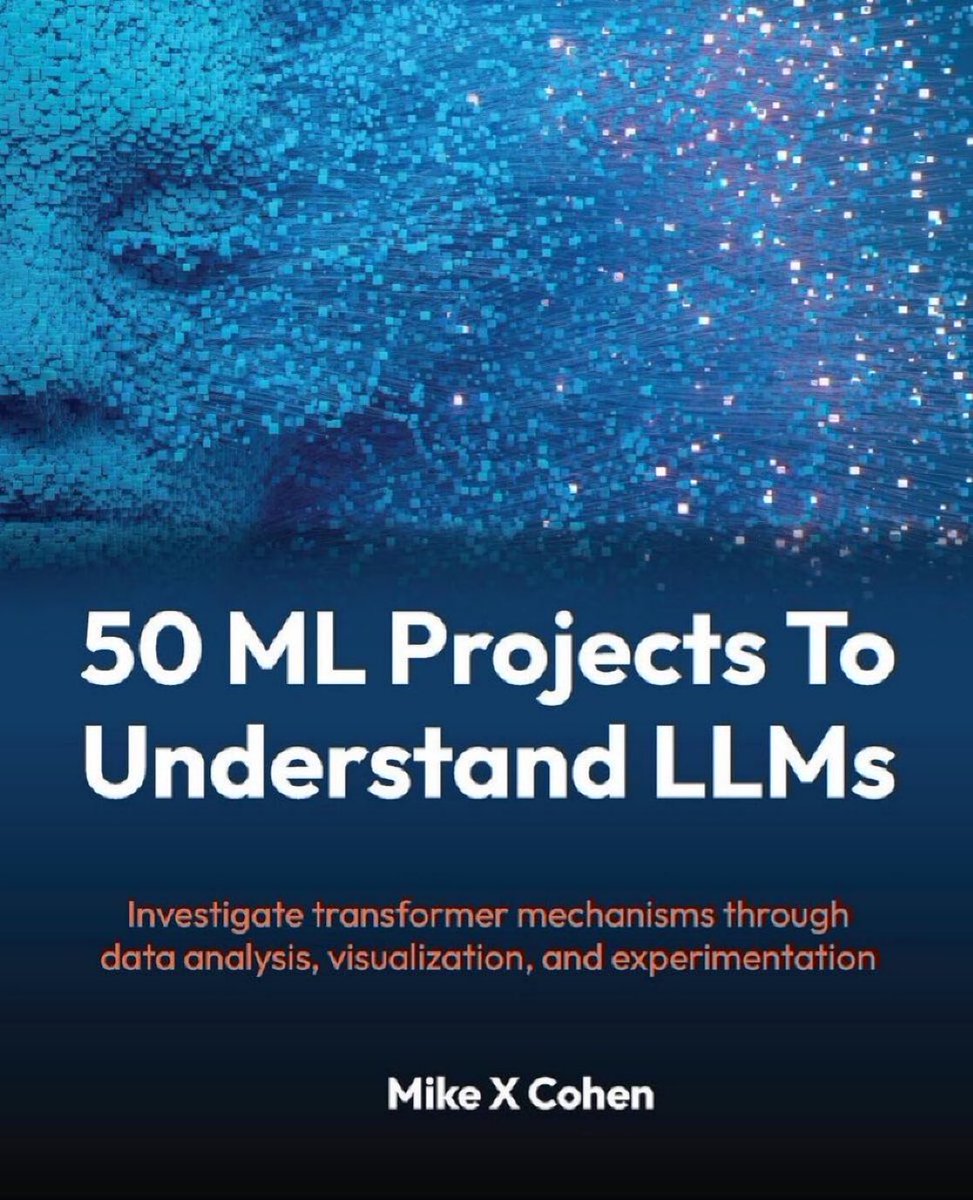
50 ML projects to understand LLMs — Investigate transformer mechanisms through data analysis, visualization, & experimentation: https://t.co/mp3s7JFolp v/ @PacktDataML
This book perfectly reflects its title "50 ML Projects to Understand LLMs". The entire book consists of exactly that: 50 projects, with tasks and subtasks pleasantly outlined, explained, and presented in a beautifully instructive and consistent style. No extraneous pedagogical content. The learning experience in each project delivers the promised understanding of LLM concepts, including informative graphics and detailed elaboration on the project's subtasks as needed. This book is essential for anyone seeking to build LLMs with confidence, knowledge, and skill.
UN PROGRAMADOR ACABA DE LOGRAR LO QUE GOOGLE LLEVA AÑOS PASANDO POR ALTO
Desarrolló un navegador en rust creado específicamente para automatizar procesos, hacer scraping web y potenciar agentes de IA
> Solo consume 30MB de RAM
> Las páginas cargan en apenas 85ms
> Bloquea automáticamente más de 3.500 trackers
> Elimina anuncios, analíticas y scripts de rastreo
Se llama Obscura
Y tiene algo que Chrome nunca va a poder ofrecer
Cada sesión genera una huella completamente distinta. GPU, canvas, audio, batería… todo se randomiza
Ningún detector lo identifica porque se comporta exactamente igual que un Chrome real
Es el reemplazo directo de Puppeteer y Playwright
Sin Node.js. Sin dependencias. Un solo binario
Ya supera las 16k estrellas en GitHub. 100% open source. Totalmente gratis
Guárdalo antes de que se te olvide, es una joya 📄
We’ve received notice that the Department of Commerce has lifted export controls on Claude Fable 5 and Mythos 5.
We'll begin restoring access tomorrow, and will share an update soon.
We’re grateful to our users for their patience, and to everyone who worked with us on redeploying the models.
Anthropic engineers just showed how to build agentic systems that run for days using "loops."
"At Anthropic, >30% of our code is already written by loops - that's how we ship so fast.
in this 40-minute workshop, they reveal the whole stack:
agent loop + harness + memory + sub-agents.
Worth more than any $500 vibe-coding course.
Watch workshop today, then read article below.
Our internal data shows Claude is accelerating AI development—a possible path to recursive self-improvement, or AI autonomously building a more capable successor.
It’s happening faster than we thought, and the implications deserve greater attention. https://t.co/OVVPJO7VQx
Evaluating AI Agents — Bootcamp on June 27 hosted by @PacktPublishing@PacktDataML — register with my discount code 'KIRK50' at this link to save: https://t.co/2iGClh49hG
Participants will be guided through the fundamentals of Evaluating AI Agents, covering:
🟠Why modern agents fail across tool usage, planning, execution trajectories, outputs, and adversarial inputs.
🟧How to build component-level evaluations to assess tool selection, argument quality, and planning effectiveness.
🔶Methods for defining and measuring trajectory-level metrics such as step count, cost, recovery behavior, and loop detection.
🟠Techniques for creating outcome-level evaluators using multidimensional rubrics and LLM-as-a-judge approaches, and calibrating them against human evaluations.
🟧Common adversarial failure modes unique to agentic systems, with a focus on indirect prompt injection through tool outputs.
🔶Frameworks for determining which evaluation layer is most relevant based on specific use cases and team maturity levels.
Deep Agents v0.6 makes harness profiles a first-class abstraction.
Now, you can get production-grade performance from models like @Kimi_Moonshot, @Alibaba_Qwen, and @DeepSeek_ai at 20x+ lower cost than closed frontier APIs.
More on tuning:
https://t.co/6sU4M8qjRV