A trial published in JAMA Neurology found that a personalized, reperfusion-guided blood pressure strategy after thrombectomy for stroke was associated with better 90-day functional outcomes than standard management.
📌 Full article: https://t.co/REoW2Wa7dr
#strokerecovery
I've always been fascinated by seizure semiology: sometimes so bizarre, yet offering unique insights into brain networks!
🏃 In our latest @GreenJournal publication, we describe epilepsia cursiva: an irresistible urge to run, heralding GBM recurrence
🔗 https://t.co/xxjYDulufU
The cases below show that antibody-mediated neurological disorders may sometimes be a manifestation of inherited disorders of immune tolerance.
Commentary from @DrWBRO@uclh ▶️ https://t.co/YOqTBqp9Oq
1/🧵
🧠 Are neurological toxicities from cancer immunotherapy becoming as frequent as spontaneous neuroimmunological disorders (PNS+AE)?
🔬 Our new population-based study suggests they now occur at rates of a similar magnitude!
📖 Read more (open access):
https://t.co/bfTj0AgGW6
This new study demonstrates that premature closure, deciding too early, can be directly measured and explains how bias leads to diagnostic errors.
@ASMEofficial#MedEd
https://t.co/8XPnv5CY1X
Among adults with newly diagnosed #IdiopathicInflammatoryMyopathies, add-on intravenous immunoglobulin plus high-dose prednisone led to greater and faster improvement than high-dose prednisone alone. https://t.co/1M3lQvkuGj
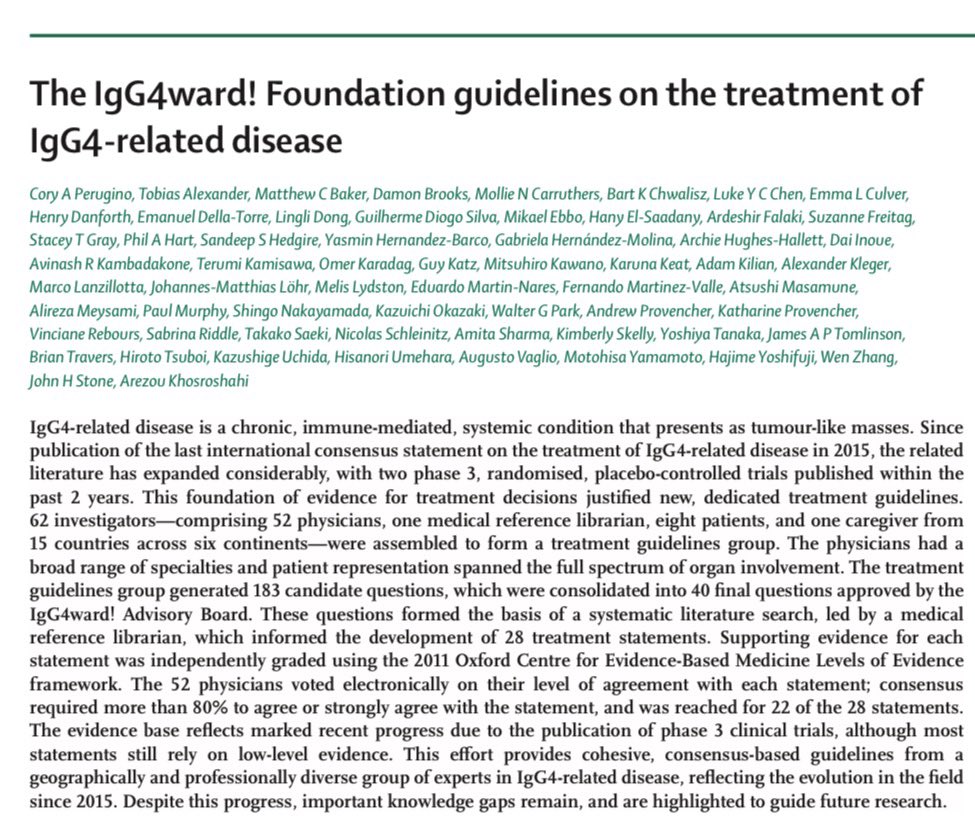
🧵 IgG4-related disease: New treatment guidelines for 2026
The IgG4ward! Foundation guidelines, published in The Lancet Rheumatology (November 9, 2026), provide a major update to the 2015 treatment framework.
Here are 10 key updates for clinicians.
#RheumattDoc#MedTwitter #RheumTwitter #rheumatology #igg4relateddisease @docakx@IhabFathiSulima@CelestinoGutirr@DurgaPrasannaM1
If we want to achieve regression of atherosclerosis, we need to lower LDL to <55 and even better, <40. Need to better explain to patients the benefits of intensive LDL lowering @AHAScience
OPTIMAL stroke trial shows 21% reduction in primary endpoint with targeting SBP<120 compared to SBP<140. 2.6% ARR. renal side effects more common with intensive lowering. Congrats to investigators @NEJM@WorldStrokeOrg@ESOstroke
In adults with drug-resistant #FocalEpilepsy, cenobamate was associated with greater seizure reduction and seizure freedom vs brivaracetam, lacosamide, and perampanel, but with more adverse effects.
https://t.co/ZsIC7loxoo
My former CBC colleague Reshmi Nair and her amazing recovery from a stroke. If you have FAST symptoms, call 9-1-1. She could not speak but wrote on a napkin that just two hours had elapsed from symptom onset. Enough time to for effective treatment. https://t.co/zwJtBgANvZ
New clinical study. Published in @Brain1878
181 patients with LGI1-antibodies. #encephalitis. Multi-centre. International colleagues. Real world approach.
https://t.co/jaO4jiapMc
3 of our Questions:
1. Which drugs / features associated with improved short term, disability and relapse outcomes?
2. Can we effectively re-threshold the modified Rankin Score (mRS)?
3. Do relapses associate with persistent disability and are there novel relapse biomarkers?
Our Main findings:
1. Seizures
- Stop with corticosteroids, plasma exchange. Not ASMs or IVIG.
- Recur with oral steroid (not ASM) weans
2. Long term disability (by mRS) - Can be re-thresholded to better reflect patient rated QoL (0-1, not 0-2)
- doing this, generates associations with immunotherapy timing: each day of delay matters, although not the specific immunotherapy
3. Relapses
- were common (37% of patients)
- associated with stepwise increases in mRS and greater overall disability
- rituximab associated with reduced relapse risk
- were associated with LGI1-IgM
We were very pleased with the depth (summarised in 8 main and 22 supplementary figures / tables) and detail of analyses
Collaboration with many including some on X @darshi_r@MackrillSamuel@antibodypad@Benjamin_Trewin
How often does recanalization occur after cervical artery dissection? What predicts recanalization? Is no recanalization associated with stroke risk? Check out our paper led by @MicheleRomoli from 🛑CAD
#stroke#meded#neurology@GreenJournal https://t.co/4qoEdX9R67
New in The Neurohospitalist: two cases of ICANS appearing 46 and 71 days after CAR T-cell therapy, with CSF pleocytosis made up mostly of CAR T-cells. A reminder that CSF analysis matters when the timing is atypical.
🧠: https://t.co/Ui1Uc2lRdN
#Neurohospitalist#CARTcell
Congratulations to NHS Board Member Dr. Vanja Douglas on receiving the @AALN_leaders Faculty Leadership Award! 🎉
Nominated by neurology chairs, this honor recognizes leaders moving the field forward. A proud moment for neurohospital medicine.
#Neurohospitalist#Neurology
Extended rituximab intervals are associated with reduced overall infection risk, but the benefit for hospital-treated infections is limited. Read the full study: https://t.co/DKB3G8Mbyy
Our latest work in Annals of Neurology: LGI1-AE shows disease specific limbic + striatal atrophy linked to regional LGI1 expression. Greater cognitive impairment predict hippocampal atrophy—highlighting the importance of early diagnosis & treatment.
https://t.co/QBvpWAvHmE
@MicieliA_MD I agree wholeheartedly, and I’m incredibly grateful for the care you provide to patients in my community. 🙏 I encourage our trainees to value & pursue all paths in neurology, and ultimately to find happiness and fulfillment in this wonderful career we are so fortunate to have.