I think a lot of people aren't using Grok Bot to its full potential, because knowing how to automate things is actually quite a difficult skill to learn. I wrote this post to break down how I approach automating anything with Grok Bot! https://t.co/FwJ4AwuHeU
so you're telling me that it's a total coincidence that software is falling apart exactly 12 months after massive agentic coding adoption and tech layoffs
1/5
AI should help you get more done, without compromising your privacy.
Today, we're introducing Lumo on Desktop, Connectors, Schedules, and Skills.
More ways to work with AI, with the same commitment to keeping your data private.
🧵
@HermesWatcher Honcho, self-hosted. Mainly because that's what Tina Huang recommended and it's been working great. I've been using Hermes for a month now
Justo esta ha sido mi experiencia con máquinas de estado finitas, reducen mucho la complejidad, son fáciles de mantener y los agentes son excelentes para encontrar problemas en el código siempre que están presentes
I think I'm addicted to getting agents to build state machines
Every time I see an agent has built a state machine (or even just a reducer) I can feel a huge bump in the robustness
And I know that future updates will be trivial and testable
Would recommend for frontend
Check out the new official plugin I created for Hermes Agent that includes the REA MCP + a Skill for how to use it way more effectively!
https://t.co/Z1CxopIOYs
We'll be spending a lot more time trying to understand the outputs of language models. A few thoughts, tips & tricks:
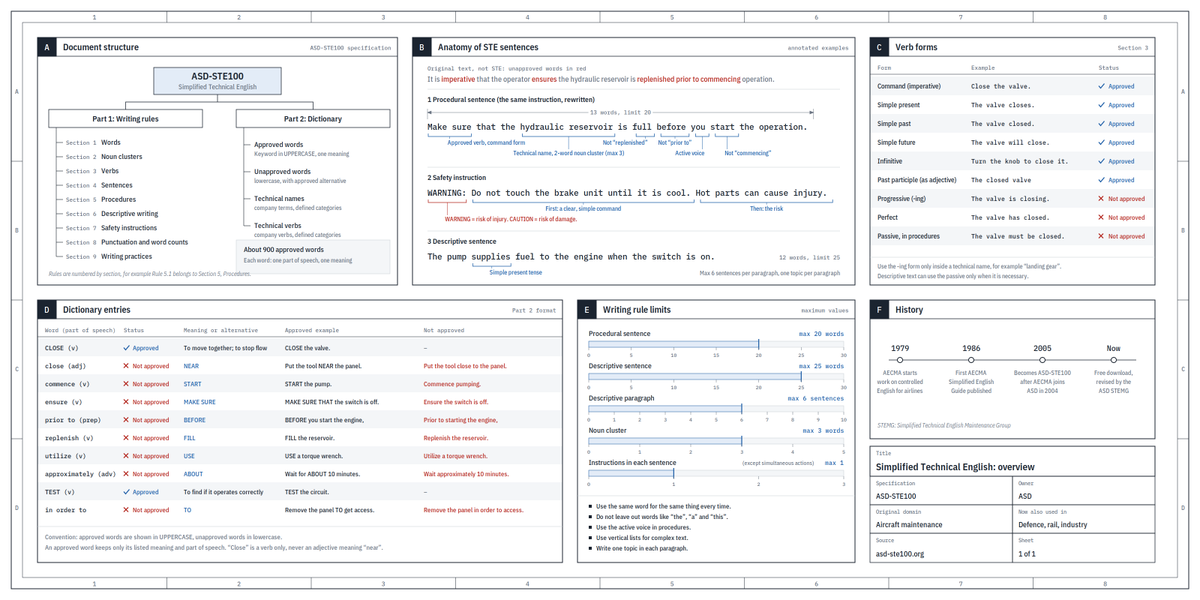
Writing. Something I've had success with: Ask your LLM to explain something in ASD-STE100, it's a controlled language specification originally developed for aerospace maintenance documentation. LLMs well-versed in this language and it comes with heavy constraints on clean writing style that I often find a lot more readable. Sometimes I've tried to soften it a bit e.g. ask for "80% of the way to ASD-STE100" because the spec is quite stringent. But even better:
Diagrams / images. Instead of writing, ask your LLM to create a diagram. These can be a lot easier to process, parse, and understand. But even better:
Web pages. Ask for output "in HTML" to get a beautiful, interactive webpage. LLMs are getting really good at frontend and can create beautiful experiences, animations, etc. But even better:
Explainer videos. The output format I am most bullish on is fully custom / bespoke explainer videos generated on any arbitrary topic. Experiment with things like "Create a 3b1b style video explainer on X. Use my ElevenLabs API key for audio narration". (you'd need an API key for the latter or you can ask your LLM to find you decent free alternatives that use your local compute). This is actually starting to work!
In summary:
- As LLMs get better, they will do more and more of the legwork autonomously, and a lot more of our work will rise up the abstractions into oversight and understanding.
- Luckily, LLMs can help here too because as intelligence and code are increasingly abundant, you can ask for large, custom, discardable software artifacts (e.g. web apps, video explainers) that would have never made sense to create before. Push the boundaries here and you'll be surprised.
I asked Claude Opus 5.5 to explain how a rocket engine works by building an interactive Raptor 3 you can take apart in your browser.
Cut it open, follow the oxygen and the methane through both turbopumps, then throttle it and watch the shock diamonds move.
https://t.co/ulDNOZyAWx
@pmdvsrk No, solo tiene una colección grande de modelos abiertos con límites bastante generosos.
Yo uso Go para dirigir agentes y mi subscripción de Claude para el trabajo pesado
De verdad que es la mejor suscripción posible para tener Kimi, Qwen, GLM y DeepSeek en un solo lugar, con una sola llave
La de $10 ya era buena, con estos mejores límites se vuelve una mucho mejor opción
@pmdvsrk Nada relacionado a trabajo, solo cosas de proyectos personales. Los clientes rara vez aceptan reducir la velocidad de desarrollo como para hacer algo “a mano” en lugar de hacerlo con un modelo.
@pmdvsrk Por eso digo, usar la herramienta para estudiar. Antes me pasaba horas buscando recursos para aprender sobre sistemas de diseño, hoy le digo a Claude que busque charlas y recursos de empresas líderes en el sector y comienzo a estudiar con un enfoque más directo
`disable_ai` in Zed turns off:
- The Agent Panel and agent threads
- Inline Assist in the editor and terminal
- Edit predictions
- The GitHub Copilot language server
- MCP servers
- The external agent registry
- AI commit message generation
- "Resolve with Agent" for merge conflicts
- AI review of branch diffs
- The Threads sidebar and panel layout picker
- AI icons and buttons in the status bar, dock, and toolbars
- AI keyboard shortcuts
- AI commands and menu items
If there's anything we missed, hit us with an issue or a PR.
Andrej Karpathy just gave one of the clearest explanations I’ve heard for how people should be thinking about their Hermes agents.
Not one agent.
All of them.
“Remove yourself as the bottleneck.”
That line is much bigger than better prompting.
Karpathy is talking about arranging your agents so they can operate with less human intervention, keep work moving longer, and accomplish far more from the relatively small amount of direction you give them.
That should be the direction you’re pushing every Hermes agent you build.
Your research agent shouldn’t need you to tell it what to search next every five minutes.
Your monitoring agent shouldn’t depend on you remembering to check something.
Your content agent shouldn’t stop after step one when the rest of the workflow is already known.
Your development agent shouldn’t need you sitting there approving every tiny action.
That doesn’t mean blindly making everything autonomous.
It means deliberately looking at every place where you are still unnecessarily sitting in the loop.
Give the agent a clear objective.
Give it the tools it needs.
Give it the right Skills, memory, files and project context.
Define the boundaries.
Define what success looks like.
Give it a reason to start working, whether that’s a schedule, an event, a recurring task or another agent handing work off to it.
Most importantly, define what it can handle itself and what actually requires you.
That’s the shift.
You’re no longer just building something you can chat with.
You’re building an operating workflow that can continue doing useful work after you walk away.
Karpathy later puts the goal even more directly: get “more agents running for longer periods of time without your involvement.”
That might be one of the best north stars you can use for a serious Hermes setup.
Because the number of agents you have means almost nothing by itself.
You can have 20 Hermes agents and still personally drive every single action.
Or you can have five well-designed agents researching, monitoring, organizing, building and reporting while your attention is somewhere else.
So instead of asking:
How many Hermes agents can I build?
Start asking this about every agent you already have:
What am I still doing that this agent could be doing without me?
That’s where the leverage starts.