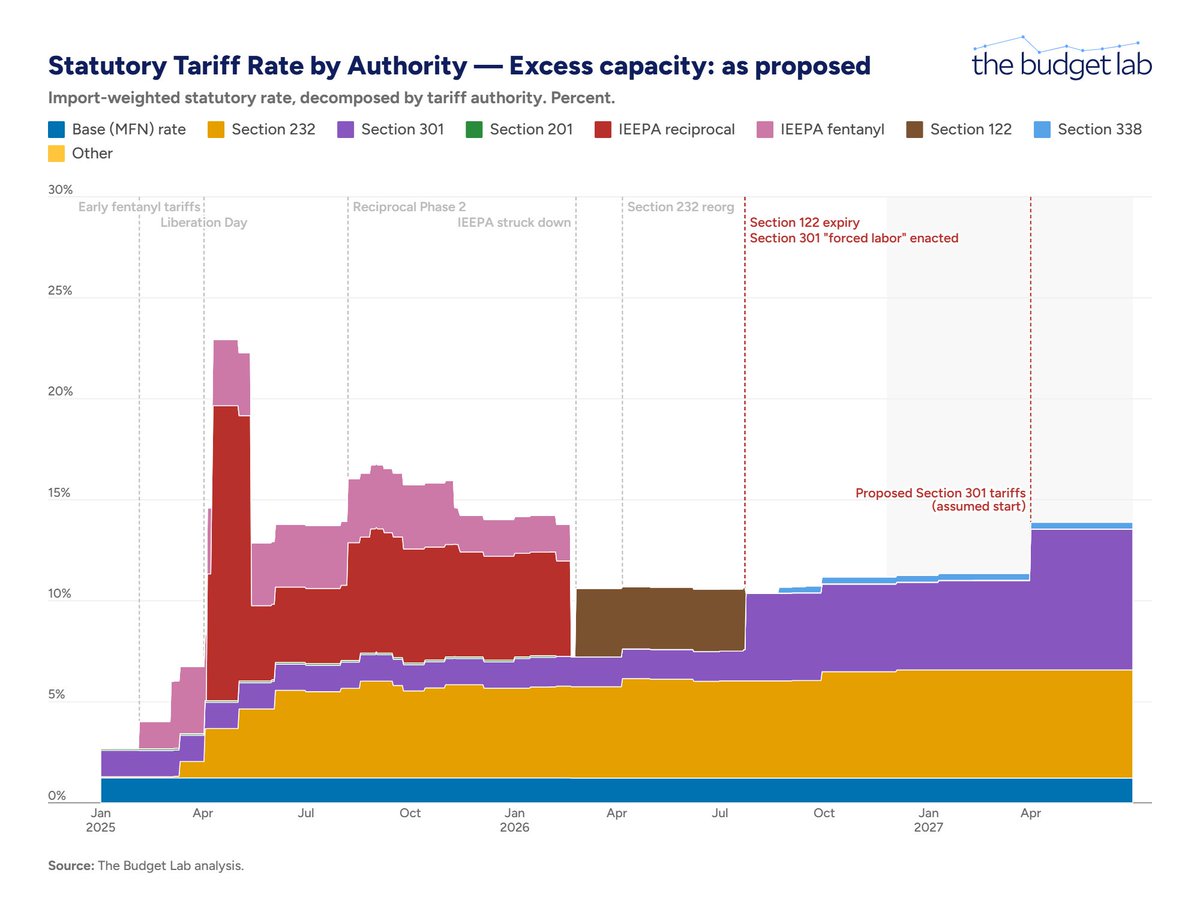
After the SCOTUS tariff ruling, the administration said it'd recreate the IEEPA regime using other legal authorities.
If today's proposed tariffs go into effect, they'll have achieved that goal: the average statutory rate would rise back to about 14%.
New from @The_Budget_Lab:
For countries that reached trade deals with the Trump admin. (e.g., the EU, Japan, S. Korea), their Sec. 301 tariff rates could be higher than the cap set in those deals if USTR considers that existing commitments are "unsatisfactory" for dealing w/ excess capacity.
From EU FRN:
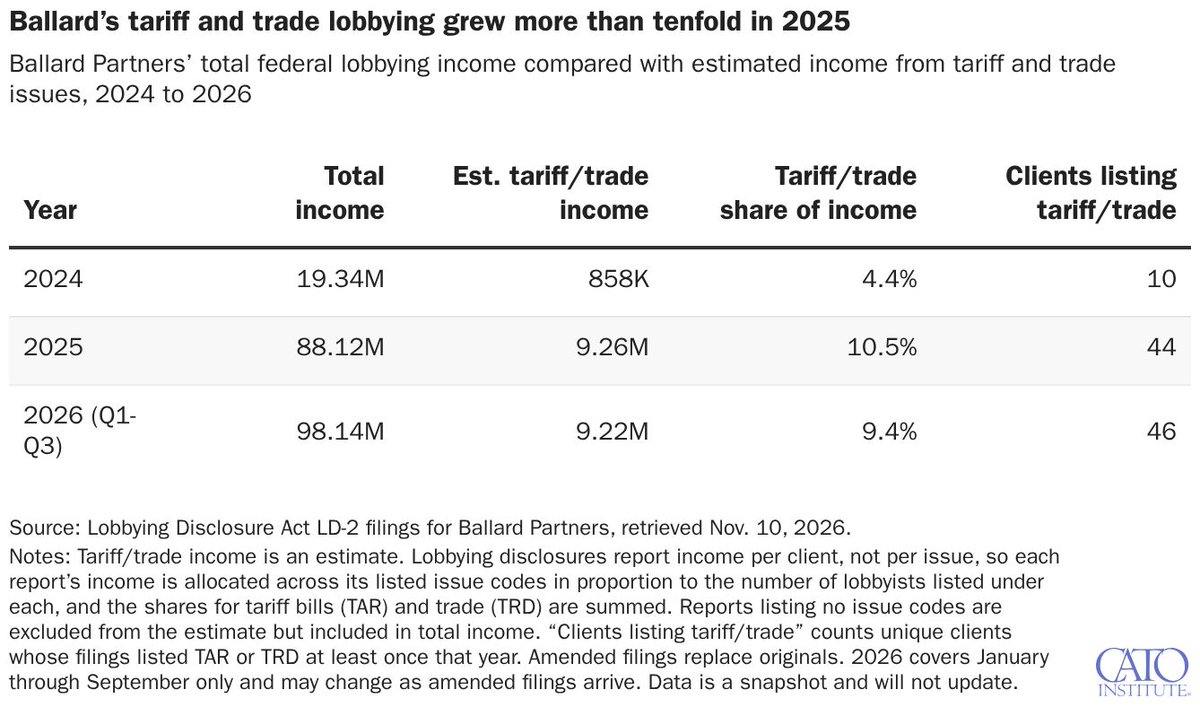
In 2016, then-candidate Trump routinely promised to “drain the swamp.” The administration’s tariff policies are filling it ever higher. A rules-based exclusion process would help somewhat, but the problem is the discretion itself.
My VoxEU column on my new NBER WP: "The Global Office"
👉Service value chains are expanding faster than industrial ones
👉their geography is strikingly different.
🌟A US-centred star rather than regional blocs dominated by China.
👉This column documents the shift from factories to offices and argues that differences in production processes call for new theory, new empirical approaches, and new development thinking.
🔗https://t.co/D3ogJbjhDD
What's the role of AI-related products in trade?
With the new data release on Wednesday, my AI-trade index series was updated.
Two points:
1) It just keeps going up and up,
2) And it is more than chips and servers... thread below
Importante
El 75.38% de las importaciones de EEUU de equipo de cómputo desde México se dirige a estados con gobierno republicano y el 24.43% a estados con gobierno demócrata.
A partir de enero de 2027, el 98.03% de las importaciones de equipo de cómputo desde México llegará a estados con gobierno demócrata y el 1.79% a estados con gobierno republicano.
Este vuelco se explica principalmente por Texas, que representa por sí solo el 71.61% de las importaciones de equipo de cómputo.
Propuestas de campaña sobre centros de datos en los estados que transitarán a gobierno demócrata 👇
Hinojosa (Texas): Propuso una moratoria sobre la construcción de centros de datos hasta que la legislatura establezca protecciones reales, para que los texanos puedan decidir si se instalan a nivel de comunidad. Argumentó que el actual gobernador Greg Abbott atrajo los centros de datos en 2015 cuando promulgó la ley HB 2712 de la Cámara de Representantes que daba exenciones fiscales de 20 años a estos establecimientos a hiperescala.
Bottoms (Georgia): Propuso frenar la construcción de centros de datos y decretar una pausa para evaluar su impacto.
Sand (Iowa): Propuso un plan que incluye no dar beneficios en costos de servicios para centros de datos, poner fin a las exenciones fiscales y establecer controles sobre el acceso a recursos de agua y energía para su operación.
Ford (Nevada): Propuso poner en pausa nuevos beneficios fiscales para centros de datos y auditarlos. Asimismo, planteó obligar a que las empresas de centros de datos paguen por actualizar la red eléctrica y que aumenten su uso de energías limpias.
Acton (Ohio): Propuso que todos los costos de instalación y operación de centros de datos corran a cargo de los inversionistas. La inversión en energía deberá correr a cargo de las empresas y se evaluará el impacto del mayor uso de energía sobre el resto de los consumidores.
Fuente: Banco Base con información de USA Trade y sitios de campaña y noticias.
An announcement that is as personal as professional:
18 months ago, we started collecting online prices in real time to track how Liberation Day tariffs were feeding into inflation.
A lot has happened since. The BLS commissioner was fired. The longest government shutdown in US history meant CPI wasn’t published for the first time. And the case for an independent measure of inflation became much stronger.
What started as a tariff inflation tracker has since grown into something much bigger:
The Bloomberg Price Project (BPP), our attempt to build the US CPI from the ground up using alternative data.
Today, BPP covers 87% of the CPI basket, across both goods and services (more new data will be added in coming weeks). Every month, we collect millions of prices from card transactions, e-commerce sites, grocery stores, pharmacies, rental listings, corporate data, Bloomberg Terminal market prices and government records. And more data are coming.
The payoff is detail. Official CPI data let you drill down to categories such as “uncooked beef steaks.” BPP goes much deeper — breaking the CPI basket into almost 700 line items, compared with roughly 200 in the official data.
Brought to you by: myself, Troy Durie, Daniel Ripperger-Suhler, Joshua Danial and Scott Johnson from across Bloomberg Economics.
Explore the Bloomberg Price Project at BECO MODELS BPP <GO>, or download the data at ECAN US BPI <GO>.
I believe the paywall on https://t.co/XYp4l1nBLn is coming down briefly so you can read this without a subscription (but you should subscribe!)
https://t.co/8Mp1itYHR7
Protectionism, specifically through high, sweeping tariffs, is not just failing to attract support among voters but has become a political liability for the president’s party.
@alfredcobregon writes: https://t.co/VjaSkyAg63
Smart phones are good case of tariff-induced shifts in trade.
Aggregate imports show a bunch of month to month variation, but on a yearly basis there has been little change.
Under the hood, there has been a massive rotation from #china to #india in sourcing:
- China used to ~ 80% of imports, now 30%
- India used to be under 10%, now 40%
chart for the day
Here is HS code 847150
These are basically servers (with chips and other stuff included) that go into a data center.
This one category is about 10% of US imports.
The sources are interesting too...
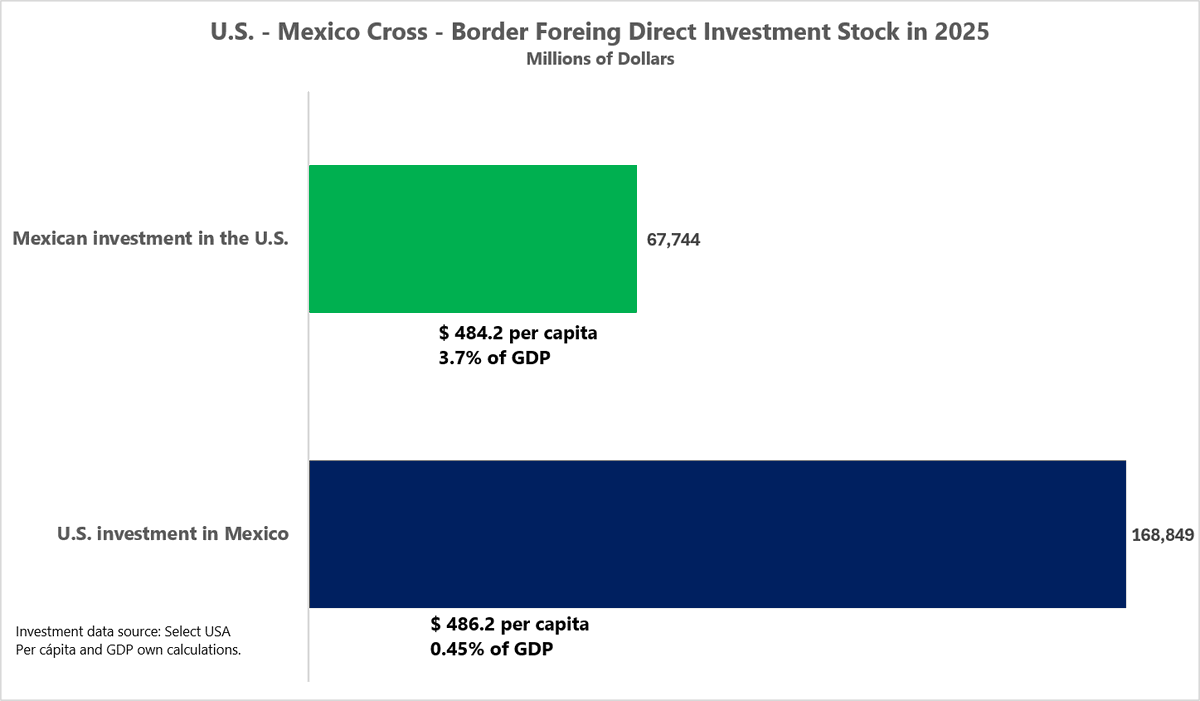
People in🇺🇸🇲🇽often think about cross border investment going south, being Mexico a developing country and the U.S. a developed one. But Mexican investment is increasingly going north. Unknown to many, Mexico's FDI in the U.S. is 40% of that of the U.S., roughly the same in per capita terms, and eight times greater as a share of its GDP.
@SE_mx@CommerceGov@USTradeRep@USEmbassyMEX@EmbamexEUA
We are pleased to announce the release of the Cato Supreme Court Review, an annual critique of the Court’s most important decisions from the Term just ended plus a look at the Term ahead.
This Term featured several blockbuster cases that captured the public’s attention.
https://t.co/FmplQaFJIY
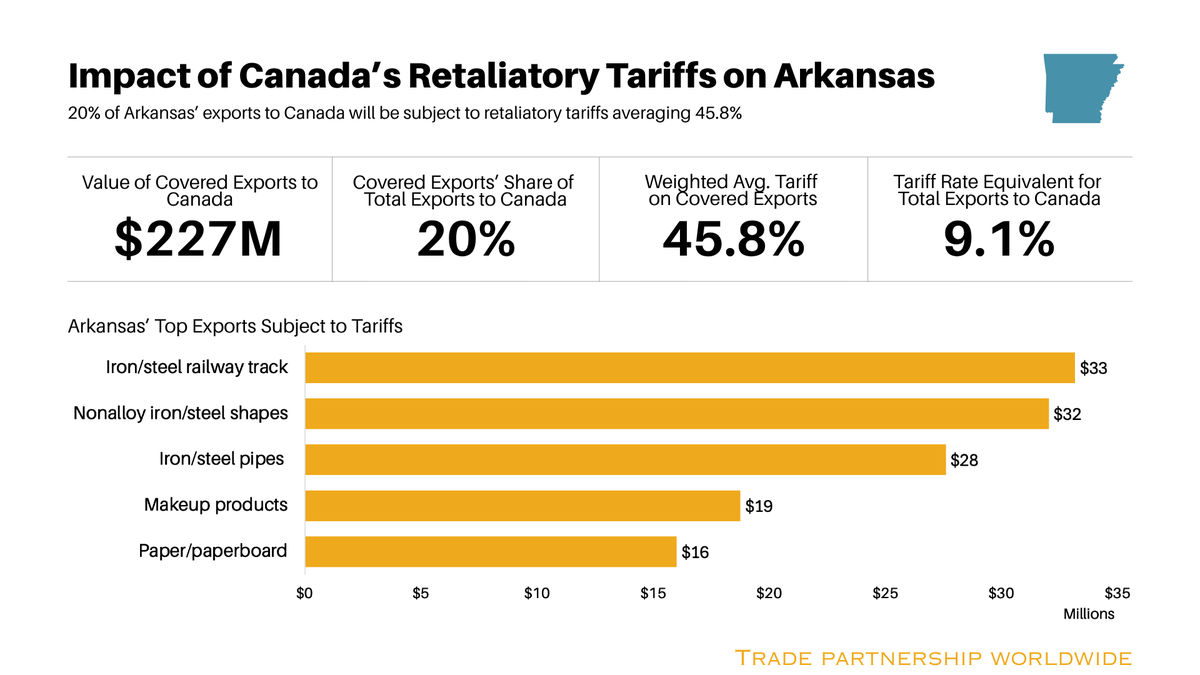
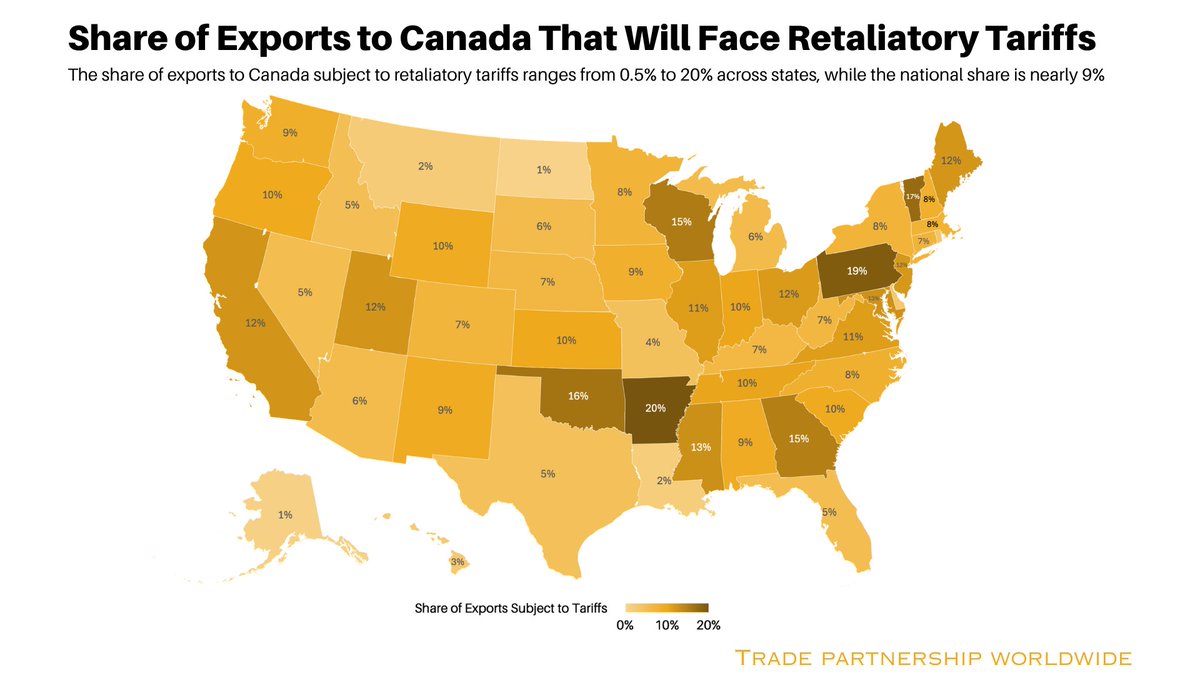
Canada's retaliatory tariffs on U.S. exports took effect today. A thread with recent analyses of potential impacts based on a variety of metrics.
Share of state's covered exports to Canada https://t.co/1Ng1nIlqQg
Most impacted: Arkansas, Pennsylvania, Vermont
New trade data release today:
Big story is the widening of the trade deficit and a continued surge in imports of AI related products
here is a simple, one minute overview of what was in the data
https://t.co/LKlcClb11Y
Here's @neilmehrotra and I updated take on tariffs on inflation.
The bottom line: 6 months ago, we argued there was little imprint of tariffs on inflation. Now there is...
The Section 338 tariffs are small, but they're only one small part of the admin's tariff strategy. We estimate new tariffs affect 54 percent of US goods imports in 2026.
My response to a very misguided American Affairs essay: Sixty Years of Steel Tariffs Haven’t Worked. More Won’t Either https://t.co/Q7VoQtjhhA via @CatoInstitute