They always said the future was going to be what we made it.
I just never imagined ... this is where we were headed.
It’s 2076.
I am ninety-five years old, and living in the Allied Territories of Greater America.
The States stopped being “United” long ago.
Long ago. 1/
Thirty Years of Ortho: What I’d Tell the Next Generation
I’ve been an orthopedic surgeon for three decades. Long enough to see techniques come and go, implants rise and fall, and the pendulum of “standard practice” swing back and forth more times than I can count.
What hasn’t changed are the pressures that come with the job… and the quiet lessons you don’t fully understand until you’ve liv,ed them.
If I were talking to the next generation—residents, fellows, the young attendings just getting their legs under them… this is what I’d tell them.
You can’t build a meaningful career on RVUs. You can meet every target and still feel empty. A career that lasts is built on trust, judgment, and relationships. You don’t measure that in productivity metrics.
A good surgeon listens more than they talk. People think surgery is a technical field, but the real work is in understanding what someone is actually asking of you. Most patients are just scared. They don’t need your scalpel, no matter what the MRI shows. Half the mistakes in this profession start with bad listening.
Master the anatomy. Master the craft. But learn the limits too. Early in your career, you’re focused on what you can do. With experience, you start to appreciate what you shouldn’t do. Judgment is a superpower.
Protect your time, or the system will take every minute you allow it to.
Learn to say no!!! There’s no shortage of demands. Notes. Inboxes. Meetings. Every one of them feels urgent. Some of you might actually feel important when you go to meetings... But... None of them is worth sacrificing your sanity or the people waiting for you at home.
Seek colleagues, not titles. Promotions and committee seats feel important for a season, but it’s just fluff, and nothing gets accomplished in those meetings anyway.
Your strength matters more than you realize. Not your technical strength—your physical and emotional strength. You can’t take care of people if your own health fades. Move, lift, sleep, and protect your energy. A worn-out surgeon becomes brittle.
Be the doctor you’d want for your family.
You need a life outside the operating room if you want a long life inside it. The surgeons who last aren’t the ones who work the most—they’re the ones who stay grounded. They have people they care about, interests that pull them away from medicine, and enough perspective to know that identity and work are not the same thing.
Thirty years in, the operations are only part of the story. What keeps you going is the purpose behind the work—helping people move, reassuring them when they’re scared, giving them back pieces of their life.
That’s the part that never gets old.
Due to egitation at Azad Maidan avoid using free way please plan accordingly.
आझाद मैदानात आंदोलन असल्याने फ्री वे रोडचा वापर टाळा, कृपया त्यानुसार नियोजन करा.
#MTPTrafficUpdates
And this isn’t just a scientific idea. It’s larger, almost philosophical, reaching into how lives are made. What unsettles, sometimes, is recognising that the most familiar forms, the ones we take to be native and sacred, may have appeared elsewhere, in different clothing. That invention is often just rediscovery, done without knowing it had been done before.
Like pyramids in Egypt. And in Mesoamerica. The same incline, the same shadow falling. Not borrowed. Not exchanged. A shape discovered again. Because stone, when piled high, eventually teaches its own geometry. There are only so many ways to raise a roof against the rain. Only so many ways to carry sweetness through a winter. And around that repetition, culture begins to form, which is the belief that this thing, this shape, this taste belongs to us because we have seen it before. Because we have handed it down.
But perhaps it was never ours to begin with. Perhaps it was only what could be done at the time, with what we had. And what others, elsewhere, were doing too, with different names.
Storytelling, too, begins this way. Not necessarily with invention, but with repetition. A man tells a story to make sense of something that frightened him. Another man, far away, says something almost the same. Not because he’d heard the story, but because he too was frightened, and language bends in certain ways when pressed by fear. And so the same myths begin to appear. The same kind of gods. The same losses. The same flood.
In both the Engadine and Kashmir, the native flora obliges. Walnuts abound, honey settles thick in the combs, dried fruit stands in for currency in the cold months when nothing will come from the earth at all. And perhaps that is why, in two distant mountain towns, under different skies, a similar tart is made. Because two groups of people arrived at the same conclusion, that winter is a problem best addressed by walnuts, and that sweetness is a civilisational duty.
And this isn’t just a scientific idea. It’s larger, almost philosophical, reaching into how lives are made. What unsettles, sometimes, is recognising that the most familiar forms, the ones we take to be native and sacred, may have appeared elsewhere, in different clothing. That invention is often just rediscovery, done without knowing it had been done before.
Like pyramids in Egypt. And in Mesoamerica. The same incline, the same shadow falling. Not borrowed. Not exchanged. A shape discovered again. Because stone, when piled high, eventually teaches its own geometry. There are only so many ways to raise a roof against the rain. Only so many ways to carry sweetness through a winter. And around that repetition, culture begins to form, which is the belief that this thing, this shape, this taste belongs to us because we have seen it before. Because we have handed it down.
But perhaps it was never ours to begin with. Perhaps it was only what could be done at the time, with what we had. And what others, elsewhere, were doing too, with different names.
Storytelling, too, begins this way. Not necessarily with invention, but with repetition. A man tells a story to make sense of something that frightened him. Another man, far away, says something almost the same. Not because he’d heard the story, but because he too was frightened, and language bends in certain ways when pressed by fear. And so the same myths begin to appear. The same kind of gods. The same losses. The same flood.
In both the Engadine and Kashmir, the native flora obliges. Walnuts abound, honey settles thick in the combs, dried fruit stands in for currency in the cold months when nothing will come from the earth at all. And perhaps that is why, in two distant mountain towns, under different skies, a similar tart is made. Because two groups of people arrived at the same conclusion, that winter is a problem best addressed by walnuts, and that sweetness is a civilisational duty.
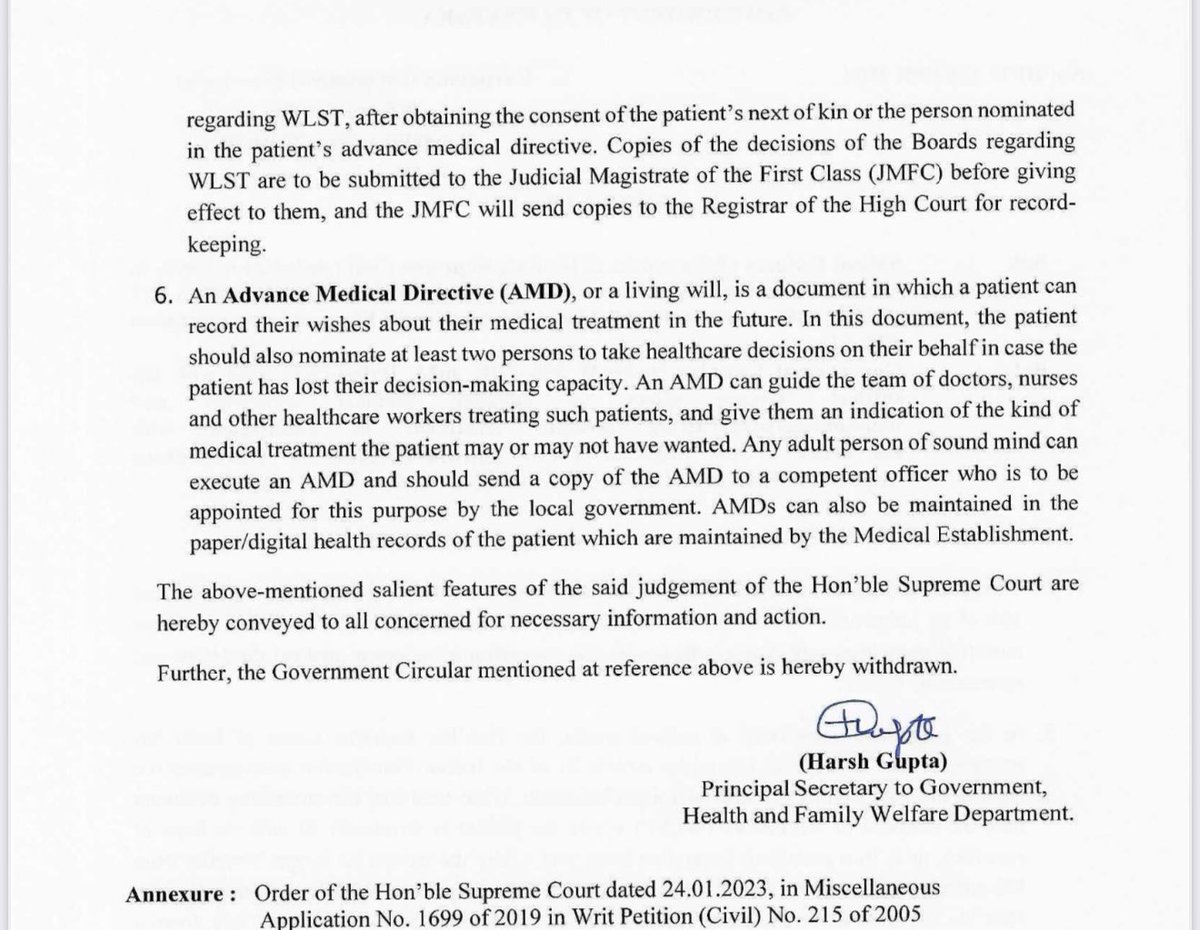
My Karnataka Health Department, @DHFWKA, passes a historic order to implement the Supreme Court’s directive for a patients Right to Die with dignity.
This will immensely benefit those who are terminally ill with no hope of
recovery, or are in a persistent vegetative state, and where the patient no longer benefits from
life-sustaining treatment.
We have also come out with an Advance Medical Directive (AMD), or a living will, in which a patient can
record their wishes about their medical treatment in the future.
This important step will bring great relief and a dignified sense of closure to many families and individuals.
Karnataka is a progressive state and we are always at the forefront in upholding liberal and equitable values for a more and just society.
Living wills, advanced care directives and care of serious patients. The legal perspective in this episode of the Living Well Podcast with lawyer Mrs Dhvani Mehta from Vidhi Legal.
https://t.co/KsOocCNmVW
https://t.co/wvxV8fxzYT
In this episode of our Living well podcast, we cover the topic of palliative care for newborns in critical care with serious illness, burnout in NiCU, creating an effective work culture- a shoutout to all health care professionals. #MedTwitter
https://t.co/5FOacCqGiW
New episode! In the Living Well Podcast, with @NaveenSalins from KMC Manipal, on palliative medicine and rehumanizing medicine by providing care in the best interests of the person and families facing serious illness. #palliativemedicine#palliativecare
@anujtiwari11 Yes. Definitely helps with long term continuity of care and ownership of medical management once the acute process is handled. Team work always helps with multi morbidity and complex care. Have seen you work Dr Anuj, thank you for it.
@DrRajeshG1@DrRazi4@drharikrishrau Unquestionably-and it is heartening, pun intended, to see the equivalent of survivorship in most specialties. With prevention, active management, and an equally active focus on quality of life, people with chronic ailments and families stand to benefit most.
@DrRajeshG1@DrRazi4@drharikrishrau Highlights the need for developing systems for quality of life discussions and supportive/pall care measures to support the person and family to minimise avoidable suffering, futile hospitalisation and aggressive treatment that may worsen QoL/ cause financial toxicity.
Excellent article on how dying has been highjacked by “big medicine" and cogently argues the case for doctors to write “dying certificates” https://t.co/QOVmySSHB6
Responses to this tweet are fascinating.
Welcome to our #EoLCare world, Sam. Only difference is that our patients aren't going to 'code.' They are usually experiencing the process of ordinary dying. Their invisible visitors offer great consolation.
However...
1/
(4/5) #4: Logistics is more important than strategy 💪>♟️
As a paramedic, logistics and flawless execution is more important than having the perfect plan. The dynamic pre-hospital arena shatters the best laid plans, and improvising and adapting is the norm.
In hospital, ordering a "stat CT" for something is the plan, but the logistics is how can you make this actually happen rapidly, safely, and effectively. That is the hard part that takes more work (that people often overlook!)
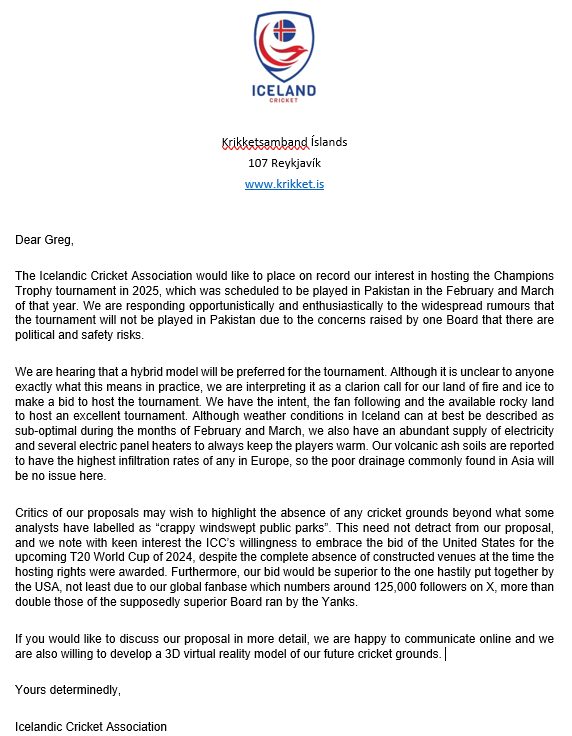
We are not people who hold back. We have today issued our bid to host the Champions Trophy of 2025, and we look forward to hearing what Greg Barclay of @ICC has to say about it.