@mrMDofficial@RobGrieves Not just mining operations, also other fleets. Site fleet operators often have extremely consistent use patterns. You can do a lot with this range if you have a daily SOP that includes overnight charging.
Humanity, created by God in all its grandeur, is today facing a pivotal choice: either to construct a new Tower of Babel or to build the city in which God and humanity dwell together. In Jesus Christ, this humanity in its grandeur becomes the Way, the Truth and the Life, opening the path for each of us to grow toward fullness. #MagnificaHumanitas
https://t.co/6i9MWs6LJl
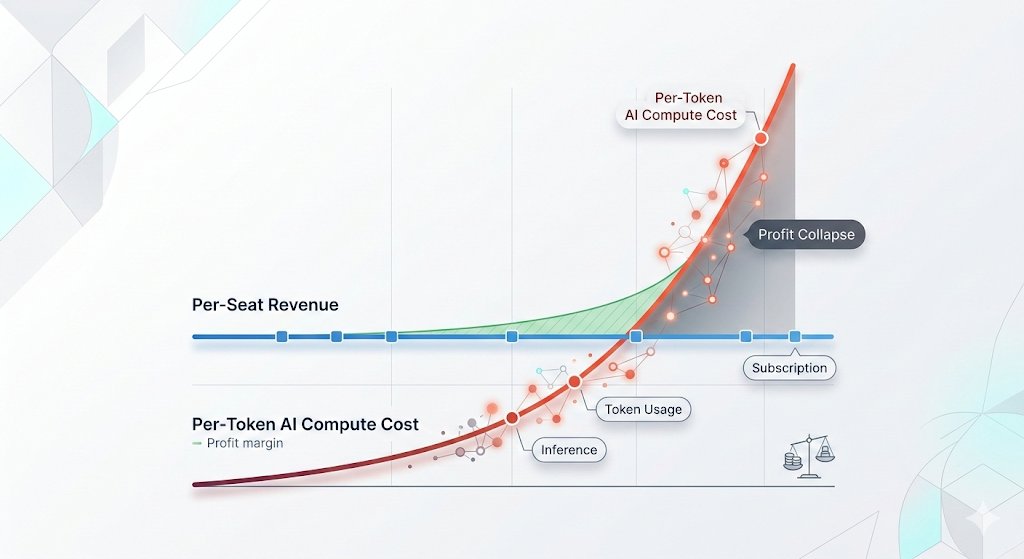
🦔Microsoft canceled its internal Claude Code licenses this week after token-based billing made the cost untenable, even for a company with effectively infinite cloud resources. Uber's CTO sent an internal memo warning the company burned through its entire 2026 AI budget in just four months. American AI software prices have jumped 20% to 37%, and GitHub (owned by Microsoft) is dropping flat-rate plans for usage-based billing across its products.
My Take
The AI subsidy era is ending in real time. The same company that put $13 billion into OpenAI and built the Azure infrastructure powering most of Anthropic's compute just looked at the bill from a competitor's coding tool and decided it was not worth paying. That is not a productivity failure on Anthropic's end. Token-based pricing is forcing every enterprise customer to confront the actual cost of running these models at scale, and the number turns out to be far higher than the flat-rate experiments suggested.
This ties directly to my Gemini Flash post yesterday. Anthropic, OpenAI, and Google all raised effective prices in the last six months. Enterprises that built workflows assuming AI costs would keep falling are now watching annual budgets evaporate in months. Two outcomes look likely from here. Either enterprises scale back AI usage to fit budgets, which slows the revenue ramp the labs need to justify their valuations ahead of IPOs, or the labs cut prices and absorb the losses, which makes the unit economics worse at exactly the wrong moment. Both paths land in the same place, the numbers stop working, and somebody has to take the writedown.
Hedgie🤗
This wild.
Two years ago, Google deleted a large customer’s account: Unisuper, an Australian retirement savings fund.
It seems they now blocked an even larger customer, cloud provider Railway.
This kind of story you never hear with AWS, Azure, or even Oracle. GCP 👎
Personal update: I've joined Anthropic. I think the next few years at the frontier of LLMs will be especially formative. I am very excited to join the team here and get back to R&D. I remain deeply passionate about education and plan to resume my work on it in time.
"Local loopback" typing is cool, but I wanted to put tthe machine online. So I put @NousResearch Hermes Agent on a Raspberry Pi, built a shell interface to chat with, and connected it to guest wifi at the Clark.
Code is here: https://t.co/zrRUsmWmB7
Teletype ASR33 was the original terminal for Unix. The first ASCII machine. Mechanical keyboard and printer, a legacy of the telegraph age.
I printed some Katherine Nash and Frederick Hammersley artworks to show at @the_clark "Analog Day" (https://t.co/7YSqVcJU7O).
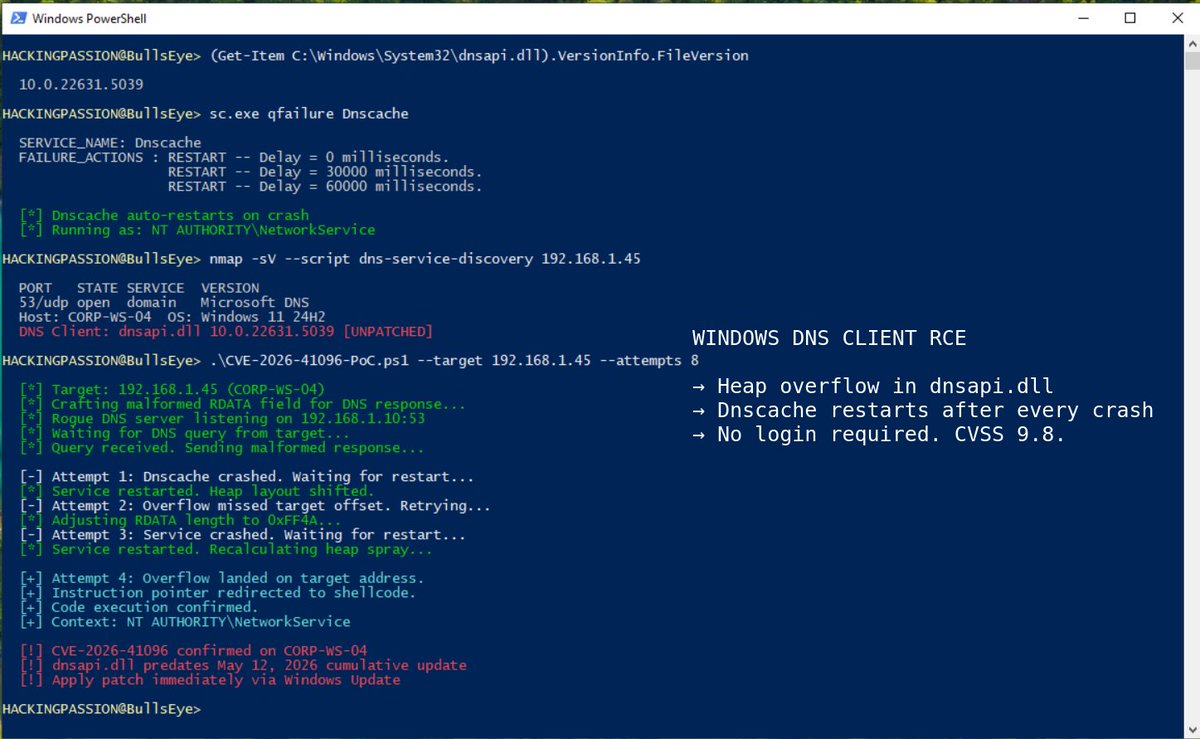
‼️🚨 Microsoft has patched a critical Windows DNS Client remote code execution vulnerability that allows an unauthorized attacker to execute code over a network. All it takes is a malicious DNS response.
The vulnerability is tracked as CVE-2026-41096 with a CVSS score of 9.8. It is a heap-based buffer overflow in dnsapi.dll, the Windows component that processes DNS answers on every machine.
To trigger it, an attacker needs a position where they can influence DNS responses: a rogue DNS server, a poisoned resolver, a compromised router, hostile WiFi, or a man-in-the-middle placement.
That puts ordinary Windows DNS activity in the blast radius. Browsers, VPN clients, enterprise apps, update checks, and background services constantly ask DNS where to connect. The vulnerable processing sits in the Windows DNS Client path, not an edge-facing server product.
Microsoft assessed exploitation as "less likely," and Rapid7 lists the issue as not publicly disclosed and not known to be exploited at release.
On the contrary, a 9.8 unauthenticated network RCE in DNS client handling is exactly the kind of bug defenders should assume will be reverse-engineered quickly.
Defenders should:
- Deploy the May 2026 cumulative updates and confirm coverage across endpoints and servers
- Restrict DNS traffic to trusted resolvers where possible
- Monitor Dnscache and svchost.exe for abnormal child processes or unexpected outbound activity
- Treat public WiFi and untrusted resolver paths as higher-risk until patching is complete
Update: Socket has found 121 more compromised npm package artifacts across 84 package names, including 64 UiPath artifacts.
Combined w/ TanStack, the current known total is 205 affected npm package artifacts across enterprise automation, AI/MCP, auth, workflow, and dev tooling.
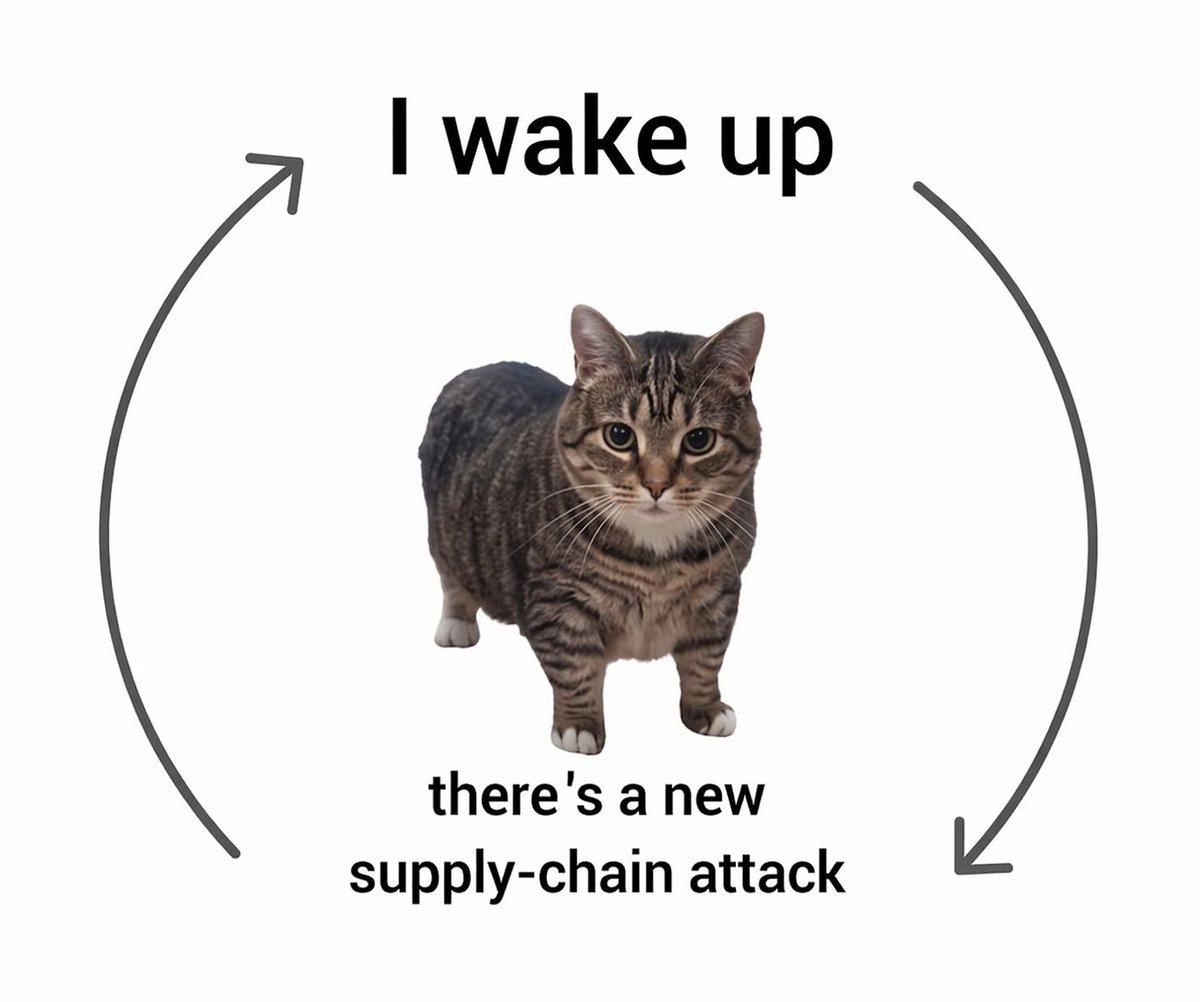
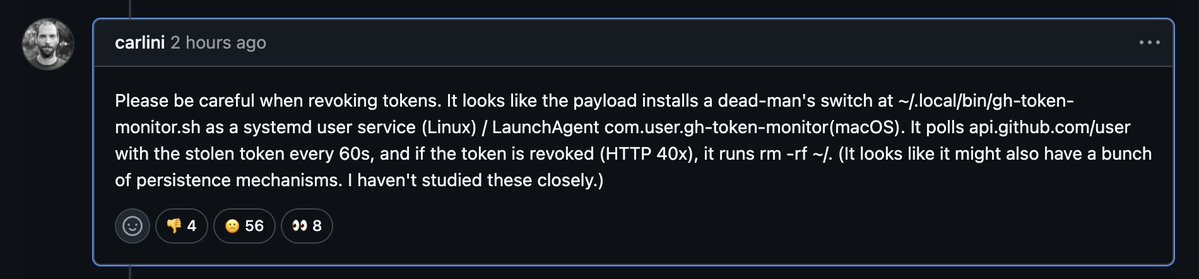
‼️🚨 BREAKING: A new npm supply-chain attack uses a dead-man's switch. The payload plants a watcher on your machine that nukes your home directory the second you revoke the GitHub token it stole from you.
The compromise happened today, across 42 official tanstack npm packages, 84 malicious versions in total. tanstack/react-router alone pulls more than 12 million weekly downloads.
The attacker forked TanStack's repository and pushed a single hidden commit. From there, they tricked TanStack's own release system into signing the malicious packages as if they were the real thing. To npm, and to anyone checking the cryptographic proof of origin (SLSA provenance), the poisoned versions looked 100% legitimate.
Maintainer Tanner Linsley confirmed the whole team had 2FA enabled. It didn't matter. This is the first documented npm worm in history that ships with a valid, signed certificate of authenticity, the same one defenders rely on to know a package wasn't tampered with.