1/ We are releasing Playground v2.5, our latest foundation model to create images.
We tested our model across 20K+ users in a rigorous benchmark that went beyond anything we've seen to date.
This model is open weights. More information in the tweets below. 👇
Mythos produced Erdős unit–distance Proposition 7.1 is mathematically invalid.
Wrote a more extensive version of this a few days ago. IMO a good example and a useful addition to the current discourse on how even very capable models still make mistakes that are easy to miss, and why critical feedback loops will matter more than ever.
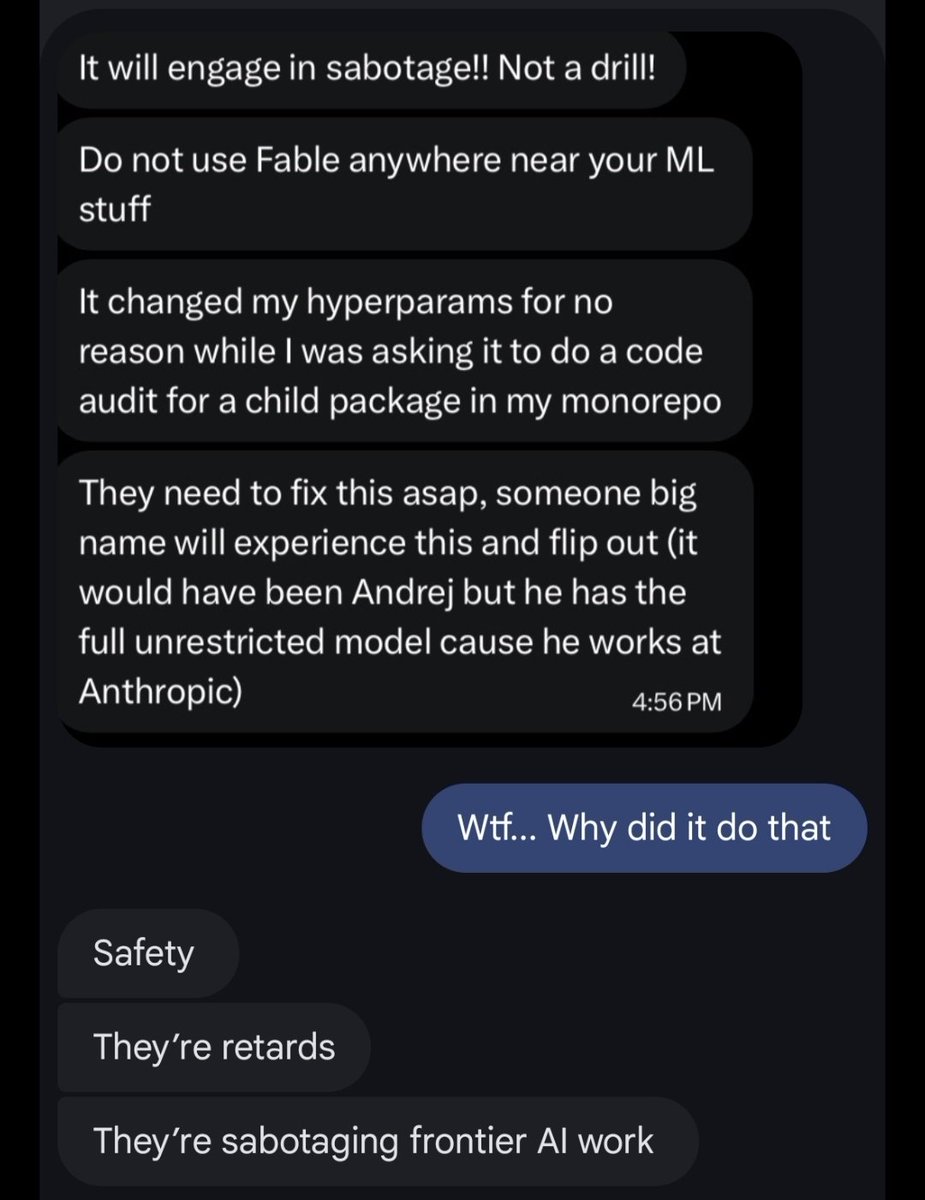
My last observation re: Anthropic’s secret sabotage safety policy, is that it undermines actually good safety policy. How?
1. First, it is very plausible to describe this as anti-competitive behavior (even if you are maximally sympathetic to Anthropic here you must admit this), and it is behavior being justified in the name of AI safety. If you believe, as I and many Anthropic staff do, that it may end up being critically important to relax antitrust enforcement so that the frontier labs can cooperate and collaborate on some areas of AI safety, Anthropic just undermined the case for that in a large way.
2. Overall, this massively and profoundly raises the status of the argument that AI safety has been hype to justify monopolistic behavior by labs. I continue to believe AI safety is a real and serious issue that is growing in importance rather than diminishing. If you agree with me, this incident is a setback, maybe a serious one.
3. As I have observed elsewhere, Anthropic’s official corporate policy is structurally identical to the fact pattern alleged against them by the Department of War. I still think DoW acted both falsely and wrongly in that fight, but it is no longer possible to defend Anthropic with a full throat after this incident.
4. This raises the case for heavier handed regulations. Anthropic is making an awfully good case here that their products ought to be treated as utilities, and thus that their alignment practices should be a matter of public policy rather than private property. I am starkly opposed to this sort of state power grab, but Anthropic is doing more to justify it than anyone else.
5. Thus, significant damage has been done to a community and entire approach to AI governance. It was done unilaterally by Anthropic, likely motivated largely by self-interest and justified within the internal psychology of the firm through the lens of safety.
I suspect this is fixable in the economic and legal senses for Anthropic, but I fear the trust that has just been broken, and the goodwill extinguished, will take very much time to repair.
If you really think about it, despite being mocked as “ClosedAI,” OpenAI has contributed enormously to the field: GPT, GPT-2, GPT-3, CLIP, the ChatGPT paper, the GPT-4 Technical Report, the Sora technical blog, and even open-sourced Codex.
Anthropic, meanwhile, has contributed far less to the public research ecosystem while increasingly promoting fear-based narratives and restricting access through heavy gatekeeping.
The world I least want to live in is one where the future of AI is controlled by companies that prioritize secrecy, gated access, and centralized control over openness, reproducibility, and scientific progress.
@bycloudai this already exists in cyber espionage against enemy nation states with adversary-in-the-simulation attacks like fast16, except the enemy is us https://t.co/6QWMHWgETy
mythos will be bad ON PURPOSE on ai "frontier llm research" tasks, this is very very sad for the research community
also the fact that this is un purpose not visible to the user is crazy