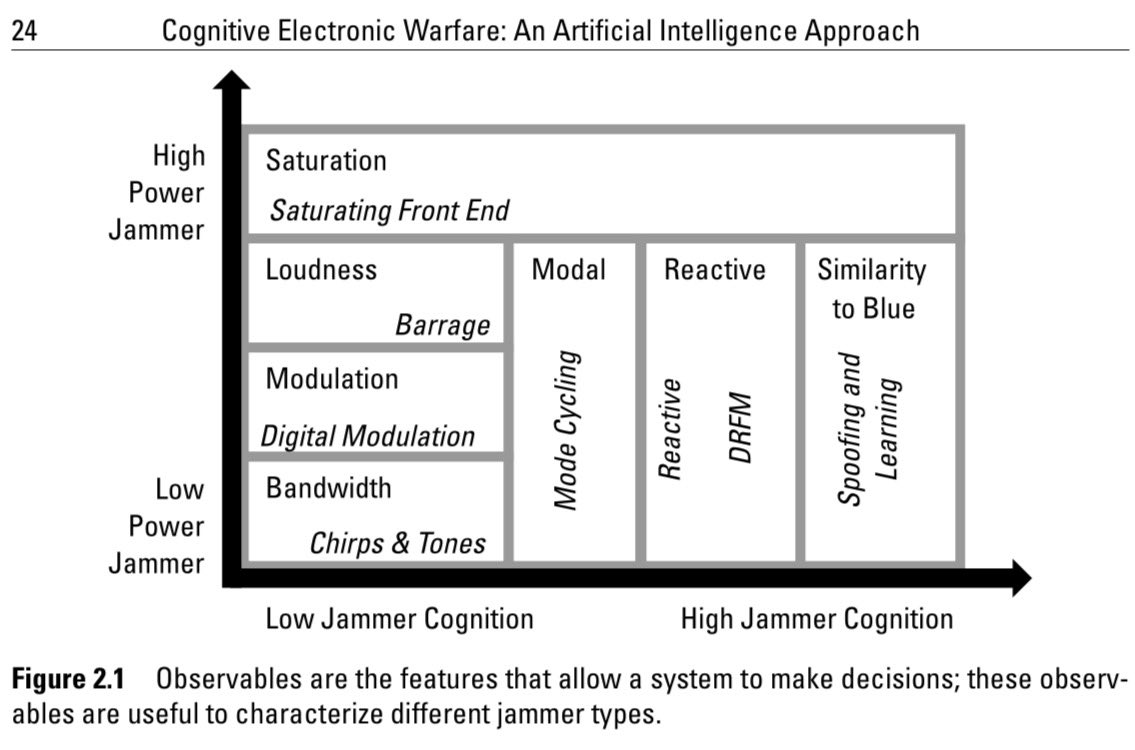
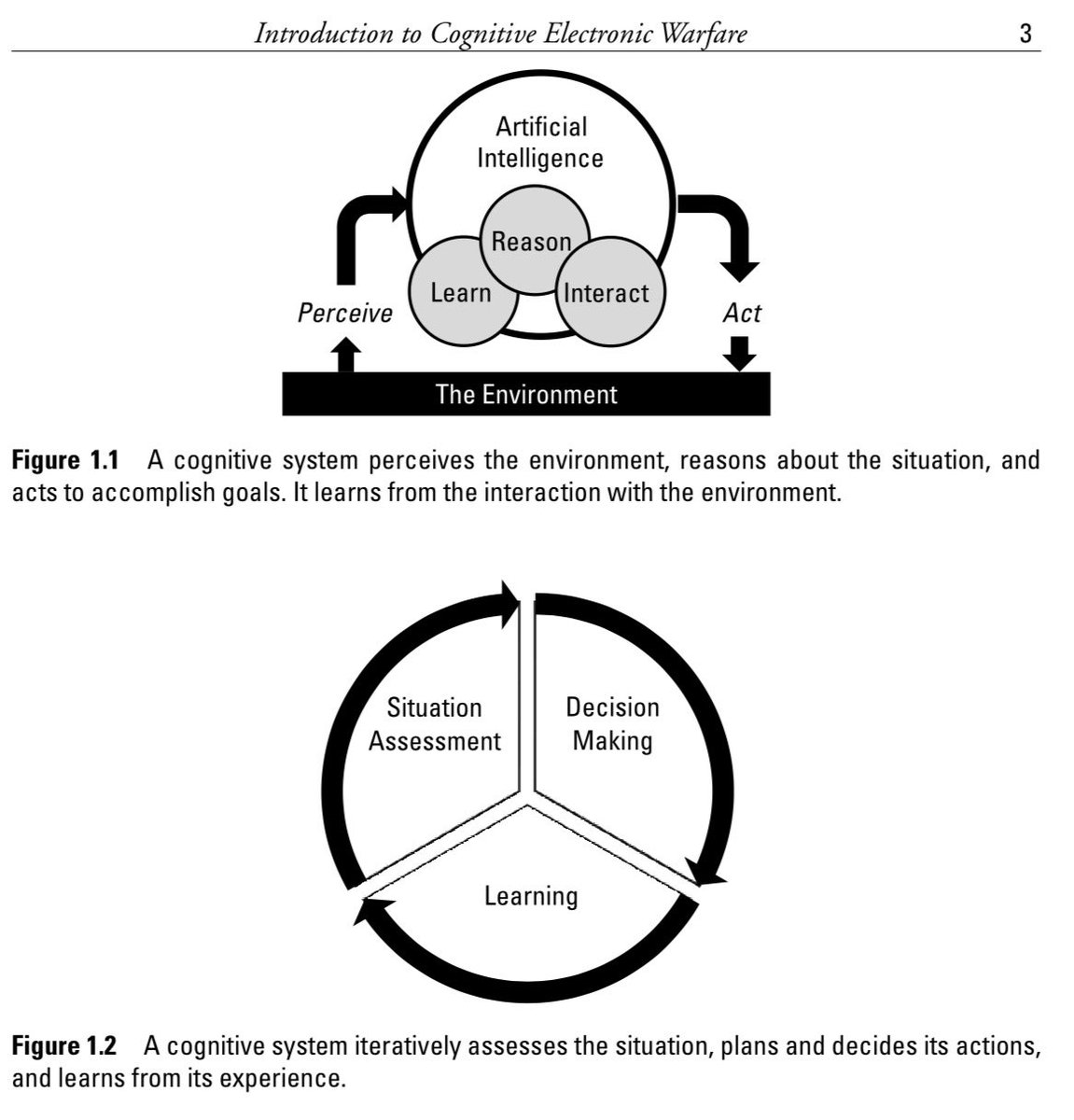
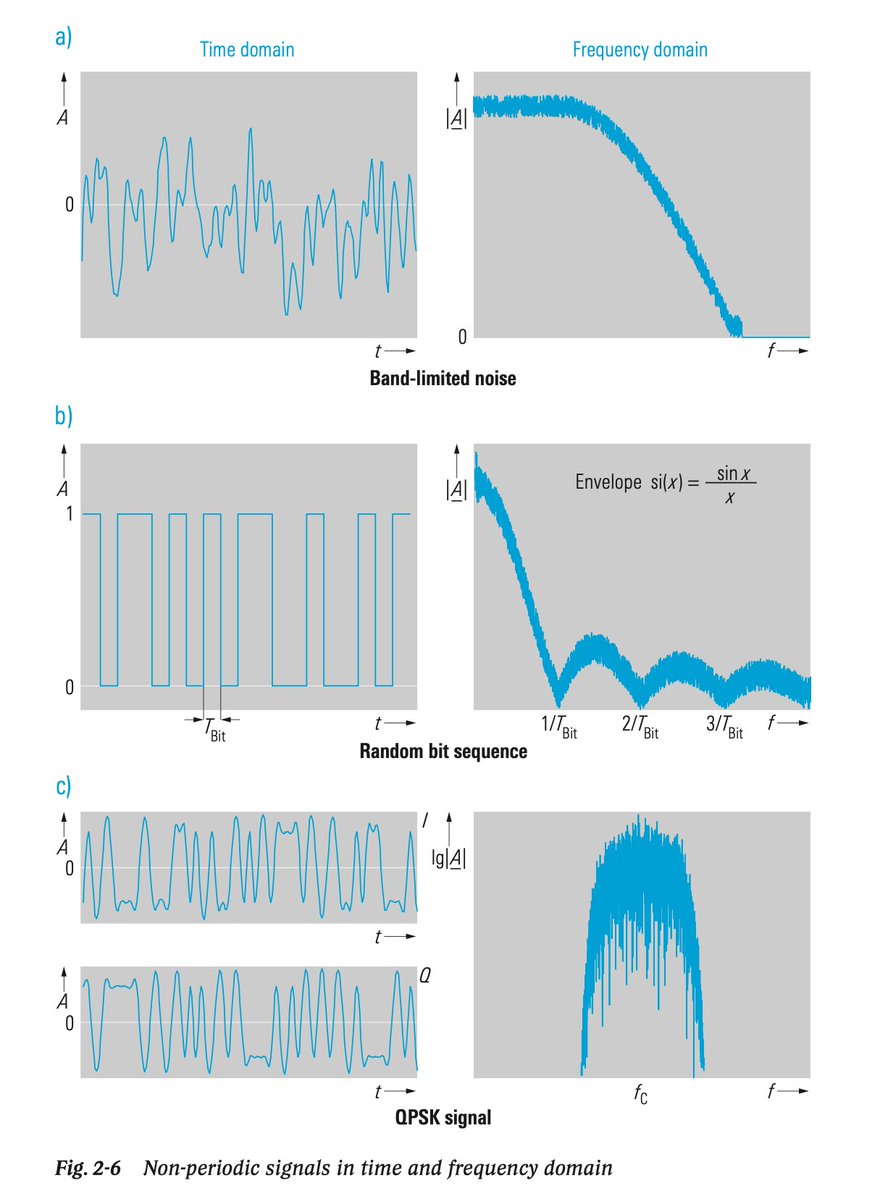
Ever wondered how spectrum analyzers work?
Here's 4 free whitepapers from Keysight, Rohde & Schwarz, and Anritsu that teach the theory, concepts, implementation, measurements, and more.
(links in the comments)
I spent 100 hours over the past week researching, writing and editing the piece we just put out.
It’s a scenario, not a prediction like most of our work. But it was rigorously constructed, dismissing it outright requires the kind of intellectual laziness that tends to get expensive.
And we’ve released it for free. Hopefully you enjoy it.
https://t.co/YK8E11GcDU
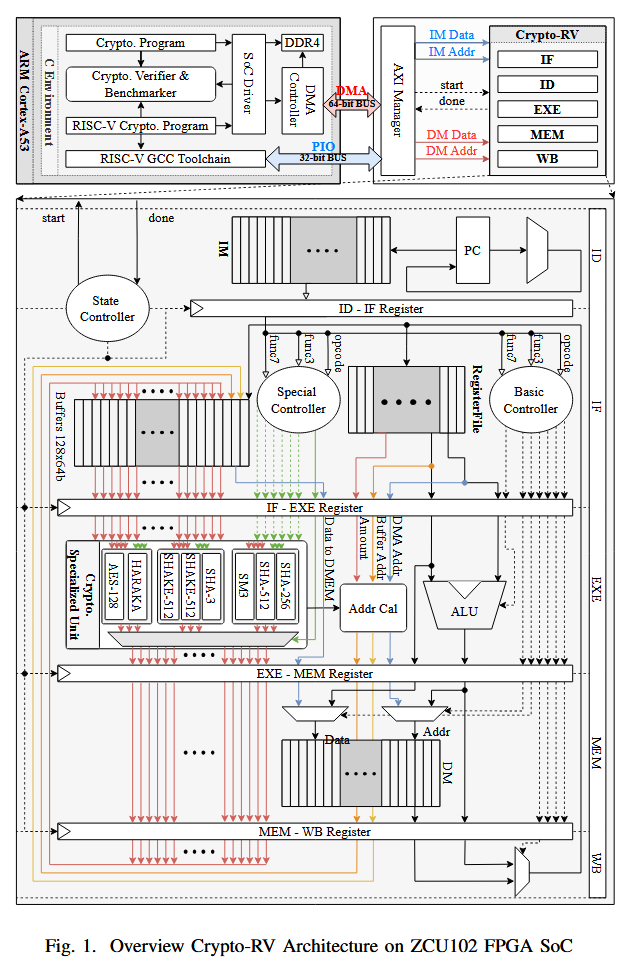
In this paper is presented Crypto-RV, a RISC-V coprocessor architecture that unifies support for SHA-256, SHA-512, SM3, SHA3-256, SHAKE-128, SHAKE-256 AES-128, HARAKA-256, and HARAKA-512 within a single 64-bit datapath. #RISCV
https://t.co/NOP5FkUMv4
Reflections on this bill from a Dutch citizen who has closely followed this process for years.
First: the old system. It was pretty simple: the government assumed that you make ~5% return on your assets per year. That return is then taxed (~35%). Assets include savings, stocks, crypto, etc. There is an exemption of ~€55.000 per person. Assets are measured on the 1st of January every year.
Imagine you hold one bitcoin worth €75,000. Subtracting the exemption leaves €20,000 taxable. The government presumes a €1,000 return (5%), resulting in €360 tax (35%).
In summary, this system is:
- Very simple to understand
- Low administrative burden
- Advantageous to investors where ROI >5%
- Disadvantageous to investors where ROI <5%
Savers fall into that latter group. Years of sub-5% interest rates led the government to overestimate savers' returns.
In 2021, the Supreme Court ruled that this was unlawful and that this needed to change. The government should calculate taxes based on the actual return on investment instead of the assumed return.
At this point, I want to make a few things clear:
- I don't mind paying taxes
- I think the Supreme Court's decision was correct
What I do mind is:
- Tax on paper gains
- Added administrative complexity for tax filings
- The Government is not listening to the advice of the Netherlands’ highest advisory body on legislation
- That the Tax Authority is pressuring the legislative process to make a quick decision
- Making obviously bad legislative decisions
And these are exactly the things that are happening.
For some reason, the Government decided against a capital gains-like system and chose an unrealized capital gains system.
This means that you pay tax on the paper profit you made during the year.
Let's say you have one Bitcoin on January 1st, valued at €70.000. On December 31st, Bitcoin is at €115.000. A return of €45.000. Taxes to pay: €15.750 (35%). No exemption in the new bill.
The problem: all your money is in Bitcoin.
But that is not a problem! That is what I want! That is why I stacked every single Satoshi I could since 2016. The same goes for stocks, gold, silver, or real estate: the goal is to have as little fiat as possible!
But in the short term, I have to pay €15.750 in taxes. In this example, it means I have to sell some of my Bitcoin (0.137 BTC, to be precise). After the tax, I'm left with 0.863 BTC (€99.245).
So on paper I'm doing fine (from €70.000 to €99.245 in a year). But my underlying assets are diminishing (1BTC to 0.863 BTC). The amount of Bitcoin, stocks, and gold in my portfolio is decreasing each year.
This creates a dilemma: I don’t want to sell. I expect bitcoin, stocks, and gold to rise over time. But I have to, because the Government demands it.
The obvious better choice was to tax when people decide to take a profit. I don't really have a problem with paying taxes on my realized profit. When I decide to sell, instead of being forced to sell when I don't want to.
I'm not the only one who thinks there are better options. The Council of State (the Netherlands’ highest advisory body on legislation):
"Don't do it. It's too complex (for both the tax authority and the citizens). Look for alternatives."
And still, the government marches on. And the House of Representatives 'reluctantly agrees'. What the fuck does that even mean?
"Yeah, we also don't like this bill, but we still are going to sign it into law."
It's batshit crazy. But it's where we are. That's what the quoted tweet is about.
Not all is lost, though:
- House of Representatives (2e kamer) still has to approve this bill (quote tweet is wrong here).
- Senate (1e kamer) still has to approve.
- The Tax Authority is unable to comply with this bill (too complex)
- Complexity makes this bill filled with loopholes
So, to sum it up: hopefully, Parliament comes to their senses and stops this monstrosity of a bill, and chooses one of the better options instead.
TT-Ascalon is officially IP released. Go build.
RiscV is now high performance.
Really happy with the team, quality of the release, quality of the support IP and DV infra.
Open source hardware is great.
https://t.co/rFV1miEiYO
2026-30 predictions
-globalism is dead. resilience is the new god. countries and individuals are racing for sovereign compute and mineral sovereignty. if you can't produce your own energy, food, and intelligence locally, you're a vassal
-the winner in robotics is the company whose humanoids can navigate a messy, 70s built warehouse. general purpose labor becomes a purchasable SKU, starting in logistics and moving toward elderly care
-the west stops moralizing about mining and starts treating lithium, cobalt, and copper with the same ruthless blood for oil energy of the 20th century
-the line between peace and war permanently dissolves. conflict shifts to gray zone operations. constant cyber attrition, undersea cable "accidents" and satellite interference. no more grand declarations, just a baseline of chaos
-the internet officially splinters. you now have the "open web" (chaotic, bot heavy, western), the "fortress web" (highly censored, eastern), and the "sovereign web" (encrypted, boutique, and high trust)
-neuralink and its competitors move from clinical trials to high performance enhancement for the wealthy. the augmented vs natural cognitive divide begins to show its first cracks in the social fabric
-control over freshwater sources becomes the primary driver of regional skirmishes, replacing traditional border disputes
-corporations with bigger balance sheets than countries (the big 5) begin negotiating directly with governments for territorial autonomy to host their own data centers and energy grids
-the alliance between the New Tech Right and traditional populism fractures. SV realizes that nationalism is bad for the global talent flow they need for AGI. they pivot toward techno statehood and local city states.
-being unreachable is the new wealth. the always-on worker is seen as a low level cog
-content with errors, rough edges, and physical presence becomes 10x more valuable than polished, AI generated perfection
-the Ivy League degree finally loses its power for good. Proof of Work becomes the only resume that matters
-high performers begin taking analog sabbats. deleting all apps for a month to reset dopamine receptors. a requirement for mental elite status
-after a year of AI-slop, the low-fi aesthetic wins. grainy film, handwritten notes, and physical gatherings become the only signs of authenticity
-micro schools and high level apprenticeship guilds replace the bloated university model. learning becomes a high stakes, boutique experience
-physical neighborhoods begin self organizing around shared values (techno-optimism, homeschooling, fitness, etc) rather than just proximity
-infinite scroll is viewed with the same social stigma as indoor smoking
-massive cultural pivot back to the importance of circadian rhythms, mineral balance, and real world movement as the bio-hacks that actually work
-AI is no longer a tech trend. it’s a national utility like electricity. small, high IQ nations pull ahead by building proprietary national models, while large bureaucracies choke on regulation
-high production value is now synonymous with fake or corporate. the most viral content is raw, unedited, and intentionally flawed. if it looks like it could have been made by an AI, it’s ignored
Transistor Circuit Configurations Infographic
There are three types of circuit configuration that can be used with transistor amplifier: common base, collector (emitter follower) & emitter - each has its own characteristics as explained in the infographic.
It is important to select the right circuit configuration for any circuit, and the characteristics of the main types are explained in the infographic.
Common base, common collector or emitter follower and the common emitter are each used for different purposes.
The common emitter is the most widely used having a high power gain. It's often used in audio amplifiers, for various small driver circuits and the like.
The common collector is also known as the emitter follower - gaining this name because the emitter follows the voltage on the base with a 0.6V different for silicon because of the base emiter junction.
This offers a high input resistance and as a result it's main use is as a buffer amplifier.
The common base is the least widely used. Its high-light characteristic is that it has a low input impedance and this makes it suitable for RF amplifiers and low impedance microphone first amplifiers.
Check out the infographic: https://t.co/MAAcbnt3O6
#transistor #circuitdesign #transistorcircuits