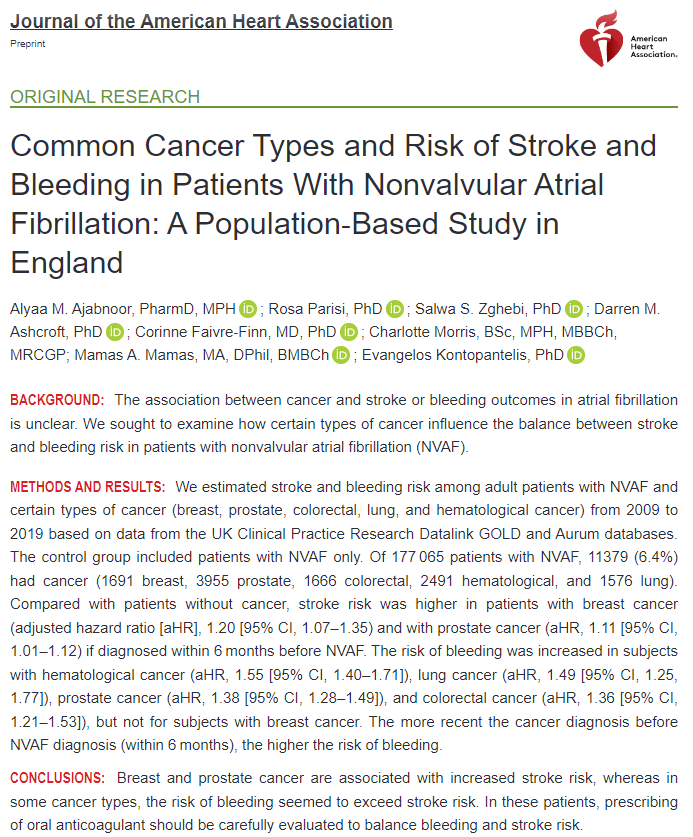
Our new paper is out @JAHA_AHA https://t.co/L6jEbewr14
Led by @dataevan We examined how certain types of cancer influence the balance between stroke and bleeding risk in patients with NVAF
@mmamas1973@Salwasz278@RosaParisi09 Prof. Ashcroft @finn_corinne & Dr. Charlotte Morris
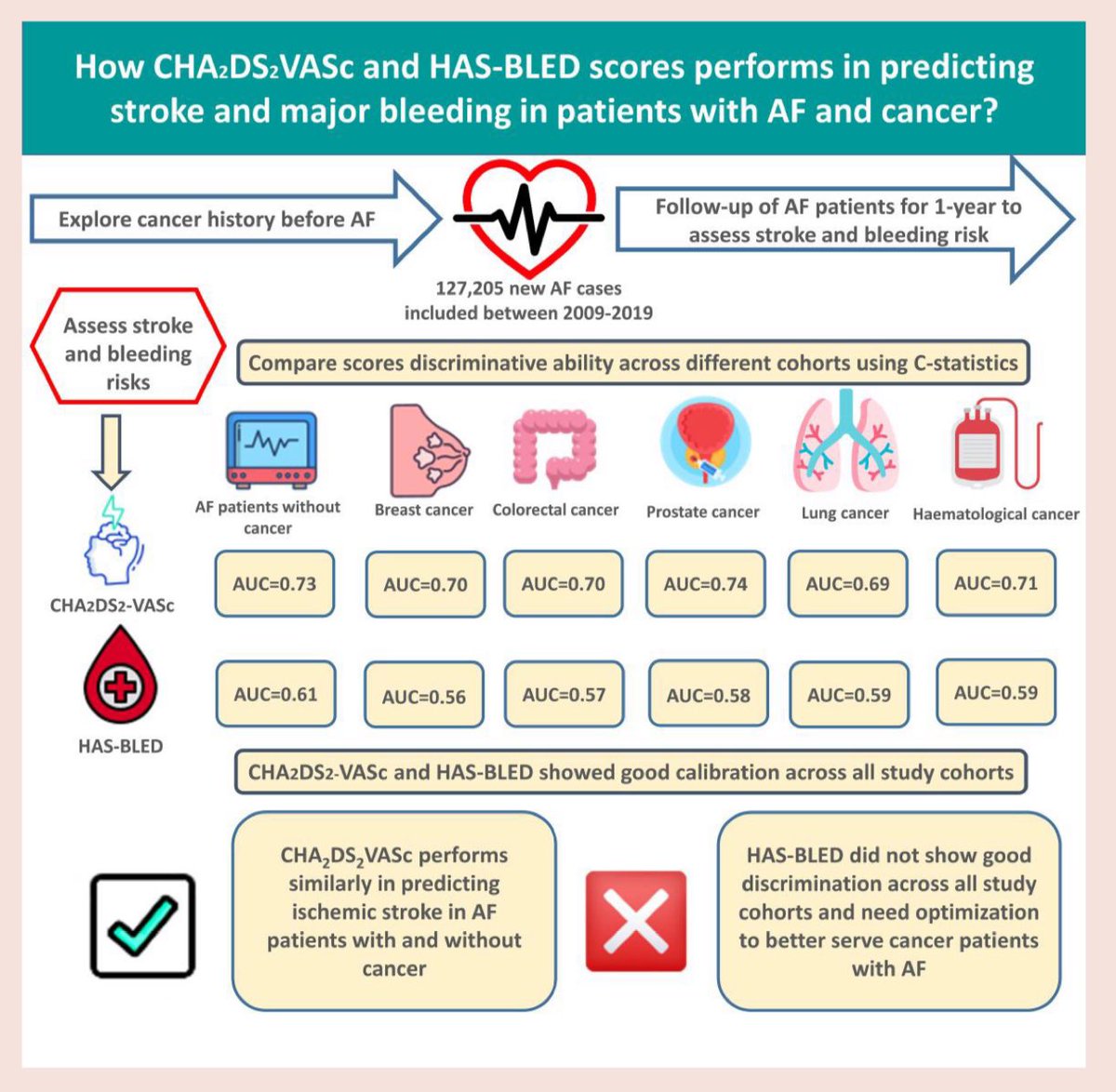
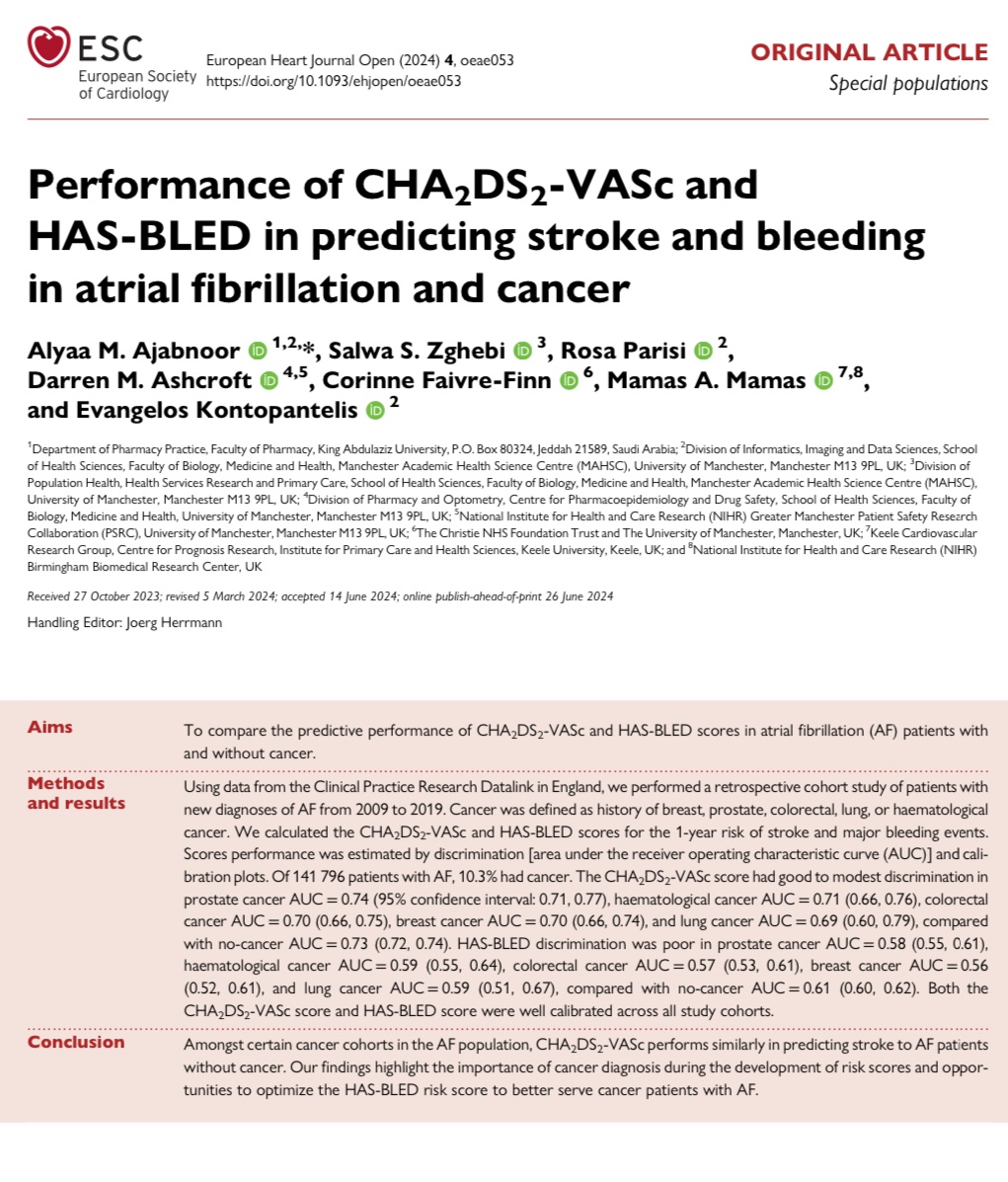
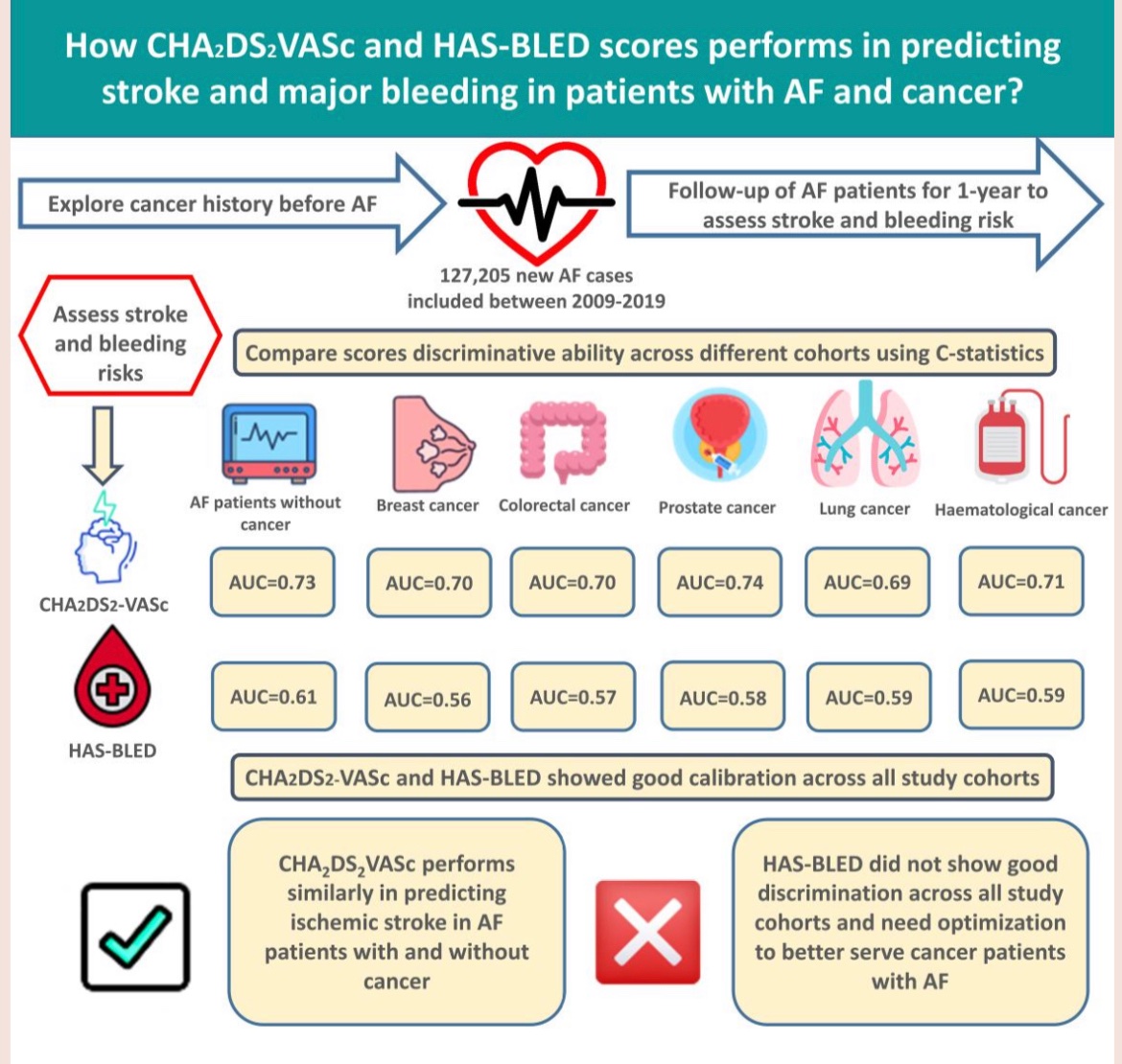
Our analysis led by @alyaa_an studying Performance of CHA2DS2-VASc and HAS-BLED in predicting stroke and bleeding in atrial fibrillation and patients with cancer .@ESC_Journals
➡️ https://t.co/G3QWExroOz
💥 CHA2DS2-VASc has similar discrimination in patients with and without cancer
💥 HAS-BLED performs poorly in patients with cancer (worse in colorectal, haematological and breast cancers)
💥 need better risk prediction in patients with cancer particularly when under-prescription of anticoagulants in cancer pts ➡️https://t.co/KVIndssN44 @mirvatalasnag@AndrewJSauer@cpgale3@vass_vassiliou@purviparwani@vass_vassiliou@drKamarajk@DrAsifQasim@iamritu@KardiologieHH@Hragy
Our new paper is out led by @dataevan & an amazing team involving @mmamas1973 Prof.Ashcroft
@Salwasz278@RosaParisi09@finn_corinne
We have examined the performance of stroke and bleeding risk assessment scores in AF patient with certain types of cancer
https://t.co/6F9qL3jRJ4
@purviparwani@DrMarthaGulati 3. @alyaa_an who undertook a PhD with @dataevan and myself, has published many important papers around AF and its management in patients with cancer, aswell as @RosaParisi09 and @Salwasz278 who have supported many of our works with methodology, and have involved me in theirs
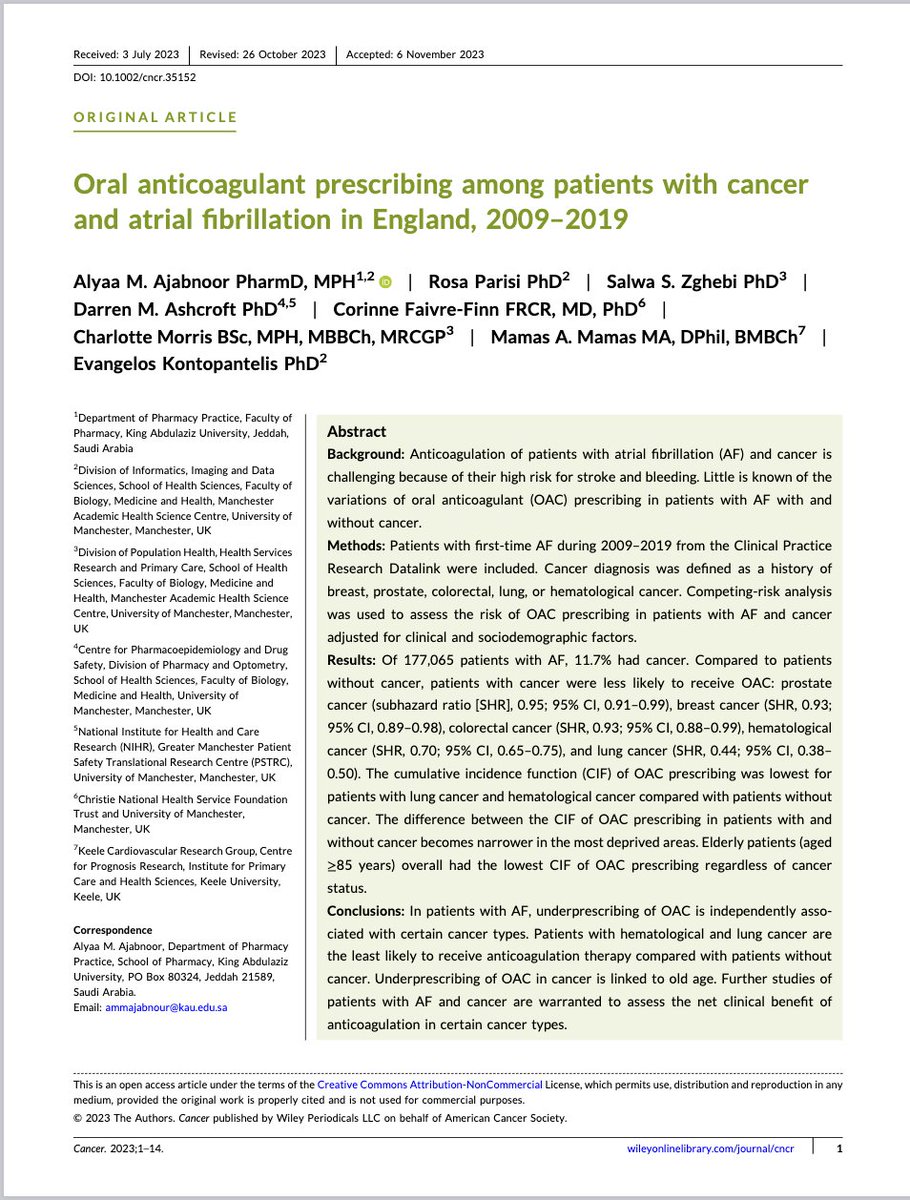
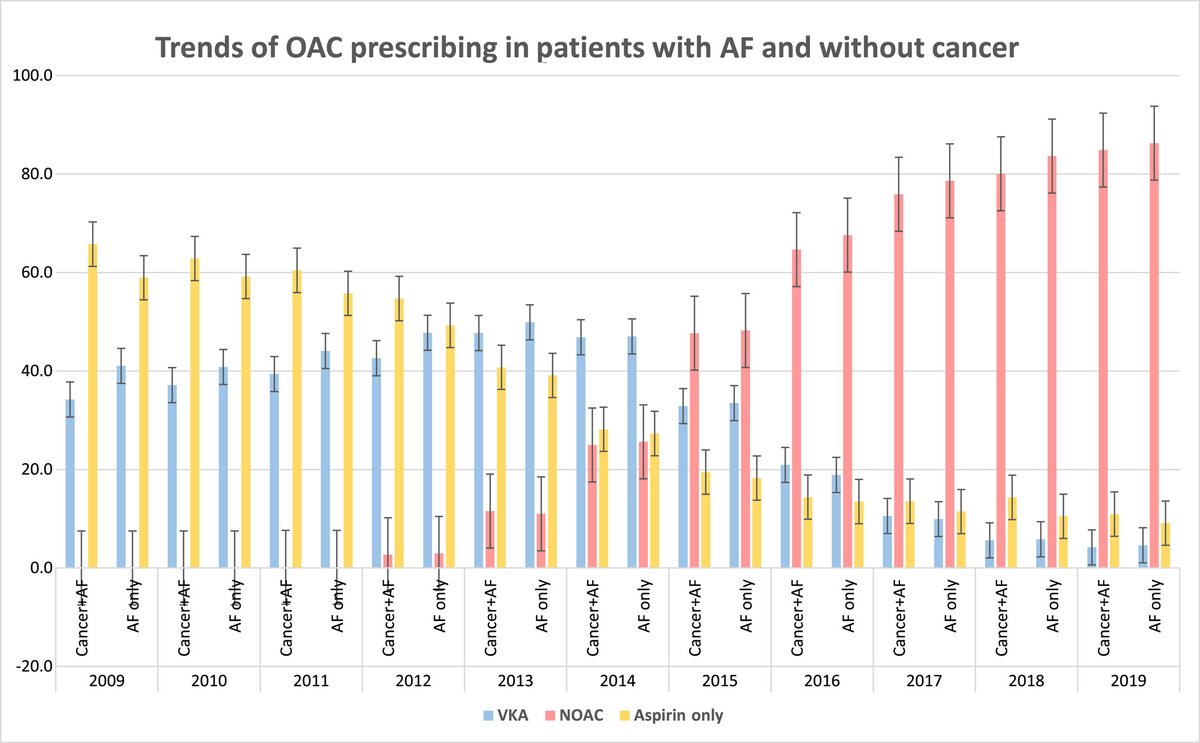
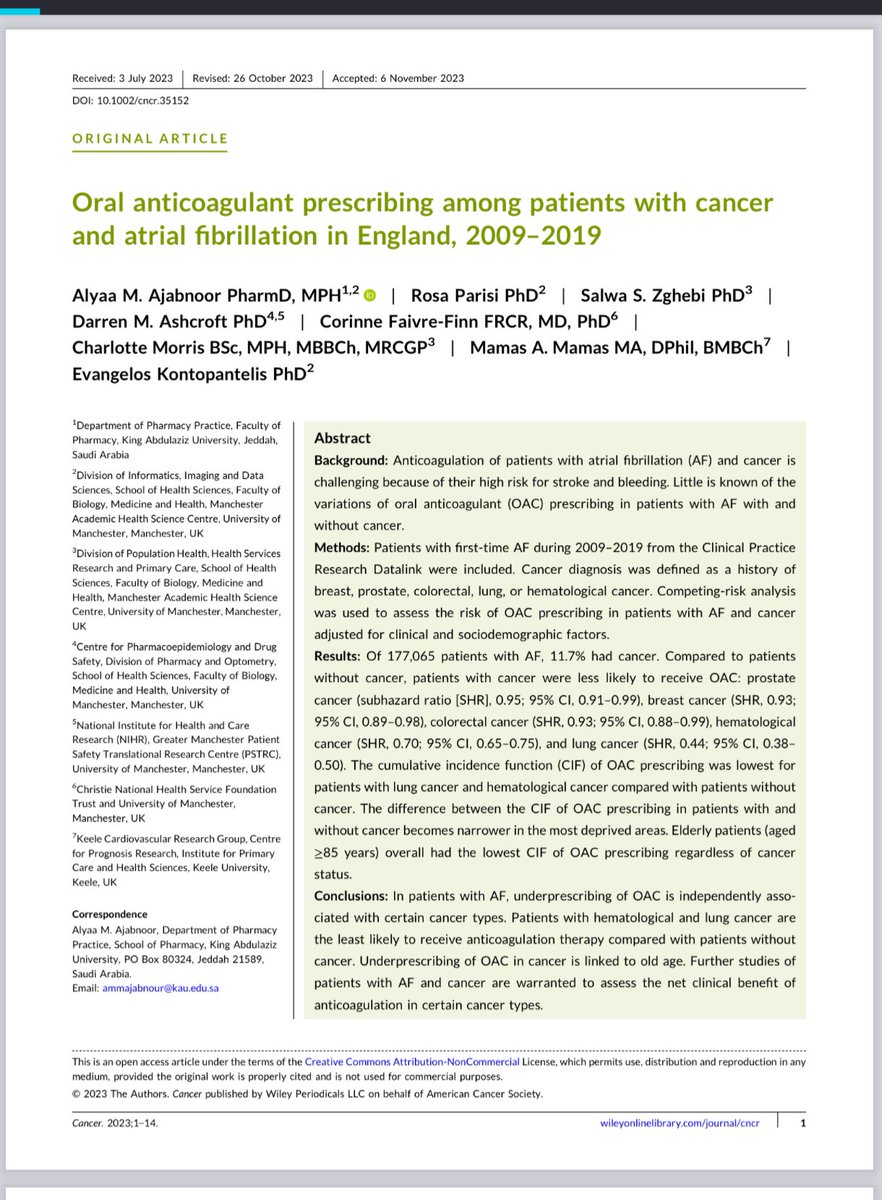
New & available #OpenAccess from @alyaa_an et al | Oral anticoagulant prescribing among patients with cancer and atrial fibrillation in England, 2009–2019
https://t.co/PcOpEyG0Iy
@OncoAlert
Our new paper is out @JAHA_AHA https://t.co/L6jEbewr14
Led by @dataevan We examined how certain types of cancer influence the balance between stroke and bleeding risk in patients with NVAF
@mmamas1973@Salwasz278@RosaParisi09 Prof. Ashcroft @finn_corinne & Dr. Charlotte Morris
A new ISPE sponsored manuscript provides guidance on the use of visualizations throughout the lifecycle of a pharmacoepidemiology study - these help to support transparent and unambiguous communication from study design to results https://t.co/9jisI9c4nV
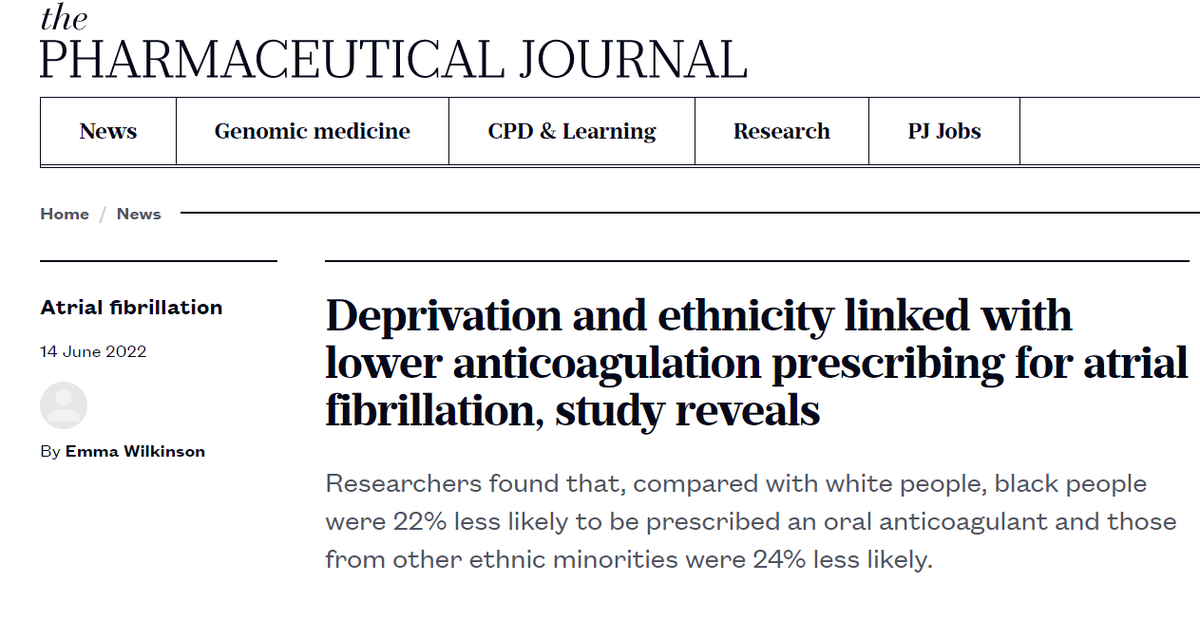
Delighted to see our recent study picked up by the official journal of the Royal Pharmaceutical Society @PJOnline_News https://t.co/M9XNK1duj7
Full study @PLOSMedicine https://t.co/Lx5oP99hsD
Someone asked me yesterday whether disparities in #AFib treatment exist in the UK. 👇🏾
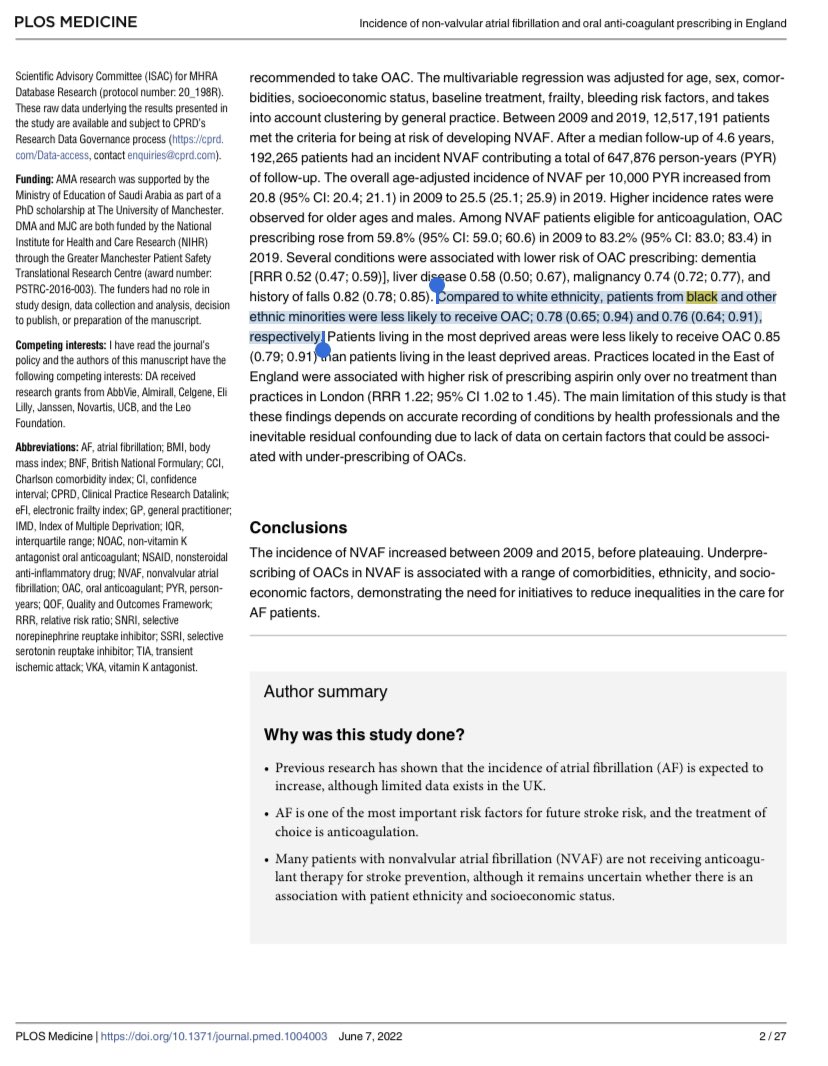
“Compared to white ethnicity, patients from black and other ethnic minorities were ⬇️ likely to receive OAC; 0.78 (0.65; 0.94) & 0.76 (0.64; 0.91).”
https://t.co/LshFN8YtIc
#Pharmacoequity
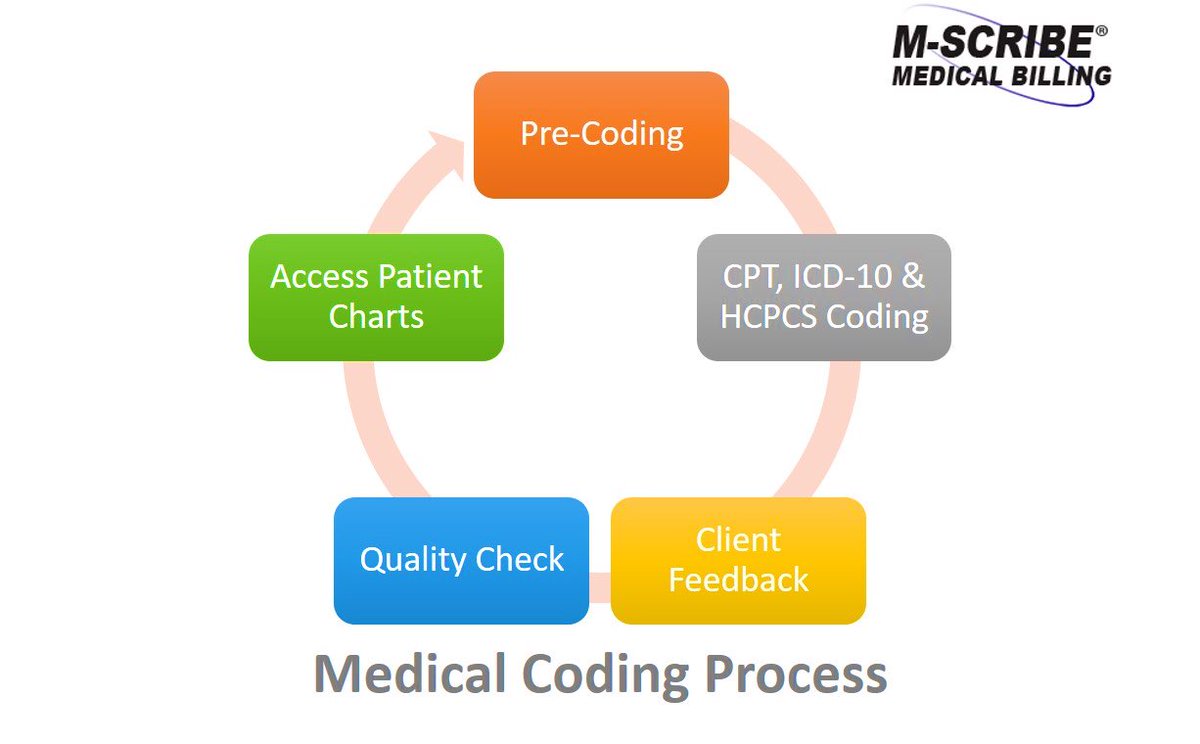
الترميز الطبي Medical Coding يعتبر علم بحد ذاته وله أهمية كبيرة في أي نظام صحي لإخراج بيانات صحيحة ودقيقة. أتمنى أن ينال هذا المجال أهمية من كل الجهات المتعلقة بالنظام الصحي سواء الحكومي أو الخاص.
@SaudiMOH#الترميز_الطبي#coding#healthcare
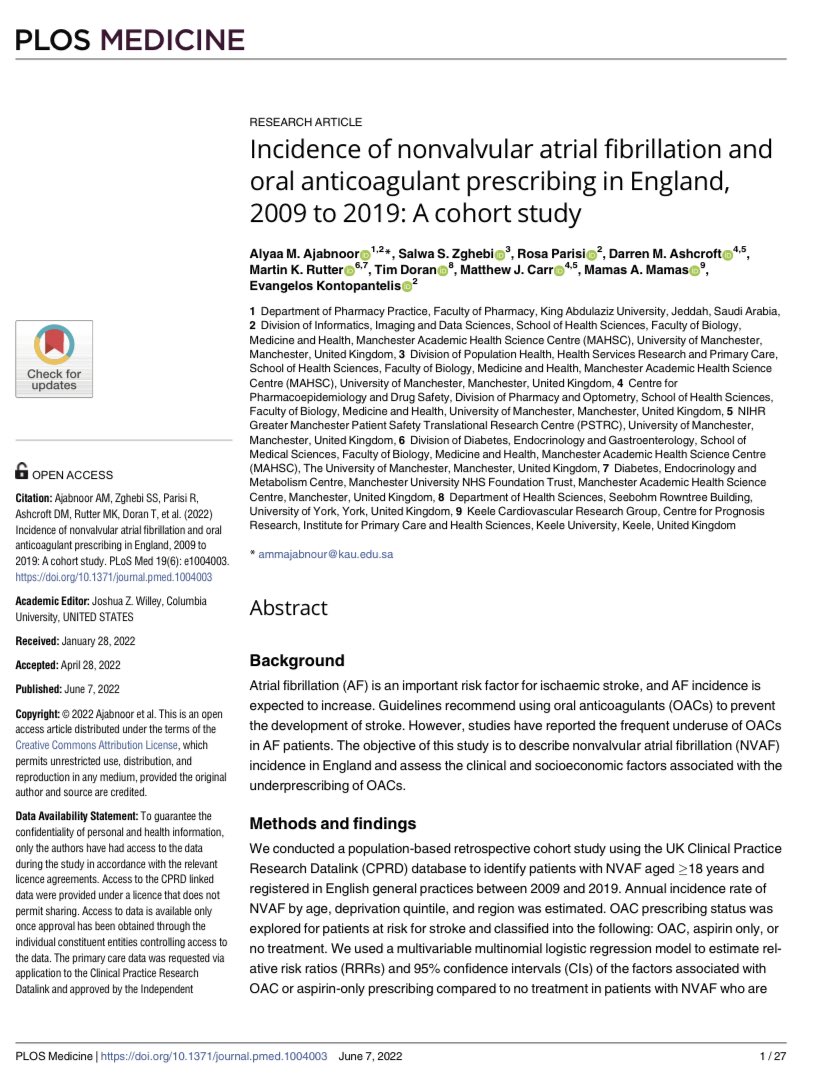
Just published our study involving @dataevan@Salwasz278@RosaParisi09@mmamas1973 Prof. Ashcroft @RutterMK@narodmit & Dr. Matthew Carr. On the incidence of nonvalvular atrial fibrillation and oral anticoagulant prescribing in England, 2009 to 2019 https://t.co/3TmJWedzyR
Black and other ethnic minority patients in England with atrial fibrillation are far less likely than white patients to have anticoagulation therapy prescribed, researchers have found https://t.co/ToGGLC4muR
Using primary care data from @CPRD we found that...
NVAF patients living in IMD 5 were 15% less likely to receive OAC, compared to patients living in IMD 1.
and compared to White patients, Black and other ethnic minorities patients were 22%, and 24% less likely to receive OAC.
Our analysis shows..
That the incidence rates of NVAF rose by almost a quarter in England between 2009 and 2019, and there are ethnic and socioeconomic inequalities of care for atrial fibrillation patients in England.