Had a fruitful meeting with President Xi Jinping in Tianjin on the sidelines of the SCO Summit. We reviewed the positive momentum in India-China relations since our last meeting in Kazan. We agreed on the importance of maintaining peace and tranquility in border areas and reaffirmed our commitment to cooperation based on mutual respect, mutual interest and mutual sensitivity.
The Anti Corruption Commission (ACC)’s so-called “corruption cases” against me and my family members regarding the allotment of lands in Purbachal New Town Project are completely false, baseless, fabricated and motivated by ulterior political agendas of the Yunus Regime.
No illegality was involved in the entire process in the acquisition of the Purbachal plots. Neither was any special treatment afforded to any of us. Every step of the process, from the application to allotment to payment, followed the letter of the law. This is simply a futile attempt by the Yunus Regime to sully the name of my family spearheaded by a politically compromised Anti Corruption Commission, and overseen by a compliant judiciary too intimidated to pursue the truth.
The plots were not given free of charge to us, but had to be purchased from the government by each person allotted one as per the official rates.
Then, why these “cases”? Because under the Yunus dictatorship, the ACC has been turned into a full-time tool for harassing and defaming my family members with baseless allegations. The ACC Chairman Abdul Momen was fired by the Awami League Government for corruption allegations. His only qualification for the job seems to be his background as a pro-BNP bureaucrat who served as the private secretary of Khaleda Zia. Thus, we had little expectations of fairness and justice from the ACC.
But these so-called “cases” should have been thrown out by the courts at first instance. However, given the Yunus Regime’s strict control over the judiciary, naked political interference of BNP and Jamaat-E-Islami lawyers over judicial matters, public prosecutors who act and talk like BNP-Jamaat leaders, and the constant fear of mob violence, the courts are now not only entertaining such baseless allegations, but issuing arrest warrants at whims, arbitrarily ordering freezing of our properties, and taking these baseless, unmeritorious cases to the trial stage. They have afforded no legal protection to those of us being tried in absentia, including state-appointed defence counsels.
Some have asked why we aren't defending these allegations in court. Because under the Yunus Regime, there simply cannot be any trust on the judiciary’s ability to discharge justice neutrally. Hundreds of thousands of Awami League associated people, including those who are mere supporters, have been arrested in hundreds of wholesale false criminal cases and languishing in jail for months without bail. If someone indeed manages bail, they are then “shown arrested" in more cases to further prolong pre-trial detention. There is not even the semblance of due process, with lawyers and defendants getting assaulted in courts without any repercussions.
#Bangladesh #Yunus
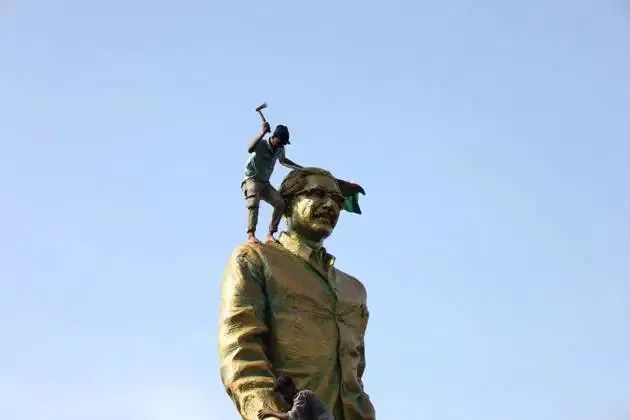
৫ আগস্ট - একজন জাতির পিতার ভাস্কর্য ভাংগার দিন
৫ অগাস্ট - বাঙ্গালি নারীর অন্তর্বাস নিয়ে নির্লজ্জ নিত্যে মেতে উঠার দিন
৫ অগাস্ট - বাংলাদেশের আঁতুড়ঘর ৩২ নম্বর আগুন লাগিয়ে পুড়িয়ে ফেলার দিন
৫ অগাস্ট - বাংলাদেশের গণভবন লুটের দিন
৫ অগাস্ট - শত শত পুলিশ হত্যার দিন
৪ আগস্ট, ১৯৭২
চিকিৎসার জন্য লন্ডনে অবস্থানরত প্রধানমন্ত্রী বঙ্গবন্ধু শেখ মুজিবুর রহমান দেশের বন্যা পরিস্থিতি নিয়ে উদ্বেগ প্রকাশ করলেন। সেখান থেকেই তিনি পরিস্থিতির খোঁজখবর রাখছেন।
#Mujib100#MujibOnThisDay#বঙ্গবন্ধুপ্রতিদিন
Diplomacy or Destabilization?
How the UN and USAID Are Undermining Bangladesh's Sovereignty
DHAKA — Once hailed for its Post-War Resilience and Rapid Development Strides,
Bangladesh now finds itself in the crosshairs of a global narrative war—one orchestrated not by traditional adversaries, but by the very institutions claiming to champion democracy and Human Rights.
In a growing chorus, the UN Secretary-General, UN Human Rights Council, and US policy strategists at USAID appear increasingly aligned in portraying Bangladesh’s elected government as authoritarian and illegitimate.
Critics argue this is more than just advocacy—it's a coordinated campaign to delegitimize the state under the pretense of democratic concern.
From selective UNHRC reports that highlight government "Abuses" while ignoring extremist opposition violence,
to USAID’s conditional aid tied to opaque notions of
“Democratic Reform,” these interventions seem less about Human Rights and more about strategic influence.
Bangladesh's pivot towards regional autonomy,
close China-India balancing,
and independent foreign policy has drawn Western ire.
UN special rapporteurs and Western-funded NGOs have created a media echo chamber that paints the country as a rogue state—despite its notable gains in poverty reduction,Women’s Empowerment, and Counterterrorism.
The “Hide and Seek” policy of the UN—visible when criticizing elections,invisible when acknowledging economic success—has raised eyebrows in Dhaka.
The Rohingya crisis,
for example,
is routinely framed in a way that pressures Bangladesh more than it censures Myanmar.
This so-called Diplomacy,many argue,is soft power at its sharpest—embedding pressure through language, aid, and narrative manipulation.
The result? A fragile political equilibrium threatened not just from within, but from a chorus of global actors playing a dangerous game of selective visibility.
Is it about rights—or rewriting regimes?
Bangladesh may be the latest test case in a growing trend where international institutions act less like neutral observers and more like geopolitical instruments.
Sources: UNHRC Reports (2024), USAID Strategy Papers, Interviews with Dhaka-based diplomats, South Asia analysts, and academic publications.
#BangladeshCrisis #YunusMustGo
#BangladeshUnderFascism #India
#SheikhHasina #UnitedNations #China
@sajeebwazed@MAarafat71@BobLancia@BobBlackman@paulocasaca1@mjgranger1@michaeljohns@CJBdingo25@rahman_milu77@Sajib7Talukder @sreoshisinha @debajits3110 @niru_nahar@JahanaraNuri@ctgchatter@avarakai@theAshleyMolly@KanchanGupta@pooja_news@palkisu@M1008P@kamalKantmishra@StowNIGDYWIECEJ@arnabnsg@DeepSen06037683@Shehzad_Ind@ciprianreyes@NepCorres@VNouka@Brishtiputro@GaziSangita@UNHumanRights@UN@unhrcpr@AidOversight@UNHumanRights@antonioguterres
আপনাকেই বলছি...
বাঙালি সংবিধান
বনাম
বিহারী সংবিধান
দেশের নাগরিক হিসেবে আপনাকে সিদ্ধান্ত নিতে হবে আপনি কোন সংবিধানে শাসিত হবেন।
কোন সংবিধানের অনুগত থাকবেন।
এখনই সময় ... 👍
Bangladesh Army’s Deadly Turn: From Interim Power Broker to Butcher of Gopalganj
1/2
On August 5, 2024, Bangladesh’s long-time Prime Minister Sheikh Hasina stepped down and left the country in the face of massive student-led uprisings. But the hope that followed—of national renewal, of democratic resurgence—was crushed under the boots of the very force once sworn to defend the country’s Constitution.
That force was the Bangladesh Army.
In the year since, the military has acted not as a neutral institution but as the political enforcer of an unelected interim regime, headed by Nobel laureate Muhammad Yunus. Installed by the Army and operating entirely outside constitutional limits, the Yunus government has presided over a year of mass repression, extrajudicial killings, and institutional collapse. But nothing quite captures the scale of this crisis like the events of 16 July 2025, when the Army opened fire on unarmed civilians in Gopalganj—the hometown of Sheikh Mujibur Rahman, Bangladesh’s founding father.
More than 20 people were killed, scores injured, and a nation’s soul was shaken.
An Army Without Orders, A Country Without a Constitution
The unraveling began with the fall of Hasina’s government in early August 2024, following weeks of mass protests. But rather than restore civilian rule through elections, Army Chief General Waker-uz-Zaman took to national television on August 5, announcing the formation of an "Interim" government.
Three days later, the Army dissolved parliament, and Yunus—who held no elected office—was sworn in as Chief Adviser.
Legal scholars immediately flagged the move as unconstitutional. Bangladesh’s 15th Amendment had abolished the caretaker system a decade earlier. Article 56 of the Constitution clearly outlines the appointment process for a Prime Minister—none of which was followed.
Yet what followed wasn’t just a legal crisis—it was a total institutional collapse.
The Descent Begins: Crackdowns, Silence, and the UN’s Blind Eye
The new regime wasted no time asserting control. Opposition leaders were arrested, the Awami League was banned from political activity, and dissent—online or on the streets—was met with baton, bullet, or both.
By late 2024, the UN Office of the High Commissioner for Human Rights (OHCHR) had launched a fact-finding mission. In a scathing internal memo obtained by human rights groups, UN High Commissioner Volker Türk warned that Bangladesh was entering what UN peacekeeping doctrine calls a "valley of death"—a failed zone where the state itself becomes the perpetrator of violence.
But the global outcry stopped there. Despite warnings, the UN took no action.Why?
The answer lies in Bangladesh’s status as a top troop contributor to UN peacekeeping operations. According to international analysts, this has created a “Mutual Silence Pact,” where abuses at home are tolerated in exchange for peacekeeping deployment abroad.
March to Gopalganj: A Country Divided, A Military Unleashed
In early July 2025, the National Citizen Party (NCP)—a pro-regime group widely believed to be backed by Army intelligence—announced a symbolic march to Gopalganj, the stronghold of the banned Awami League. Critics saw the move as a deliberate provocation.
On July 16, during a standoff between NCP supporters & local civilians in Gopalganj, the Army and police opened fire without warning. Mobile footage shows troops shooting into crowds of unarmed civilians. Some were shot in the back as they tried to flee.
At least 4 were confirmed dead on the spot; independent estimates place the toll at over 20 dead and dozens injured. A historic monument tied to Mujib’s legacy was also vandalized.
A curfew was imposed within hours. No Army officer has been held accountable to date.
#BangladeshCrisis
#YunusMustGo #BangladeshUnderFascism #GopalganjGenocide
@sajeebwazed@MAarafat71@paulocasaca1@BobLancia@BobBlackman @sreoshisinha @rahman_milu77@avarakai@KanchanGupta@M1008P @debajits3110 @ctgchatter
গণভবন থেকে চুরি করা পোডিয়াম দিয়ে চলছে ছাত্রদলের সমাবেশ, আমি প্রশ্ন রাখতে চাই ছাত্রদল বাংলাদেশের জাতীয় প্রতীক পোডিয়ামে রেখে সভা করে কিভাবে? এটা কি কোনো সরকারি অনুষ্ঠান?
বাংলাদেশে জাতীয় প্রতীকের ব্যবহার নিয়ন্ত্রিত হয়:
> "জাতীয় পতাকা, জাতীয় সংগীত এবং জাতীয় প্রতীক।
এই হলো গণমাধ্যমের স্বাধীনতা!!
আওয়ামী লীগের দোহাই দিয়ে জনকণ্ঠ প্রত্রিকা দখল করে নিলো এনসিপি নেতা জয়নাল আবেদিন শিশির। ফ্যাসিবাদের ট্যাগ দিয়ে সামান্য রিপোর্টার থেকে নিজেকে সম্পাদক বোর্ডের সদস্য ঘোষণা দিয়েছে জাতীয় নাগরিক পার্টির যুগ্ম সদস্য সচিব জয়নাল আবেদিন শিশির।