Posting links, tweets, and articles on Data Analytics/Engineering/Science, Security as well as topics like Psychology, Economics, Modern Warfare, and Finance.
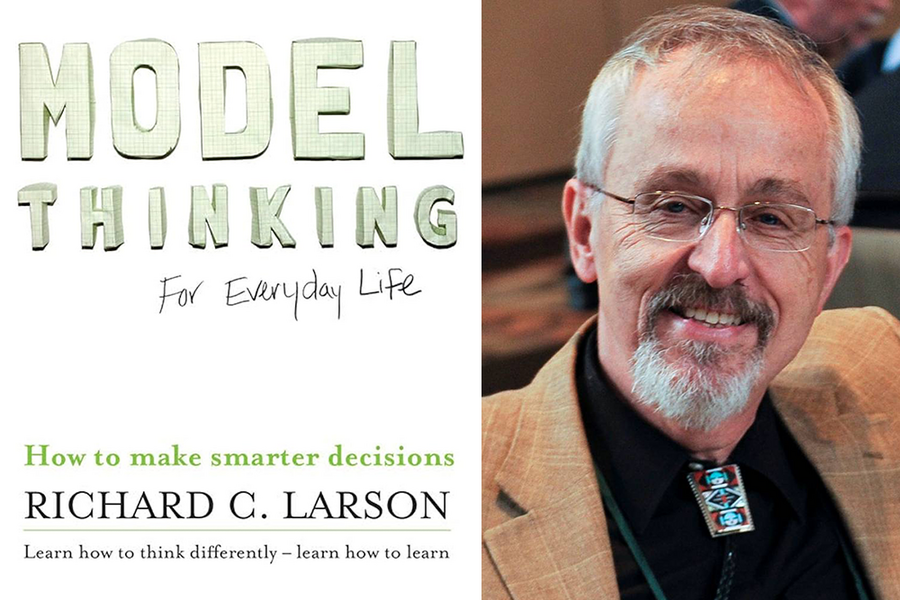
A MIT professor who spent 50 years studying how people solve problems said something that I haven't been able to stop thinking about.
He wasn't giving a commencement speech. He was being interviewed about a book he wrote after decades of teaching at one of the most meticulous institutions on earth.
His name is Richard Larson, and MIT knows him as "Dr. Q" the world's leading expert on queuing theory and complex systems.
Here's what he said: "Many of us in the age of instant Google searches have lost the ability or perhaps the patience to undertake multistep problems."
That sentence diagnoses something most people feel but can't name. We've optimized for answers and completely forgotten how to think.
Here's the framework he spent his career teaching MIT students instead.
He calls it "Model Thinking," and the core insight is that every person on earth already uses mental models constantly without realizing it. When you plan the most efficient route for your errands, you are solving the traveling salesman problem from operations research. When you decide how much food to buy at the grocery store, you are running an inventory management model in your head. The question is never whether you use models it's whether you use them intentionally or accidentally.
The first skill he drills into students is problem framing. He argues that most people fail not because they can't solve problems but because they frame the problem wrong from the start. Before you attempt any solution, your entire job is to define what the actual problem is using first principles, not assumptions.
The second skill is accounting for uncertainty in every decision. He uses a simple example: if the ferry leaves at 2pm and the drive takes 30 minutes on average, what time do you leave? Most people say 1:30. Model thinkers account for traffic outliers, the asymmetry of consequences, and the difference between an average and a guarantee. They leave earlier, not because they're anxious but because they understand how uncertainty compounds.
The third skill is the one he says matters most: doing the thinking yourself instead of immediately searching for an answer. He marks every exercise in his book with a pencil and blank paper icon, because the act of working through a problem is where the actual learning happens. Reading a solution teaches you nothing. Struggling toward one teaches you everything.
His most powerful line came near the end of the interview: "Teaching a difficult topic is our best way to learn it ourselves."
MIT doesn't just train students to find answers. It trains them to understand problems well enough to teach them to someone else.
That gap is where most people's thinking stops, and where MIT students are just getting started.
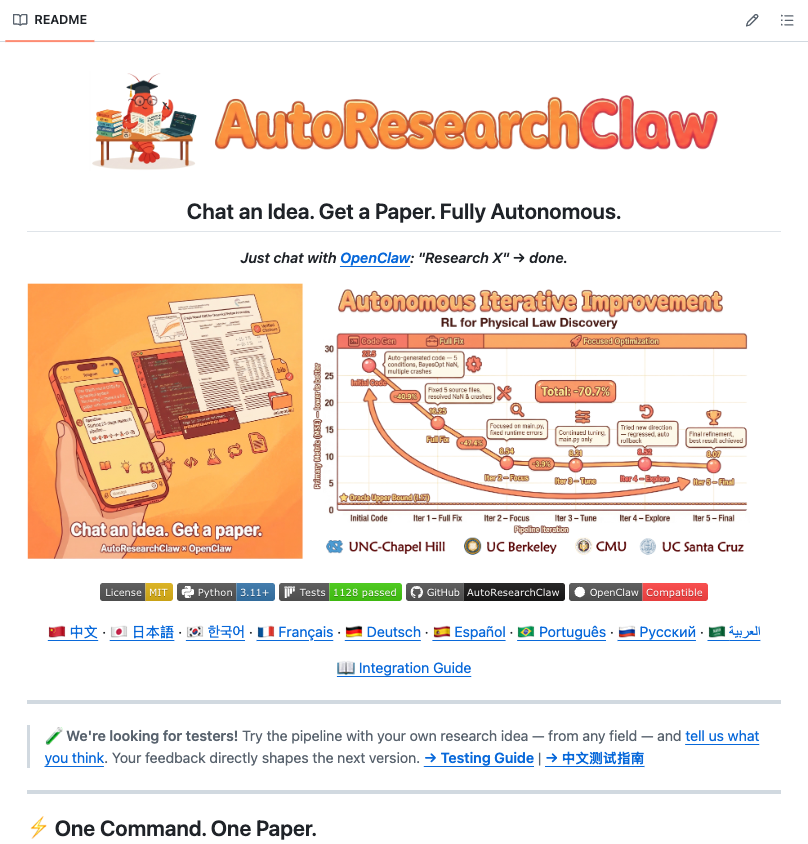
Holy shit...Someone built an AI system that takes a research idea and outputs a full academic paper. Real citations. Real experiments. Conference-ready LaTeX. Zero human input.
It's called AutoResearchClaw. And the pipeline is insane.
Here's what actually happens when you type one command:
It searches arXiv and Semantic Scholar for real papers. Not fake citations actual literature with 4-layer verification: arXiv ID check, CrossRef DOI lookup, Semantic Scholar title match, and LLM relevance scoring. Hallucinated references get killed automatically.
Then it designs and runs real experiments. Hardware-aware auto-detects whether you have NVIDIA CUDA, Apple MPS, or just CPU, and adapts the code accordingly. When experiments fail, it self-heals. When results don't support the hypothesis, it pivots to a new direction on its own.
Then it writes the paper. 5,000-6,500 words. Section by section. Multi-agent peer review with methodology-evidence consistency checks. Then it revises based on those reviews.
Then it outputs conference-ready LaTeX. NeurIPS, ICML, ICLR templates. Compile-ready for Overleaf. BibTeX references auto-pruned to match inline citations.
The whole thing runs across 23 stages and 8 phases. Three human-approval gates if you want them. Or just pass --auto-approve and walk away.
What you get back:
→ Full academic paper draft
→ Conference-ready LaTeX + BibTeX
→ Experiment code + sandbox results + charts
→ Peer review notes
→ Verification report on every citation
This is what autonomous scientific research actually looks like in 2026.
100% Opensource. MIT License.
Link in comments.
Should there be a Stack Overflow for AI coding agents to share learnings with each other?
Last week I announced Context Hub (chub), an open CLI tool that gives coding agents up-to-date API documentation. Since then, our GitHub repo has gained over 6K stars, and we've scaled from under 100 to over 1000 API documents, thanks to community contributions and a new agentic document writer. Thank you to everyone supporting Context Hub!
OpenClaw and Moltbook showed that agents can use social media built for them to share information. In our new chub release, agents can share feedback on documentation — what worked, what didn't, what's missing. This feedback helps refine the docs for everyone, with safeguards for privacy and security.
We're still early in building this out. You can find details and configuration options in the GitHub repo. Install chub as follows, and prompt your coding agent to use it:
npm install -g @aisuite/chub
GitHub: https://t.co/OCkyxXQMCq
Prompt engineering is dead.
Anthropic recently released the real playbook for building AI agents that actually work.
It’s a 30+ page deep dive called The Complete Guide to Building Skills for Claude and it quietly shifts the conversation from “prompt engineering” to real execution design.
Here’s the big idea:
A Skill isn’t just a prompt.
It’s a structured system.
You package instructions inside a SKILL .md file, optionally add scripts, references, and assets, and teach Claude a repeatable workflow once instead of re-explaining it every chat.
But the real unlock is something they call progressive disclosure.
Instead of dumping everything into context:
• A lightweight YAML frontmatter tells Claude when to use the skill
• Full instructions load only when relevant
• Extra files are accessed only if needed
Less context bloat. More precision.
They also introduce a powerful analogy:
MCP gives Claude the kitchen.
Skills give it the recipe.
Without skills: users connect tools and don’t know what to do next.
With skills: workflows trigger automatically, best practices are embedded, API calls become consistent.
They outline 3 major patterns:
1) Document & asset creation
2) Workflow automation
3) MCP enhancement
And they emphasize something most builders ignore: testing.
Trigger accuracy.
Tool call efficiency.
Failure rate.
Token usage.
This isn’t about clever wording.
It’s about designing an execution layer on top of LLMs.
Skills work across Claude, Claude Code, and the API. Build once, deploy everywhere.
The era of “just write a better prompt” is ending.
Anthropic just handed everyone a blueprint for turning chat into infrastructure.
Download the guide here: https://t.co/Bf3j0GFRGu


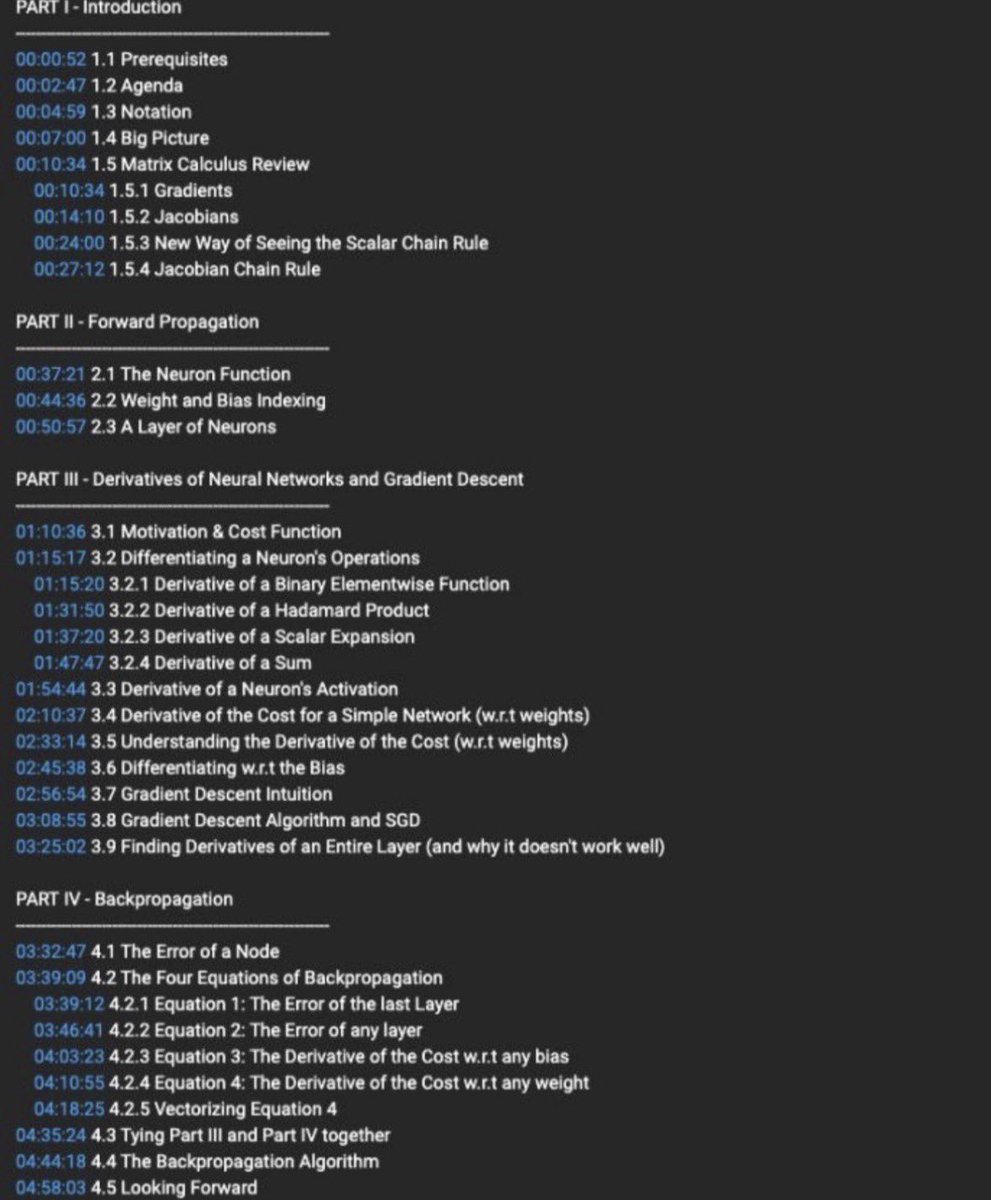



![KirkDBorne's tweet photo. [Download 585-page PDF eBook]
Game Theory: https://t.co/8NySL3GFmu
—————
#GameTheory #Gamification #Mathematics #Statistics #Probability https://t.co/OgBrQ0EitZ](https://pbs.twimg.com/media/HEJXSntbkAAB_eK.jpg)