In all seriousness, one of the best ways to build and maintain your memetic resistance is to make sure that at any given time, you’re reading something from before 1900. It doesn’t much matter what it is.
Both sides have merit.
Anti-introspection (Dana White style): Constant self-analysis breeds rumination, hesitation, and paralysis. High performers often succeed by blocking noise, executing relentlessly, and treating problems as temporary obstacles—not endless therapy sessions. Dwelling amplifies negativity and slows momentum.
Pro-introspection: Self-awareness prevents blind spots, repeated mistakes, and toxic patterns. It sharpens decisions, builds emotional resilience, strengthens teams/relationships, and enables course-correction for sustainable success.
Nuance: Productive reflection = brief, fact-based review tied to action. Rumination = endless emotional looping without forward movement. Top performers reflect quickly then move; they don't wallow.
3 months ago I started building a coding agent that runs in the cloud.
It's since written every line of code I've shipped, including itself.
Today, I'm open sourcing it. Introducing Open Agents.
In one experiment, academics were presented with compelling evidence that they should start saving for retirement...they get absolutely convinced.
But when you check in with them after six months, none of them are saving for their retirement.
So what is the missing factor?
Hal E. Hershfield and colleagues suggest vividly thinking about the subjective experience of the future self you are trying to be.
It emphasizes your perspectival orientation towards your future self.
Are you in first person or third person relationship to your future self?
My dear front-end developers (and anyone who’s interested in the future of interfaces):
I have crawled through depths of hell to bring you, for the foreseeable years, one of the more important foundational pieces of UI engineering (if not in implementation then certainly at least in concept):
Fast, accurate and comprehensive userland text measurement algorithm in pure TypeScript, usable for laying out entire web pages without CSS, bypassing DOM measurements and reflow
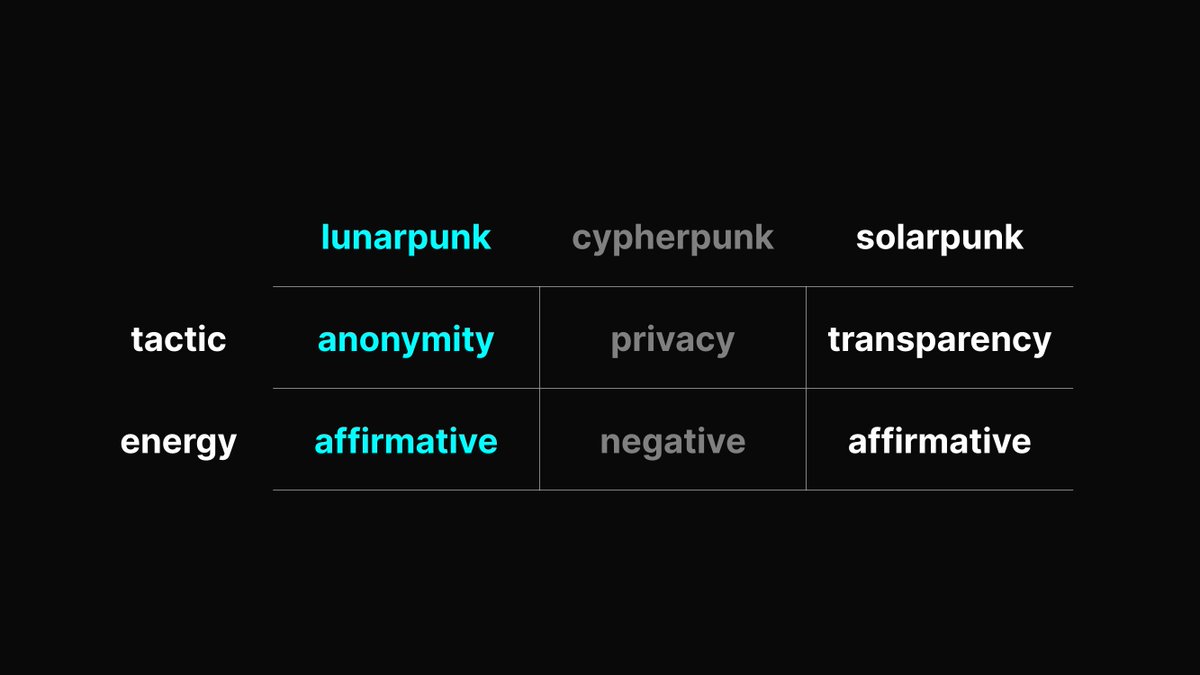
Neo-cypherpunk is lunarpunk.
For years I’ve been arguing for a reframing of cypherpunk along these lines:
From individuals to squads,
From anti-state to non-state,
From dystopian privacy to generative anonymity.
The original promise of crypto was pure. But it was co-opted by the system and by centrists who wanted to use crypto to perfect existing financial institutions.
Crypto generated an image of itself (weak, apologetic and defanged) that destroyed it from the inside.
The question I had was: is there something in crypto's memetic heritage that created this trap?
Perhaps cypherpunk was too reactive, too individualist. Everything in its aesthetics was focused on negativity and inversion. Perhaps this was limiting its scope and confining crypto to be a mirror image of the system, never truly able to surpass it.
We needed a new memetic landscape that was active rather than reactive. Oriented toward real revolution and guided by a utopian vision of what anonymity could do. We chose anonymity rather than privacy as our defining term since privacy felt too wrapped up in the old defensive paradigm. Privacy is sad and closed off. Anonymity is active, aggressive, vitalist.
We spoke of squads rather than individuals, not because we're collectivists but because we had a big, wide, expansive vision that required many people to work together toward massive change.
DarkFi calls this new paradigm "lunarpunk." The web3privacy crowd calls it "neo-cypherpunk." The aesthetics differ quite a lot. It doesn't really matter.
What matters is it feels that crypto has become trapped in a relentless discussion of terminology. I'm bored of discussing lunarpunk, solarpunk, cyberpunk, cypherpunk, and neo-cypherpunk.
This no longer feels like a healthy, energetic retvrn to the original values of crypto. Rather it feels more like a paranoid preoccupation with crypto's self-image.
Nick Land says: "An animal attending to the operation of its own organs is sick." Action happens on the outside. When it turns inward, it becomes pathological. Crypto's relentless self-questioning has started to feel like a disease.
I'm more interested in facing outward to the world and to the future. Escaping from the repetition of old symbols and self-referential purity spirals. I love cypherpunk and crypto-anarchy. But why are we still stuck in visions from the 90s? It's time to leave the old symbols behind and create something new.
We are in a fundamentally new paradigm. Everything has changed. No new terms can keep up with this relentless forward march. Nor should they.
Code is a cybernetic intensity capable of reorienting the world in ways we cannot predict. It's more powerful than language. It has a certain magical immanence since it does exactly what it says. That's why I spend most of my time today writing code rather than consciously creating culture. The culture follows us, not the other way around.
Crypto has been been a phenomena for over 17 years. It has made so many beautiful promises. It has delivered on much less. It's time we find out what crypto can actually do.
We haven’t seen anything yet.
this is actually insane
> be tech guy in australia
> adopt cancer riddled rescue dog, months to live
> not_going_to_give_you_up.mp4
> pay $3,000 to sequence her tumor DNA
> feed it to ChatGPT and AlphaFold
> zero background in biology
> identify mutated proteins, match them to drug targets
> design a custom mRNA cancer vaccine from scratch
> genomics professor is “gobsmacked” that some puppy lover did this on his own
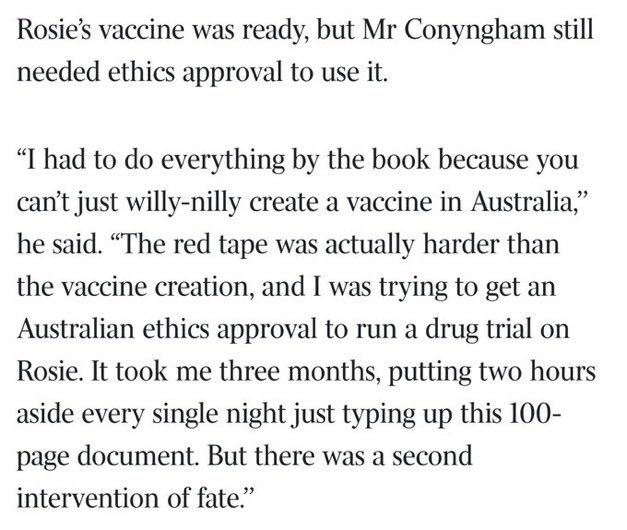
> need ethics approval to administer it
> red tape takes longer than designing the vaccine
> 3 months, finally approved
> drive 10 hours to get rosie her first injection
> tumor halves
> coat gets glossy again
> dog is alive and happy
> professor: “if we can do this for a dog, why aren’t we rolling this out to humans?”
one man with a chatbot, and $3,000 just outperformed the entire pharmaceutical discovery pipeline.
we are going to cure so many diseases.
I dont think people realize how good things are going to get
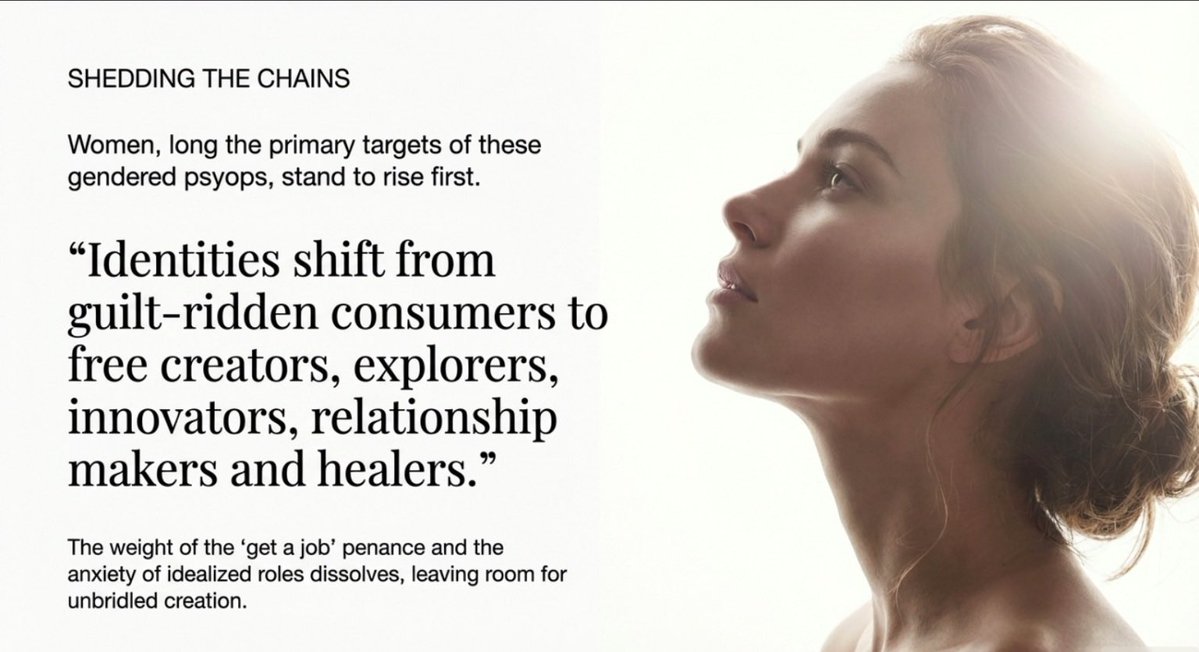
Nobody else is addressing the “how” to adapt to the next 5000 Days and the Age Of Abundance.
The technology and financial will sort itself out.
But what about you and the roles you chose because you thought they defined you?
Who defined you?
I show you and help you.
Spent some time optimizing OpenClaw token usage today.
Biggest wins were not model swaps, but reducing heartbeat frequency, removing dumb repeated file reads, shrinking context a bit, and cleaning up duplicate runtime noise.
Way less waste now.
Please share your tips too.
there is a rhetoric in ai rn that vibing and half-assing is the future of technology. do not fall for this psyop. the future is deep understanding and mastery. always has been