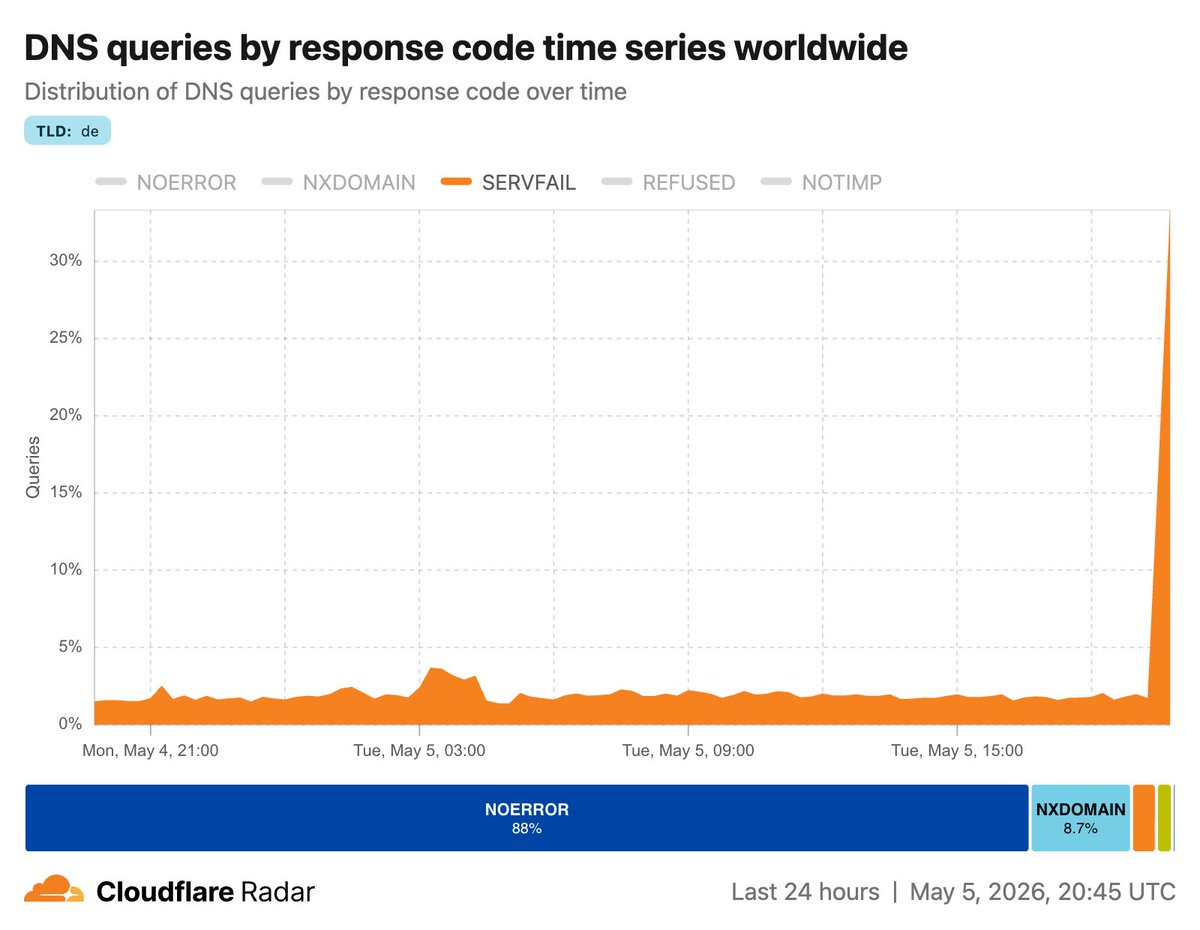
.@1111Resolver is installing a temporary Negative Trust Anchor for .de to keep the TLD resolving for 1.1.1.1 users.
Per RFC 7646.
https://t.co/Cdzg60TRoW
Apparent DNSSEC problems impacting the .de top-level domain (TLD) are visible on the Radar Data Explorer as a spike in SERVFAIL responses: https://t.co/yQ0O7L5Dj8
https://t.co/ygq0nPju1G
🚨 Someone just solved the biggest bottleneck in AI agents. And it's a 12MB binary.
It's called Pinchtab. It gives any AI agent full browser control through a plain HTTP API.
Not locked to a framework. Not tied to an SDK. Any agent, any language, even curl.
No config. No setup. No dependencies. Just a single Go binary.
Here's why every existing solution is broken:
→ OpenClaw's browser? Only works inside OpenClaw
→ Playwright MCP? Framework-locked
→ Browser Use? Coupled to its own stack
Pinchtab is a standalone HTTP server. Your agent sends HTTP requests. That's it.
Here's what this thing does:
→ Launches and manages its own Chrome instances
→ Exposes an accessibility-first DOM tree with stable element refs
→ Click, type, scroll, navigate. All via simple HTTP calls
→ Built-in stealth mode that bypasses bot detection on major sites
→ Persistent sessions. Log in once, stays logged in across restarts
→ Multi-instance orchestration with a real-time dashboard
→ Works headless or headed (human does 2FA, agent takes over)
Here's the wildest part:
A full page snapshot costs ~800 tokens with Pinchtab's /text endpoint.
The same page via screenshots? ~10,000 tokens.
That's 13x cheaper. On a 50-page monitoring task, you're paying $0.01 instead of $0.30.
It even has smart diff mode. Only returns what changed since the last snapshot. Your agent stops re-reading the entire page every single call.
1.6K GitHub stars. 478 commits. 15 releases. Actively maintained.
100% Open Source. MIT License.
someone built an entire AI RED TEAM - multiple agents that coordinate HACKING ATTACKS together, ZERO human input
PentAGI, open source, one agent does recon, another scans, another exploits, another writes the report. they talk to each other and adapt based on what they find
it ships as one docker container with nmap, metasploit, sqlmap, hydra preinstalled. the AI decides which tool to use and when. you point it at a target and walk away
a red team engagement costs $30-50k and takes weeks. this is one docker command and API tokens
Claude codes faster than I do, by a significant factor. Claude can hold more details in its "mind" than I can -- again by a significant factor.
But Claude cannot hold the big picture in it's mind. It doesn't really even understand the concept of a big picture. Architecture is likely beyond it's capacity.
And although Claude appreciates the value of refactoring, it shows no inclination to acquire that value for itself. It has no sense of self preservation. It does not look ahead and foresee the disaster it is creating.
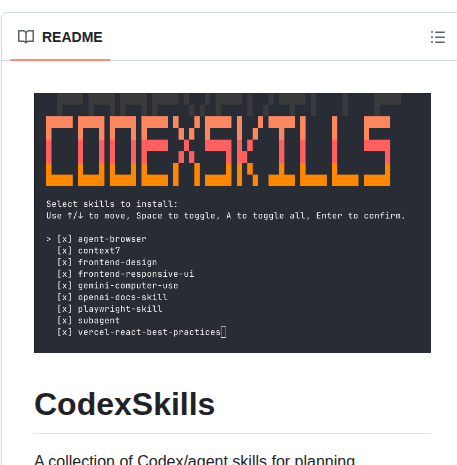
🆕 Codex now officially supports skills
Skills are reusable bundles of instructions, scripts, and resources that help Codex complete specific tasks.
You can call a skill directly with $.skill-name, or let Codex choose the right one based on your prompt.
Nicht vergessen, morgen ist der @ShopwareDevs@shopware Stammtisch in München, https://t.co/nus5NI5gl0 mit Talks von @Shyim97 und https://t.co/W5WfvK35eH Meldet euch an und kommt zahlreich :-) 🍻🍕🛸
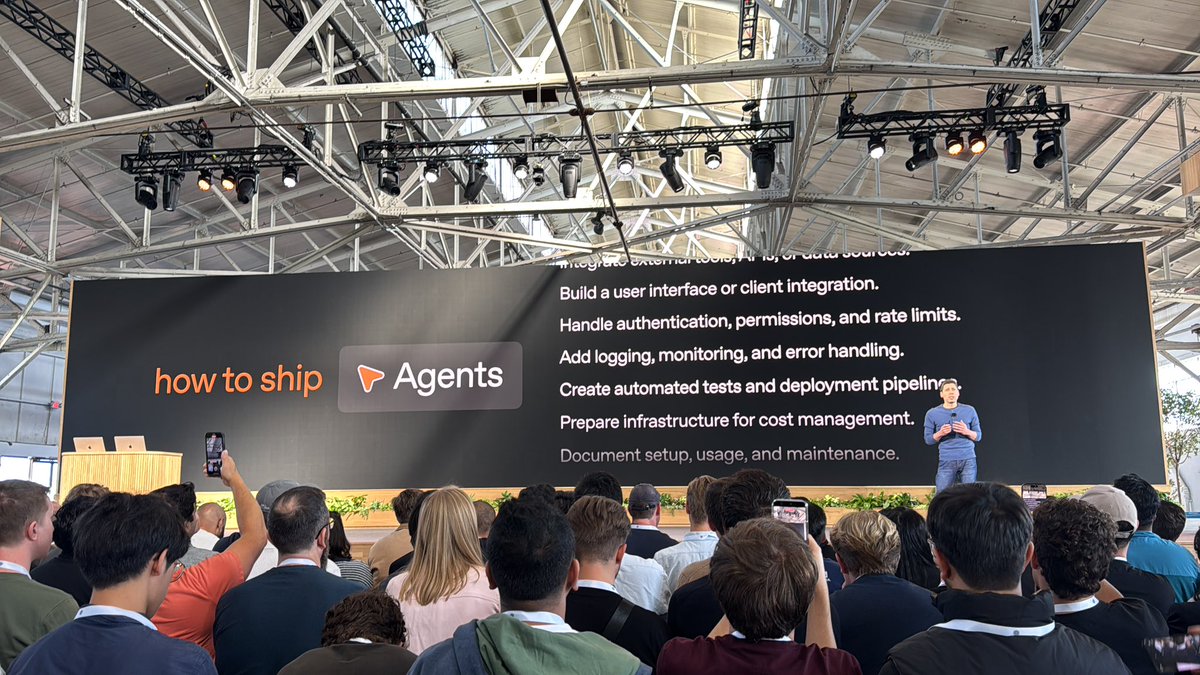
OpenAI announces a NEW AGENT BUILDER
It’s called AgentKit. A complete set of building blocks to make agents:
- AgentBuilder is a canvas to build agents, like Zapier
- ChatKit is a simple embeddable chat
- Evals lets you measure the performance of your agents
Pretty awesome!!!
BREAKING 🚨: OpenAI is planning to announce Agent Builder on DevDay. Agent builder will let users build their agentic workflows, connect MCPs, ChatKit widgets and other tools.
This is one of the smoothest Agent builder canvases I've used so far.
The year of Agents 🤖