My patient lost almost no weight on semaglutide. His liver healed. His blood pressure dropped. His sleep apnea lifted. His knees stopped hurting. He barely moved the scale and got better everywhere else.
I'd been measuring the wrong thing for years. 🧵
Fred Rogers met with a child psychologist every week for 22 years to build his show. She shaped everything: every script, prop, and song. The whole point was to give a child's nervous system time to slow down. In 1984, a single regulatory decision ended all of it.
The psychologist was Dr. Margaret McFarland, who co-founded the Arsenal Family and Children's Center alongside Benjamin Spock and Erik Erikson. She and Rogers understood that the prefrontal cortex in children, the part of the brain that controls impulse, emotion, and attention, takes decades to fully develop. At the start of every episode, Rogers tied his sneakers and changed his sweater while children settled in. Those pauses were intentional, designed to help a child's nervous system shift into a calmer, more focused state.
What ended it had nothing to do with child development science. In 1984, Reagan's FCC chairman Mark Fowler abolished the advertising limits that had protected children's programming from commercial pressure. Toy companies moved within months. Between 1984 and 1985, cartoons tied to toy lines increased by 300%, from a handful of shows to more than 40 animated series. In almost every case, the toy was designed first. The cartoon was built to sell it.
Researchers later put numbers to what parents were already noticing. A 2011 study in Pediatrics from the University of Virginia tested 60 four-year-olds across three groups: one watching SpongeBob, which cuts scene every 11 seconds; one watching a slow PBS show, which cuts scene every 34 seconds; and one drawing. Nine minutes later, all three took tests on attention, impulse control, short-term memory, and problem-solving. The SpongeBob group scored significantly worse across every measure.
In the 1970s, children began watching television around age 4. Research from pediatrician Dimitri Christakis found that by 2009, the average age of first screen exposure had dropped to 4 months, as the content got faster and the audience got younger. Researchers separately found that each additional hour of daily screen time at ages 1 or 3 raised the risk of attention problems at age 7 by 9%.
@Plastician Not sure what europes been like, as I only visit from time to time but since Covid, North America, specifically in the big cities(and the corporations within them) have just been price gouging the ever living fuck out of its populations. Incredibly unsurprised by this.
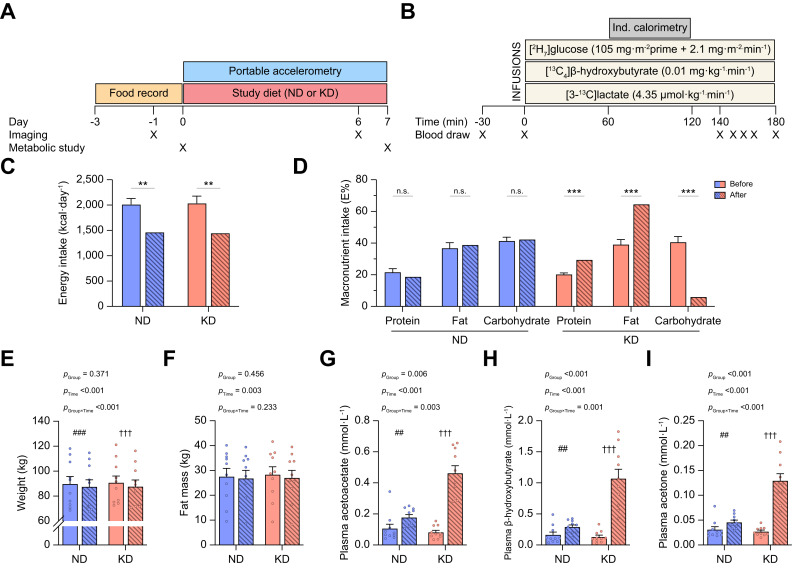
This study found that in MASLD, a hypocaloric ketogenic diet (KD), when compared to calorie matched "normal diet" (ND), produced:
Greater ⬇️ in intraheptic TG (-29% KD vs -20% ND, 45% greater decr with KD)
Better hepatic insulin sensivity ( +59% KD vs 21% ND)
Better serum insulin
Increase hepatic redox state
Decr mitochondrial TCA cycle oxidation
I am curious what my friends on X think of the conclusion:
"The findings highlight a potential trade-off between greater short-term reductions in liver fat and the emergence of metabolic features previously associated with increased susceptibility to liver injury."
and from the discussion
"Despite substantial reductions in IHTG and hepatic insulin resistance with KD, the concurrent inhibition of hepatic mitochondrial TCA cycle oxidation and increase in redox state may adversely affect liver health."
https://t.co/k97h5nDext
@DrEricRodgers@theproof@nicknorwitz@realDaveFeldman Simon has been MORE than fair with them. Podcasts, Twitter discourse, etc.. But when shit hits the fan and the tough questions need to be answered? Crickets.
@DrNadolsky@ZKForTre I implore everyone to listen to his podcast with Feldman, I wanted to hear what he had to say about this “paper”. After starting the podcast on his bit about Attias rebutall, I listened to another 45 mins at which point, I just couldn’t stomach anymore. They both live in delusion
@DrNadolsky@Brady_H The irony of them being processed and packaged in plastic wrappers.
How does Paul sleep at night with those PFAS+micro plastics he’s ingesting/having other ppl ingest?
Oh I know how, he sleeps on his giant pile of money, the money he made taking advantage of the I’ll informed
@DrNadolsky Actually so infuriating. Posts case study of himself with zero proof of outcome other than a graphic. Ignores his own study that he had to pull after it shows accelerated rates of plaque progression for large portion of participants. Proclaims “hazah, LDL hypothesis is toast.”
@pacifieraka@theproof Apob raises plaque levels independent of inflammation, and in the absence of high blood sugar. So now what’s your thesis, genius?
@stathi_@Alexleaf@KetoCarnivore Brother your argument was were made of meat so our body knows what to do with it. Our bodies are also 60% water, yet if we drank 3 litres of it in an hour, you’d likely die of hyponatremia.
@Plastician In the past two weeks we’ve had @Plastician hailing pinkpanthress as one of the most interesting pop acts in years and @ScubaOfficial saying she’s the worst thing he’s ever had the displeasure of listening too, bwahaha amazing. Music truly is subjective, even amongst peers.
@pacifieraka@theproof Your body maintains glucose in your blood at all times regardless of carb intake, if it didn’t you would die. Your comment makes no sense.