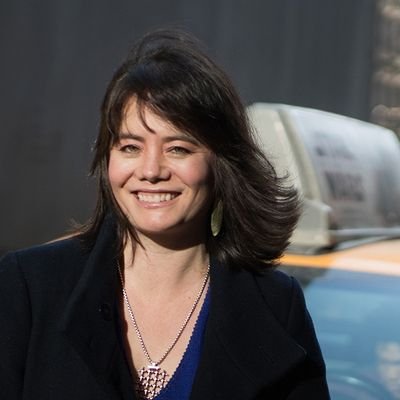
Working on Nano Banana has been a highlight of my career. A real privilege to be a part of this incredibly high-functioning team. I'm as excited as many of you to play with it more. I can't wait to make stuff! Here's 🤏🍌 re-imagining our 12yo's Shadowdark TTRPG character sheet
The ban on social media for children under 16 is an idea that has merits. But the way it is being done is simply a way to force everyone, including adults, to identify themselves online, creating the most powerful surveillance and censorship architecture in human history.
Bit odd that that investigating child abuse by grooming gangs was resisted for years but then now all of a sudden, child safety is the number one priority for Keir Starmer.
Just watch this government build the machinery to verify every adult online at speed. And once the infrastructure exists, the uses for it will go far beyond social media age checks
My family moved to the US when I was 8, but by the time I turned 20, my dad was still on an H1B (waiting to get processed for a green card).
Once I turned 21, I would age out as his dependent, despite the fact that I basically grew up in the US.
I thought I'd have to become a code monkey after college, and even that only if I was lucky enough to win the H1B lottery.
Otherwise, back to India.
I had become a huge fan of @paulg's essays in college. I was actually depressed that my desire to start a startup or do something entrepreneurial was basically hopeless.
Working on the promising podcast I was doing as a side project? A beyond impossible pipe dream.
Even after 9 years, my dad wasn't able to get a green card - and the lines were only getting longer over time. I figured I'd be an old man before I could quit some FANG job and build my own thing.
By some miracle, COVID travel restrictions cleared out the lines, and I got my green card literally months before I would have aged out.
If not for this unbelievable coincidence, I would not be hosting the podcast.
In the best case, I would be shifting pixels around in the 3rd sub-sub-menu of some big tech software.
I'm incredibly grateful I made it through.
But it's unconscionable that we put the kids of high skilled immigrants through all this anxiety, and in many cases make them repeat the nerve-racking indentured life trajectory that they had to watch their parents go through.
My first instinct was to support the UK’s social media ban for under 16s.
Protecting children from grooming, exploitation and harmful content seems like common sense.
But I’m seeing a lot of opposition to it, so I’m genuinely curious as to why?
One thing making me second guess is that platforms like bluesky are exempt, while at the same time there’s a push to let 16 year olds vote. To me that looks less like child protection and more like controlling where young people get their information.
Interested to hear other perspectives.
We really need to address the fact that our most coveted universities are giving their seats to ingrates who hate their country and are radical communists It's not a handful of disruptors causing a problem. It seems like at least half the students are boycotting.
California is one of the most dynamic places on the planet.
But it is a case study in how a rich society can spend more and more while producing less and less of what its ordinary citizens need.
My take:
Berkeley math professor:
“Today, the more successful a public high school is at preparing its students, the lower its graduates' chances of getting into top UC campuses like Berkeley and San Diego.”
Berkeley admitted 45% of applicants from a high school where nearly 94% of “students failed to meet the state standards in mathematics.”
It admitted less than 14% of applicants from a school where “nearly 100 percent of its students in AP Calculus BC pass the national exam with a perfect score of 5.”
In University of California admissions, up is down:
“Today, the more successful a public high school is at preparing its students, the lower its graduates’ chances of getting into top UC campuses like Berkeley and San Diego”
Anthropic made a generational mistake.
Framing AI as a technology that’s going to take everyone’s jobs, create cyber weapons, enable autonomous warfare, etc. instead of curing disease and helping humans do more is one of the most unforced errors I’ve ever seen.
How difficult would it have been to frame AI as technology so powerful it’s going to discover cures for disease, allow humans to be more productive, expand what small teams can build, accelerate GDP, and give people leverage they’ve never had before?
Such an unforced error.
bro immigrated from Mexico and took a $28/hr contract welding job in 2015.
didn't even know what SpaceX was.
they gave him $10,000 in stock and let him buy more through payroll deductions.
that stake is now worth $880,000.
and he's one of 4,400 employees who became millionaires on Friday. welders. technicians. cafeteria staff.
Exciting news: Gemini Omni Flash is now #1 in the Video Arena (both Text-to-Video and Image-to-Video)!
For Text-to-Video this is a massive +158 pt improvement over Veo 3.1 (1080p) and a large +61 pt lead over the next best model, Seedance 2.0.
Congrats @GoogleDeepMind for this huge milestone!
My kid just got into “8th grade algebra.” He’ll take it in 7th grade.
He passed a *test* 😱 and can now do a thing at his appropriate capability level. In a public school! Ali Collins and Gabby Lopez and Brandee Marckmann (who just lost her school board race!) fought to keep this from being allowed in SF so I just wanted to close the loop on it. ☺️
Fight to keep bullshit policies out of your kids’ districts. Acceleration is good, actually.
Meet DiffusionGemma!
An experimental open model that explores a fast approach to text generation, released under an Apache 2.0 license.
Moving beyond sequential, token-by-token processes to generate entire blocks of text simultaneously. Here’s what’s new with DiffusionGemma: 👇
"HIPAA was a mistake". Yes, and this is true for almost all of the "precautionary principle" regulations, from GMO restrictions in Europe to AI regulations across US states.
Rather than imagining all the things that might go wrong and seeking to prevent them, let the marketplace work and if and when things actually do go wrong, regulate *then* based on real-world harms not fantasies.
Everyone who over-hired or lowered the bar too much in the 2021-2023 wave, or isn’t growing as fast as budgeted, now pretends they’re laying people off “due to AI productivity.”
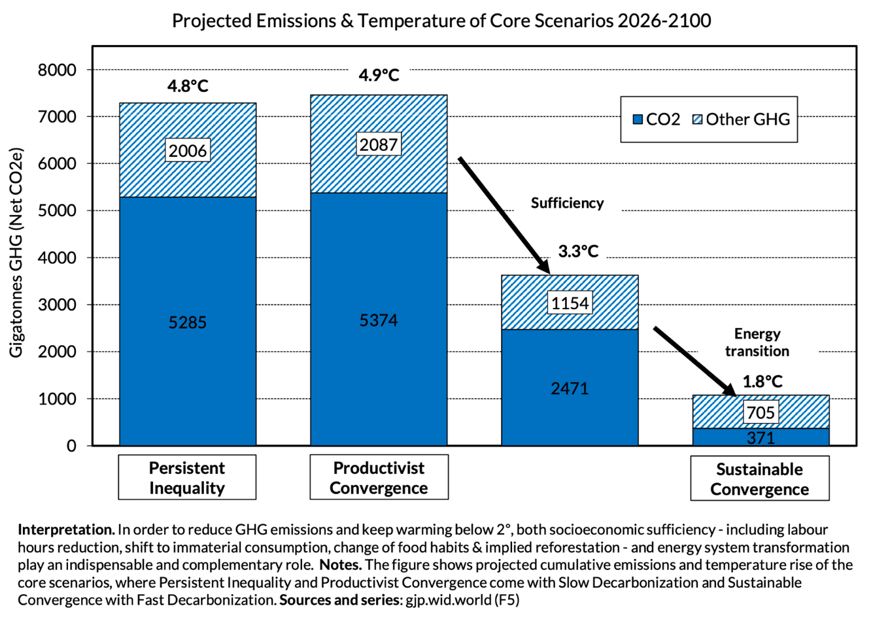
The key finding of the report is that energy transition alone will not suffice.
We need to combine it with "sufficiency" to stay within 2 degrees. This includes labour hour reductions, growth caps in rich countries, less material consumption, and changes in food habits.
It's hard to overstate how much of an outlier California is for its slow vote-counting relative to literally any other state or almost any other industrialized democracy.
The jobs data coming out continues to suggest the opposite of what a lot of people had thought would happen.
Just take engineering, as the prime example of the area with greatest AI impact (and perceived risk). Most companies now have far more software projects than ever before because of AI, and effectively only engineers are going to be the ones doing that work.
You can get by for a while by being non-technical building software, but eventually someone has to understand what the thing is that got built, has to maintain it, has to fix security issues that come up, upgrade the systems beneath it, and so on. That’s all jobs.
Now apply that to a number of other job functions. AI is going to cause companies to hire more in sales because agents can let them process more leads and do more customer research. AI will cause an explosion of new marketing roles because of how much more efficient it is to launch campaigns and target. The list goes on.
AI is going to have the opposite effect that lots of people thought on jobs.