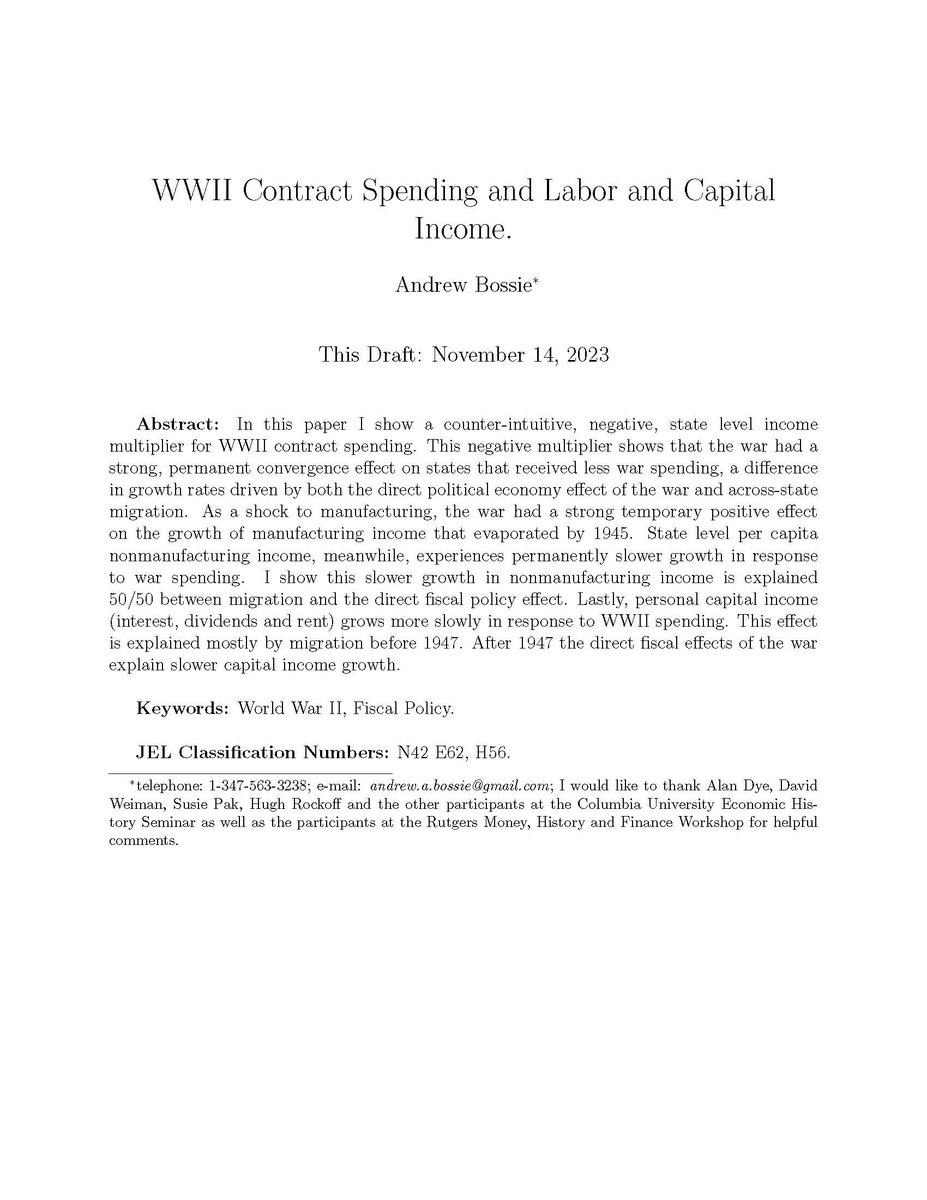
I am on the job market this year. My JMP shows both the role of migration and the role of “capital repression” in how WWII spending drove postwar across state income convergence as well as the Great Compression. #econtwitter#econhistory#historyofcapitalism (1/9)
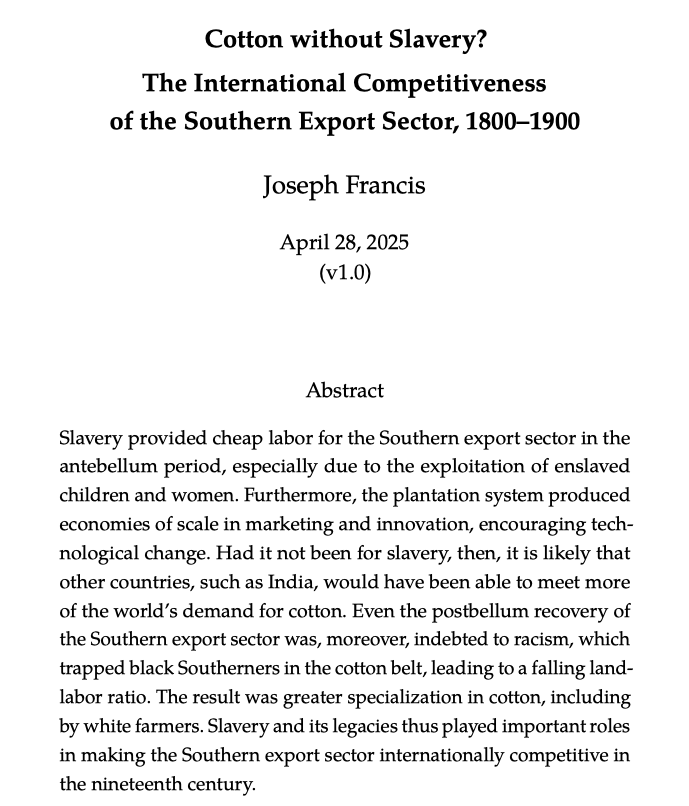
In my new paper, I argue that slavery facilitated the growth of cotton exports in the 19th-century United States.
To see why this is controversial, we must enter the rabbit hole of how economic history is currently taught in American universities… 1/20
@MarkAmesExiled@TheWarNerd Hey Mark, I wanted to DM you about this episode, but I cannot unless you follow me or I pay $8 to be "verified".
I'm not gonna pay Musk $8 so if you want to be pestered about the economics of the Civil War please follow me.
I am making a firm prediction on how the impending, inevitable, stock market crash will play out. I feel so strongly about it I dusted off my blog to make this prediction publicly.
https://t.co/ja1MaHEUPH
Overutilization in NYC schools is localized. In 22-23, Brooklyn school Districts 16 & 18 had no overutilized buildings, while Queens D20—the most overutilized in the City—had 74% of students in overutilized school buildings
Read Indicators for more info https://t.co/qYFIs8H3so
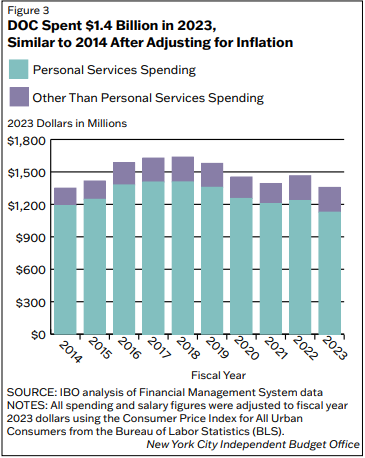
Staffing levels throughout the Department of Corrections declined by 24% in 2023 compared with 2014, while the jail population fell by 45%. Despite decreases in population and staff, spending levels did not substantially change.
Read our report: https://t.co/ILfAaKsNZW
@_gabriel_U@PrestonMui@ilzetzki Also I want to be clear I’m just being a pedantic debbie downer. I’m sure these issues have already been seriously considered in that paper.
@_gabriel_U@PrestonMui@ilzetzki Using the price of military output is also an issue cause the prices are arbitrary. The example I was just presented with is that the B-24 and B-29 are both four engine bombers. The B-29 costs twice as much, is it twice the “output”?
@BuddyYakov Well i think the 51 accord was more or less meaningless, so I don't want to overstate it. I am just saying that my assumption we would be at the ZLB forever was myopic and now that we are at a full employment economy rates are likely to stay relatively high for a while.
@BuddyYakov This doesn't talk about Asia (would be interested to read about Asian shell production) but it does outline why the US is best able to increase production.
But again, this is all academic because the cost of shell production is basically epsilon.
https://t.co/iKdmBxRsCO
@BuddyYakov The horizon for this kind of stuff is 3-5 years to get production up and running. The time horizon for this kind of stuff is much shorter.
The US has a GOCO system that can produce shells much more quickly and flexibly than offshoring.
@BuddyYakov That is, after WWII the Fed wisely didn't jack up the interest rate on that giant pile of post-war Treasury debt.
Neoliberalism, on the other hand, is going to crowd out real economic activity in favor of interest payments for the foreseeable future.
@BuddyYakov I have been anguine about the idea that the ZLB is a permanent feature of the US economy. But lately I've been wondering if I'd be saying roughly the same thing in 1948.
I think the contemporary misreading that the Fed contained inflation means we are (prematurely) in 1951.