Intro
Lifelong competitive golfer. Professionally: Background in sales leadership, incentives, tradeoffs, and process design/management. Last year I led the host club’s effort for the IHSAA 4A Boys State Golf Tournament and saw behind the curtain. Iowa HS golf needs a fix. 🧵
@rob_23456@KateKcollins1@rob_23456 - 1) I'd encourage you to attend a Catholic Mass. 2) You'll hear more scripture proclaimed at Mass than any other Protestant service (4 readings on Sundays). 3) Scripture is all over the liturgy itself (Order of the Mass) https://t.co/9HFlzrUnaO
I have never had more people who are not Catholic tell me what it means to be Catholic than since I started openly talking about my faith.
It is honestly wild.
People who do not go to Mass telling me what the Mass means.
People who reject the Church telling me what the Church teaches.
People who have not opened the Catechism telling me I am practicing Catholicism wrong.
People who mock the Pope telling me what Catholics are supposed to believe about the Pope.
People who do not believe in confession, the Eucharist, apostolic succession, sacred tradition, or the authority of the Church suddenly becoming experts on Catholicism the second a practicing Catholic speaks.
No.
You are allowed to disagree with me.
You are allowed to dislike the Catholic Church.
You are allowed to think I am wrong.
But you do not get to redefine my faith for me because the real version makes you uncomfortable.
Catholicism is not whatever opinion happens to fit your politics, your worldview, or your personal grievances with the Church.
It is a faith with doctrine.
With authority.
With sacraments.
With 2,000 years of history.
With saints who died rather than deny it.
And no, being Catholic does not mean I think every priest is perfect, every bishop is wise, every Pope is beyond criticism, or every decision made inside the Vatican is good.
Catholics know better than anyone that the Church is made of sinners.
That does not make the faith false.
It makes the need for Christ painfully obvious.
So if you are not Catholic and want to ask me questions, ask.
If you genuinely want to understand, I will talk to you all day.
But if you are going to lecture me about my own faith while rejecting the very Church you are explaining to me, save it.
I am not Catholic because it is fashionable.
I am not Catholic because it is easy.
I am Catholic because I believe it is true.
And the more seriously I take that, the less interested I become in letting people who do not practice it tell me how I should.
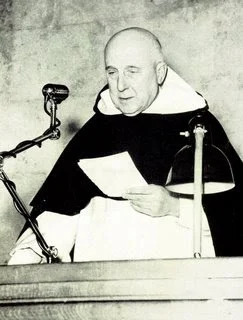
Fr Garrigou-Lagrange, while holding firm to the traditional doctrine extra ecclesiam nulla salus, explains how non-Catholics can attain justification and the beatific vision:
"All persons, even those who have not had the Gospel preached to them, receive graces sufficient for them to save their souls. Certainly, they are helped far less than those born in the Catholic Church, but they receive help sufficient for salvation. If they correspond to the graces received, if they act according to the dictates of conscience, as they are prompted to do by actual grace, then by a series of graces and by constant fidelity to inspirations, they finally receive the light of faith and acquire that life of charity, by means known to God, even if He has to send an angel or a preacher of the faith to them, as He sent the Apostle St. Peter to Cornelius the centurion."
@Brosephos@BishopJaxi@paleochristcon@KellyPowersBPA That seems like a reasonable conclusion. When someone can't even restate or "steel man" their opponent's argument and be able to re-state or accurately represent your opponents position and presuppositions, it will not be a fruitful conversation let alone a "debate".
Posted about June being dedicated to the Sacred Heart of Jesus and got asked a question about the meaning behind the Sacred Heart image. Here’s the breakdown:
Thomas Aquinas taught that faith without works cannot save, centuries before the Reformation.
Luther acted like he discovered something new in 1517. Aquinas had already addressed the question in full, two hundred years earlier, and reached the opposite conclusion.
In Summa Theologiae II-II Q.4, Aquinas draws a sharp distinction between two kinds of faith.
"Unformed" faith is intellectual assent. You believe the creed. You accept the propositions. But that faith, standing alone, does not justify you. The demons believe and tremble (James 2:19). Aquinas knew this.
"Formed" faith is something different. It is faith animated by charity, love of God and neighbor poured into the soul by grace. This is what Aquinas calls fides caritate formata. This is the faith that saves.
In I-II Q.113, he goes further. Justification is not a legal declaration made from the outside. It is a real interior transformation of the soul. Grace infused. Charity received. The will moved toward God.
This is not a medieval innovation. It is Paul in Galatians 5:6: "faith working through love."
So when Protestants say the Catholic Church invented works-righteousness as a response to Luther, the chronology collapses under scrutiny. The Church's position was already worked out in precise philosophical and theological detail before Luther was born.
The question was never faith vs. works. It was always: what kind of faith actually transforms a soul?
What do you think Aquinas got right that Luther's framework lost?