In 2025, we interviewed 2,431 candidates and we observed two things:
1. Over 70% of the people we hired just applied and had no referral.
2. Candidates who asked the best questions were more likely to get hired.
So we made this video about the questions we wish people asked more.
Full vid on YouTube: https://t.co/HPBkT049xb
Generic job titles attract generic candidates.
That’s fine for a lot of companies (and people) but if you don’t want to build a generic company, you might need to try something different.
For example, at @posthog, we struggled with hiring a product marketer for months. We got hundreds of applications from people who had been product marketers at other companies, but their experience was a bit too corporate for us.
It wasn’t until we changed the title to Developer Marketer that we started getting the right kind of candidates. Developers who could write, marketers who could code, the weird generalists we were looking for.
We do something similar for lots of roles now:
Docs writer → Developer who loves teaching
Events marketer → Developer who organizes events
Paid ads copywriter → Propagandist
Social media manager → Social poster in chief (hiring btw, DM me)
ClickHouse Operations Engineer → ClickHouse Rizzler (ok, I made this one up)
Weirder job titles attracts people who want less traditional jobs. It gets the M- and T-shaped people we want more excited and likely to apply.
warning: actually non-meme content...
@timgl and I jumped on some quick calls and ended up raising a $70 million series D led by Stripe.
and of course we decided to announce this with the help of our newly created irl hedgehog Max.
see reply for a link to a post on how we’re going to use the $$$, but here’s the tl;dr version:
- we'll build even more products, like messaging, support, CRM, a lot more
- all the tools + your data + Max AI = shareholder value
serious post incoming...
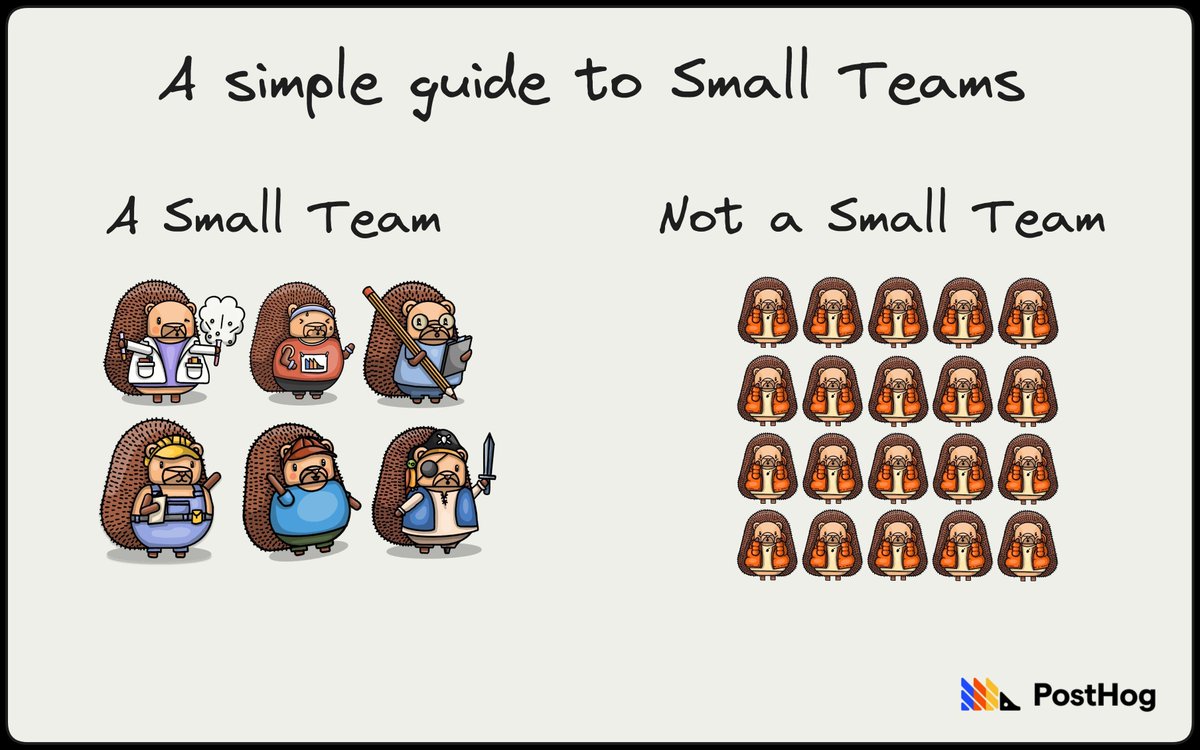
i'm kind of obsessed with keeping teams small.
the bigger we get, the easier it would be for us to slow down. once momentum is lost, it's lost forever.
small teams have been an incredibly effective way for us to avoid this trap.
to work, a small team has to:
- be genuinely small. 3 to 6 people is ideal. each team should own an area of the company and behave like an early-stage startup.
- run itself. they should decide on their own goals, make the final call on what features to ship, own growing revenue for their product, etc.
- be flexible. moving people between teams, or creating new ones, should be trivial. no one should feel trapped working on an area of the product that doesn't interest them.
small teams aren't without tradeoffs.
there will be overlap sometimes, and ownership can be fuzzy, but these are things you can mitigate.
the benefit is you create teams that are highly accountable, motivated, and move fast.
and here's the best bit..
most of our competitors have 500+ employees
but a single one of our small teams isn't competing with a company of 500 people
they're competing with a team of 30 people in that company who can't move as fast because of all the bloat and process they deal with
this means we can out ship companies that are much larger than us, despite still being relatively small.
and we can maintain that advantage as we grow by keeping our teams small.
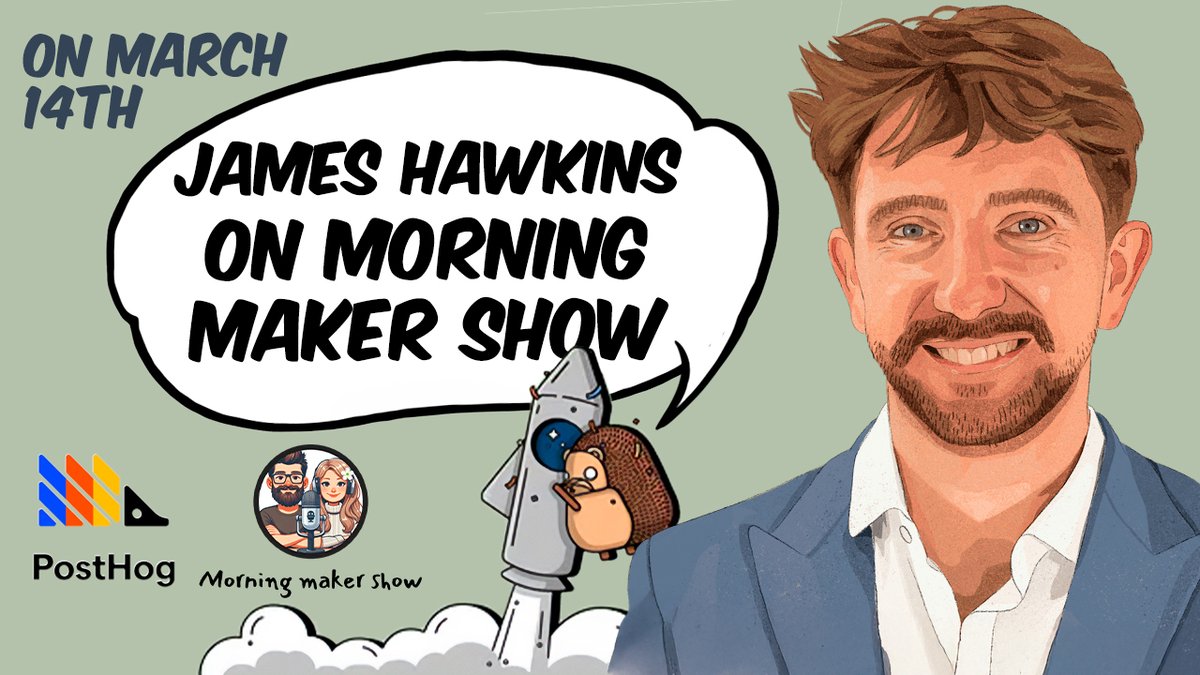
The mastermind behind one of the community's favorite products is coming to The Morning Maker Show.
Get ready to hear @james406 journey, insights, and—of course—why he's not a fan of those "quick calls".
Make sure to subscribe to the channel so you don’t miss this one.
some non-obvious behaviors that will kill your startup:
- not praising people for day-to-day work: companies are full of people who don't even do their core job well, so don't forget to recognize when people do
- giving mostly positive feedback: a lack of constructive feedback is equally corrosive. inertia is the default mode of most companies. the day you stop giving each other constructive feedback is the day inertia becomes the default.
- taking shortcuts when hiring: hiring is hard, so it becomes tempting to accept good enough candidates so it doesn't slow you down. this will slowly kill your culture.
- not trusting teammates: you can't move fast without trust. this is also why compromising on hiring is a huge mistake.
- sticking rigidly to plans: judge people on what they ship, how often they ship, and the impact of their work, not on whether they “stuck to the plan.” people who feel like they must stick to the plan won’t bias for impact.
- waiting “one more week” to ship something: one more week sounds harmless enough, right? it’s just ONE week. but this attitude extrapolated out over months or years = way less momentum. the sooner you get something into the hands of users, the faster you will learn
- not following-up with customers: when someone gives you feedback about your product, respond with something useful. failing to do so will teach them not to share more feedback in future.
we look at a lot of different things, but for organic the main one is tracking conversion to either "consideration" or "intent".
we define these using actions in posthog (e.g. visiting our docs, product pages, etc) would be considered showing intent.
we then create funnel insights that track how specific organic content pages convert.
this isn't something we do continuously, though, as we have a pretty good understanding of what does and doesn't work based on previous work.
I wrote this in more detail here: https://t.co/sxKM2kN0Gn
not everything in that article is current, but it gives you the broad strokes.